

Pointing out that manic depressive disorder is the psychiatric illness most affected by seasons, Tarhan warned, “Spring and autumn are the flare-up periods for this illness.” Tarhan stated that if a person easily falls in love, withdraws into themselves thinking for hours, or frequently becomes lost in thought, one should suspect bipolar disorder, also noting that bipolar disorder in childhood and adolescence is often overlooked, emphasizing that bipolar disorder is seen at a higher rate particularly during adolescence.
Content
Prof. Dr. Nevzat Tarhan: “Spring and Autumn are Bipolar's Flare-up Periods”
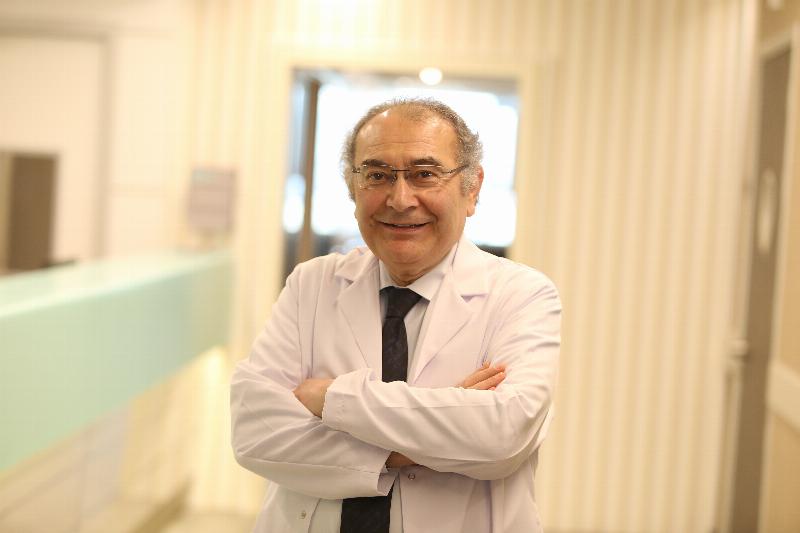
Üsküdar Üniversitesi Founding Rector Psychiatrist Prof. Dr. Nevzat Tarhan, made important evaluations regarding bipolar disorder and manic depressive conditions.
Bipolar was referred to as manic depressive in the literature
Prof. Dr. Nevzat Tarhan stated that bipolar disorder was previously referred to as manic depressive in old literature, but as new findings and evaluations emerged, it was understood that it is not merely a disease with manic depressive attacks, but rather a mood disorder, meaning it's essentially a disorder in a person's ability to manage their emotions. The reason many conditions like schizophrenic thoughts, OCD thoughts, and emotional management disorders are called bipolar disorder lies in mania. In mania, the person becomes excessively energetic, constantly feels excitement, their energy increases, they sleep three or four hours but are always dynamic and full of energy. They talk a lot, spend too much money, have an excessive increase in sexual desire, and often experience a decrease in appetite. They establish companies, try to fix the world. There are patients who walk from Istanbul to Izmir and wear out socks in a single day from walking around,” he said.
Bipolar Disorder Must Be Treated First
Tarhan stated that most cases of alcohol and drug use reveal bipolar disorder in the background. “They come in as alcoholics, but during diagnosis, bipolar emerges. We see that they have turned to alcohol and drugs due to a disorder in managing their emotions. If alcohol addiction is attempted to be treated without first treating bipolar disorder, the person relapses after being discharged from the hospital. At the other extreme, there is depression. They enter a melancholic depression accompanied by states of sluggishness, joylessness, forgetfulness, withdrawal, desire for death, suicidal ideation, feelings of worthlessness, and inability to enjoy anything,” he explained.
There are people with '4-season' moods
Tarhan stated that patients experience mood swings in the intervals from manic-depressive state to depression. “Sometimes there are people among us who walk around normally, living four seasons in a day. In the morning, they kiss their child; in the afternoon, they curse, saying, 'Why did I give birth to you?' You might say this is their temperament, but in reality, it's not temperament; it's the illness. A girl falls in love with someone online; the man is in America. The girl goes to America. We conducted therapies, but it wasn't typical mania. She also had no depression, but she experienced mood swings. Eventually, we hospitalized her, and for everything she had done, the girl asked, 'Why did I do all these things?' He added, 'In reality, it was beyond her control.'”
They are Convinced to Treatment with Visual Evidence
Tarhan, stating that the cause of the illness has been found, continued his words as follows:
“In these individuals, the chemical balance in the brain is disrupted. The right brain is the area that manages emotions, and the left brain is the area that manages logic. The left prefrontal cortex constantly controls the right prefrontal cortex. It says 'put on the brakes' in excesses, it says 'enough'. When chemicals in the brain surge, the balance of serotonin and dopamine in the brain is disrupted. When we take brain imaging, we see an inconsistency, a disorder in that person's brain region. Especially during manic and hypomanic periods, individuals do not accept themselves as ill. We explain the situation to them, tell them what treatments they need, but they become convinced when they see it visually. For example, if you don't show a diabetic patient their high sugar levels with a test, you can't easily get them to use diabetes medication. Similarly, in psychiatric illnesses, as we show such biological evidence, the person's compliance with treatment increases.”
In Medicine, the Patient's Best Interest is Paramount
Prof. Dr. Nevzat Tarhan stated that brain imaging methods have advanced significantly, saying, 'Medicine has developed a great deal. A chip called Neuralink was implanted in the brains of pigs, an experiment was conducted. They will do it to humans in the coming years. The brain is currently science's new frontier. A very serious and large investment is being made for discoveries. For example, a person who has become the world's second-richest, coming from South Africa, is making tremendous future investments. I see that many of my colleagues keep their distance from these. The patient's best interest is paramount. For their best interest, if there is a diagnosis, a case, scientific evidence related to a treatment for the disease in the world, it is our responsibility to go and find it. There is a saying in the military: 'A commander is responsible not only for what is done but also for what is not done.' We translated this saying as 'A physician is responsible not only for the treatments performed but also for those not performed' and hung it on the walls of our hospital,” he said.
Bipolar Has a Genetic Predisposition
Tarhan pointed out that 2 out of every hundred people on the street have bipolar disorder, saying, “So, statistically, it exists. If one of the parents in a person's family has bipolar disorder, the likelihood of that person having bipolar disorder rises to 7-8 percent. This is not a high rate. It's not 100 percent genetic, but there is a genetic predisposition. For instance, if they are identical twins and one has it, the probability of the second one having it is between 40-60 percent. This high rate in identical twins is also due to a genetic predisposition. So, we don't say the disease is one hundred percent genetic, but there's a susceptibility gene. We are conducting genetic studies on bipolar patients. We are accumulating cases to identify which gene it is. Currently, there are candidate genes being researched, but they cannot be called 100% genes because there are polygenic and multifactorial influences. If 3-4 genes related to them could be found, if we could find gene carriers, some studies could be conducted more efficiently,” he said.
Manic Patient Can Get Angry at the Doctor After Recovery
Tarhan pointed out that bipolar disorder is among the areas where medicine has been very successful, stating, “During the manic phase, the patient does not accept being ill. After overcoming the manic phase and recovering, the patient gets angry at the doctor. We suddenly turn such an energetic, world-fixing person into a normal individual, and they feel sad about their condition. In other words, the brain has self-doped. In the context of manic-depressive - depression, the opposite happens. During the manic phase, the man could sign a check and sell his bus below its value. Therefore, in such situations, the family must be cautious. If a person manages to take medication after having a panic attack, the attacks, if they occur, are usually mild and short-lived,” he said.
Childhood and Adolescent Bipolar Go Unnoticed
Prof. Dr. Nevzat Tarhan stated, 'What is most often overlooked are childhood and adolescent bipolar disorders,' and continued his words as follows:
“They say this child is hyperactive, but when we investigate, the child is not hyperactive; they have childhood bipolar disorder. Also, bipolar disorder is found at a higher rate in adolescence. If a person at forty acted like an adolescent, displaying adolescent behaviors, you would say they are bipolar. Because an adolescent's brain is a period of emotions rather than logic. It is naturally and biologically so. They act without thinking, doing whatever comes to mind. Adolescence is defined as a normal schizophrenic period. We categorize adolescents as 'out-of-class bipolars,' meaning we define them as bipolar NOS (Not Otherwise Specified). They need to be treated like bipolar patients, and they respond very well to treatment. Interestingly, epilepsy medication is used in the treatment of bipolar disorder. Epilepsy means reducing the intensity of brain waves. It is a medication that corrects brain storms.”
3 Years: A Critical Period…
Tarhan stated that in the treatment of manic depressive disorder, the patient's condition should be monitored with a physician with whom they have established a trusting relationship and achieved treatment compliance, adding, “If there are no attacks for 3 years, then attempts to discontinue medication can be made. However, there must be no attacks for 3 years. If their thoughts speed up, if their sleep decreases, the symptoms have already begun. In such cases, the patient even comes to us themselves. They say that ideas and projects are starting to fly around in their head again, ideas for establishing companies are forming, their sleep is decreasing, and their illness is escalating. We immediately start their medication. There are very high-ranking individuals with bipolar disorder who can recover. Bipolar patients should not think that they cannot recover or that it is a chronic illness. Many great businessmen and historically famous individuals known for their fits of madness were bipolar,” he said.
They Fall in Love Easily, Dive into Deep Thoughts
Tarhan, pointing out that manic depressive disorder is the psychiatric illness most affected by seasons, stated, “Spring and autumn are the flare-up periods for this illness. In such cases, if the illness is seasonal, we immediately consider a bipolar diagnosis. They are also triggered during seasonal transitions. Humans are not independent beings from nature and the universe. We are part of the universe. We have a quantum brain related to universal flow. Therefore, we cannot say there is no seasonal influence. Ultimately, bipolar is an illness with a biological dimension, but its treatment is not solely biological. Psychological treatments, in particular, need to be carried out concurrently. If a person easily falls in love, withdraws into themselves thinking for hours, or frequently becomes lost in thought, one should suspect bipolar disorder. If individuals are in the early stages, they can overcome it with mild treatment. In children under ten, it manifests as anger. They might think it's climbing straight up walls or hyperactivity, but this is a condition that specialists should particularly investigate with tests,” he said.
Emotion Regulation Test Applied in Treatment
Tarhan, stating that everyone can exhibit mild bipolar traits from time to time, concluded his words as follows:
“There are some individuals who experience mood swings, but all are within an acceptable range. In bipolar disorder, however, it is beyond the acceptable limit. They spend their money all at once; they can talk a lot in the morning and not at all in the evening. Most people who experience such sudden mood swings are bipolar. We don't just give these individuals medication. There's an emotion regulation test that is applied. The positive and negative strategies produced by that test are investigated. These individuals are taught emotion management skills using positive strategies. When they gain emotion management skills, even if their emotions surge, the person becomes able to manage themselves. This happens through therapy. Therefore, if not only medication but also therapy is done together in treatment, the person gains emotion management skills during intermittent, healthy periods. In our culture's belief system, when the 'nafs' (ego/self) surges, we call it a mood disorder. Therefore, being able to manage these is a skill. For this, the person needs to strive and put in effort.”
Share
Update Date: February 26, 2026
Creation Date: November 30, 2020
Request a Call
Other News
- The book that read today's digital threats in 2014: Being a Conscious Family
- Experts warn: 'Instead of memorizing letters, teach pencil grip, scissor use, and coloring'
- School fear and school love both start in the family!
- Family is not merely transforming, it is being battered under a serious assault
- Artificial intelligence opens the door to early diagnosis in autism!