

Underlining that Ramadan is a significant period for the maturation of the soul, Üsküdar Üniversitesi Founding Rector Prof. Dr. Nevzat Tarhan pointed out that despite anti-religious movements around the world affecting Anatolia, the reason for there not being a major destruction in our culture is Ramadan. Tarhan said; “The gatherings during Ramadan, even when there was no Friday prayer, Ramadan and Eid continued. This facilitated cultural transmission, but there is a risk now; the globalization of media has taken cultural transmission from the family and given it to social media.”
Content
Prof. Dr. Nevzat Tarhan: “Ramadan is a kind of self-calibration for humans”
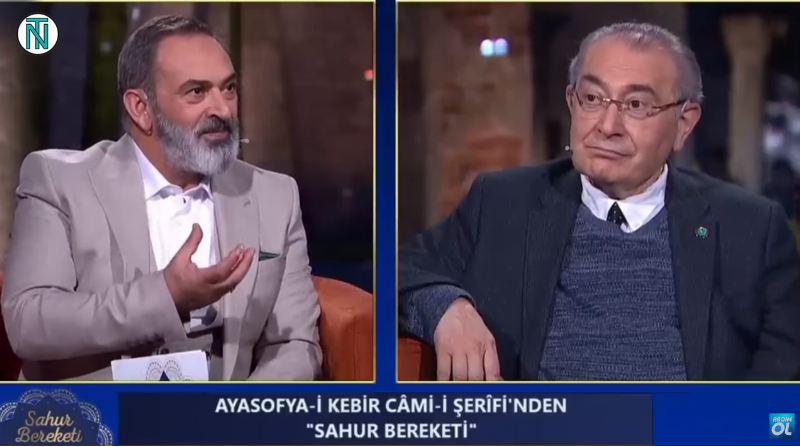
Üsküdar Üniversitesi Founding Rector Prof. Dr. Nevzat Tarhan was a live guest on the 'Sahur Bereketi' program with Dursun Ali Erzincanlı, broadcast on TRT1. Tarhan made evaluations on the topic of 'Ramadan and Our Spiritual World'.
“Humans need a mental sanctuary”
Prof. Dr. Nevzat Tarhan, drawing attention to the human need for a mental sanctuary, stated; “In earthquakes, in pandemics, there are things a person can control and things they cannot. There are things within their power and things beyond their power. In such situations, humans need a mental sanctuary. Religion provides that, but it must be a religion compatible with our mathematical mind. That religion is already the religion of monotheism. Therefore, if one has such an understanding of religion, they feel well-being and peace in such situations, and they receive an advance payment for it in this world. After that, Ramadan is a very important month to reinforce this. Someone with question marks about faith in their mind cannot focus on worship. To be able to focus on worship, just as one needs to know the multiplication table before progressing in mathematics, one must first know the multiplication table. Someone who doesn't know it cannot teach higher mathematics. After a person resolves the questions in their mind regarding the existence and unity of Allah, they begin to take pleasure in acts of worship, and even when reading the Holy Quran, they then read it asking; 'What message is the Creator of the universe giving me?' For this reason, Ramadan is a kind of taking a break in our lives. The expression we recommend for mental health is for a person to declare a moratorium. Abandoning the routine work done during a certain period of life, this is even called the rule in innovation. If a person, for example, works ten hours, they need one and a half hours to think about what they are working on, why they are working, and to have a high-level interpretation. When they do this, they do their job better and, in a way, renew themselves, purify themselves.”
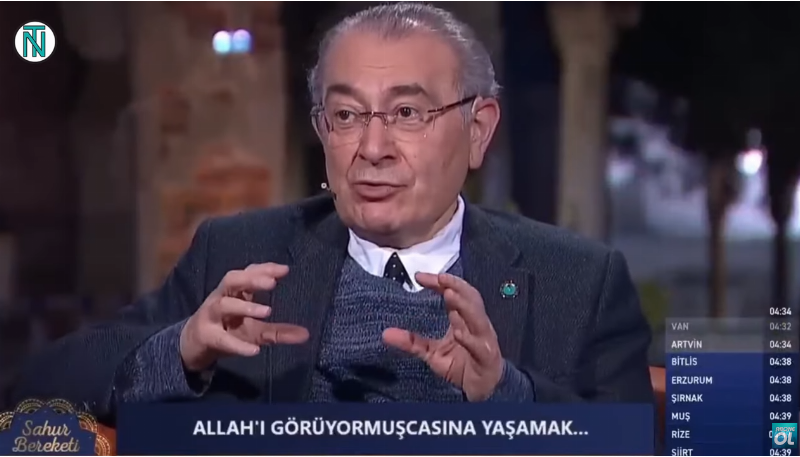
“It took cultural transmission from the family and gave it to social media”
Prof. Dr. Nevzat Tarhan mentioned the risk of losing the culture of Ramadan and this atmosphere in ten to twenty years. Tarhan said; “As our master Sezai Karakoç said; ‘Ramadan is a significant period for the maturation of the soul.’ It has already been given to us in creation. There are so many anti-religious movements in the world. They have affected us too, and Anatolia, but despite that, there hasn’t been a major destruction. In our culture, the reason for this is Ramadan. The gatherings during Ramadan, even when there was no Friday prayer, Ramadan and Eid continued. This facilitated cultural transmission, but there is a risk now; the globalization of media, the globalization of social media, has taken cultural transmission from the family and given it to social media. Perhaps in ten to twenty years, we risk losing this culture that we built despite everything, the Ramadan culture, this atmosphere, which is why we need to use social media and the internet for this purpose.”
“In this world there are deeds, no accountability; after death there is accountability, no deeds”
Prof. Dr. Nevzat Tarhan addressed the issue that the feeling of accountability is a feeling of responsibility towards Allah; “The test in this world is not just today’s test; it is a process, a journey. Life is a journey, and in this journey, like discounts at a fair when selling books or anything else, for the one month given to us, Ramadan is similar for spiritual trade, for trade for the afterlife, because in this world there are deeds, no accountability; after death there is accountability, no deeds. Therefore, the more good and beautiful deeds, behaviors, and actions we fill our saddlebag with now, the heavier that pan of the scale will be at the end of life, which is why this is a spiritual trade, because death is the only truth in the universe without exception. There is no exception. No one has ever escaped death. Therefore, given such a truth, it is important for a person to remember that death is near. There is a matter related to the end times. Our Prophet says; ‘In the end times, Muslims will be like debris on water. They will be scattered. There is a disease called ‘Wahn’.’ They ask, ‘What is the disease of Wahn?’ He says; ‘Fear of death, avoidance of it, and love of this world.’ If these two diseases exist, it is the disease of Wahn, and then Muslims have become Muslims of the end times. Worldliness exists, which is secularism right now. Not in the political sense, but in the philosophical sense. Secularism, philosophically, is referred to as ‘worldliness’ in TDK. To live as if there is no afterlife, to live as if there is no day of judgment. What does Fatiha say; ‘Do you want to be among the good or the bad?’ Yawm al-Din actually means accountability, the day of judgment, in its lexical sense. Therefore, what protects one from evil is not good intention, not religiosity, but accountability. If religiosity and accountability are not together, one is merely a 'wardrobe Muslim'. They live superficially. The feeling of accountability means the feeling of responsibility towards Allah.”
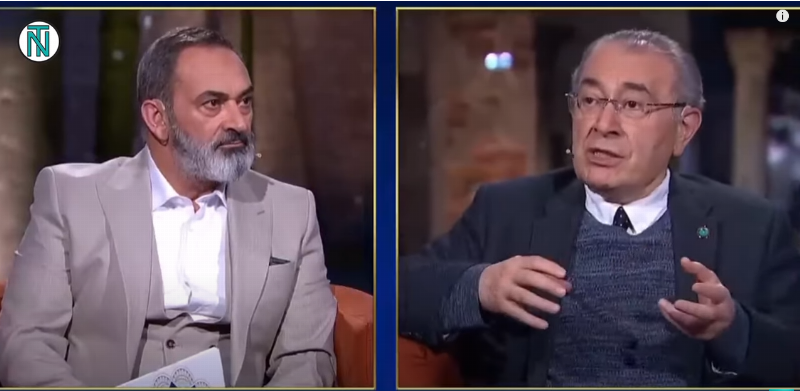
“Sincere intention programs the brain”
Tarhan, drawing attention to the human brain's ability to self-program; “We have consciousness over our brain, and that consciousness governs the brain. If a person fasts unwillingly, for the sake of others, because the brain is not convinced, the brain, for example, normally stops secreting hunger hormones after 2-3 days, and your stomach doesn't rumble at noon because the brain
programs itself saying 'you will eat in the evening'. Our brain has the feature of self-programming. Intention programs the brain; for instance, if you believe you will wake up at four in the morning and do so without setting an alarm, if you truly believe. If you say, 'It's okay if I wake up, it's okay if I don't,' you will miss it, because sincere intention programs the brain and that inner motivation is formed. There is an external motivation, what others do by saying 'come on, come on', and there is also an inner motivation. Inner motivation is related to a person having an intense desire. When one has a desire, a need arises; when a need arises, self-mobilization occurs, and unused energy in the brain, all reserve energies, kick in. If a person has a strong desire, they feel the need created by it. For example, if you want to make a horse drink water, you cannot make it drink even if you hit its head. It will drink by itself when it is thirsty. You need to make it feel desire; desire leads to craving, craving leads to need, and need leads to self-mobilization. The stronger the desire, the more powerfully a person uses the hidden potential in the brain that they don't normally use.”
“Ramadan is a kind of self-calibration for humans”
Prof. Dr. Nevzat Tarhan, mentioning that human beings’ own spiritual and material mechanisms also need calibration; “Ramadan is a kind of self-calibration for humans, a process of self-recognition and rebuilding, readjusting internal balances and sensitivities. If there's even a tool, you calibrate it once a year; if you don't, it will malfunction after a while. Here too, a person's own spiritual and material mechanisms need calibration. Furthermore, beyond that, recent research on hunger and satiety in the body suggests that staying hungry for a certain period, like in a fasting diet, is beneficial. It is said this way because a cultural dimension has also formed. In fact, our body's fasting during Ramadan has an advantage like DNA self-renewal; it’s not just for our spiritual structure but also for the brain, making our brain work differently.”
Share
Update Date: March 01, 2026
Creation Date: March 28, 2023