

Emphasizing the significant importance of the concept of personal space and privacy in a child's development, Psychiatrist Prof. Dr. Nevzat Tarhan, stated that the concept of privacy must be taught in the first 6 years of life. Noting that families have crucial responsibilities regarding personal space and privacy, Prof. Dr. Nevzat Tarhan, pointed out that children should be taught to use the toilet and bathroom independently, sleep alone, and dress themselves by the age of 4. Tarhan also underlines that intimate body parts should not be used as areas for affection when caressing a child.
Content
Prof. Dr. Nevzat Tarhan: "Privacy Should Be Taught in the First 6 Years"
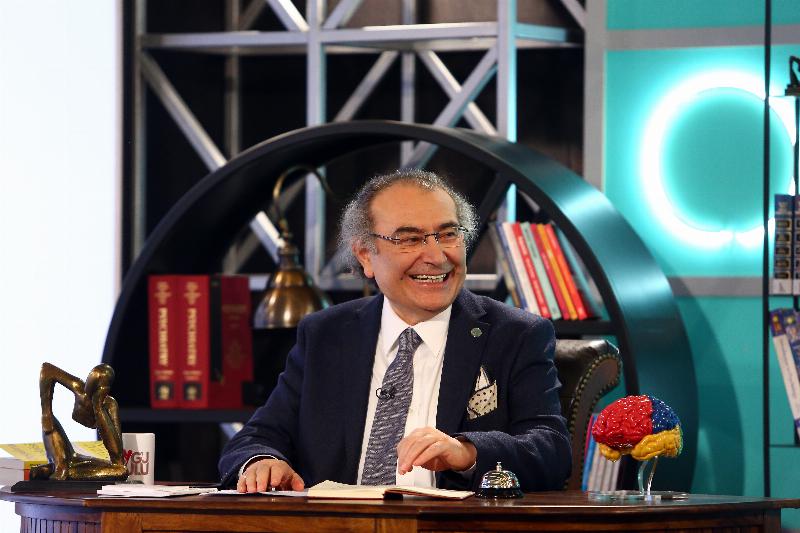
Intimate Body Parts Should Not Be Used as Areas of Affection!
Üsküdar University Founding Rector, Psychiatrist Prof. Dr. Nevzat Tarhan, made evaluations regarding the concept of personal space and privacy.
Human Infants Are Born to Learn
Stating that learning is a uniquely human concept, Prof. Dr. Nevzat Tarhan noted that human children come into the world differently from animal offspring in nature, saying, “An animal cub is born having already learned. Their behaviors are genetically coded from birth. For example, a duck swims immediately, another animal cub stands up as soon as it's born. But a human infant is born to learn. Therefore, humanity learns everything. It learns social life, many concepts in life, relationships with other people. It is born with a brain eager to learn everything.” he said.
It Must Be Learned Correctly in the First 6 Years of Life
Noting that privacy education should be given between the ages of 0-6, Prof. Dr. Nevzat Tarhan stated, “In a person's learning journey, the first teacher is their mother. These teachers later become their father, extended family, and then friends. Early privacy is a concept that must be learned correctly in the first 6 years of life. If a child cannot learn privacy or learns it incorrectly between the ages of 0-6, there is a possibility that they may be unprepared for many risks in the future.” he warned.
Lack of Education Lies Behind Many Negative Events
Stating that there are many negative events globally increasing today, such as sexual abuse, harassment, and violence, Prof. Dr. Nevzat Tarhan said, “When looking at the background of these, the lack of privacy education stands out. Children who have not developed a sense of personal space can become victims of incest. In past years, a young girl, around 18-20 years old, weighed 130 kilograms. She couldn't stop eating. The victim gained weight by eating to make herself appear ugly due to feelings of guilt. Especially in cases like incest, various psychiatric illnesses can emerge in victims experiencing depression and trauma.” he said.
Reminding that families have very important duties regarding personal space and privacy, Prof. Dr. Nevzat Tarhan said, “Here, all the work belongs to the family. Failure to teach children the feeling of sexual privacy and personal space can lead to major problems.” he said.
Prof. Dr. Nevzat Tarhan stated that the concept of personal space should encompass many areas, from toilet training to the separation of bedrooms, adding, “Children should not sleep in the same room as their parents, and their room should be separated at an appropriate age. A child witnessing situations inappropriate for their age can lead to various behavioral disorders in the future. Children who have not developed the ability to express their emotions or learned abstract concepts may experience adjustment problems.” he said.
Privacy Covers a Very Broad Area
Noting that privacy education covers a very broad area, Prof. Dr. Nevzat Tarhan said, “A child needs to become aware of their private life. It means protecting their personal space. It means other people respecting their privacy. It means a child being able to maintain their personal boundaries between themselves and their environment. It is important for them to learn to protect their private life within social life. If a stranger offers them chocolate, not immediately believing them and being influenced is also related to the concept of personal space. The child needs to understand the meaning of this concept as ‘my personal space is related to my private world’. This is actually important for a child to manage their emotions. They must have the ability to say no to someone who wants to force them to do something.” he said.
Prof. Dr. Nevzat Tarhan stated that safe behavior, rather than fear, should be taught in privacy education, warning, “When providing certain information to a child, it is important not to scare them. Frightening a child can lead to sexual problems like vaginismus later in life.” he warned.
Children Should Be Taught That No One Should See Them While Dressing
Highlighting the importance of teaching children that no one can touch their body without their permission, Prof. Dr. Nevzat Tarhan said, “There is a very important ‘underwear rule’ here. When teaching privacy to a child, it should be explained, ‘No one should touch the area covered by your underwear without your permission. Even I shouldn't touch it without asking. If necessary, only a doctor can touch it, and even they must ask your permission.’ Children should also be taught that they should be in an area where no one can see them when getting dressed. If this is not taught, the child does not develop a perception of personal space. When this doesn't develop, they can become vulnerable to inappropriate behavior or abuse.” he said.
Toilet and Bathroom Doors Should Be Closed
Stating that certain areas of the house, like the toilet and bathroom, should also be explained as private, Prof. Dr. Nevzat Tarhan said, “A child's room should be separated. Especially after the age of four, their door should be knocked on before entering. It should be explained that the door should be closed when entering the toilet and bathroom. It should be taught that one must knock on the door if someone is already in the toilet or bathroom. Children should learn to use the toilet independently from the age of 4. From the age of 4, they should be bathed with their underwear on, and given the opportunity to change their underwear themselves. Parents should set an example for the child by doing these things, not just by telling them. Being an example in this regard is much more educational than giving hours of lectures. If a child's drawer or bag is looked into with permission, the child will also learn the boundaries between their own privacy and that of others.” he said.
Behavior at Home is Also Very Important
Noting that attitudes and behaviors at home are also effective in teaching privacy, Prof. Dr. Nevzat Tarhan warned, “Even the clothes parents wear at home are important. If one walks around the house in underwear or beachwear, it is difficult to teach that child privacy. A person's bedroom attire is separate. One does not go to the guest room, living room, or near strangers in bedroom attire. For example, behaviors like kissing a child on the lips, touching their naked body, or freely uttering sexually suggestive words in front of a child can disrupt the child's perception of privacy.” he warned.
Intimate Body Parts Should Not Be Used as Areas of Affection
Prof. Dr. Nevzat Tarhan emphasized that sexually suggestive jokes made to children would also harm their development, stating, “In some cultures, a circumcised child is told, ‘Show it to your uncles.’ This eliminates the concept of privacy. We emphasize that intimate body parts should not be used as areas of affection when caressing a child.” he said.
Prof. Dr. Nevzat Tarhan also pointed out the importance of information regarding sexuality being provided by the family, saying, “We should be able to talk with our children. A child should learn to communicate their problems to their mother and father without fear when needed. Parents should learn to guide the child within a relationship of trust, not by frightening them. Let's raise children with love. Indeed, if there is love, fear decreases, and trust increases.”
Digital Technology Use Should Be Limited
Noting that a child's technology use should be limited in the digital age we live in, Prof. Dr. Nevzat Tarhan advised, “We are in the digital age. The world is experiencing digitalization. Children should not be given technological devices without parental supervision until the age of five. When given, boundaries must be clearly set. Children can easily access everything. After the age of 5, it should be used for a very limited time under parental supervision. When limitations are imposed, the child learns to control their impulses. If they cannot achieve this, the child cannot manage money, cannot manage their life, and becomes open to all kinds of addictions. What is behind addiction? Children who have easily obtained everything, chased pleasure, and become the little princess or prince of the house are not satisfied with pleasure. They develop a reward deficiency syndrome in the brain. Reward deficiency means addiction. Children should be taught the skill of managing their emotions at a young age.” he advised.
Share
Update Date: February 28, 2026
Creation Date: April 11, 2022
Request a Call
Other News
- The book that read today's digital threats in 2014: Being a Conscious Family
- Experts warn: 'Instead of memorizing letters, teach pencil grip, scissor use, and coloring'
- School fear and school love both start in the family!
- Family is not merely transforming, it is being battered under a serious assault
- Artificial intelligence opens the door to early diagnosis in autism!