

Psychiatrist Prof. Dr. Nevzat Tarhan stated that psychiatrists and psychologists working in the field of mental health should avoid prejudice, emphasizing that clients must be evaluated solely as patients. Tarhan noted that if an individual has prejudices, their thinking automatically remains within a dogmatic realm, adding, “The person is unaware of their own dogma. However, a professional receives supervision during training. This enables them to learn to remain independent between the patient’s prejudices and their own.”
Content
Prof. Dr. Nevzat Tarhan: “Prejudice against clients should be avoided”
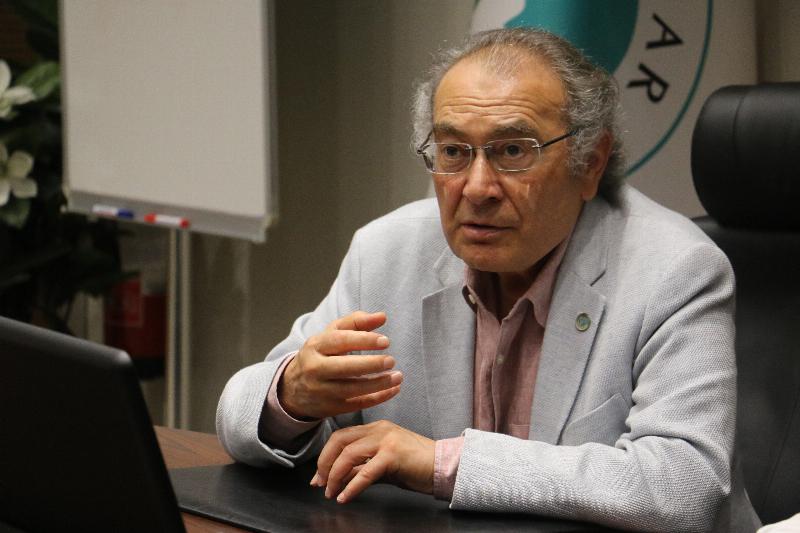
If there is prejudice, the person remains within a dogmatic realm
Üsküdar Üniversitesi Founding Rector, Psychiatrist Prof. Dr. Nevzat Tarhan, emphasized that psychiatrists and psychologists working in the field of mental health should avoid prejudices against patients who consult them.
No need to question the patient's beliefs
Prof. Dr. Nevzat Tarhan noted that individuals seeking help from mental health professionals are present in the capacity of a patient and should be evaluated as such, stating, “Since that person is before us as a patient, there is no need for us to conduct an analysis such as questioning their beliefs. If the patient or client raises the topic themselves, meaning if they have conflicts, obsessions, or other issues related to it, then that topic will be addressed.”
Prejudiced approach causes harm
Prof. Dr. Nevzat Tarhan stated that if a psychologist, psychiatrist, or any psychology professional has prejudices and rigid beliefs on any subject and defends these beliefs as proven truths without any discussion, then when they do something that upsets or angers the other party, they will attribute it to the person's illness. Tarhan said, “They do this due to their own prejudice. Most importantly, because these individuals have rigid beliefs and carry such prejudices, they deny that they think this way.”
A psychologist must first overcome their own narcissism
Tarhan emphasized that for a specialist to be a psychologist, they must overcome their own narcissism, stating, “Someone who cannot overcome their own narcissism cannot be a psychologist. What is overcoming narcissism? It is the ability to self-criticize and be open to criticism.”
We aim to offer clients different perspectives
Tarhan noted that individuals from all viewpoints can apply to professionals working in the field of mental health, stating that their goal as experts is to bring different perspectives to the person. Prof. Dr. Nevzat Tarhan said, “If a person asks for help, it is problematic for us to make a positive, plus, or minus evaluation regarding that help. We cannot say it exists, nor can we say it doesn't; we offer options, and the person decides. In other words, they take responsibility. Our goal is to bring different perspectives and offer options to that person. In such situations, because they draw their own conclusions, they 'buy' that information. When they 'buy' that information, it becomes permanent for them. They have expended mental effort and endeavor for it.”
Is it possible to change prejudices?
Prof. Dr. Nevzat Tarhan noted that changing prejudices is difficult but possible, stating that the greatest remedy for prejudices is shocking experiences. Referring to the learned helplessness experiment with monkeys, Tarhan said, “They give electric shocks to monkeys when they reach for a banana. After a while, the monkey stops reaching for the banana because it receives an electric shock every time it extends its hand. The banana remains there; it doesn't extend its hand because it hurts. This is the learned helplessness experiment. Then something interesting happens: the laboratory floods. After the laboratory floods, everything gets mixed up, and they reorganize the laboratory. They put the same monkey back in the cage. The monkey with learned helplessness starts reaching for the banana again. It does the 'broken' thing again because shocking experiences change prejudices. Shocking experiences are the greatest remedy for prejudices. Shocking experiences prompt questioning. They activate the system of stop, think, re-evaluate.”
Dogmatic knowledge is closed to discussion
Prof. Dr. Nevzat Tarhan stated that being unveiled is considered a norm in some segments, adding, “People who think this way have such a stereotype in their minds. These are modernist dogmas. In modernist doctrine, modernist dogmas, this is a dogmatic knowledge, sacred, closed to discussion. This is a rigid belief, a blind belief. In such cases, it is a dogmatic prejudice for that person. It is a dogma. The person does not question that dogma. And because they do not question it, they cannot change it. The world is currently moving towards multiculturalism. For example, in France, such prejudices are more common, but in the system of multiculturalism represented by England, many cultures, different cultures, can live together. The Ottoman Empire achieved this. There was a census in 1894. In the census, 44% of Istanbul's population was non-Muslim, but they lived together beautifully for centuries. Many cultures were able to express themselves and live without feeling oppressed.”
Automatic prejudice is overcome through dialogue
Referring to the concept of “Automatic Stereotype” in political psychology, Prof. Dr. Nevzat Tarhan said, “There is an example in political psychology books. A white mother is walking with her child, and a Black person approaches from the opposite direction. The white mother unconsciously, completely unaware, takes her child's hand and pulls her child closer. Automatic prejudice says a Black person is a danger; she has learned this as a threat and pulls her child towards her. This automatic prejudice, how is it overcome? It is overcome through dialogue.”
Prejudices guide individuals
Prof. Dr. Nevzat Tarhan stated that automatic prejudices and value judgments unconsciously show and guide us how to think, much like traffic signs, and that through training, individuals learn to remain independent from prejudice. Tarhan, who said, “Our prejudices, our value judgments show us how to think and in which direction to make decisions,” added that supervision is provided to prevent the formation of prejudices.
If there is prejudice, the person remains within a dogmatic realm
Tarhan noted that if an individual has prejudices, their thinking automatically remains within a dogmatic realm, and stated the following: “The person is unaware of their own dogma. However, a professional receives supervision during training. This professional could be a lawyer, a psychologist, or a psychiatrist. Psychology is a basic science; psychiatry is a medical science, dealing with medical treatment and clinics. If a master’s degree in psychology is pursued as clinical psychology, those in clinical psychology master’s programs already undergo this training. They receive supervision, and during supervision, within the patient-client relationship, they learn to remain independent between the patient’s prejudices and their own.”
One must act as if entering a laboratory
Prof. Dr. Nevzat Tarhan noted that mental health professionals should view their own worldview as a hat in front of the client who consults them, and that they should take off and hang that hat, saying, “Let's say this person is dogmatically against headscarves. A patient wearing a headscarf comes to them. That person, when entering the office, needs to take off their worldview as a hat and hang it on the coat rack opposite. They will hang that hat, and then act as if entering a laboratory. When entering a laboratory, you leave your prejudices on the coat rack and enter that way. If you don't enter that way, you cannot find the truth. Now, the person who comes to us is both a human being with their worldview and cultural identity, and a human being with a patient identity. We must respect that person's teachings related to their cultural identity. We might be prejudiced against them; in that case, we will put our own prejudices aside. For example, if someone with a sexual identity issue, a transsexual person, comes, one might be prejudiced about that. They will take that prejudice and hang it aside, evaluating them with the patient dynamic of that moment. If they cannot put aside their own prejudice and cannot be impartial, then that person already has a professional thought disorder. That person cannot practice that profession.”
It is necessary to show respect for differences
Tarhan noted that when evaluating a patient or client, they should, of course, be considered with their pros and cons, stating, “To consider them only with this is also a prejudice. We can think differently. We have many colleagues who think differently. We also have colleagues with whom we work under the same roof. We think differently, but ultimately, we work together for the same purpose. This is a very natural situation, but in such situations, it is necessary to show respect for differences. This signifies a level of development. If a person tells another, ‘Change and come back,’ then that person is totalitarian.”
Saying “Everyone will think the same” is totalitarianism
Tarhan noted that democratic thought has four characteristics: “First, being open to criticism; second, being accountable. Third, being liberal, meaning granting the right to life to those who do not think like oneself; and fourth, being pluralistic. In a democracy, a person who thinks differently can also express themselves. To say that everyone in Turkey will think the same is totalitarianism. This is the ideology of a single type of human being. This is completely an ideological prejudice inherited from the single-party republic. This is the thought of the single-party republic. Therefore, if a person insists on such thoughts and does not apologize, this person is extremely prejudiced.”
A segment of society is being demonized
Reminding Prof. Dr. Üstün Dökmen’s controversial statements, Tarhan said that psychiatric and psychological associations in Turkey should issue warnings to their colleagues due to professional prejudice. Prof. Dr. Nevzat Tarhan stated, “Because with what you are doing, you are demonizing a segment of society. You are categorizing society. You are dividing the clients who come to you into two groups: those I approve of and those I do not. It’s the same as the 'acceptable citizen' mentality. That is also a kind of prejudice. That is sexist prejudice; this is an entirely ideological judgment.”
As a result of prejudice, incorrect questions are asked
Tarhan noted that the most important thing in such a situation is the person's unawareness of their own prejudice, stating, “They accept this as a rigid belief, a piece of knowledge. In such a case, due to their prejudice, they ask the other party wrong questions. They can unknowingly cause prejudice in the other party. That patient will not come to that person again. For example, if a prejudiced person provides a service to the public, operates a kindergarten, they cannot be neutral or independent towards a mother wearing a headscarf who brings her child to the kindergarten. If this friend has prejudice, then they should hang a sign on the school door saying, ‘Headscarved individuals cannot enter here.’ A person needs to be independent against their own prejudice.” Tarhan added, “Let's say you are in America. A Black patient comes. Will you say, ‘I don’t like Black people. I hate them,’ and not give them an appointment? It could be a very honest thing. If they say, ‘I cannot provide therapy to Black people. I am prejudiced against them,’ the person might have had a past trauma related to it. If there is past trauma, that also creates prejudice.”
Expressing his concern that this issue, which has recently come to the agenda, is becoming politicized, Prof. Dr. Nevzat Tarhan warned, “We will experience a new debate like the February 28 discussions in Turkey. That's why this issue should not be politicized. Social scientists should discuss this issue, and prejudices should dissipate. Currently, this person is being insulted, which is wrong. Insults should not be made.”
Proof, counter-proof, truth emerges
Tarhan, noting that he had sent 7 tweets on the subject and that Prof. Dr. Üstün Dökmen should also present proof for his own truths, said, “Proof, counter-proof, truth emerges. If the counter-proof states, ‘This is not my prejudice, it is the real truth,’ then it needs to provide proof of why it is true. Why is it true? Are other people second-class citizens? In 2008, when these discussions were happening, I wrote a long article titled 'Those who cover their heads and those who oppose it.' In that article, I analyze the opponents in perhaps 8-10 points. They are individuals who have transcended themselves; our friend here has not transcended himself. He cannot question himself. He sees himself as special, important. In my opinion, this is called professional narcissism. He sees his own profession as special, important, superior. A person seeing themselves as superior to their clients, defending this as an unquestionable rigid belief, and thinking that everyone should adhere to it. Just as racism is ethnic narcissism, this is professional narcissism.”
Prejudices must be suspended for empathy
Prof. Dr. Nevzat Tarhan stated that such individuals cannot empathize, saying, “For a person to empathize, they need to succeed in suspending their own prejudices. That is, they need to become aware of themselves and be able to say, ‘I am prejudiced on this matter, I am sensitive, I cannot be objective on this matter.’ They might get angry or upset with them because of their clothing. For example, they don't allow touching their body, they don't allow examination. However, in such a situation, the person needs to tell them, ‘I cannot help you, I apologize,’ and explain their reasons.”
Prof. Dr. Nevzat Tarhan noted that according to this view, the person’s being headscarved is already a pathological condition, stating, “It means accepting that person’s being labeled in a way. It categorizes society into A-class and B-class, in the manner of ‘This person, despite being headscarved, does not deserve many rights.’ It categorizes similarly to Black, white categorization, or headscarved, unveiled, or racial categorization.”
Prof. Dr. Nevzat Tarhan noted that in Europe, it was understood after long years of wars that racism is harmful, stating, “Europe experienced the Hundred Years' Wars. There were civil wars between England, France, and Germany. After those civil wars, World War I and World War II occurred. After that, they understood that racism was a harmful thing. They said that racism leads to discrimination, and trying to change people due to discrimination leads to debate and conflict, and subsequently, an understanding of multiculturalism developed.”
These thoughts are remnants of modernist despotism
Stating that “Saying a headscarved psychologist cannot exist is a completely dogmatic thought,” Prof. Dr. Nevzat Tarhan said, “Dogmas are sacred realms. They are areas closed to discussion. These are modernist fascism. Just as there is religious fascism, there is also modernist fascism. Turkey experienced this in past years. It experienced modernist pressures and modernist despotism. These thoughts are its remnants. Thoughts belonging to the Middle Ages. Middle Ages thoughts operate on prejudices. However, Voltaire said there, ‘I do not agree with your opinion, but I respect it.’ Voltaire said this in the Middle Ages. But now, you see that this is a way of thinking more backward than the Middle Ages.”
Wrong cannot be met with wrong
“We have to respect such a thought. You may not like someone, you may feel hatred, but this is their prejudice,” said Prof. Dr. Tarhan, adding, “Currently, wrong should not be met with wrong. This is incorrect. To say ‘I do not approve’ is to show respect. It means, ‘I do not approve of your idea, but there can be people who think like you. I accept this.’ We will accept this. Will we say, ‘Such people should be killed on sight’? If you say something like that, then we would be making the same mistake.”
Prof. Dr. Nevzat Tarhan stated that saying “There cannot be a headscarved psychologist” is an imposition, adding, “There are also male clients who come to this person. A male client whose wife wears a headscarf comes to her. Because she doesn't wear a headscarf... These are the standard characteristics of prejudiced people. These are learned prejudices we call stereotypes. In such situations, people who are closed to changing themselves cannot change this either.”
Religious narcissism also exists
Prof. Dr. Nevzat Tarhan, noting the existence of religious narcissism alongside ethnic narcissism, said, “This is also trying to see one's own religion as superior and impose it on everyone. This is also religious narcissism. Religious narcissism, professional narcissism, these are all types. Racism is a disease. It is a social pathology. It is not a clinical pathology. Clinical pathology is something that has a place in classification books. Islamophobia is such a thing. For example, some people have prejudices related to race. There is a global Islamophobia. I believe Islamophobia is an idea cultivated in global psychological warfare. It doesn't emerge spontaneously. It's a deliberately created concept. Some people want Christian culture and Muslim culture to fight, and they want to benefit during this war. They want to pit two cultures against each other.”
These discussions are important and necessary
Prof. Dr. Nevzat Tarhan also emphasized that it is very important and necessary for all these discussions to take place, stating, “This is a professional prejudice. We find it important for that prejudice to be criticized and for that person to conduct self-criticism. It is not a bad thing for these matters to be discussed; on the contrary, it is a good thing. Let them be discussed, but if this issue becomes a matter of polarization by raising one's voice in any way, it will result in what we call social schizophrenia, where one part of society is in conflict with another. We are experiencing the same situation in the Southeast. The situation in the Southeast is something that arises from the official ideology in Turkey, due to the imposition of race. The people there did not want to change their race or language; they should be respected. They were told, ‘Love it or leave it.’ It is still being said. ‘Love it or leave it’ is being said. There is no empathy in this. I can be proud of my own identity, it is a beautiful thing, I can carry its honor, but to say, ‘You have to be like my identity’ means imposing one's own cultural identity on them, and this is also a prejudice. First, we are human, then the others come. First, we are human, then we are psychologists, then we are headscarved. First, we are human. Someone who does not see their incoming patient as a human being, but sees them with prejudices, regardless of their profession, has put on the armor of prejudice.”
We must retain young people through persuasion
Emphasizing the importance of engaging young people in the current era, Tarhan pointed to the significance of being a role model for this. Stating, “In this period, you should use persuasion, not coercion,” Tarhan concluded his words as follows:
“If we do not use persuasion as a method of endearment, we will lose this young generation. We have already started losing them. This is our biggest problem. Youth is slipping away. They are turning their backs on truths. They get angry at person A and act as person B. There are 10 – 15 thousand students at Boğaziçi. There are many LGBT activist associations. These are not young people with sexual identity issues; they go there purely as a protest. We are unknowingly setting a bad example for them, which is why they go there. Now is not the time to preach our values, but to represent them. We will live them ourselves. We will keep our word. The propagation of this era happens through lifestyle. The propagation of this era happens not through words, but through actions. It happens through body language, through behavior. If the new generation does not see this, they will turn their backs on truths and turn their backs on our own values. Therefore, there is a serious need for self-criticism here. In society, opinion leaders, in such a situation, facing the current course of events, there is a serious moral decay. Previously, culture was transmitted by parents; now, culture is transmitted by media, by social media.”
Share
Update Date: March 01, 2026
Creation Date: August 19, 2022
Request a Call
Other News
- Social responsibility courses moved to the field
- Erasmus+ Orientation Week completed at Üsküdar
- Prof. Nevzat Tarhan: “Brain secretes ‘dark glue’ in social media lynchers!”
- Prof. Nevzat Tarhan: “Every segment of society should be able to say, ‘This constitution is my constitution!’”
- OHS releases guide for safe operation of industrial robots