

Üsküdar Üniversitesi Founder Rector Prof. Dr. Nevzat Tarhan, was a guest on Clinical Psychologist Müjde Yahşi’s Instagram live broadcast, which discussed the topic of ‘Difficult Personalities’. Tarhan stated, “Individuals with difficult personality structures are those who disrupt harmony in business relationships, family relationships, and professional relationships. The vast majority do not know that what they do is wrong. But some do know and see it as a method. Some try to solve the problem with anger, others with stubbornness.”
Content
Prof. Dr. Nevzat Tarhan; “The Cause of Personality Disorder Comes from the Family”
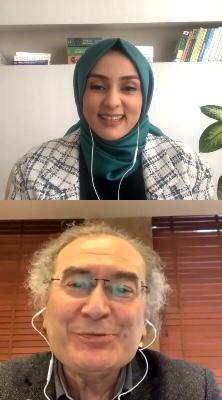
“Such individuals are the biggest obstacle to communication”
Prof. Dr. Nevzat Tarhan emphasized that individuals with difficult personalities often have experienced childhood traumas; “The concept of difficult personalities usually emerges more in close relationships and in the environment. Individuals with difficult personality structures are those who disrupt harmony in business relationships, family relationships, and professional relationships. The vast majority do not know that what they do is wrong. But some do know and see it as a method. Some try to solve the problem with anger, others with stubbornness. Such individuals are the biggest obstacle to communication. We see the biggest difficulties in family and couples therapy with these individuals. They resist treatment unknowingly. Some of these individuals are also success-oriented. Is success important, or peace? The capitalist system also nurtures these individuals. There are performer personalities, and theatrical individuals are also in this group. If we can analyze such personalities a bit, there is a language they understand. If we approach them with the language they understand, we enable these personalities to improve. Most of these individuals have experienced childhood trauma. They have unknowingly forgotten the trauma. However, the internal defense they formed regarding that trauma is how their current complex behaviors have emerged within their plan.”
“We all have narcissistic tendencies within us”
Tarhan explained how to understand narcissistic individuals; “The most prominent characteristics of narcissistic individuals are that they are type B personalities. Type B personalities are individuals with undeveloped empathy skills. That is, they do not consider the feelings of the other person. They look at all events only from their own perspectives. Generally, these types of personalities unknowingly harm relationships. But there are also some narcissists who play a very humble role. In other words, they are opportunistic individuals who are closed to criticism. They are always nourished by praise. When someone criticizes them, they see that person as an enemy. If you are at the beginning of a relationship, you need to pay attention to certain things to live with such people. Because there is also a language these individuals understand. The fear of losing what they value pushes them towards change. When they start to lose what they love, they begin to question themselves. The important thing is for the person to be well-intentioned and open to help. Because we all have narcissistic tendencies within us. There are twelve personality types in humans. We are born with one of them. We have innate genetic predispositions. But if the person is well-intentioned, they can develop these personalities and reveal their talents. Sixty percent of these individuals can change, the others come from genes. If the person wants to, they change,” he said.
“Children are raised like little rulers of the house”
Prof. Dr. Nevzat Tarhan spoke about the consequences of parents' wrong attitudes, stating; “If a parent wants to raise their child as a narcissist, they should do everything the child wants. If you fulfill their every wish and say yes to every behavior, childhood may go well, but with the onset of adolescence, their demands begin to grow. First, they ask for a toy car, then a small car. Later, they start wanting everything their parents own. When they grow up, they cannot control their impulses. Currently, in the USA, narcissism is called the plague of the era. There is a narcissistic education system. There is a child-centric education system. There are well-intentioned parents who say, 'I suffered, my child shouldn't suffer.' Because of this, children are raised like little rulers of the house. After a while, these children's desires grow, thinking, 'What I say always happens anyway.' As they grow, these desires become unfulfillable. A child who gets everything they want at home becomes aggressive and has temper tantrums when they don't get what they want at school. The child who is the king of the house also wants to be the king of the school. Because such children receive a lot of love from their families, they become hungry for love, insatiable for love.”
“In marriage, a horizontal relationship, not a vertical one, needs to be established”
Tarhan, speaking about dependent personality traits in marriage, said; “This is very common in our culture. Married couples ask their families everything. And parents like this. In reality, couples need to solve their problems among themselves. In marriage, a horizontal relationship needs to be established, not a vertical one. In a horizontal relationship, husband and wife will establish the relationship. If a child takes the side of the mother or father, there is a vertical relationship there. Polarization also begins there. For example, if a daughter tells her mother everything or a son tells his father everything, a vertical relationship has formed in such situations. That marriage will not work. Conflict will always arise. First, they will establish a horizontal relationship among themselves and try to solve the problem. If it doesn't work, then both of them will go to the parents as arbitrators. If married individuals tell their parents everything, a trust issue arises. No one wants a spouse who doesn't talk to them but talks to their family. The home needs to be a safe space,” he noted.
News: Aleyna Yıldırım
Share
Update Date: February 26, 2026
Creation Date: December 07, 2020
Request a Call
Other News
- Experts warn: 'Instead of memorizing letters, teach pencil grip, scissor use, and coloring'
- School fear and school love both start in the family!
- Family is not merely transforming, it is being battered under a serious assault
- Artificial intelligence opens the door to early diagnosis in autism!
- Artificial intelligence doesn't end engineering, it transforms it!