

Stating that there are lessons all humanity should learn from the Covid-19 epidemic affecting the world, Prof. Dr. Nevzat Tarhan, said, “Our freedom was restricted, but our ability to delay gratification developed. Our physical and spiritual comfort decreased, but we had more time to improve ourselves and strengthen family ties. Our pleasure and speed-oriented lives were restricted, but we were able to discover new interests. We learned that not only economic prosperity but also spiritual prosperity is important.”
Content
Prof. Dr. Nevzat Tarhan: “The Pandemic Should Be an Opportunity to Learn Lessons”
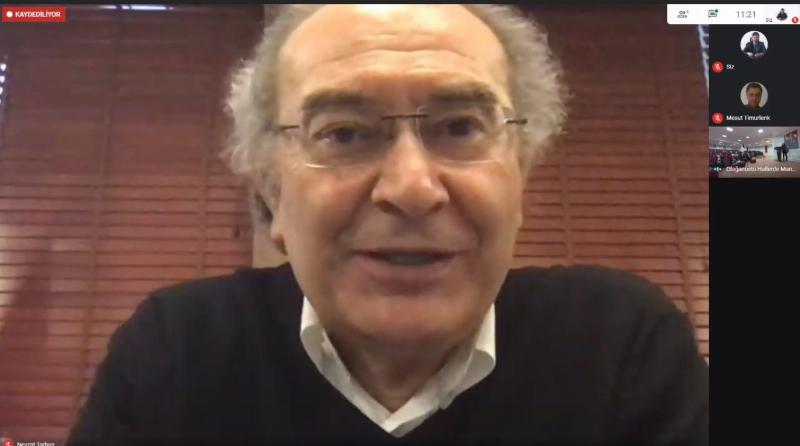
Üsküdar University Founding Rector, Psychiatrist Prof. Dr. Nevzat Tarhan, attended the “Symposium on Spiritual Counseling and Guidance in Extraordinary Times” organized by Kütahya Dumlupınar University as a keynote speaker. Tarhan stated that there are lessons to be learned from the pandemic period, drawing attention to the positive spiritual effects of the Covid-19 epidemic on individuals, despite its many negative consequences.
The Pandemic Had Effects on Maturation
Prof. Dr. Nevzat Tarhan stated that Üsküdar University conducted a study in April, after the onset of the Covid-19 pandemic, involving 6,318 people in 81 provinces to understand the pandemic's effects on maturation, and significant results were obtained from this research.
Prof. Dr. Nevzat Tarhan stated that in the research, they examined psychological processes, perceptions, anxieties, fears, as well as maturation, and later turned this study into a book. “In terms of maturation, we had 6 questions from the Post-Traumatic Growth Inventory. Some results showed that the rate of those who said the priority of things I value in life changed was 59%. The rate of those who said their interest in spiritual matters increased was 49%, those who understood they could cope with difficulties was 56%, and those who could accept events as they are was 56%. These are people who experienced change compared to before. 48% started putting more effort into their relationships, and 74% said they better understood the value of what they had. The equivalent of these six concepts in our culture is patience and gratitude. Covid-19 actually caused similar developments worldwide. In people's minds, these six questions yielded results that could teach individuals unaware of these things in their heedlessness, characteristics such as valuing what you have and showing importance to the rights of others,” he said.
Strong and Weak Points Must Be Determined Before a Crisis
Prof. Dr. Nevzat Tarhan said, “There are psychological factors in crisis management. It is important for individuals and institutions to include psychological factors in their crisis plans. A psychologist working on psychological factors in crisis management received the Nobel Memorial Prize in Economic Sciences in the 2000s. Following those studies, the first is to have a crisis plan, the second is to conduct risk calculations and work on risk management. If a person conducts a risk analysis before a crisis, it means there is preparation for the crisis. The third is knowing a person's strengths and weaknesses before a crisis. Just as a psychological SWOT analysis is done, a social SWOT analysis should also be conducted. Societies, companies, or country administrations should definitely have a SWOT analysis conducted by independent observers and auditors,” he said.
Routine Should Be Continued After the Crisis Hits
Prof. Dr. Nevzat Tarhan also emphasized the importance of calculating opportunities and threats when managing a crisis and taking a position to turn the crisis into an advantage before it occurs. “When a crisis occurs, one must know that breakdowns happen at the weakest points. Life is like a chain. The strongest part of the chain is its weakest link. Breakages and ruptures occur there during a crisis. In a storm, the weak and dry branches of trees break first. In a crisis, one must know that nothing will resolve itself without leaving damage. In other words, one must approach the crisis like a storm. Just as we take precautions before a storm, we must also take precautions for these types of crises. And after the crisis hits, we must be able to continue our routine,” he said.
A Psychiatric Disease Explosion May Occur After the Pandemic
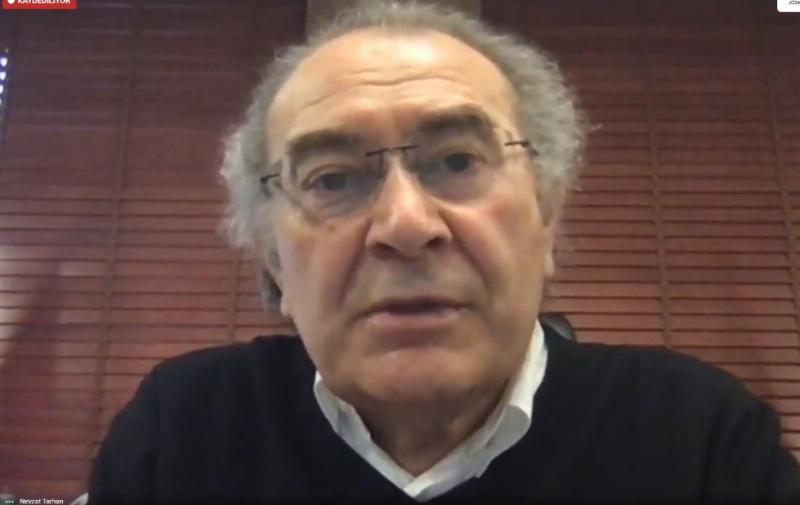
Prof. Dr. Nevzat Tarhan, emphasizing the importance of cooperation in the fight against the Covid-19 pandemic, warned, “China states in its Covid-19 report that they defeated the pandemic through cooperation. The pandemic is a psychological phenomenon. There are pandemic experts, public health experts, and epidemic specialists working. These people need to inform the public more. When only explained in medical terms, people's anxiety increases. While trying to correct some careless people, the mental health of the entire society deteriorates. Instead of giving exaggerated virus news that scares people from their routine, the message should be given: 'Take these precautions regarding the virus, then continue your routine work.' If we cannot do this in crisis management, we will have mismanaged the pandemic. This time, there may be a post-pandemic psychiatric disease explosion after the pandemic; there are precedents for this in the world.”
We Also Need to Prepare for the Post-Pandemic Period
Prof. Dr. Nevzat Tarhan, emphasizing the need to take precautions for the post-pandemic period, said, “For example, what happened during the pandemic? There was less economic prosperity, less psychological well-being, less physical comfort, fewer social relationships, less trust, less happiness. But against this, there was more poverty, more income inequality, more health problems, more social isolation, more loneliness, psychological isolation, more anxiety about the future, more fear of death, more frequent depression, panic, and social problems. Therefore, we also need to prepare for the post-pandemic period. If we don't take measures about what we will do after it passes, no pandemic, no epidemic, no crisis will pass without leaving damage. Those who suffer the least damage are those who can manage the crisis correctly. If you leave a crisis to its natural course, what is the result if a person with a broken arm treats themselves? The arm remains disabled. Therefore, crisis intervention is needed for such situations. The crisis must be managed correctly. These are the biggest lessons to be learned.”
If Western Civilization Does Not Take Precautions, the Pandemic Will Collapse It
Referring to a joint study by Manchester University and the BBC in England, involving over 55,000 people, Prof. Dr. Nevzat Tarhan said, “Here, the loneliness rate among those aged 16-24 was found to be 40%. This is the digital isolation rate. In older ages, this rate is 27%. In 2018, the UK announced the establishment of a Ministry of Loneliness. Looking at the world, Western civilization was already in a crisis. If Western civilization does not take precautions, the bad consequences of this crisis will emerge. When did Rome suffer its greatest defeat? The collapse began after the plague epidemic. If Western civilization does not take precautions, the current pandemic will collapse it,” he said.
Is the Pandemic a Danger or an Opportunity?
Prof. Dr. Nevzat Tarhan, noting that there are lessons to be learned from the pandemic, said, “Is the pandemic a danger or an opportunity? Our freedom was restricted, but our ability to delay gratification developed. Our physical and spiritual comfort decreased, but we had more time to improve ourselves and strengthen family ties. Our pleasure and speed-oriented lives were restricted, but we were able to discover new interests – of course, for those who could learn these lessons. We couldn't exercise some of our rights, but we also realized that others have rights. We were very harsh on nature, but our awareness of global pollution and climate change increased. For example, Uludağ could be seen from Istanbul. Economic and social mobility can pollute the environment. We saw all this. We learned that not only economic prosperity but also spiritual prosperity is important.”
The Education System Should Also Teach How to Be a Good Person…
Prof. Dr. Nevzat Tarhan stated that humanity has seized a new opportunity as a philosophy of life, and said, “Please let's make good use of this opportunity. Let our education system seize this opportunity. The education system should not only teach academic success but also how to be a good person.”
At the symposium, Prof. Dr. Şahmurat Arık, Director of DPÜ Graduate Education Institute, Prof. Dr. Kâzım Uysal, Rector of DPÜ, Dr. Kerem Kınık, President of Kızılay, and Prof. Dr. Ali Erbaş, President of Religious Affairs, also delivered opening speeches.
Share
Update Date: February 27, 2026
Creation Date: December 18, 2020
Request a Call
Other News
- Social responsibility courses moved to the field
- Erasmus+ Orientation Week completed at Üsküdar
- Prof. Nevzat Tarhan: “Brain secretes ‘dark glue’ in social media lynchers!”
- Prof. Nevzat Tarhan: “Every segment of society should be able to say, ‘This constitution is my constitution!’”
- OHS releases guide for safe operation of industrial robots