

Prof. Dr. Nevzat Tarhan, who made the opening speech of the Pandemic and Earthquake Psychology Symposium organized by Üsküdar Üniversitesi, emphasized the importance of approaching natural disasters with crisis management. Stating that the biggest enemy in terms of occupational health and safety is indifference, Prof. Dr. Nevzat Tarhan said, “Our greatest need is awareness. For this reason, society has a serious need for enlightenment.” Tarhan noted that taking precautions in pandemics and natural disasters is a primary moral element, adding, “Professional responsibility comes in the second dimension.”
Content
Prof. Dr. Nevzat Tarhan: “Our Biggest Enemy is Indifference”
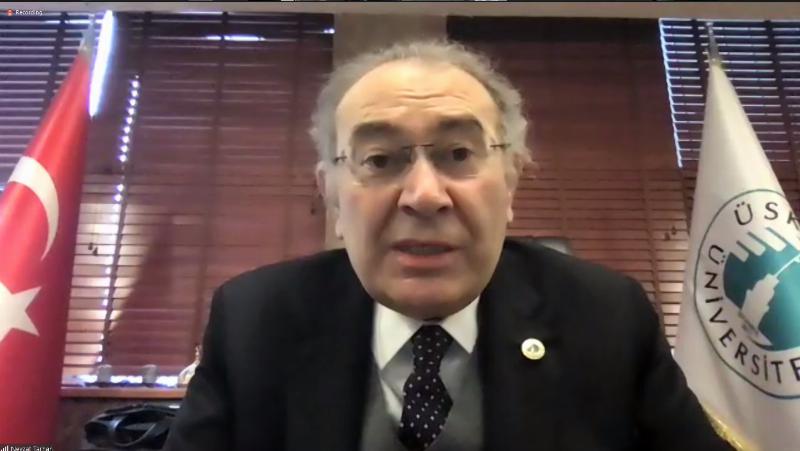
Experts in their fields gathered at the 'Pandemic and Earthquake Psychology Symposium' organized by Üsküdar Üniversitesi Continuous Education Application and Research Center (ÜSEM) and Üsküdar Üniversitesi Occupational Safety, Health, Environmental Health Application and Research Center (ÜSGÜMER). The symposium was held online as part of the measures taken in the fight against the pandemic.
Prof. Dr. Nevzat Tarhan: “Natural disasters require a crisis management approach”
Üsküdar Üniversitesi Founding Rector Prof. Dr. Nevzat Tarhan stated in his opening speech that there are two important issues in crisis management, one of which is to make a plan and risk analysis.
Prof. Dr. Nevzat Tarhan: “Risk analysis and planning should be done before a crisis”
Stating that earthquakes and pandemics are natural disasters, Prof. Dr. Nevzat Tarhan said, “One is a biological natural disaster, and the other is a natural disaster related to earth layers. We also emphasize the psychological dimension of natural disasters. When we consider it as a psychological dimension, people should approach natural disasters as a crisis management situation. For example, a storm is also a natural disaster. But because storms occur every year, people take precautions against them. Our relationship with earthquakes and pandemics should be like our relationship with storms. Because this cannot be achieved, and because it is unpredictable when such situations will occur, people are caught off guard by natural disasters. Crisis management has two important rules. The first is to plan for a crisis in advance. If you have done a risk analysis before the crisis and have a plan for the crisis, that crisis will be overcome with the least damage. Humankind has disturbed the balance in nature. Nature has its own laws; if you don't obey them, it makes you pay the price without mercy. The laws of creation have set such a system in nature.”
Prof. Dr. Nevzat Tarhan: “Occupational health and safety gain importance in disasters”
Prof. Dr. Nevzat Tarhan stated that Turkey is located in a very risky geography both in terms of earthquakes and social and economic mobility, emphasizing the necessity of taking precautions accordingly. Prof. Dr. Nevzat Tarhan stated that the biggest aim of Occupational Health and Safety programs is this, and said, “Creating awareness in society about this and conducting inspections are among the plans of the occupational health and safety department. In Turkey, there was a significant decrease in work accidents until before the pandemic. The decrease continues now. You will make large investments and take precautions in a place. Even if those precautions are not needed for a long time, they will save lives when they are needed. Life is like a chain. The strongest part of the chain is its weakest link. At the moment of tension, it breaks and separates from there. For this reason, in a crisis, the break occurs where the weakest point is.”
Prof. Dr. Nevzat Tarhan: “Our biggest enemy is indifference”
Prof. Dr. Nevzat Tarhan stated that those who do not take precautions during pandemics and natural disasters and those in the risk group are the first to be affected, and said, “For this reason, society has a serious need for enlightenment. Currently, our biggest enemy in terms of occupational health and safety is indifference. Our greatest need is awareness. If there were an earthquake in Turkey right now, a scenario of what kind of risk it would pose needs to be written. It has been written, studies have been carried out, but there is a very serious problem of disregard and postponement regarding investment. If Turkey is a ship, the benefit of the ship is more important than the benefit of individuals. In crisis situations affecting the ship, there is a need for individuals who take responsibility, not those who shirk it.”
Stating that “the moral and conscientious dimension of occupational health and safety is very important,” Prof. Dr. Nevzat Tarhan said, “In profit-oriented capitalist systems, investment in occupational safety is considered contrary because it is a necessity. A boss in that system does not want to invest in occupational safety. In such situations, awareness is needed. Written law is also important for us to protect ourselves. Furthermore, monthly reports on occupational health and safety are of great importance. If an occupational health and safety specialist provides reports without control when giving the monthly report, conscientious responsibility begins there.”
Prof. Dr. Nevzat Tarhan: “What protects humans is accountability”
Reminding that taking precautions during pandemics and natural disasters is a primary moral element, Prof. Dr. Nevzat Tarhan said, “Professional responsibility comes in the second dimension. If there is professional responsibility but no conscientious responsibility, that person can make mistakes. What protects people from threat and disaster is not being well-intentioned, patriotic, or religious. What protects people is accountability. Being accountable to laws happens through laws. Being accountable to society happens through social norms and traditions. Being accountable for hidden evil happens through conscience. Conscience is humanity's most sacred inner guardian, its mental jury. In divine teachings and holy books, conscience is seen as the place where Allah manifests. Not only physical precautions but also human precautions are important. For this reason, we have emphasized the importance of conscience in the psychological and spiritual dimensions to occupational safety specialists.”
Prof. Dr. Şefik Dursun: “We will learn to live with the pandemic”
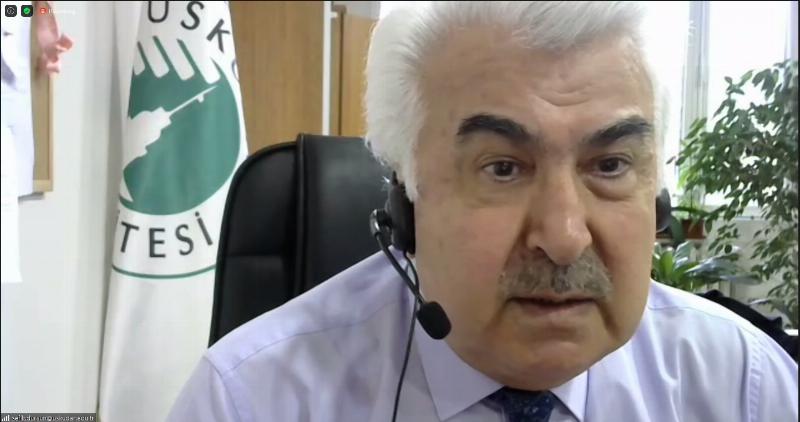
Üsküdar Üniversitesi Faculty of Health Sciences Dean Prof. Dr. Şefik Dursun stated that the pandemic, which is effective all over the world, has changed our lives and pointed out the importance of taking psychological precautions in the fight against the pandemic. Stating that the pandemic has changed our lives with its many effects, Prof. Dr. Şefik Dursun said, “We will learn to live this way.”
Prof. Dr. Şefik Dursun stated that Üsküdar Üniversitesi, a thematic university related to health, and its application partner NPİSTANBUL Beyin Hastanesi have carried out many important studies in the field of psychiatry and psychology, and said, “Today, they organized a program under the chairmanship of Occupational Health and Safety Department Head Rüştü Uçan to evaluate the psychology that emerged regarding the pandemic and earthquakes. I congratulate them. Üsküdar Üniversitesi is one of the leading universities that did its best during the pandemic period.”
Dr. Lecturer Rüştü Uçan: “The pandemic process is difficult to overcome in multi-story buildings”
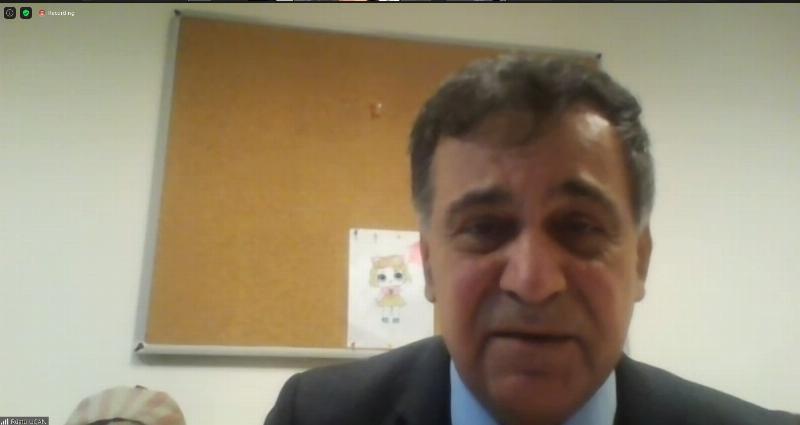
Üsküdar Üniversitesi Occupational Health and Safety Department Head Dr. Lecturer Rüştü Uçan pointed out in his opening speech that the preference for multi-story structures increases risks in natural disasters like earthquakes and fires, or in events caused by human factors. Uçan noted that various security problems also arose in high-rise buildings during the pandemic process, stating that single or two-story structures are preferred in Europe and America, and said, “While we cannot find living space in high-rise buildings, they easily overcome the pandemic in their gardens.”
Dr. Lecturer Rüştü Uçan pointed out that common areas in high-rise buildings have increased, and their disinfection processes are extremely difficult, adding, “The need for green areas for family members cannot be met. Because in such large buildings, people are confined indoors and can face major psychological problems.”
Dr. Lecturer Rüştü Uçan ultimately underlined the need for healthier construction instead of high-rise buildings.
Earthquake discussed in all its aspects…
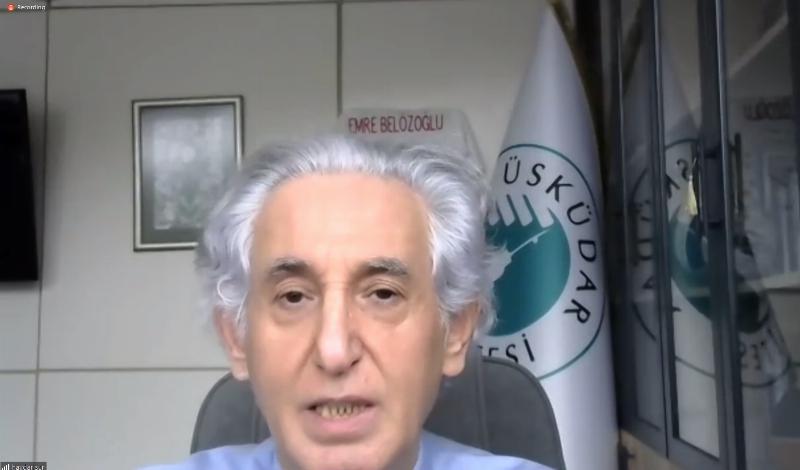
At the symposium, Assoc. Dr. İsmail Barış, who was the Mayor of Gölcük in 1999 and is currently Üsküdar Üniversitesi Rector's Advisor and Head of the Social Services Department, explained the effects of the Marmara earthquake in his presentation titled “Human Before and After the Earthquake.” Üsküdar Üniversitesi Faculty of Medicine Dean, Head of Public Health Department Prof. Dr. Haydar Sur gave a speech titled “Epidemiology of Earthquakes.” Üsküdar Üniversitesi Faculty of Communication Dean, İLİMER Director Prof. Dr. Nazife Güngör participated with her presentation titled “Crisis Communication Management in Disaster Situations.”
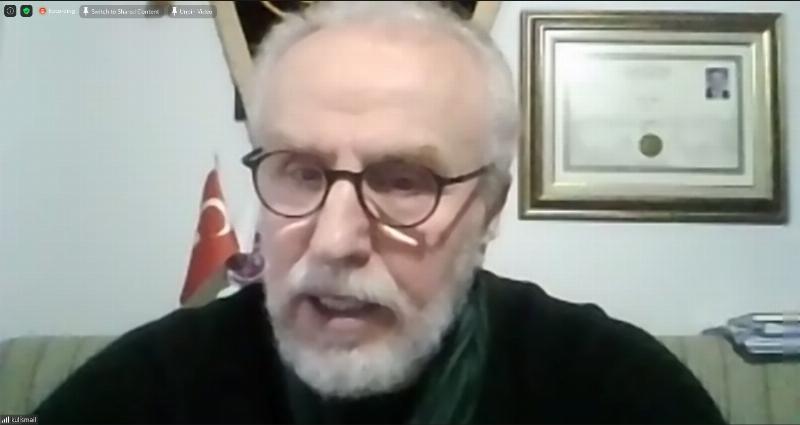
Üsküdar Üniversitesi Faculty of Humanities and Social Sciences, Psychology Department Dr. Lecturer Esra Işık, with her presentation “Post-Earthquake Mental Health and Psychosocial Services”; Üsküdar Üniversitesi AİLEMER Director, Faculty of Humanities and Social Sciences, Psychology Department Dr. Lecturer Mert Akcanbaş, with his speech titled “Factors Increasing the Severity of Trauma” participated.
Üsküdar Üniversitesi Faculty of Medicine, Family Medicine Department Head Dr. Ayhan Özşahin made his presentation titled “Minimum Standards in Disaster Aid: International Sphere Project.”
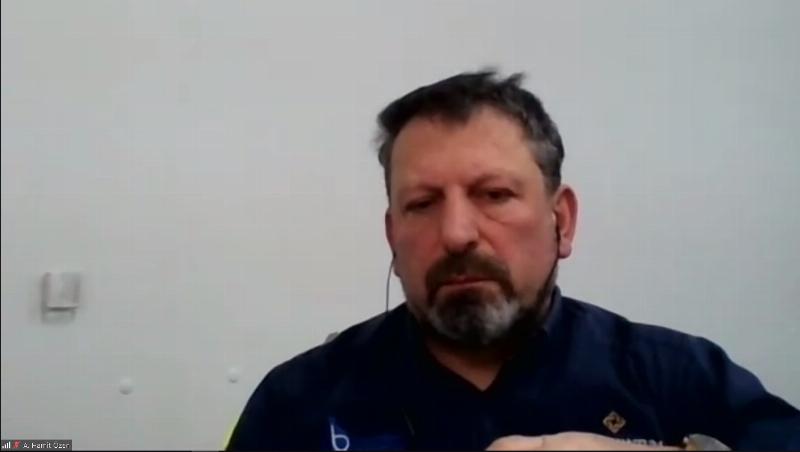
Çayeli Bakır İşletmeleri A.Ş. OHS, Environment and Security Manager A. Hamit Özen participated in the symposium with his speech titled “The Role of Rescuers in Earthquakes.”
Dr. Lecturer Rüştü Uçan and Üsküdar Üniversitesi ÜSEM Training Specialist Bengisu Altınten served as moderators.
Share
Update Date: February 27, 2026
Creation Date: December 21, 2020
Request a Call
Other News
- The book that read today's digital threats in 2014: Being a Conscious Family
- Experts warn: 'Instead of memorizing letters, teach pencil grip, scissor use, and coloring'
- School fear and school love both start in the family!
- Family is not merely transforming, it is being battered under a serious assault
- Artificial intelligence opens the door to early diagnosis in autism!