

Psychiatrist Prof. Dr. Nevzat Tarhan stated that a person can be defined as old if they cannot step out of their comfort zone, cannot learn new things, are not surprised, think they know most things, live their youth memories, and constantly dwell on the past. He added that old age and aging start in the brain. Prof. Dr. Nevzat Tarhan noted that the motivation to learn new things and take risks keeps the brain young, saying, “When a person says ‘I’ve grown old,’ the brain categorizes itself as aging.” Tarhan emphasized the importance of positive interaction within the family, stating that loneliness and social isolation are the biggest problems for the elderly.
Content
Prof. Dr. Nevzat Tarhan: “Old age and aging start in the brain”
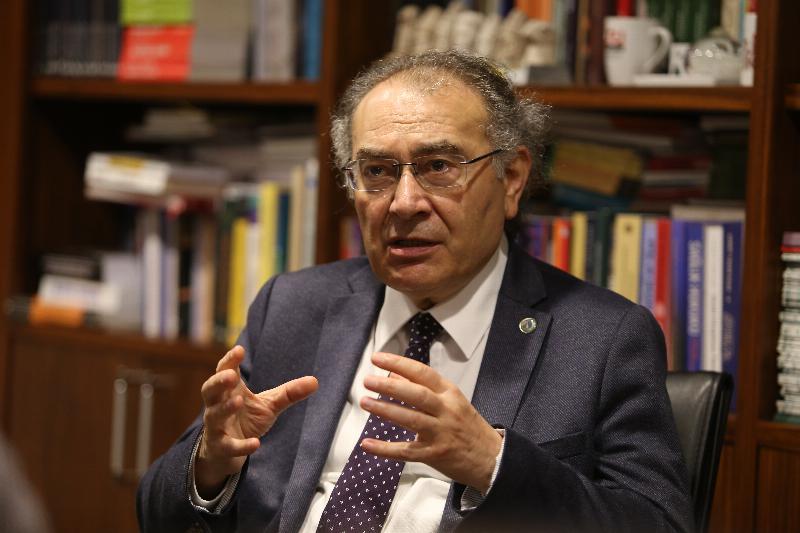
Üsküdar University Founding Rector, Psychiatrist Prof. Dr. Nevzat Tarhan, made evaluations regarding the psychology of aging and old age.
Modernism viewed the elderly as a burden
Prof. Dr. Nevzat Tarhan noted that the elderly are not shown the respect and interest they deserve, stating that modernism has had a significant impact on this. Prof. Dr. Nevzat Tarhan said, “Modernism brought us many positive things, but it had negative effects on our culture. One of these effects was the perception that viewed the elderly as a burden. Under the influence of the capitalist system, ideas emerged in Europe before the Second World War suggesting that people who reached a certain age should die. Thoughts proposing that elderly individuals were useless if they were no longer productive… Elderly individuals began to be considered factors increasing operational costs. Many incentives were provided, such as leaving the elderly to their own devices or even euthanasia.”
Dialogue with the elderly weakened
Prof. Dr. Nevzat Tarhan stated that this cultural influence also reflected on some segments of society, saying, “The spread of egocentrism, especially the increase in people among the youth who only think of their own pleasure and comfort, weakened dialogue with the elderly. Their bonds weakened and broke. The weakening of the extended family and the absence of wise elders, as in the past, have contributed to this. In the past, there were wise elders who gathered and organized the family, solved problems, and made correct decisions. However, beautiful approaches concerning the elderly still continue in our culture, despite all the wear and tear.”
Loneliness is the biggest problem for the elderly
Prof. Dr. Nevzat Tarhan noted that the biggest problem for the elderly today is loneliness and social isolation, stating, “Globally, especially compared to Western countries, this problem is less prevalent here. This reduction is actually related to our cultural codes. Time is now changing very rapidly. Previous sociological changes used to occur every 30 years. Now, sociological changes have fallen to one in three years.” Tarhan added, “Currently, the biggest psychosocial problem for the elderly is loneliness. When I took my associate professorship exams in '90, it was one of the questions. Our professor Eflatun at Çapa Medical Faculty asked, ‘What is the biggest psychosocial problem for the elderly?’ I said ‘Loneliness.’ I explained it, and the same truth continues.”
The definition of old age has been redefined
Prof. Dr. Nevzat Tarhan noted that the Western world realized this understanding was wrong and stated that the definition of old age has been redefined, saying:
“They started valuing the elderly again. They are working to include the elderly in social life. They redefined old age. UNESCO has a wonderful definition of old age. It says, ‘When does a person grow old? A person is old if they cannot step out of their comfort zone.’ Secondly, a person is old if they cannot learn new things, are not surprised, and think they know most things. If they think ‘I know everything,’ if they have closed themselves off from asking and learning, if they are not curious, do not explore, and live in past memories, live their youth memories, and constantly contemplate the past, then they are old.”
Curiosity and wonder, taking risks keep the brain young
Prof. Dr. Nevzat Tarhan stated that a person's motivation to learn new things, being surprised, being curious, wondering, and taking risks are what keep the brain young, saying, “If we liken our body to a state, the brain is the government. If the brain functions healthily, all organs function healthily. Therefore, old age actually starts in the brain. When a person says ‘I’ve grown old,’ the brain categorizes itself as aging. It takes a position related to it, starts avoiding things related to it. It establishes connections and makes perceptions related to it.”
There are four groups of aging
Prof. Dr. Nevzat Tarhan noted that there are four groups of aging, listing them as chronological, biological, psychological, and sociological aging. Prof. Dr. Nevzat Tarhan said, “Chronological age is the age on our identity card. Biological age is related to our body. If we take good care of ourselves, pay attention to what we eat, drink, and our lifestyle, our chronological age might be 70-80, but the person might appear 50-60 years old. Psychologically, the same person might be 70-80 years old, but you might see them as psychologically energetic. They are learning new things, learning computers, learning new programs. If they are dynamic, go to work, and continue to be productive, their psychological age is younger than their chronological age, or vice versa.”
Sociological aging wears a person down
Prof. Dr. Nevzat Tarhan stated that sociological age is a person's ability to behave in harmony with the society they live in, saying, “If a person is lonely against their will, beyond chosen solitude, if they are isolated, if no one consciously excludes them but they remain alone against their will, if they have avoidance behaviors, these individuals wear out more. People who remain alone are sociologically referred to as elderly…”
Mental flexibility slows down aging
Tarhan stated that people without mental flexibility age faster, saying, “This situation usually occurs in conservative age groups. That is, they lack mental flexibility. They want everything to conform to their own conditions. If sitting, standing, eating, or doing things doesn't suit them, they get angry. They say, ‘It's better if it's not like this.’ These individuals are stubborn and cannot show mental flexibility. They cannot adapt and are always tense. They clash and argue with those around them. People with mental flexibility, on the other hand, are always cheerful. They can adapt to their environment. Such people also adapt to care homes.”
Mental flexibility weakens in the elderly
Tarhan emphasized that mental flexibility is the most important personality trait sought to be instilled in therapies, saying, “The goal is to develop mental strategies and teach them. A person has a method learned and automatically applied in an event. If it doesn't work to solve a problem, immediately bringing in a mental strategy and applying another method, and if that doesn't work, applying yet another method… The situation we call mental flexibility, or mental flexibility, weakens in the elderly. Especially a reflexive traditionalism to protect oneself occurs.”
We have a system that cares for the elderly
Prof. Dr. Nevzat Tarhan stated that it is recommended for elderly individuals to live in their accustomed environment, but sometimes they can also stay in nursing homes, saying, “As a society and as state institutions, we have a system that can very easily ensure that elderly people are not left on the streets. There are many elderly care institutions and facilities like Darülaceze. They provide good comfort for elderly individuals, addressing their mental needs. They even try to meet their psychological needs. They try to ensure their comfort. Those people can produce beautiful things there. And when they produce, they feel better about themselves.”
Why do grandparents get along well with grandchildren?
Prof. Dr. Nevzat Tarhan noted that the most important thing for an elderly person is to be asked for their opinion and to be told that their ideas are needed, saying, “It is very important to ask that person's thoughts on any situation and to try to benefit from their experiences. That's why grandparents and grandchildren get along so well. Grandfathers, grandmothers, or paternal grandmothers have a desire and impulse to tell and share. Children also have a desire to ask and learn. These two combine. Middle-aged parents are always busy. They cannot spend time with children. This is where the experience of elders comes in.”
Children will learn life from transferred experiences
Prof. Dr. Nevzat Tarhan stated that some parents do not allow their children to interact with elderly family members, saying, “Some mothers and fathers do not support their child having contact with older individuals. These people act on thoughts like, ‘My mother and father are changing my child's behavior.’ However, children will learn life from their elder family members. We cannot raise a child in a glass bubble, can we?”
A person open to new things has not aged
Prof. Dr. Nevzat Tarhan noted that another situation emerging in elderly individuals is the fear of novelty, saying, “Some elderly people view new things as a threat. In such situations, they are closed off to new experiences. Therefore, a person who is open to new experiences, regardless of age, has not aged. We don't say the psychology of old age, but the psychology of aging. Aging can be slowed down, stopped, delayed, but when you say old age, it seems as if it is an inevitable fate.”
Prof. Dr. Nevzat Tarhan emphasized the importance of elderly individuals being part of a social group, saying, “That's why elderly people who cannot join a social group decline rapidly. Spending time with our elder family members, chatting with them, and thanking them is like medicine to them. Expressing gratitude to them, thanking them for enabling us to reach this day, and offering words of appreciation and approval are like gifts to them and are very valuable.”
Share
Update Date: March 01, 2026
Creation Date: October 03, 2022
Request a Call
Other News
- Social responsibility courses moved to the field
- Erasmus+ Orientation Week completed at Üsküdar
- Prof. Nevzat Tarhan: “Brain secretes ‘dark glue’ in social media lynchers!”
- Prof. Nevzat Tarhan: “Every segment of society should be able to say, ‘This constitution is my constitution!’”
- OHS releases guide for safe operation of industrial robots