

Emphasizing that the martyrs and veterans of Çanakkale have made great efforts for us to live today, Psychiatrist Prof. Dr. Nevzat Tarhan stated that encoding information in memory with vivid emotions prevents mental and social fragmentation. Prof. Dr. Nevzat Tarhan noted that national days create a common ground and determine the nation's destiny, saying, “If one layer of society cannot communicate with another, social schizophrenia emerges in such situations, leading to disintegration. As a solution, we must certainly elevate the emotional fellowship during national days.”
Content
Prof. Dr. Nevzat Tarhan: “National days determine the nation's destiny”
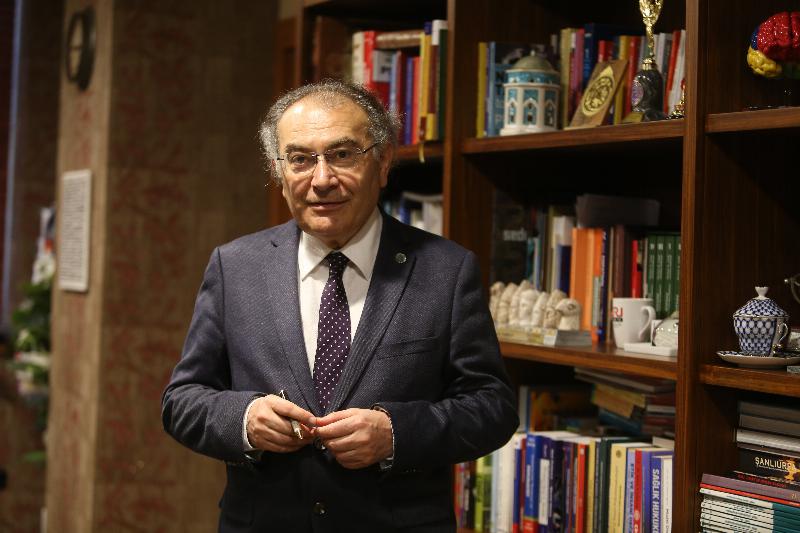
Üsküdar Üniversitesi Founding Rector, Psychiatrist Prof. Dr. Nevzat Tarhan made evaluations and shared his recommendations on the importance of national days on the occasion of March 18 Çanakkale Victory.
Martyrs and Veterans Have Made Great Efforts for Our Present Day
Prof. Dr. Nevzat Tarhan stated that the saying 'Those who do not know their past cannot write their future' applies to both individuals and society, adding, “This culture in an individual is called micro-culture. The culture in society is called macro-culture. If we can organize programs and walk freely in our streets today, it is due to the immense efforts of the Çanakkale martyrs and veterans. Those born in 1900, at the age of 15, were conscripted. No students could be admitted to medical school at that time, so there were no graduates. Sources mention 400-500 medical officers. This is a very great sacrifice.”
The Çanakkale Victory Was Effective in Preventing the Looting of Istanbul
Emphasizing that Çanakkale played a huge role in preventing the looting of Istanbul even if the war was lost, Prof. Dr. Nevzat Tarhan said, “It is important to know this. Anafartalar and Arıburnu had a very significant role. Mustafa Kemal was noticed for his success at Anafartalar when he was a staff officer, and he was assigned to the Anatolian movement due to his leadership. The War of Independence was actually a movement of the Ottoman 'special forces' as they are now called, or 'Teşkilat-ı Mahsusa,' as it was called then, meaning an irregular warfare unit. Fevzi Çakmak, while Chief of General Staff, went and joined the movement in Ankara. They were able to do this thanks to the training they received on what to do when the country was occupied. On this occasion, we also witnessed the military quality of the Ottoman Empire.”
The Commemoration of National Days Began During the Özal Period
Prof. Dr. Nevzat Tarhan stated that national holidays are defined as national days, saying, “They are not called 'bayram' (religious holiday), but rather 'gün' (day). National days did not exist in earlier times. During our student years, there was no Çanakkale Victory commemoration day in regular high schools. It only existed in military high schools. We didn't notice this. During Turgut Özal's time, the Japanese came. They used to have all elementary school students visit Hiroshima and Nagasaki in groups. Özal asked them why they did this. In response, they said, 'This is an event that keeps us together. It's a trauma for us, but we both commemorate those who died there and reflect on what lessons we learned from this trauma. This is our day to share our feelings.' A motivation to commemorate these important days in our history was formed in us as well.”
Information in Memory Must Be Coded with Vivid Emotions
Prof. Dr. Nevzat Tarhan stated that the Çanakkale Victory is the most important national day and continued his words as follows:
“All students in high school, middle school, and elementary school are looking for a beautiful emotional sharing about Çanakkale because the information in our individual memory needs to be coded with vivid emotions. When coded with vivid emotions, information becomes permanent and is not forgotten. We can say that these events, commemorations, and ceremonies are the coding of information in scientific memory with vivid emotions. They prevent mental fragmentation. If there is no mental fragmentation, you cannot fragment a society. If there is mental division, then mental fragmentation occurs. Then emotional fragmentation occurs, and the conscience of society deteriorates. Injustices occur. Public conscience deteriorates. When it deteriorates, divisions and fragmentations occur. Therefore, public conscience, in old terms, means 'Şahs-ı Manevi' (Moral Person/Entity).”
National Days Determine the Destiny Line of Our Nation
Prof. Dr. Nevzat Tarhan stated that one of the wrong teachings of modernism was the deification of society, saying, “There was such a thesis, but it was understood that this thesis was not correct. It seriously promoted statism by claiming that society is sacred, divine, and the individual is not important. In response to this, humanism emerged. Humanism, in contrast, advocated the thesis that 'the individual is important, society is not important.' It is important to strike a balance between the two. The most important element that holds social conscience together is the celebration of individual emotions and individual knowledge with emotions. National days create a common ground. They determine the destiny line of our nation.”
It Is Possible to Prevent Social Schizophrenia in Society
Prof. Dr. Nevzat Tarhan stated that it is possible to change the destiny line of our nation if we revive our positive aspects and social character strengths, saying, “If a person is not at peace with themselves, they cannot invest in the future and cannot show development. Therefore, a person at peace with themselves is important. Likewise, society must also be at peace with itself. Schizophrenia is the inability of one part of the brain to communicate with another part, acting separately. If one layer of society cannot communicate with another, social schizophrenia emerges in such situations, leading to disintegration. As a solution, we must certainly elevate the emotional fellowship during national days. These are especially important in turbulent situations. They facilitate our emergence from turbulent situations.”
Communication Must Come First for Mutual Aid and Sharing in Society
Emphasizing the importance of common preferences, shared affections, and avoidance reactions as part of a common culture, Prof. Dr. Nevzat Tarhan said, “Having a common culture has formed the fundamental dynamics of a society. Cultural commonality and then comradeship (ülküdaşlık) are also important. Just as an individual has an ego ideal, so does the collective ego have an ideal. These are the situations we call 'ülkü' (ideal), 'mefkure' (lofty ideal), and 'ideal'. National days are periods when these are remembered, understood, and passed on to our children and youth. In any society, there must first be communication for mutual aid and sharing to exist. After communication, sharing and mutual aid also occur. These do not happen without communication.”
Peaceful Competition Ensures Progress in Society
Stating that societies are like families, Prof. Dr. Nevzat Tarhan continued his words as follows:
“There is not constant tranquility within a family. Peaceful competition ensures progress in society, fosters development, saves people from laziness, and creates dynamism. Progress occurs in dynamic societies. For example, Buddhists have mutual aid but no competition. That's why they live by abandoning the world. Our culture is not like that. In our culture, there is a race for good and beauty, not a race between individuals. In Western culture, there is competition between one person and another. In our culture, a person sets a goal for themselves and always strives to be a good person. They are not interested in what others are doing, but rather in how much they have achieved their own goal. The teaching of psychology is also in this direction. Pulling others down and tripping them is not in our culture. However, unfortunately, this deteriorates in environments where fear and oppression are prevalent among us.”
Turkey Needs Dialogue the Most
Prof. Dr. Nevzat Tarhan stated that Turkey needs dialogue the most, as the late Cemil Meriç said, “Our biggest enemy is prejudice. Therefore, there will be dialogue, communication, and then mutual aid and sharing. After these, there will be no need to fear situations like sibling rivalry. An expectation that no one criticizes anyone, and no one says anything negative about anyone would be pleasant, but it's not possible. Therefore, we can say that national holiday days are unifying, sharing, and reinforcing days in some common areas.”
Families Should Tell Children About the Çanakkale Victory at Home
Advising that the Çanakkale Victory should not remain merely a day commemorated in schools and official ceremonies, Prof. Dr. Nevzat Tarhan said, “Everyone should read about Çanakkale at home and know what happened there. There is a lot of excellent information on search engines. Families should tell and discuss with their children how the naval victory was won and the story of the Nusret mine layer. This conversation within the family is more effective than conversations at school. Narratives at home are more sincere and disinterested, meaning they are not propaganda, making them more effective for children. In this way, we instill a sense of belonging in our children.”
Kut'ül Amare is a Trauma for the British
Prof. Dr. Nevzat Tarhan pointed out that, although not often mentioned, chemical weapons were first used in human history at Çanakkale, saying, “There were House of Commons debates. When chemical weapons were used, there were objections in the House of Commons. When it was said that innocent people were also killed, Churchill said about our ancestors in Çanakkale, 'they are not human.' Our power of resistance made history; they were surprised. Churchill lost his political power due to its impact. The British-led alliance won, but it was seen that the seemingly invincible British army was indeed vulnerable. Kut'ül Amare is a trauma for them.”
National Days Foster Love for the Homeland
Prof. Dr. Nevzat Tarhan stated that popular culture globally weakens people's sense of belonging and concluded his words as follows:
“Popular culture weakens people's sense of loyalty to their country and homeland, thus encouraging brain drain. The source of such love and emotional sharing for these lands are days that will certainly ensure emotional codes are embedded in our knowledge, days that are not exaggerated, and that reinforce genuine empathy. Even in a fragmented public conscience, these days eliminate separatist approaches. That is why national days are days when emotional intensity is experienced. They are national days that unite the societal conscience, the public conscience, and create a common ground. On these days, no one should deal with others' faults. Today, everyone should act with a consciousness of integration. We need to create cultural understanding for our youth. These days are very important for cultural understanding. Cultural perception needs to be formed.”
Share
Update Date: February 28, 2026
Creation Date: March 21, 2022
Request a Call
Other News
- The book that read today's digital threats in 2014: Being a Conscious Family
- Experts warn: 'Instead of memorizing letters, teach pencil grip, scissor use, and coloring'
- School fear and school love both start in the family!
- Family is not merely transforming, it is being battered under a serious assault
- Artificial intelligence opens the door to early diagnosis in autism!