

Üsküdar Üniversitesi Founding Rector Prof. Dr. Nevzat Tarhan participated as a speaker in the e-conference organized by Samsun Governorship. In the conference titled “Humanity After the Pandemic,” attended by prominent figures from Samsun, Tarhan emphasized that lessons should be learned from the pandemic and that measures for the post-pandemic period are essential.
Content
Prof. Dr. Nevzat Tarhan Met with Samsun Residents…
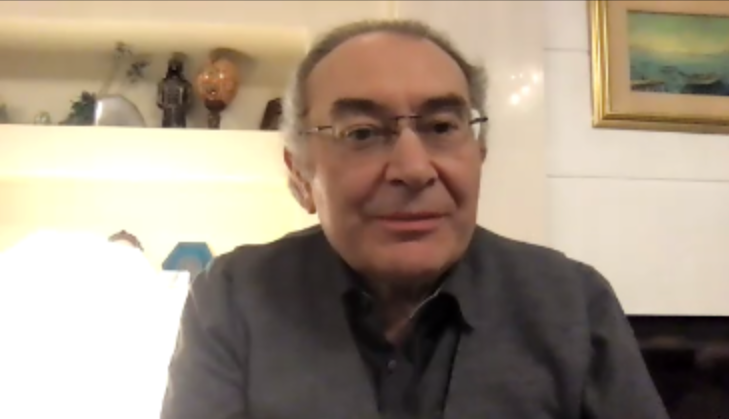
“During the pandemic, we learned that spiritual well-being is also important”
Samsun Governor Assoc. Dr. Zülkif Dağlı also participated in the program, and Prof. Dr. Nevzat Tarhan noted that there are lessons to be learned from the pandemic, stating, “Is the pandemic a danger or an opportunity? Our freedom was restricted, but our ability to delay gratification could develop. Our physical and spiritual comfort decreased, but we had more time to develop ourselves and strengthen family ties. Our pleasure and speed-oriented lifestyle was restricted, but we were able to discover new interests, of course, for those who could learn lessons. We couldn't use some of our rights, but we also realized that others have rights. We were very harsh on nature, but our awareness of global pollution and climate change increased. For example, during the pandemic, we could see Uludağ from Istanbul. Economic and social mobility can pollute the environment. We saw all these things. We learned that not only economic well-being but also spiritual well-being is important.”
“The pandemic has a great impact on maturation”
Prof. Dr. Nevzat Tarhan stated that Üsküdar Üniversitesi conducted a study in April to understand the effects of the pandemic on maturation, and important results were obtained from this research. Prof. Dr. Nevzat Tarhan, who stated that they examined psychological processes, perceptions, anxieties, fears, as well as maturation in the research and later turned this study into a book, said, “In maturation, we had 6 questions taken from the Post-Traumatic Growth Inventory. Some of the results obtained are as follows: The rate of those who said that the priority order of things I value in life has changed was 59%. The rate of those who said their interest in spiritual matters increased was 49%, those who understood that they could overcome difficulties were 56%, and those who said they could accept events as they are were 56%. These are individuals who experienced change compared to the past. Those who said they started to put more effort into their relationships were 48%, and those who said they understood the value of what they had better were 74%. The equivalent of these six concepts in our culture is patience and gratitude. Covid-19 has actually led to similar developments in societies all over the world.” He said.
“A psychological pandemic will emerge worldwide”
Emphasizing that a psychological pandemic will emerge worldwide after the Covid-19 pandemic, Tarhan said: Even if the pandemic passes, it will take us 1-2 years to return to our old social mobility. We need to develop new norms in relationships between people. People were accustomed to physical comfort and luxury. With the pandemic process, where our freedom was restricted, it became clear how close death is. This process has a crisis dimension, but also an opportunity dimension from which humanity can learn lessons. The epidemic gave us three important gifts: leisure time, sound psychological education, and the opportunity to increase our spiritual accumulation. Let's see the virus not as an enemy, but as a situation to be managed. Instead of taking the virus against us, we should take it with us and walk together. This is not getting used to the pandemic, but managing the pandemic.”
“Measures must be taken for the post-pandemic period”
Emphasizing that measures must also be taken for the post-pandemic period, Prof. Dr. Nevzat Tarhan said: “What happened during the pandemic? There was less economic well-being, less psychological well-being, less physical comfort, fewer social relationships, less trust, and less happiness. But against this, there was more poverty, more income inequality, more health problems, more social isolation, more loneliness, psychological isolation. More anxiety about the future, more fear of death, more frequent depression, panic, and social problems emerged. Therefore, we need to prepare for the post-pandemic period. We must take measures regarding what we will do after it passes. No pandemic, epidemic, or crisis passes without leaving damage. Those who suffer the least damage are those who can manage the crisis correctly. Such situations require crisis intervention. It is necessary to manage the crisis correctly. These are the biggest lessons to be learned.”
Share
Update Date: February 27, 2026
Creation Date: January 19, 2021
Request a Call
Other News
- The book that read today's digital threats in 2014: Being a Conscious Family
- Experts warn: 'Instead of memorizing letters, teach pencil grip, scissor use, and coloring'
- School fear and school love both start in the family!
- Family is not merely transforming, it is being battered under a serious assault
- Artificial intelligence opens the door to early diagnosis in autism!