

Üsküdar University Founding Rector, Psychiatrist Prof. Dr. Nevzat Tarhan, participated in a training session held with the attendance of high-level executives working at the Revenue Administration. Sharing information under the title 'Multiple Intelligence in Leadership, Neuroscientific Leadership,' Tarhan emphasized that being intelligent and hardworking is not enough in leadership; one must also be benevolent. Tarhan also highlighted the importance of justice in management, stating that the three enemies preventing the establishment of justice are; egoism, nepotism, and favoritism.
Content
Prof. Dr. Nevzat Tarhan Met with Revenue Administration Executives in Ankara…
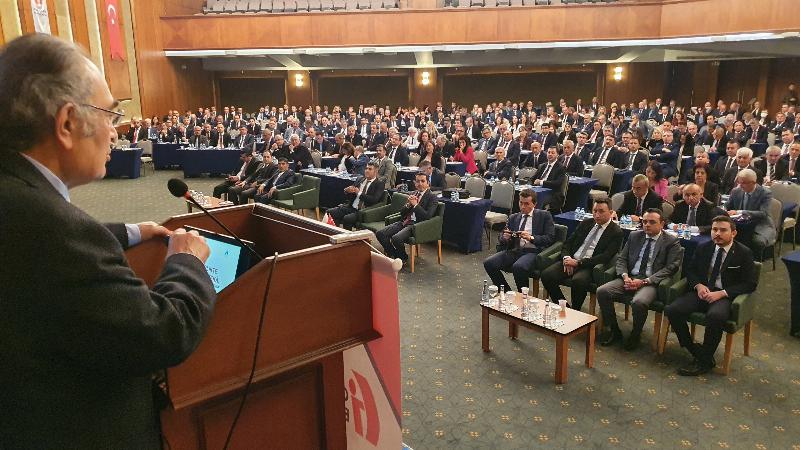
The "Multiple Intelligence in Neuroleadership, Neuroscientific Leadership" training was held
The training was held at Kızılcahamam Eliz Hotel Congress Center with the participation of 400 people from all over Turkey, including Tax Office managers, central managers, group heads, department heads, and deputy heads working at the Ankara Revenue Administration.
Tarhan, providing evaluations to the presidency executives under the title "Multiple Intelligence in Neuroleadership, Neuroscientific Leadership," made remarkable presentations on 21st-century skills, types of intelligence in leadership, and leadership ethics.
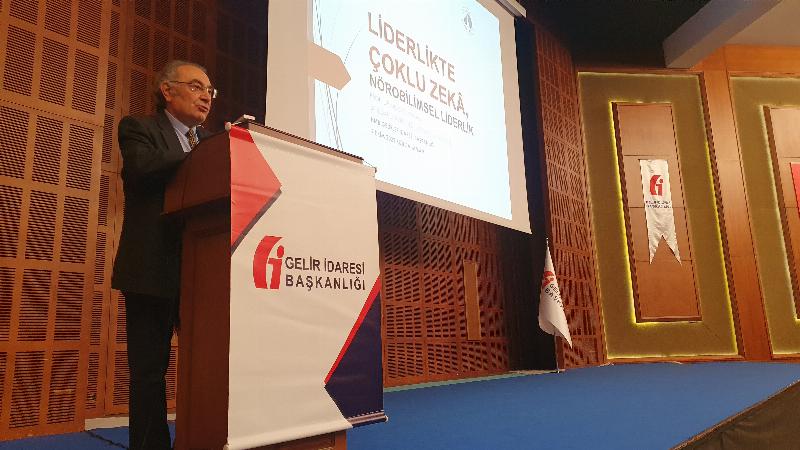
Prof. Dr. Tarhan drew attention to 21st-century skills
Tarhan, evaluating the importance of 21st-century skills in leadership, defined these skills as; emotivism, connectivism, innovativeness, and objectivism.
Different types of intelligence were discussed within the scope of “Multiple Intelligence in Neuroleadership”
Tarhan, stating that there are many different types of intelligence in leadership, also touched upon the differences between these intelligence types. Tarhan described the types of intelligence as follows:
“ IQ (Logical Intelligence): Being an idealist, being able to dream, generating ideas, predicting the future, creating expectations, thinking strategically, thinking outside the box, planning for the future, believing in oneself and trusting oneself.
EQ (Emotional Intelligence): Being an activist, being hopeful, optimism, courage, empathy, humor and being fun, believing in and trusting people, having a passionate project, seeing the positive, having self-confidence.
PQ (Physical Intelligence): Inner discipline, being a realist, focusing on the goal, suppressing distractions, taking risks, dedication, perseverance, sacrifice, determination.
SQ (Social Intelligence): Being open to cooperation, being trustworthy, conducting risk assessment, managing crises, being an active listener, being able to make solution-oriented decisions, considering the feelings, needs, and rights of others, strengthening family ties.
SPQ (Conscious Intelligence): Being able to listen to one's inner voice, internal - external responsibility, accountability, responsibility towards the creator, possessing ethical values, using moral reasoning, wisdom, humility, honesty.”
7 characteristics of a trustworthy leader…
Tarhan, expressing the importance of the concept of 'trustworthiness' in leadership, emphasized that trustworthy individuals are seen as leaders in society. According to a survey conducted on 54 thousand people, employees look for seven characteristics in a leader, which Tarhan listed as follows:
- Honesty
- People-Oriented
- Open to Communication
- Visionary
- Diligent in Their Work
- Motivational
- Brave
Each type of leader has a different approach…
In the attentively followed training, Tarhan also revealed the differences in how leader types approach events, from business life to social life. He noted that each type of leader displays a different approach in areas such as reward-punishment management, idea generation, leveraging experience, relations with bureaucracy, problem-solving, crisis management, etc. Tarhan expressed leader types and their approaches as follows.
Leadership in Reward and Punishment Management
Classical Leader: Immediately hands out the yellow envelope; punishment is paramount.
Charismatic Leader: Excessively sensitive towards those who make mistakes. Acts on intuition, makes quick decisions. Likes to punish.
Transformational Leader: Reward is prioritized; punishment is an exception. Instead of punishment, they seek ways to make individuals realistically feel their wrong behaviors.
Leadership in Idea Generation
Classical Leader: Leadership has an ideology; they generate ideas like a headmaster. They are commanding.
Charismatic Leader: Generates ideas through PR. Dictatorial, generally closed to different opinions. More open to ideas aimed at domination.
Transformational Leader: Generates ideas without making it obvious. Does not easily give ideas to employees. Gives the idea to the person who will buy it, doesn't let it go to waste, first stimulates desire, then gives it.
Leadership in Leveraging Experience
Classical Leader: Benefits from the experiences of others. Speaks with those who are knowledgeable. Focused on maintaining the current situation effectively and follows innovations.
Charismatic Leader: Benefits from experiences but makes quick decisions. Prioritizes acting on intuition over literature.
Transformational Leader: Researches other experiences when making decisions, has literature and sources researched, provides information, and uses intuition simultaneously.
Relationship with Bureaucracy
Classical Leader: Establishes a good system, builds bureaucracy, and doesn't force themselves to deviate from it. Fears stepping back. Enjoys shepherding sheep.
Charismatic Leader: Can override bureaucracy, pushes bureaucracy aside on issues where they are right. Hesitates to step back. Likes wolves.
Transformational Leader: Applies the rule 'You can force a person to do something, but you cannot force them to believe.' Offers options to persuade bureaucracy. Does not hesitate to step back. Enjoys herding geese.
Problem Solving Style
Classical Leader: Builds good relationships with the people they work with, loves them. Does not grow to avoid making mistakes. Doesn't pay much attention to emotions. Likes backgammon.
Charismatic Leader: Loves the people they work with, builds good relationships. However, their listening skills are weak. Desires to contend in communication, likes playing football. Grows rapidly, loses completely when they lose. Their own emotions are prioritized.
Transformational Leader: Loves the people they work with, builds good relationships. In communication, values empathy, both their own emotions and those of others. Likes chess.
Planning Ability
Classical Leader: Thinks operationally, performs operations well. Is a mission-oriented person.
Charismatic Leader: Is a good tactician, makes the operation more advantageous. May miss the strategic goal. Is a person of success.
Transformational Leader: Has long-term planning ability. Is a visionary person. Can step back for a strategic goal. Acts with the understanding that "if your strategy is wrong, the success you achieve is meaningless."
Crisis Management
Classical Leader: Pulls the ship to port in a storm. Is a realist.
Charismatic Leader: Says 'The biggest investment is made during a crisis.' Chooses to take risks and advance in a storm. Is an activist.
Transformational Leader: Is an idealist but aims to be both a realist, an activist, and an idealist. Knows how to balance enthusiasm, desire, and intuition with facts. Steps back if necessary. Is like a Janissary band. Knows how to wait.
Motivation Management
Classical Leader: Prefer to give syrup according to the pulse to maintain the status quo. They don't need to be sincere. They lose trust in the long run. External motivation is prioritized.
Charismatic Leader: Sincerity is important, so they easily influence people. They get angry in the face of obstacles and lose trust. They fall into self-confidence blindness. They motivate by forcing. Their exterior is tough, their interior is soft.
Transformational Leader: Radiate positive energy. Do not engage in work they don't believe in. Motivate by inspiring desire. Seek persuasion. Their exterior is soft, their interior is tough. Aims for internal motivation.
Initiative-Taking Style
Classical Leader: Takes initiative with difficulty. Says, 'Let no harm come to me, and let the car not break down on the road.' Does not like investment. Conditions their ego to their work. In motherhood, overprotects the child.
Charismatic Leader: Easily takes initiative. Is entrepreneurial and innovative. Exalts obedience and loyalty. Has a high ego. Is charismatic/driving. In motherhood, gives the child initiative. Reacts when a mistake is made.
Transformational Leader: Takes cautious initiative. Exalts justice. Delegates work, their ego becomes 'we' instead of 'I'.
Sense of Responsibility and Success
Classical Leader: Is like a civil servant. Focused on doing their job well. Acts according to their personality in failure. Has a weak sense of belonging.
Charismatic Leader: Sees themselves as the boss of the workplace. Easily marginalizes employees. Does not care about employees' sense of belonging. Avoids responsibility in failure.
Transformational Leader: Sees themselves as a partner and major shareholder of the institution, and employees as partners. Values the sense of belonging. In failure, they first question themselves.
Teamwork in a Leader
Classical Leader: In a football team, likes defense, stays back, doesn't go for the ball. Focused on not conceding a goal.
Charismatic Leader: Likes to be upfront, in the spotlight, and appreciates applause. Plays midfield defense. Wants to always have the ball.
Transformational Leader: Values assisting goals rather than scoring them. Doesn't say 'I did it,' but makes others say 'we did it.' Takes responsibility for failure and shares success.
Understanding of Power and Authority
Classical Leader: Obeys authority, likes to take and give orders. Is a man of principle.
Charismatic Leader: Has a high sense of control. Likes to give orders, often oppressive, disregards rules, dislikes consulting, forcibly imposes their own ideas, and promotes a monolithic style. Power comes before justice.
Transformational Leader: Is like an orchestra conductor, delegates work. Exerts influence through persuasion, values principles, rules, and regulations, and is unforgiving towards those who don't follow rules. Justice comes before power.
3 enemies hindering justice!
Finally, concluding the training, Tarhan made statements about the importance of the concept of justice in leadership, identifying the three enemies of justice that prevent its establishment as; egoism, nepotism, and favoritism.
Share
Update Date: March 01, 2026
Creation Date: October 08, 2022
Request a Call
Other News
- The book that read today's digital threats in 2014: Being a Conscious Family
- Experts warn: 'Instead of memorizing letters, teach pencil grip, scissor use, and coloring'
- School fear and school love both start in the family!
- Family is not merely transforming, it is being battered under a serious assault
- Artificial intelligence opens the door to early diagnosis in autism!