

Üsküdar University Founding Rector, Psychiatrist Prof. Dr. Nevzat Tarhan was a guest at the conference titled “Guidance and Communication,” organized by the Ümraniye District Mufti's Office as part of the Mawlid al-Nabi week celebrations. During the conference, which was also attended by the Ümraniye District Governor and Mufti, Tarhan offered important advice to religious officials regarding the communication language to be preferred in guidance activities, emphasizing the importance of influencing emotions in communication and stating that there is a three-tiered communication model that affects people.
Content
Prof. Dr. Nevzat Tarhan Met with Religious Officials within the Scope of Mawlid al-Nabi Week
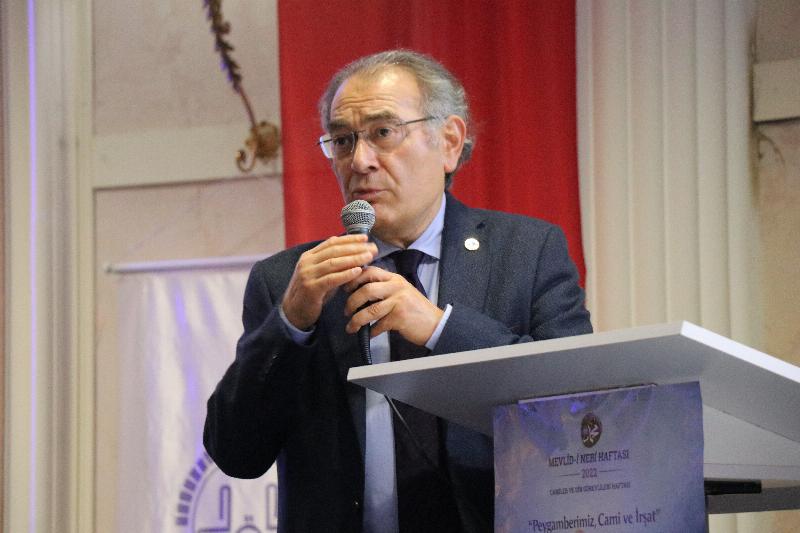
“Talking about emotions in communication ensures a lasting bond”
During the conference held at Ümraniye Wedding Palace as part of the Mawlid al-Nabi Week celebrations, which garnered significant interest from religious officials, Tarhan evaluated the connection between guidance and communication skills, providing tips on effective communication models that work to influence people. Tarhan stated: “Today, I will focus on the topics of guidance and communication. We are all leaders; first, we are leaders of ourselves, then leaders of our families. 'Imamat' (leading prayers) already means leadership. I want to touch upon leadership methods in this era. What are the principles of leadership and how to establish healthy communication with people? How can effective service be provided to people? Now, imagine you are a mother, a spouse, a father, or you need to take care of your children, or you are at a workplace. There is a three-tiered communication model that affects people. The first tier is when a child comes home, for example, you ask the child, ‘How are you? How’s school? How are your lessons?’ This conversation is superficial. Afterwards, everyone goes about their business, the child takes their phone, everyone disperses to their rooms, and communication with the child stays at this level. This leaves no trace; it’s like writing on sand. It dissipates at the first opportunity. How about taking it a step further? In the first tier, you talk about events; in the second, you will talk about meanings. For example, ‘You went to school, how was this lesson, what does it mean to you?’ You will deepen it a bit more. This creates a slightly more lasting bond with the child, but even that is not enough. The crucial third tier, if communication is established with the child, becomes permanent and is never forgotten. While recounting the same event, what were your feelings about that event? What made you sad? What did you feel? It is necessary to be able to talk about emotions, to express emotional states. Because emotions are recorded in the brain. These negative and positive emotions are imprinted on the child's developing psyche. They are imprinted on all our developing psyches. The more positive emotions we can create in the work environment or home environment, the more lasting a bond will be formed.”
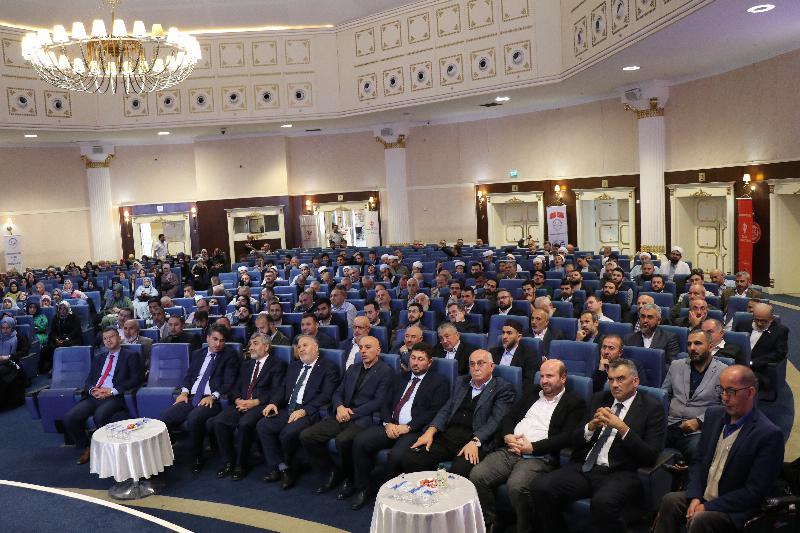
"Influencing emotions, establishing a balance between mind and heart is very important”
Tarhan also evaluated the concept of positive psychology and 21st-century skills, drawing attention to the importance of influencing emotions. Tarhan stated: “Research conducted on corporate loyalty examines three groups. The first priority is attachment to the group. For instance, if someone loves their workplace and goes there willingly, they become attached. Second is feeling secure about their future, and third is the salary received. Consider this ranking in a person's corporate loyalty. Therefore, influencing emotions acts like the engine of a car, setting it in motion, while the mind, like the steering wheel, shows where to go. If the steering wheel driver is excellent but the engine is poor, it's useless. If the engine is excellent but the driver is inexperienced, it will still hit a wall. So, both need to be balanced; establishing a balance between mind and heart is very important. There are elements that move the heart, elements that move emotions. The world has only recently discovered emotions. We need to teach 21st-century skills; don't just teach technical academic skills in schools. Also teach social and emotional skills. In the USA, mindfulness training is currently provided in high schools and middle schools. What they call mindfulness is actually similar to the education we teach in our schools as positive psychology. In fact, the World Health Organization designated mental health, intellectual health, and the concept of well-being as the theme for this year's World Mental Health Day. Positive psychology means moving from zero to positive, rather than just the absence of illness or depression. For this reason, how do we teach this to people, how do we ensure a happier, higher quality of life? Do you know what the Turkish equivalent of ‘good health and well-being’ is? Good Health is 'sağlık', and what they call 'well-being' can be expressed with the concept of 'afiyet'. The exact equivalent of the word 'afiyet' in our culture is actually asking for health and 'afiyet' from Allah. When 'afiyet' is translated into Turkish, they translate it as 'esenlik', but 'esenlik' is so degraded; it expresses nothing, it's a flat word. The word 'afiyet' contains that meaning. For example, in the prayers of the Prophet (Resulullah), the word 'afiyet' is used frequently, which is why 'health' and 'afiyet' are used together. The Western world claims to have just discovered this, but we are sitting on a treasure, we are sitting and sleeping on vast Anatolian wisdom, yet we do not appreciate its value.”
“In Secularism, Reason is Prioritized Over Emotion”
Tarhan shared insights on secularism and modern lifestyle diseases: “There are three critical variables in modern life. We are in the age of secularism. In secularism, reason and intellect become dominant over emotion. That is, in the TDK (Turkish Language Association), it is translated as 'worldliness'. Living solely by thinking about the world is the biggest problem of this century. The biggest concept of an era that lives as if death and the afterlife do not exist has become a characteristic of this age. It has existed in every age but has not globalized to this extent. It has not spread this widely. The second is narcissism, egoism as a personality trait, narcissistic personality structure. Everyone can be egoistic from time to time, but when it becomes narcissism, the person has made it a character trait, seeing themselves as autonomous and important, success-oriented, only thinking about their own comfort, a disease of arrogance and grandiosity. Imam Ghazali has a beautiful saying: ‘If you fill all evils into a room, arrogance opens its door.’ He also says, ‘If you fill all good deeds into a room, humility opens its door.’ He made such a concise observation. Narcissism is the scientific equivalent of arrogance. Materialism, this is also a scientific disease, stemming from science. In old times, it came from ignorance. Attacks on religious moral values came from ignorance and lack of knowledge. But now it comes in the name of science. People of this century value scientific robustness over religious robustness. Therefore, if we can put religion into the laboratory, making it evidence-based and explain it—especially if we can succeed in explaining the sciences of Ilm-al-Kalam and Aqidah at the level of young people—young people are questioning now, but we always say 'alas, young people have become deists,' but it's not merely being deist; they are just questioning. They want to learn and question, that's why, if we can speak the same language as young people, rest assured those young people will find the truth, they will find it. Modernism is experiencing a civilization crisis for this reason.”
“Cultural Imperialism Voluntarily Exploits Humanity”
Tarhan stated that cultural imperialism has turned into voluntary slavery, emphasizing that the ideal of the new world is hedonism. Tarhan remarked: “There is a cultural imperialism in the world, that imperialism industry, the Hollywood entertainment industry, that is currently making the whole world undergo voluntary colonization through cultural imperialism. Previously, exploitation was forced; now it is voluntary, and this must be known. There are four symptoms of this, one is hedonism, pleasure-seeking, with pleasure as the ego ideal; in other words, we live in an age of pleasure and speed. We live in such a time that young people, even when watching something on YouTube, do not use 1x speed but 1.5x or 2x, rushing through things. Pleasure and speed, as an ego ideal, are what modernism offers. We are moving towards a world where hedonism is the ego ideal of pleasure-seeking. Subsequently, a life philosophy has emerged in people in these times that sees the pursuit of pleasure as the purpose of life. Humans are undergoing a transformation in life philosophy, making not divine contentment, not the afterlife, but only the world and the pursuit of pleasure their ego ideal. We are losing the values that make us human. Values that chase pleasure. Now, consider other living beings apart from humans: eating, drinking, procreating, sheltering. Anyone whose purpose is nothing beyond these falls to a level lower than humanity. At this point, you are at the same level as other living beings. If the purpose of life is to eat, drink, and procreate, then humans are not merely beings that pursue concrete pleasures. Humans also have abstract pleasures within them. There is music, art, philosophy, and on one side there is death, and beyond death there is life. One must do things that add meaning. Yalom has a very good observation. He says that humanity's fundamental fear is four things: One, the fear of losing freedom; second, the fear of meaninglessness, the inability to give meaning; third, the fear of loneliness; and fourth, he says, is death. Because humans cannot overcome these four fundamental fears, they cannot be happy. This is stated by a famous American psychiatrist. This is truly a very accurate observation. These are fundamental anxieties. What alleviates this? The values we possess alleviate it. It is our duty to explain these values to the world. If we do not explain them, there is a burden of responsibility. Or will we just live with the values capitalism offers us?”
“The Most Effective Method in Communication is the Da'wah Method”
Tarhan offered advice to the attendees continuing their work at the Mufti's Office, making statements about da'wah methods and religious education for children. Tarhan said: “There are many types of religiosity right now. In the type I call capitalist religiosity, despite performing prayers, one can comfortably lie, does not give charity or zakat, consumes forbidden things, breaks promises despite fasting. Despite going to the mosque, one doesn't care about bribery or the rights of others, and so on. Such religiosity negatively affects young people. For this, the most effective method is the da'wah method. There is verbal da'wah, and there is behavioral da'wah. In this era, behavioral da'wah is performed in the common tongue. This is also called representation. If we can represent the truth, then by representing this truth, people will say that one lives what one believes, and they can accept your ideas. And look, here in leadership, the leader is different. A leader has taken responsibility, gotten involved, but is authoritarian. In human relations, in leadership, this is emotional leadership, not leadership that instills fear. We educate children that Allah is a frightening Allah who punishes. Whereas, Allah's mercy precedes His wrath by far and is much superior. We use Allah as a stick just to maintain discipline over the child. Consequently, the child sees Allah as a frightening object and rebels after adolescence.”
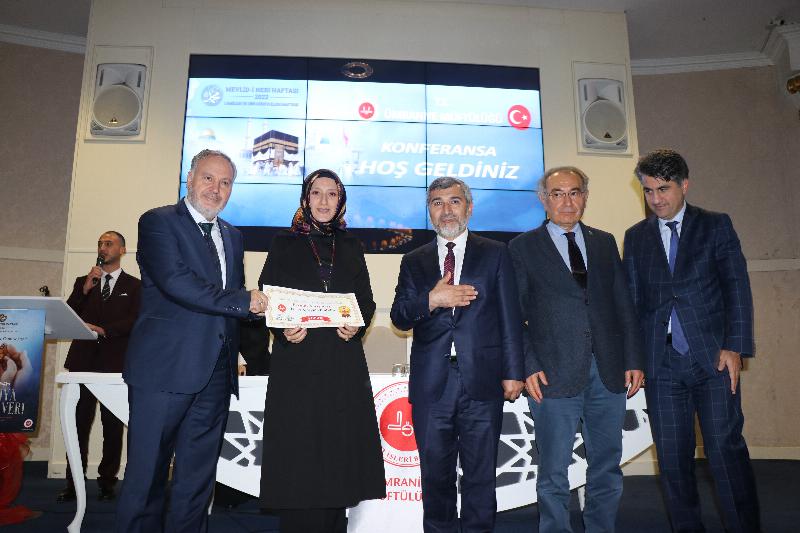
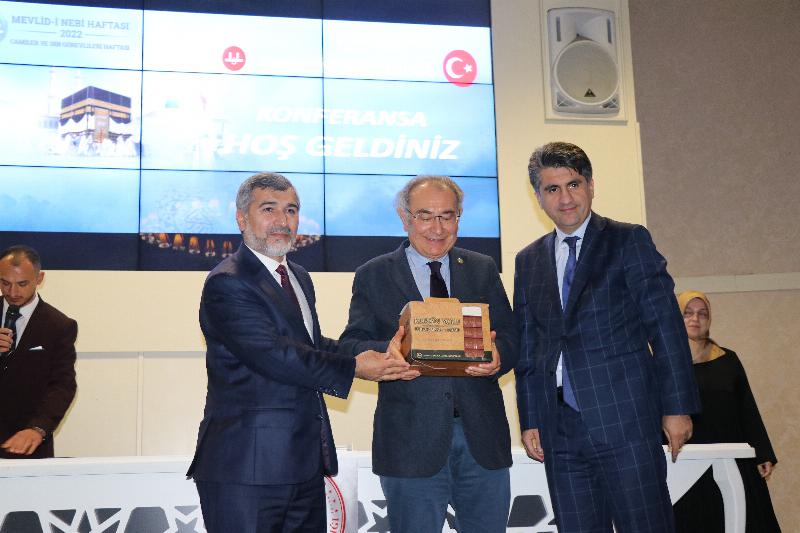
In the program, which was also attended by Ümraniye District Governor Abdulaziz Aydın and Ümraniye Mufti Muharrem Gül, certificates were presented to those who ranked in the Holy Quran recitation competition across Turkey.
Share
Update Date: March 01, 2026
Creation Date: October 08, 2022
Request a Call
Other News
- Social responsibility courses moved to the field
- Erasmus+ Orientation Week completed at Üsküdar
- Prof. Nevzat Tarhan: “Brain secretes ‘dark glue’ in social media lynchers!”
- Prof. Nevzat Tarhan: “Every segment of society should be able to say, ‘This constitution is my constitution!’”
- OHS releases guide for safe operation of industrial robots