

Noting that lying has many negative effects in the institution of marriage, Psychiatrist Prof. Dr. Nevzat Tarhan points out that a child learns the concept of lying within the family. Emphasizing that one should not lie to persuade a child, Prof. Dr. Nevzat Tarhan notes that negative behaviors of children should not be approved, underlining that this will lead to the reinforcement of that behavior. Prof. Dr. Tarhan advised, “A child's mistakes must be corrected by being stated directly to them.”
Content
Prof. Dr. Nevzat Tarhan: “Lying should not be used to persuade a child”
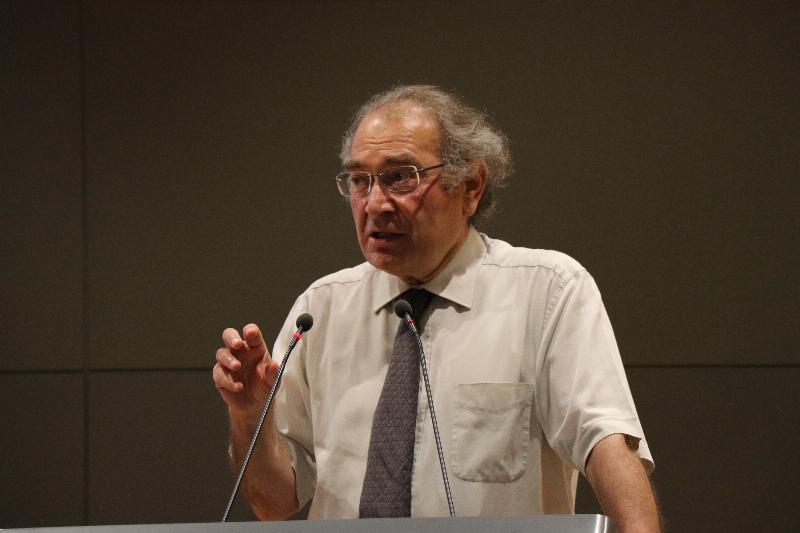
Üsküdar University Founding Rector, Psychiatrist Prof. Dr. Nevzat Tarhan, made evaluations regarding the negative effects of lying on the institution of marriage during the AKRA FM Marriage School program. Prof. Dr. Nevzat Tarhan pointed out that the concept of lying can lead to significant problems in marriages, as in all areas of life, and stated that lying is learned within the family during childhood.
Children test the truth
Prof. Dr. Nevzat Tarhan noted that since children do not know the truth until the age of 4-5, most of what they say is thought to be wrong, and added, “In fact, they are testing the truth. That is, a child tells something to their mother. Based on the mother's reaction, they say, 'This is true, this is false.' They tell something to their father. They say, 'This is true, this is false.' If parents approve of lying in such situations, the child begins to adopt lying as a method. In other words, the child learns lying as a method of seeking rights and problem-solving at an early age.”
Lying resembles a spark
Prof. Dr. Nevzat Tarhan stated that no matter how small a lie is, it resembles a spark. He said, “A lie may be small, but like big fires, it starts with a small spark. In other words, like great evils, it begins with a small step. If you fill a room with all evils, lying opens its door.”
Prof. Dr. Nevzat Tarhan stated that lying is a learned concept, saying, “A child takes a glass full of water and spills it. We assume they are being naughty. No, that child is developing their muscles against gravity. The brain learns it. In lying, too, the child engages in social learning. They say something. If the mother approves their lie, they continue that lie. If she doesn't approve, they learn social boundaries there.”
Lying should not be used as a method in education
Prof. Dr. Nevzat Tarhan pointed out that some people lie to console a child when they cry, stating, “They say, 'I will buy you this.' The child might quiet down and believe it at that moment, but this time, the child's trust in the mother weakens. After a while, if the mother doesn't do what she promised, the child starts to raise their voice. They begin not to believe the mother. Could there be a worse example for a child than not believing their mother? That's why we say that when comforting a child, it's necessary to change their focus of attention as much as possible without lying. If you want to calm and silence a child, instead of lying and making promises you cannot keep, immediately shift their focus of interest and attention. It is important not to use lying as a method in education.”
A list of lies can be made
Prof. Dr. Nevzat Tarhan stated that couples should not lie to each other, and if parties lie to each other and this becomes a continuous habit, he advised listing the lies told. Prof. Dr. Nevzat Tarhan said, “When the other party lies, one should say, ‘Look, I am listing your lies.’ They will list them as ‘You lied about this on this day,’ and say, ‘Look, you lied.’ In this case, their spouse will say, ‘My spouse knows, they are aware.’”
A liar has no internal stopper in their conscience
“A liar has no internal stopper in their conscience,” said Prof. Dr. Nevzat Tarhan, adding, “Some people have an internal stopper in their conscience, which we call an 'Internal Stopper.' It's a conscientious stopper, also known as the superego. Some people don't have this. These individuals need an external stopper, which we call 'External Stoppers.'”
In Mythomania, there is no intention to deceive
Prof. Dr. Nevzat Tarhan noted that in lying there is an intention to deceive and a purpose, and stated that there are also pathological lies which are a sickness, adding, “In mythomania, there is no intention to deceive. The person takes special pleasure in lying. They create stories, fabricate, tell them, and it greatly pleases them when those around them believe it. There is psychological satisfaction. There is no expectation of gain or financial benefit. There is a psychological satisfaction. This condition is called mythomania.”
Prof. Dr. Nevzat Tarhan also stated that the party who lies in marriages should not be approved.
In the digital age, humanity must be much more honest
Stating that rules are important in marriage, Prof. Dr. Nevzat Tarhan said, “There must be a rule-based environment at home. Not lying must exist as a rule at home. If this is not a rule, the parties should consider how it should be implemented as a rule. There should be no lies in marriage. There should be an open, transparent, and honest relationship. In this age, a liar’s candle burns not until nightfall, but until the internet. Everything comes to light in a very short time. Nowadays, you cannot do anything in secret. There are cameras everywhere. A murder is committed. The suspect says, ‘I didn't want to kill.’ In the camera, you see they pointed the gun directly at the heart. For this reason, we are in an age where lying is most easily caught. Humanity must be much more honest after this digital revolution.”
Lying is one of the reasons marriages break down
Prof. Dr. Nevzat Tarhan stated that the institution of marriage is a place where one should feel safe, saying, “Marriage is a person’s safe zone, an environment where one feels secure. The spouse tells them A here, and B outside. Such a marriage doesn't work anyway. That is the biggest reason for marital breakdowns. The biggest reason for their arguments is that marriage, the home, is not a safe space.”
An open, transparent, and honest relationship is required for the continuation of the safe space
Stating that an open, transparent, and honest relationship is required for the continuation of marriage and the safe space within the family institution, Prof. Dr. Nevzat Tarhan said, “Of course, there are various difficulties in the institution of marriage. And there are ways to overcome those difficulties. Imagine a palace. A palace with 100 doors. If 99 doors are closed and 1 door is open, you would do whatever it takes to try and enter through that door. But if you try 2-3 doors and say, ‘It’s not working, you can’t get in here,’ you won’t succeed. Humans are also like this, like a palace with 100 doors. There is a language and a way they understand. One needs to find that. If one insists on imposing their will, saying 'it will be as I say,' then ego wars will ensue.”
Loneliness and unhappiness, the biggest side effect of this age
Prof. Dr. Nevzat Tarhan noted that even babies have egos in the current age, stating, “We are in an age where ego is high even among primary school children. Under the guise of freedom and individualism, it has shifted towards egoism. People of this age cannot manage relationships due to egoism. Loneliness is currently the biggest problem of this era. It has emerged as the biggest side effect of Westernized culture, popular culture; loneliness and unhappiness. There is wealth, but people are lonely and unhappy.”
A conscientious standard should be established in children
Prof. Dr. Nevzat Tarhan stated that finding a child's incorrect action "clever" would mislead them and ensure the continuity of that action in the child. He said, “For example, if a child, out of childish jealousy because their friend's eraser seemed nicer, took it and brought it home, and at home the child is told, ‘Give your friend’s eraser back to them. Go apologize to your friend,’ a conscientious standard is formed within the child. People of this age are also growing up very unwilling to establish conscientious standards. Generally, from the age of 5-6, children learn basic things about right and wrong, good and bad. That is, during those periods, if children are given hours of lectures on honesty, they won't learn, but they will learn if they see an example of honesty.”
The most effective teaching method: Being a good role model
Prof. Dr. Nevzat Tarhan stated that the most beautiful and effective teaching method at home is being a good role model, saying, “It is very important for parents to be role models. It means being able to express and live social roles well and correctly at home. This is the best.”
Prof. Dr. Nevzat Tarhan highlighted the importance of telling a child what they did wrong and making an effort to correct their mistake instead of overlooking it when they make one. He said, “For example, a child went to the grocery store. Without the grocer seeing, they 'borrowed' a candy and came home, showing it to their father. If the father says something like, ‘Never mind, it's just a little bit,’ and doesn't give any warning, doesn't warn him to correct his mistake, the child will continue that behavior. However, if he were to do this; if he said, ‘Look, my child, you probably don't know these things yet, learn,’ went with the child to the grocer, returned the candy or paid for it, and also apologized, the child would thus learn the sense of responsibility.”
The greatest inheritance: Good morals taught
Prof. Dr. Nevzat Tarhan noted that learning a sense of responsibility is more important than a child experiencing shame, and said, “We don't do these things so that the child isn't shy, so they grow up free. However, the feeling of shame draws a person's social boundaries. Normally, there is a legal norm, defined by laws. There are social norms. These are defined by traditions. And there are moral norms. These are defined by conscience. Conscience is something that develops. The feeling of conscience is innate, but conscientious standards develop later. These are taught. There's a saying: If you raise a good child, there's no need to leave them an inheritance, they will make their own way. If you haven't raised a good child, no matter how much inheritance you leave, it will be of no use. That's why the greatest inheritance is good morals taught to the child. Being able to give this. After giving this, one should have no fear at all.”
Share
Update Date: February 28, 2026
Creation Date: December 20, 2021
Request a Call
Other News
- The book that read today's digital threats in 2014: Being a Conscious Family
- Experts warn: 'Instead of memorizing letters, teach pencil grip, scissor use, and coloring'
- School fear and school love both start in the family!
- Family is not merely transforming, it is being battered under a serious assault
- Artificial intelligence opens the door to early diagnosis in autism!