

Stating that parents should be concerned with ensuring justice among their children in the family, Psychiatrist Prof. Dr. Nevzat Tarhan, “Parents should have the principle of acting justly. If such a principle exists, the child will always say, ‘My mother and father would not treat me unfairly,’ and attachment to home increases. Feelings of responsibility towards the home increase.” Tarhan emphasized that the greatest enemy of justice is selfishness, adding that injustice in the family leads to emotional neglect.
Content
Prof. Dr. Nevzat Tarhan: “Injustice leads to emotional neglect”
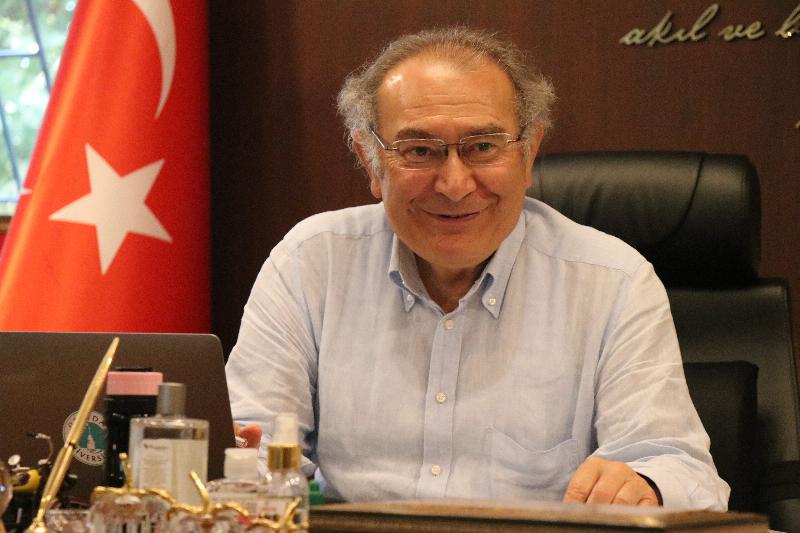
“The greatest enemy of justice is selfishness”
Üsküdar Üniversitesi Founding Rector, Psychiatrist Prof. Dr. Nevzat Tarhan, evaluated the concept of justice in the family.
Prof. Dr. Nevzat Tarhan stated that the concepts of justice and equality are always confused: “Equality is like everyone wearing the same type of clothing. It is giving the same, equal amount. In justice, there is a balance and a measure. Giving to those who deserve it as much as they deserve, and not giving to those who don’t. Therefore, justice should not be perceived as equality. If the rights obtained by a talented and hardworking person are the same as those obtained by a lazy and idle person, laziness will be rewarded. For this reason, justice will create a balance there by paving the way for the talented, while providing minimum rights for others.”
Equality is stable, justice is dynamic
Prof. Dr. Nevzat Tarhan noted that justice is a dynamic process: “Equality is stable, fixed, but justice is dynamic. It changes according to place, situation, and conditions. To be just, a person must always act with the principle, ‘I must be just.’ Because they don’t do this, they can make mistakes at any moment. This also applies within the family.”
There are three types of justice
Prof. Dr. Nevzat Tarhan noted that when justice is mentioned, courthouse walls are often thought of: “However, there are three types of justice. The first is normal judicial justice, which is the benefit distributed by the laws there. The other is social justice. It is the sharing distributed by traditions and customs. It is the sharing of benefits. It is the distribution of opportunities related to traditions and customs, various opportunities in social environments. The third is determined by the norms of conscience, which are shaped by morality and justice.”
Where there is no justice, there is no peace
Prof. Dr. Nevzat Tarhan stated that in family justice, this third group, meaning justice determined by consciences, comes to the forefront more: “Because there is no direct connection with any judicial process there. There is also no connection with external traditions. There is a balance entirely within itself. Let's say a child in the house is always protected and favored; then jealousy and spoiling begin to be stimulated among the other siblings towards that child. For example, let's say there is a village. There is only one well in the village. Water comes out of that well. If only those who are powerful and close to the village headman benefit from that well, and other people have to beg for water, there is no justice there. Where there is no justice, there is no peace.”
Injustice in the family leads to emotional neglect
Prof. Dr. Nevzat Tarhan stated that examples of injustice in the family are sometimes encountered:
“A child does not call their parents ‘mother and father.’ They think they are a stepchild because their parents always show interest in their disabled sibling. They always thought they were a stepchild. Since their sibling was sick and their parents always cared for them, emotional neglect developed in the child. When emotional neglect arises, both love and anger develop towards the mother and father. This situation also leads to unhappiness. It is a situation that causes them to seek expert help. They feel anger towards their mother and father but actually love them. They become uneasy and experience fluctuations between feelings of remorse. These children feel excluded.”
Favoring a loved one is injustice
Prof. Dr. Nevzat Tarhan, referring to the concept of “discrimination for benefit,” called “nepotism” in literature, said: “This situation generally occurs in social relations. One does everything for self-interest and disregards those without benefit. A benefit-oriented capitalist system. Nepotism feeds self-interest. Also, favoritism is common among us. Favoritism is done for certain reasons. This is also favoritism. Favoring a loved one is injustice.”
The concept of justice in the family is very important
Prof. Dr. Nevzat Tarhan, recalling the story of Prophet Yusuf (Joseph) from the Quran, which he cited as an example in literature, said: “Prophet Jacob loved Prophet Yusuf very much among his children. He protected and cared for him. As a result, an immense feeling of jealousy arose in the other children. And they threw Yusuf into a well. This is considered Prophet Yusuf's trial. Prophet Jacob also had a trial there. He could not provide justice in love. Because he could not, he protected one of his children excessively, and the others, not being mature, decided to eliminate their brother, and eventually threw him into the well. Therefore, the concept of justice within the family is not a simple matter.”
Where there is justice, there is peace and tranquility
Prof. Dr. Nevzat Tarhan stated that they try to measure the child's reaction with certain questions to understand if there is justice within the family: “They ask, ‘If something happens, would you side with your mother or your father?’ If the child blindly sides with their mother or father, there is no justice in that home. But if the child says, ‘I will side with whoever is right,’ then there is justice there. Justice is very important. Where there is justice, there is peace and tranquility. If we want peace, justice is necessary.”
Parents must ensure justice
Prof. Dr. Nevzat Tarhan stated that parents should be concerned with ensuring justice in the family: “Parents should have the principle of acting justly. If such a principle exists, the child will always say, ‘My mother and father would not treat me unfairly,’ and attachment to home increases. Feelings of responsibility towards the home increase.”
Wrong jokes lead to sibling rivalry
Prof. Dr. Nevzat Tarhan noted that inappropriate jokes are sometimes made within the family: “A new baby is born at home. Inappropriate jokes like ‘You have a sibling, your shoes have been thrown onto the roof’ are made to the child. The child goes and makes their sibling cry. One is one year old, the other is three. Parents do things that make the child jealous. Because justice is not fundamentally observed within the family, sibling rivalry occurs among siblings.”
Siblings should be taught fair sharing
Prof. Dr. Nevzat Tarhan also noted that children should be taught the skill of resolving problems among themselves through agreement and sharing: “It exists in positive psychology therapy methods. How is fair sharing learned? There is a group of five people. A model used in early adolescence for ages 10-12. Four chocolates are brought to five children around 10 years old. They are told to share this. They sit, talk, and find a formula for how to share. This way, they teach fair sharing. If one says 'this is my right' and takes it, and another says 'this is my right' and takes it, one person will be left behind, crushed. After that, there will be no peace in that group.”
There should be a balance and limit between rights and responsibilities
Prof. Dr. Nevzat Tarhan stated that the measure of being civilized is not carving stone, but setting boundaries: “Justice is also a person’s ability to maintain balance and limits between their rights and responsibilities. The balance between humanity’s power and justice is also very important here. There are skeptical parent types. They incredibly favor and protect their child, are just within the family, but see the outside world as a threat. They raise their child this way. What happens to the child then? They become a skeptical type, a type who doesn’t care about anyone. Justice is also important in the outside world and in human relationships.”
Where love enters, there is psychological vitality…
Prof. Dr. Nevzat Tarhan stated that where money enters, there is economic vitality, and where love enters, there is psychological vitality: “When you manage this fairly, trust is formed in people. Where there is trust, attachment is formed. Where attachment is formed, people become peaceful. However, in an environment without fair sharing, there is no peace.”
Prof. Dr. Nevzat Tarhan noted that justice is also important in love within the family: “We call this the balance of love and discipline. Justice within the family occurs with consistent discipline. If there is inconsistent discipline, you say yes to something one day and no the next. The father says no to what the mother says yes to. There is inconsistency here. There will be no fair sharing here.” he warned.
The greatest enemy of justice is selfishness…
Prof. Dr. Nevzat Tarhan emphasized that justice should be upheld as a value in the family: “That’s why we stress that justice begins in the family. An understanding that emphasizes justice brings peace and tranquility to the home. Where there is peace, trust is formed, and where there is trust, good people are raised. Good children grow up. The greatest enemy of justice is selfishness.”
Share
Update Date: February 28, 2026
Creation Date: December 13, 2021
Request a Call
Other News
- Experts warn: 'Instead of memorizing letters, teach pencil grip, scissor use, and coloring'
- School fear and school love both start in the family!
- Family is not merely transforming, it is being battered under a serious assault
- Artificial intelligence opens the door to early diagnosis in autism!
- Artificial intelligence doesn't end engineering, it transforms it!