

Psychiatrist Prof. Dr. Nevzat Tarhan, stating that selfish tendencies lie beneath malevolent emotions, said, “If we treat our selfish tendencies, we become social beings. A person who does not think of the well-being of others is evil. We need to develop our empathy.” Prof. Dr. Nevzat Tarhan noted that individuals who are evil lack empathy, and the most effective way to combat evil is by increasing goodness. Tarhan stated that the concepts of good and evil are learned culturally, and said, “Goodness needs to be taught as a model.”
Content
Prof. Dr. Nevzat Tarhan: “Goodness Needs to Be Taught as a Model”
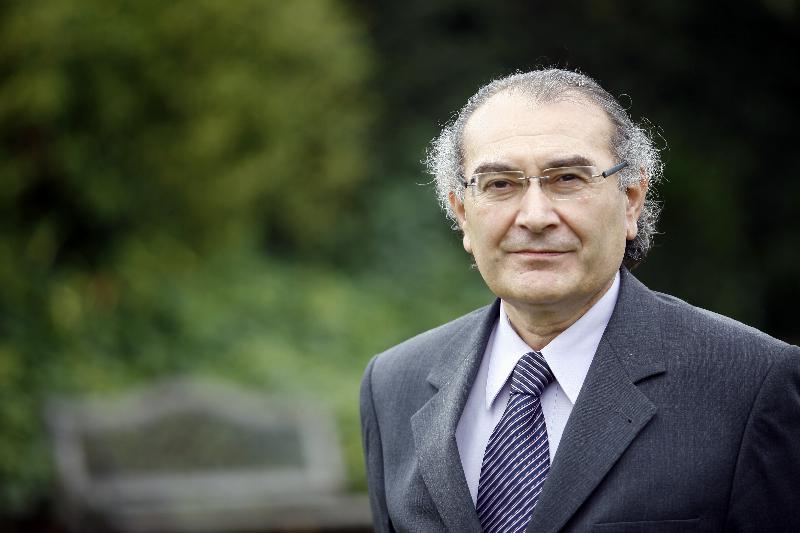
Üsküdar Üniversitesi Founding Rector, Psychiatrist Prof. Dr. Nevzat Tarhan, made evaluations regarding the psychology of evil.
The most beautiful fight against evil is by increasing goodness
Stating that the question “Why do people do evil?” is one of the most important topics in evolutionary psychology, Prof. Dr. Nevzat Tarhan said the following:
“First, it is necessary to define what evil is. If we define something correctly, we can understand it. If we define it incorrectly, we will be misunderstood. The concept of evil can vary from person to person. The concept of evil in the law of entropy is the best concept to describe evil. Evil is the absence of good. Darkness is the absence of light. Cold is the absence of heat. Goodness is active; evil is passive, inert. Where there is goodness, evil naturally disappears. The most beautiful fight against evil is by increasing goodness. Research is being conducted on whether the concept of good and evil exists in animals – monkeys. The second most important keyword related to good and evil is empathy.
Those who are evil lack empathy
The more bad behaviors a person has, such as a propensity for crime or harming others. Research on individuals with these characteristics shows that all of them have a lack of empathy. A person incapable of empathy is selfish. They prioritize their own interests. They consider individual benefit before societal benefit. A situation that is good for themselves can be evil for someone else. Humans are composed of malevolent and benevolent emotions. Other living beings do not have malevolent emotions. There is no such concept in animals. If all monkeys gathered together, and remained together for a thousand years, there would be no development among them from an evolutionary psychology perspective. But when humans gather, they immediately socialize. A selfish person will also go and start exploiting others. Humans have the potential for infinite good and infinite evil within them.”
Cultures teach the concept of good and evil
Noting that the concepts of good and evil are learned later, Prof. Dr. Nevzat Tarhan pointed to the importance of cultural learning. Prof. Dr. Nevzat Tarhan said, “Consider a dog in society. If one person in society says that dog has rabies, everyone tries to chase that dog away. Perceptions are very important; we need to pay attention. How we perceive something defines it as good or evil for us. The concept of good and evil is taught later. Cultures teach it. It is not innate. Humans have innate emotions that can be positive and negative. Cultures fill these in. Those who inspire trust in people are considered good, and those who do not are seen as bad. For example, there is a greeting gesture where the hand is brought to the forehead. This greeting originated during a period of civil war in Europe, meaning ‘I have no weapon in my hand’ because no one trusted anyone. If someone approached with their hand behind their back, they would be perceived as malevolent, assuming they had a weapon. At the core of human beings is the instinct for survival. Under the influence of this instinct, there is a self-preservation emotion. Things perceived as a threat are demonized, while those not seen as a threat are considered friends.”
Prof. Dr. Nevzat Tarhan noted that the frontal region of the human brain is the decision-making area, stating, “Over the years, we automatically begin to understand and categorize things as good, bad, beautiful, ugly, useful, or useless. However, in unfamiliar or unaccustomed situations, we still question, and our brain makes decisions in that way. Whether we act thoughtfully or not depends on whether the object in question has become a habit or an object of trust for us.”
The human brain decides as benevolent and malevolent
Tarhan noted that from birth, the human brain makes decisions by categorizing things as benevolent and malevolent. He said, “Two files are opened in the brain. Humans record these in their brains. When we process them into the brain’s operating system this way, what is benevolent and malevolent varies from person to person. It is individual. Children, for example, do not know the concept of theft. They see something shiny in the middle, don't wonder if it's theirs, and just take it. Monkeys are similar. A monkey is not an abstract thinker. A thief is also an abstract concept. If something you take belongs to you, it is your right. But if you take and use something that belongs to someone else, that is theft. This is related to definition. Shopping within a family at home is not the same as shopping outside. Sometimes people can take certain things from their relatives without asking, but taking something from someone outside without asking can be perceived as theft.”
Prof. Dr. Nevzat Tarhan stated that over the years, a stance regarding the concepts of good and evil has formed. He said, “We act and decide whether these are good or bad, useful or useless. We do this automatically. If we have matured and developed ourselves, meaning if a person has social and psychological maturity, they proceed by distinguishing whether situations are benevolent or malevolent. A materialistically thinking person asks, ‘What is my interest here?’ They do not consider whether it harms others or not, or whether it has societal benefit or not. This is something the capitalist system has taught us.”
People living aimlessly are more prone to evil
Prof. Dr. Nevzat Tarhan noted that opportunism is one of the most important indicators of evil, and emphasized the importance of having a purpose in life, stating:
“Behind opportunism lies egocentrism. Its manifestation as a personality trait is narcissism. Narcissism is the most frequent source of evil. Therefore, unless we mature our own narcissism, we cannot curb our malevolent emotions. In fact, experiments are conducted with middle school-aged children regarding this. They gather them on an island. They give them no purpose, saying, ‘Live here for three months, and at the end of three months, everyone should write their memoirs.’ Incidents of violence and evil are very high. Another group is given a single purpose: ‘Keep this fire constantly burning.’ When there is a purpose, incidents of violence decrease. Where there is no purpose, incidents of violence increase significantly. People living aimlessly are more prone to evil.”
The reason for the spread of evil is hedonism
Prof. Dr. Nevzat Tarhan noted that as Üsküdar Üniversitesi, they strive to instill a philosophy of purposeful living in their students, stating that the prevailing ideology of hedonism today is the reason for the spread of evil.
“The ideology of this era is hedonism, or pleasure-seeking,” said Prof. Dr. Nevzat Tarhan. He continued, “It says that whoever pursues pleasure is good, and whoever does not is evil. As people progress through life, not everything goes according to our pleasure. Suffering is a part of development. People need to endure some difficulties, thinking about what kind of person they will be when they reach the end of their lives. Global culture currently does not want this. This is not just in Turkey but worldwide. Because the consumer economy demands it. Earn, consume, earn, spend. This exploits the world. Certain individuals use the ideology of hedonism to lead people wherever they want by appealing to their sense of pleasure. They first processed this ideologically and turned it into an ideology. Hedonism has now become an ideology and is the biggest reason for the spread of evil. You see someone very rich establishing a charity association, and you say, ‘What a philanthropic person!’ But under the guise of charity, you see they are creating a new name for enrichment. This is called altruistic punishment. You punish and marginalize as if making a sacrifice. This is exploiting people under the guise of making sacrifices and is hidden evil.”
Selfish tendencies lie beneath malevolent emotions
Prof. Dr. Nevzat Tarhan stated that humans can be limitless in both good and evil. He said, “Humans can commit evil in a planned manner. If you gather all evils in a room, its door is opened by lies and selfishness; if you gather all good deeds, its door is opened by honesty and humility. Beneath our malevolent emotions lie our selfish tendencies. If we treat our selfish tendencies, we become social beings. A person who does not think of the well-being of others is evil. We need to develop our empathy. Empati is not just an emotion; it is also a concept.”
A global goodness movement is needed
Prof. Dr. Nevzat Tarhan stated that there will be no peace in a world where people only think of their own interests. He said, “A global goodness movement is needed. Those who have turned humanism into an ideology even advocate against punishing a wolf attacking a flock. In the balance between good and evil, the concept of justice, where everything is in its proper place, is very important. There is also a need for evil. Evil and wrong are important for understanding good. The balance in the world shifts between the decrease and increase of good and evil. Sometimes goodness increases, and when good people start to relax, they begin to make mistakes, and evil increases. When the negative consequences of evil begin to be seen, goodness increases.”
Goodness needs to be taught as a model
Prof. Dr. Nevzat Tarhan noted that where a person positions themselves is very important, and he concluded his remarks by stating that being a good person should be taught in education:
“It is important whether a person wants to be remembered as good or bad after their death. The person decides this themselves. This needs to be taught. For example, our current education system focuses on everyone being intelligent and hardworking, but in addition to all this, one also needs to be a good person. Goodness needs to be taught as a model. In positive psychology education, which has started to be taught in the USA, they discuss Eastern wisdom: sacrifice, gratitude, and helpfulness. Humans have a feeling of omnipotence. Against this hypothesis, one needs to develop common sense. We need to develop common sense against our own selfish emotions. The ability to distinguish between good and evil is referred to as common sense in the psychoanalytic school. The first method to combat evil is to recognize evil. This issue should not be left to its natural course in the education system. The state should not say, ‘This is not my job.’ It should be taught as doctrine. There is no need to fear evil. The important thing is to instill a compass of conscience within ourselves. We must take a stand against evil.”
Share
Update Date: February 26, 2026
Creation Date: September 11, 2020
Request a Call
Other News
- The book that read today's digital threats in 2014: Being a Conscious Family
- Experts warn: 'Instead of memorizing letters, teach pencil grip, scissor use, and coloring'
- School fear and school love both start in the family!
- Family is not merely transforming, it is being battered under a serious assault
- Artificial intelligence opens the door to early diagnosis in autism!