

Üsküdar Üniversitesi's 3rd International Loneliness Symposium is being held this year under the title “Digitalization and Loneliness”. The “Turkey Digitalization and Loneliness Research Results” conducted by Prof. Dr. Ebulfez Süleymanlı from Üsküdar Üniversitesi and Dr. Nihan Kalkandeler, Lecturer at Avrasya Üniversitesi, were also announced. The study, which included 7,140 participants nationwide in Turkey, attracted attention with its interesting results. According to the research, young people and women are lonelier.
Content
Prof. Dr. Nevzat Tarhan: “The danger of the future is global selfishness, and its result is loneliness”
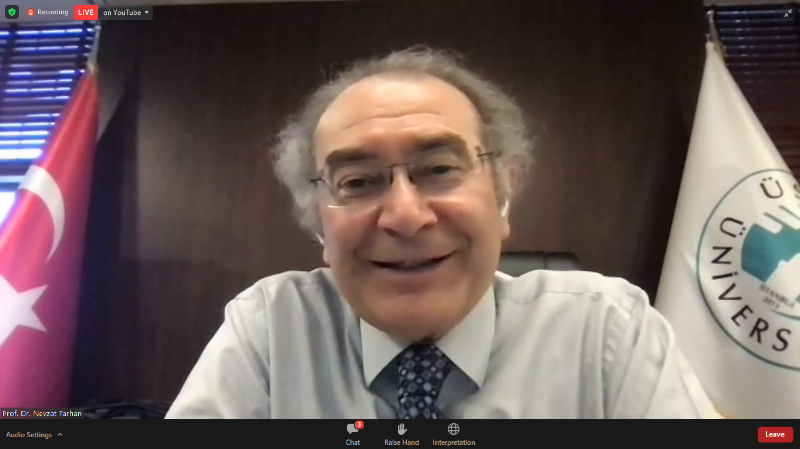
Üsküdar Üniversitesi Founding Rector, Chairman of the Executive Board, Psychiatrist Prof. Dr. Nevzat Tarhan stated that the danger of the future is not nuclear weapons, but global selfishness, adding, “The result of this is loneliness. It is very important that we emphasize the loneliness awaiting humanity and future generations, and that we do something about it.”
The symposium, held between December 10-11, 2021, addresses the effects of digitalization on loneliness, with the participation of scientists and academics from various universities in Kazakhstan, England, and Turkey.

Prof. Dr. Ebulfez Süleymanlı: “The relationship between digitalization and loneliness will be discussed in depth”
The opening speeches of the symposium, held online within the scope of pandemic measures, were delivered by the Symposium Organizing Committee Chairman, Head of Üsküdar Üniversitesi Sociology Department, Prof. Dr. Ebulfez Süleymanlı. Süleymanlı stated that in addition to the advantages of digitalization such as communication, acculturation, and instant tracking of current developments, it also has a power that takes over individuals' life balance. He added that they aim to discuss the complex relationships between digitalization processes and the state of loneliness in a holistic, original, and in-depth manner.

Special message from the '80s TV series
In the first session of the symposium, where a special video message about digitalization and loneliness, filmed on the set of the '80s TV series by its actors, was shown, loneliness in the digital age was discussed.
Prof. Dr. Nevzat Tarhan: “As digitalization increases, so does loneliness”
Üsküdar Üniversitesi Founding Rector, Chairman of the Executive Board, Psychiatrist Prof. Dr. Nevzat Tarhan gave a speech titled “Loneliness in the Age of Digitalization.” Prof. Dr. Nevzat Tarhan noted that there is a serious cause-and-effect relationship between digitalization and loneliness, stating, “As digitalization increases, loneliness also increases. Digitalization is currently a serious global reality. We need to think about how we can find a way out of this global reality without becoming isolated.”
Prof. Dr. Nevzat Tarhan: “It should be called virtual media instead of social media”
Stating that it should be called “virtual media” instead of “social media,” Prof. Dr. Nevzat Tarhan said, “It's always called social media, but digital media is actually virtual media. There is no sociality there, only digital communication. There is no conversation, no chat, no physical contact, no intimacy, no sincerity. It's virtual media, actually.”
Noting that digital transformations have occurred in the digital world since the 2000s, and the internet first began to be used in 1993, Prof. Dr. Nevzat Tarhan said, “By the mid-2000s, digitalization had become a communication area where individuals express themselves in new ways. There is something here that will add a new dimension to the relationship between digitalization and loneliness. This was discussed in Davos in 2018, and signals of global changes were given. A digital control infrastructure was established and announced there. In fact, a voice of objection was raised there. Harari said, ‘The world is heading towards digital dictatorship. We are the last free generation.’ This received a rightful echo. The concept of ‘Artificial intelligence as the new God’ was discussed. What is God? The one who is all-powerful, controls everything, gives power to everything. Here, it was used in the sense of the greatest power, and such a meaning was attributed to artificial intelligence. It was said that ‘Our minds and brains can be hacked,’ which is true. We use various waves. There are studies showing that magnetic stimuli and radio frequencies affect and change animals.”
Noting that studies in this field are ongoing, Prof. Dr. Nevzat Tarhan stated that important work is being done especially in the field of brain diseases, and that the brain is the new frontier of science.
Prof. Dr. Nevzat Tarhan: “Metaverse will be our three-dimensional identity in the virtual universe”
Noting that a new concept called Metaverse is now being discussed, Prof. Dr. Nevzat Tarhan said, “When we say Metaverse, we mean a super-universe. Currently, there is a virtual universe plan. In the virtual universe, there are online games, and augmented reality is used. In this universe, shopping will be done with digital currencies through special glasses. A financial system and a virtual universe will be created. Each of these is an independent medium. For example, we have an identity on social media. That identity will now be three-dimensional. With that identity, you will now enter the virtual universe and walk the streets. You will shop, and cryptocurrencies will be used there. We will experience the behavior of the real world there with augmented reality technology. All information will be recorded on the blockchain. It creates a database. Everything will be recorded, and digital assets will be formed in that world. People will enter that universe, wander around without doing any work, and have fun. All of this will happen in the virtual universe.”
Prof. Dr. Nevzat Tarhan: “We are in the top 10 in the world”
Stating that South Korea is the country with the most social media usage in the world, followed by England, Prof. Dr. Nevzat Tarhan said, “We are also in the top ten globally. We are ahead of the US in internet infrastructure usage. In Turkey, there is 7 hours of usage per person per day. We try to solve many issues there, we do them there.”
Looking at the trajectory of humanity, despite increasing wealth, happiness scores have not increased at the same rate, and have even decreased, stated Prof. Dr. Nevzat Tarhan. He added, “When the reason for this is investigated, California Syndrome emerges. It was named after where it attracted the most attention. It has four main symptoms: First is Hedonism, which is pleasure-seeking. People of this age adopt pursuing pleasure as their ego ideal and life philosophy. Making sacrifices for the country, for the homeland, is not valued. Instead, the person says, ‘I am important.’ We sometimes observe this. Some psychologist friends educated in America, when marriage problems arise, advise, ‘You are important, family is not important. Divorce.’ Family means embarking on a long journey together. Can someone on a long journey in the middle of the ocean say, ‘I am abandoning the ship’? This understanding has created a type of person who lives for their own interests and prioritizes their own pleasures. Egocentrism emerges in a person who chooses their own pleasure as an ego ideal. They say, ‘I am important, the family is not important.’ Thus, there is no intra-family justice. The powerful dictate terms.”
Prof. Dr. Nevzat Tarhan: “Loneliness and unhappiness emerge”
Noting that the second symptom of California Syndrome is egocentrism, the third symptom is loneliness, and the fourth symptom is unhappiness, Prof. Dr. Nevzat Tarhan said, “Someone who aims for pleasure and thinks only of their own interests ends their marriage when their spouse falls ill, saying, ‘Am I going to come to this world again?’ When their child starts having problems in adolescence, they say, ‘Let the Social Services Institution deal with it, I won't interfere after 18.’ In such situations, social ties weaken. Unhappy people multiply.”
Prof. Dr. Nevzat Tarhan: “The danger of the future is global selfishness”
Noting that unhappiness is a natural emotion and state of mind, while depression is a clinical condition, Prof. Dr. Nevzat Tarhan said, “When unhappiness lasts too long, brain chemistry is disrupted, and depression occurs. It reaches a point where clinical and expert help is needed. Violence increases, crimes increase, mercilessness increases, and as a result of all these, social peace is threatened. The danger of the future is not nuclear weapons; the danger of the future is global selfishness. Its result is loneliness. After the Metaverse, people entering the virtual world will say, ‘What's the point of getting married?’ and ‘What's the point of working?’”
“It is very important that we emphasize the loneliness awaiting humanity and future generations, and that we do something about it,” said Prof. Dr. Nevzat Tarhan, adding, “Let's convert the information produced here into publications and announce it to the scientific world; it is our duty to do these things. I believe we live in an age of wonders. Let us describe what is good and beautiful, let us take steps, and good and beautiful changes will occur in response.”
Prof. Dr. Milay Köktürk from Pamukkale Üniversitesi participated in the symposium with her presentation titled “Deep Loneliness in the Digital Age,” and Assoc. Prof. Dr. Durmuş Ümmet from Marmara Üniversitesi with his presentation titled “Social Media Addiction and Loneliness.” Assoc. Prof. Dr. Durmuş Ümmet stated that there are studies showing close relationships between the feeling of loneliness experienced by individuals and negative psychological indicators, saying, “Individuals with high levels of loneliness experience many issues such as low life satisfaction, academic and social failures, negative social behaviors, depression, suicidal tendencies, and low self-esteem.”
The “Turkey Digitalization and Loneliness Research Results” conducted by Prof. Dr. Ebulfez Süleymanlı from Üsküdar Üniversitesi and Dr. Nihan Kalkandeler, Lecturer at Avrasya Üniversitesi, were also announced. The striking results of the study, which included 7,140 participants nationwide in Turkey, attracted attention.
International participants discussed loneliness in the world
Prof. Dr. Sergey Ryazantsev and Prof. Dr. Tamara Rostovskaya from the Institute for Demographic Research (IDR, FCTAS, RAS) participated in the second session of the symposium with their presentation titled “Loneliness of Migrant Women in the Digital Age.”
Loneliness in East Kazakhstan and the UK was discussed
Psychologist Botagöz Tolepbergenova and Assoc. Prof. Dr. Yelena Barabanova from S. Amanjolov East Kazakhstan Üniversitesi participated in the symposium with their presentation titled “Loneliness as a Lifestyle in Adults in Terms of Digital Communication.”
Robin Hewings, Director of the Campaign to End Loneliness from the UK, participated in the symposium with his presentation titled “Loneliness in the United Kingdom: Lessons Learned from Ten Years of the Campaign to End Loneliness.”
Prof. Dr. Barış Erdoğan: Explained “Women’s Experiences of Overcoming Loneliness on Online Dating Sites.”
In the third session of the symposium, experts evaluated the topic of loneliness from different perspectives. Assoc. Prof. Dr. Mustafa Günay from Çukurova Üniversitesi presented “Human Relations and Loneliness in the Digital Age: A Philosophical Perspective”; Prof. Dr. Barış Erdoğan from Üsküdar Üniversitesi drew attention with his presentation titled “Women’s Experiences of Overcoming Loneliness on Online Dating Sites.”
Prof. Dr. Süleyman Sadi Seferoğlu from Hacettepe Üniversitesi discussed “Digital Loneliness in the Digital Transformation Process”; while Dr. Ufuk Eriş, Lecturer from Anadolu Üniversitesi, brought a different perspective to loneliness with his presentation "The Reciprocal Existential Relationship Between Humans and Technology in the Context of Loneliness."
The loneliness of crowds will be discussed on the second day
On the second day of the symposium, which will continue on Saturday, December 11, 2021, two separate sessions will take place. In the first session, Prof. Dr. Veysel Bozkurt from İstanbul Üniversitesi will participate with his speech titled “The Loneliness of Crowds.”
Prof. Dr. Belma Oğul and Research Assistant Oğul Köker from İstanbul Teknik Üniversitesi will present “Home Studio as a Man's Lonely Space”; Prof. Dr. Fulya Bayraktar from Ankara Hacı Bayram Veli Üniversitesi will present “The Problem of Being Human in a Digitalizing World”; and Assoc. Prof. Dr. Deniz Mertkan Gezgin from Trakya Üniversitesi will participate with his presentation “The Relationship Between Nomophobia and Loneliness.”
“The Relationship Between Loneliness, Isolation, Discrimination, and Violence” will be discussed
In the final session of the symposium, “The Relationship Between Loneliness, Isolation, Discrimination, and Violence” will be discussed by Prof. Dr. Kadriye Bakırcı from Hacettepe Üniversitesi.
Dr. Cem Tutar, Lecturer from Üsküdar Üniversitesi, and Communication Specialist-Sociologist Bilge Evran will also deliver their presentations titled “Digital Spaces and Loneliness.”
Producer-screenwriter Birol Güven: “One with Internet is Never Alone”
The session will continue with the presentation titled “Digitalization and Loneliness in Business Life” by educator, author Hülya Mutlu, and will conclude with the presentation titled “One with Internet is Never Alone” by producer-screenwriter Birol Güven.
The 3rd International Loneliness Symposium will conclude with the closing speech of Symposium Organizing Committee Chairman Prof. Dr. Ebulfez Süleymanlı. The symposium is also being broadcast live on Üsküdar Üniversitesi's official YouTube account and ÜÜ TV.
Share
Update Date: February 28, 2026
Creation Date: December 10, 2021
Request a Call
Other News
- Prof. Nevzat Tarhan: “Every segment of society should be able to say, ‘This constitution is my constitution!’”
- OHS Releases Guide for Safe Operation of Industrial Robots
- Prof. Nevzat Tarhan: “Social media is digital fast food”
- 2026-2027 Academic Year orientations completed
- Asst. Prof. İdil Arasan Doğan explained the importance of early intervention in living with dementia