

Persian language courses offered in Üsküdar University Institute of Sufi Studies postgraduate programs are supported by the Saadi Foundation, headquartered in Tehran, within the scope of the education cooperation protocol developed between the Cultural Attaché of the Consulate General of the Islamic Republic of Iran in Istanbul and our University. At the ceremony, master's and doctoral students who completed Persian language courses were presented with international Persian language certificates from the Saadi Foundation.
Content
Prof. Dr. Nevzat Tarhan: “Friendship and Culture are the Most Important Diplomatic Fields”
Üsküdar University Founding Rector Prof. Dr. Nevzat Tarhan stated that there are deep-rooted ties with Persian culture dating back to ancient times, and these ties need to be strengthened. Tarhan said, “Friendship and culture are the most important diplomatic fields here. Universities also generate ideas here. We are trying to translate these types of collaborations into practice. Hopefully, decision-makers will encourage these efforts. This will lead to new students, new participations, new relationships, and new networks.”
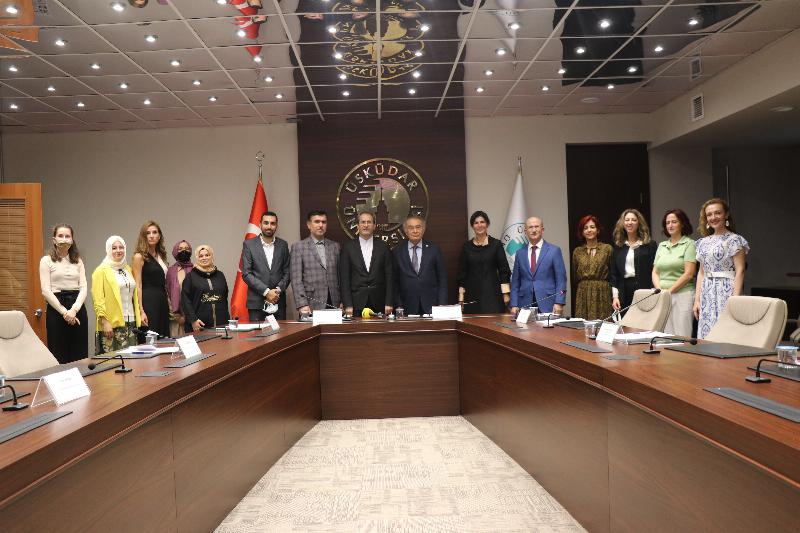
The ceremony, held in the Üsküdar University Senate Room, took place with limited participation within the scope of pandemic measures.
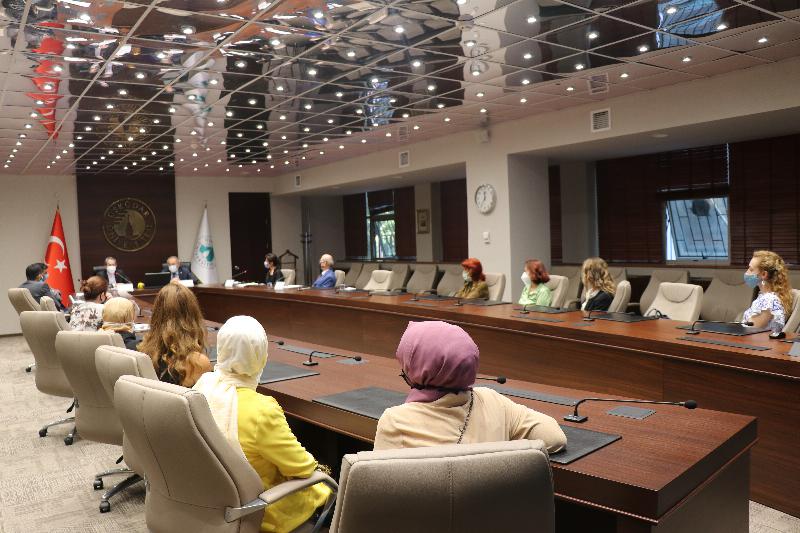
The ceremony was attended by Üsküdar University Founding Rector, Chairman of the Supreme Board of Management Prof. Dr. Nevzat Tarhan, Iranian Istanbul Consulate General Cultural Attaché Kourosh Moghtaderi, Consulate First Counselor Aref Mahri, Director of the Saadi Foundation Institutes Istanbul Persian Language Education Center Dr. Meraj Niknam, Director of the Institute of Sufi Studies Prof. Dr. Elif Erhan, and Institute of Sufi Studies faculty member Prof. Dr. Reşat Öngören. Saadi Foundation President and former Speaker of the Islamic Consultative Assembly of Iran, Gholam-Ali Haddad-Adel, participated in the ceremony with a video message. Of the twenty-three students who qualified for their certificates, nine received them during the ceremony.
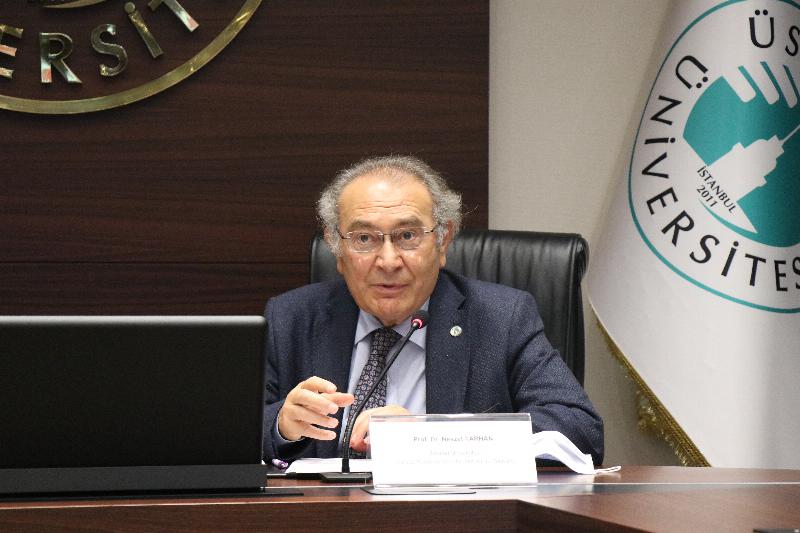
Prof. Dr. Nevzat Tarhan: “Interest in Persian is a Sign of a Serious Awakening”
Üsküdar University Founding Rector Prof. Dr. Nevzat Tarhan, in his speech at the ceremony, stated that the cooperation carried out with the university and the Saadi Foundation is bearing its first fruits, saying, “The interest of these students in Persian is a sign of a very serious awakening in this geography. We could not have imagined this 20-30 years ago. We are in the same civilization geography, but we have turned our backs on our own civilization. We should consider this as self-criticism. While turning to the West and adopting many of its values, we needed to modernize without neglecting our own culture. This distance from our historical and cultural roots caused some of our values to be lost or interrupted during the modernization process.”
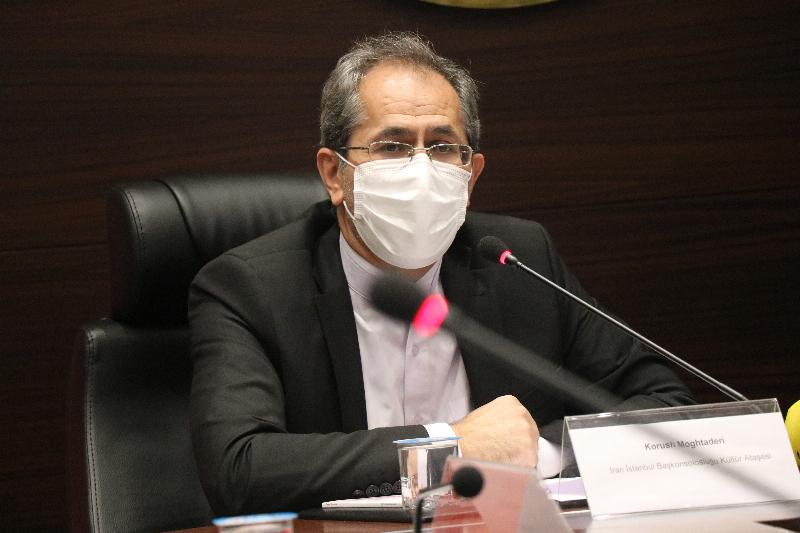
Korush Moghtaderi: “We Want to Develop Bridges of Friendship Between the Two Countries”
Cultural Attaché of the Iranian Istanbul Consulate General, Korush Moghtaderi, began his speech with Yunus Emre's lines: “Come, let us all be friends / Let us make the task easy / Let us love and be loved / The world will not remain for anyone.” Korush Moghtaderi also gave an example from contemporary Iranian poetry, saying, “I wanted to start my words with poetry because we are people of the same culture in the same geography. Today is a very beautiful day. We are on a blessed Friday. And I am very pleased to be together with our students and lecturers. Here, I am present as the Cultural Attaché of the Iranian Istanbul Consulate General and also as a representative of the Saadi Foundation in 65 countries worldwide. The Saadi Foundation is a foundation that works on language, much like the Goethe Institute, Cervantes Institute, and Yunus Emre Institute. Its duty and mission are to provide and spread Persian language education worldwide. We are very grateful to Üsküdar University for this valuable cooperation. Many works have been produced in Persian throughout the world. Persian is the language of culture, the language of art, literature, and Sufism. Therefore, the entire message of Persian literature to the world is nothing but peace, love, and friendship. We want to build bridges of friendship between the two countries.”
Prof. Dr. Nevzat Tarhan: “It is Very Important to Plant Seeds in This Regard”
Prof. Dr. Nevzat Tarhan noted that institutions like the Saadi Foundation and Yunus Emre Institute are carrying out this revitalization, stating, “Young people have also started to show interest in these topics and are trying to learn. The interest of our students and the planting of seeds in this regard are very important. Therefore, I find it important to cooperate with these institutions. God willing, we will also have a hand in this effort and contribute to these studies concerning our own cultural geography. We need to revive our cultural roots. This is important for the future.”
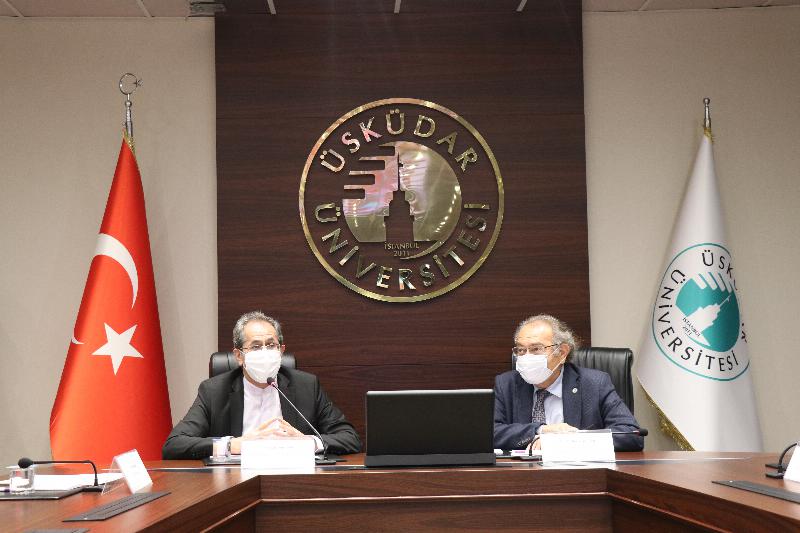
Prof. Dr. Nevzat Tarhan: “Persian is the Language of Poetry”
Prof. Dr. Nevzat Tarhan noted that not only Rumi but also the Persian poet Saadi Shirazi's work “Bostan and Gulistan” is a much-referenced and used work. He said, “The stories and depictions in it are widely used in daily life. I recommend my young friends to read Saadi Shirazi when reading Persian texts. Another characteristic of Persian is that it is a language of poetry. Rumi chose this language for that reason.”
Prof. Dr. Nevzat Tarhan stated that while learning Persian, one also learns about their own roots extending from the Seljuks to the Ottomans. He said, “I want to emphasize the importance of our civilization's geography. We talk about friendship and culture; for there to be unity, there must be unity in purpose. If there is unity in purpose, there is unity and alliance. What is the purpose? The purpose we learn when we read the Holy Quran is divine pleasure. Making divine pleasure the purpose is what matters.”
Prof. Dr. Nevzat Tarhan: “Friendship and Culture are the Most Important Diplomatic Fields”
Prof. Dr. Nevzat Tarhan noted that culture and friendship are common grounds, stating, “There may be different ideas. There are so many common areas. Focusing on rock-like differences when there are mountain-like similarities in the vast majority is falling for a trick here. Therefore, in such situations, we should evaluate based on commonalities and similarities, not on faults and shortcomings. Friendship and culture are the most important diplomatic fields here. Universities also generate ideas here. We are trying to translate these types of collaborations into practice. Hopefully, decision-makers will encourage these efforts. This will lead to new students, new participations, new relationships, and new networks. I thank everyone who contributed.”
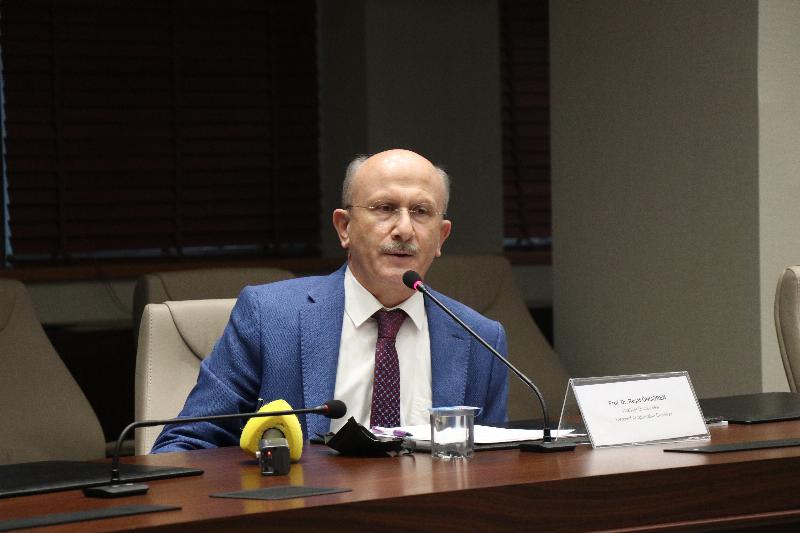
Prof. Dr. Reşat Öngören: “Persian is an Important Language for Sufi Studies”
Prof. Dr. Reşat Öngören from the Institute of Sufi Studies stated that their hands have been significantly strengthened in terms of Persian through the protocol made with the Saadi Foundation Institute. He said, “The education provided since 2019 has made a very serious contribution to our students in terms of accessing resources. Because the Persian language is one of the three main languages for Sufi studies. The other two are Arabic and Ottoman Turkish.” Prof. Dr. Öngören noted that the work of the Saadi Foundation is very important, and stated that relations would be established on a more solid ground as Turkish also becomes widespread in Iranian academic and cultural circles as a result of similar activities by the Yunus Emre Institute in Tehran.
Prof. Dr. Gholam-Ali Haddad-Adel: “A Part of Turkey's Cultural Heritage is Persian, and This Heritage is Considered a Common Heritage for Us Iranians”
Saadi Foundation President and former Speaker of the Islamic Consultative Assembly of Iran, Gholam-Ali Haddad-Adel, also noted in his video message that the Persian language has a long history in Turkey. Haddad-Adel said, “A part of Turkey's cultural heritage is Persian, and this heritage is considered a common heritage for us Iranians. The best-known example of this is Rumi's Masnavi. Shams wrote his ghazals in Persian. Official correspondence in the Seljuk State was in Persian. Today, there are numerous Persian works in libraries in Turkey, some of which are still unstudied. Persian literature is a treasure whose key is the Persian language. You, dear students, by learning Persian, can both learn the intricate concepts of Persian literature and better recognize the works written by your ancestors.” Haddad-Adel congratulated the students who successfully completed their programs and emphasized that those who learn Persian could be effective in developing relations between Iran and Turkey. Haddad-Adel also touched upon the continuation of cooperation between institutions and expressed his thanks to Üsküdar University and Founding Rector Prof. Dr. Nevzat Tarhan.
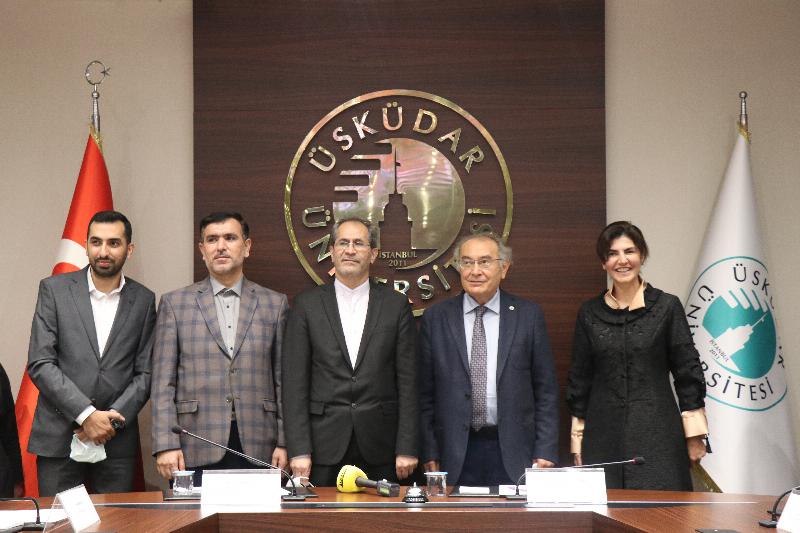
Prof. Dr. Elif Erhan: “Our Students Have Been Taking These Courses for Credit for the Last Four Semesters as Part of Their Registered Postgraduate Programs”
Director of the Institute of Sufi Studies, Prof. Dr. Elif Erhan, noted that in 2019, an education cooperation protocol was developed between the Üsküdar University Institute of Sufi Studies and the Cultural Attaché of the Consulate General of the Islamic Republic of Iran in Istanbul. “This initiative, which began in the Fall semester of 2019, was linked to a cooperation protocol with the positive evaluations of the parties. This protocol has been established between the Cultural Attaché of the Consulate General of the Islamic Republic of Iran in Istanbul and Üsküdar University. Our students have been taking these courses for credit for the last four semesters as part of their registered postgraduate programs. The curriculum for Persian language courses is prepared and presented by the Saadi Foundation Institutes Istanbul representation. Students who successfully complete the first level Ottoman Turkish, Introduction to Persian, and Persian Text Readings courses are also entitled to receive the international Persian language certificate from the Saadi Foundation Institutes. Today, with this symbolic ceremony, language certificates jointly prepared as a token of the established cooperation will be presented to the students of our Institute's Master's Programs in Sufi Culture and Literature and Doctoral Programs in Islamic Civilization Thought, History, and Literature. We also see this as a historical awareness.” she said.
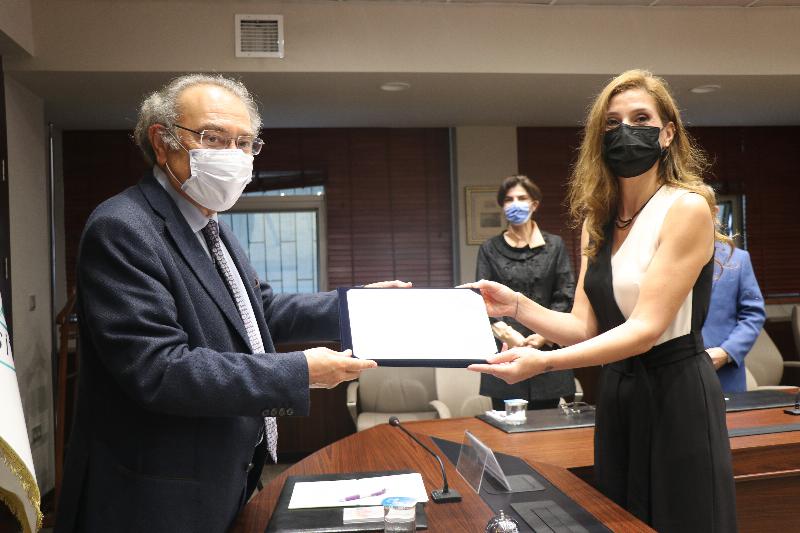
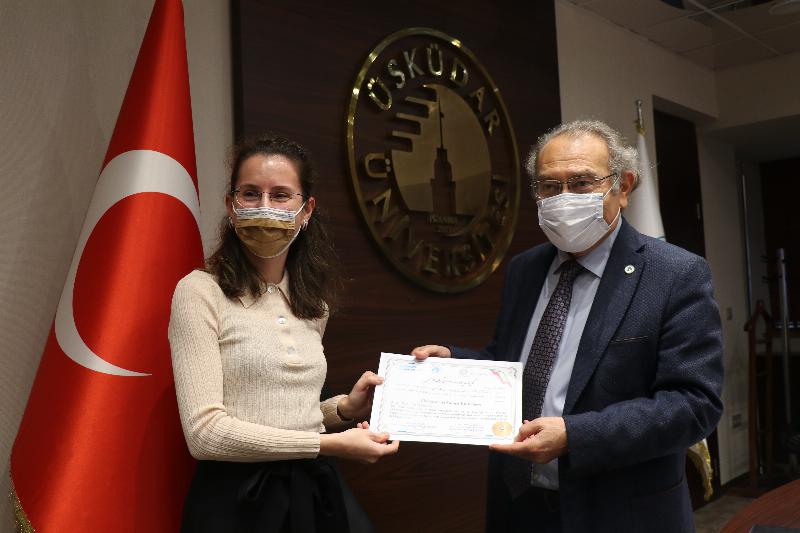
The ceremony concluded with Prof. Dr. Nevzat Tarhan and Korush Moghtaderi presenting the certificates to the students.
The program was broadcast live by ÜÜ TV.
Share
Update Date: February 28, 2026
Creation Date: September 18, 2021
Request a Call
Other News
- The book that read today's digital threats in 2014: Being a Conscious Family
- Experts warn: 'Instead of memorizing letters, teach pencil grip, scissor use, and coloring'
- School fear and school love both start in the family!
- Family is not merely transforming, it is being battered under a serious assault
- Artificial intelligence opens the door to early diagnosis in autism!