

Prof. Dr. Nevzat Tarhan answered Haber7's questions. Tarhan provided assessments and recommendations regarding the traumas experienced by earthquake victims.
Content
Prof. Dr. Nevzat Tarhan Explained What to Pay Attention to During the Normalization Process After the Earthquake
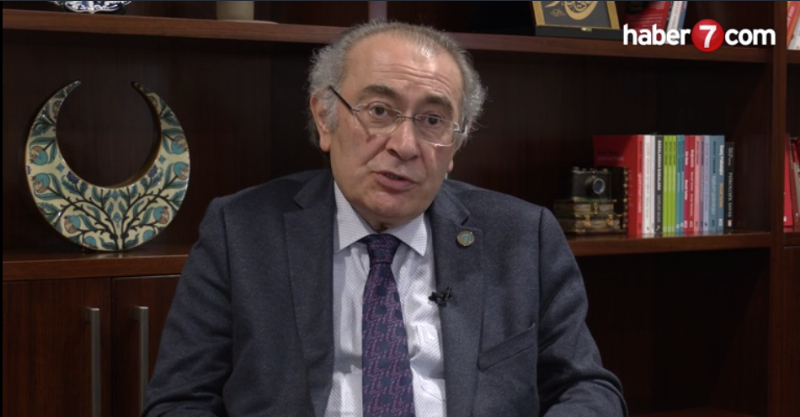
TURKEY EXPERIENCED THE CATASTROPHE OF THE CENTURY. IT WAS SHAKEN BY EARTHQUAKES OF MAGNITUDE 7.7 AND 7.6. THERE IS A TRAUMA CAUSED BY THE EARTHQUAKE. HOW SHOULD THIS TRAUMA BE INTERPRETED?
Life will now be divided into 'before the earthquake' and 'after the earthquake.' This applies not only to that region but to all of Turkey, and it should be so. Every trauma has a threat dimension and an opportunity dimension. The same rule applies to all traumas, just as it does to all natural disasters. Currently, in this acute phase, we have focused on the threat dimension. There is a post-traumatic maturation process. There is a trauma process that fosters growth and development. This process begins within 3 weeks. There is a shock period of 2-4 weeks. Everyone experienced great stress. Some were bewildered, disconnected from reality. Some became aggressive, while others withdrew into themselves. A major migration occurred in the region. Three-quarters of the population has migrated from the region. This is not a situation that will be forgotten, including for children. Therefore, we say that we should not try to make sense of this event in the first 7-14 days. Because questioning 'why did it happen' or searching for culprits greatly disturbs those in shock initially. It prevents traumas from being overcome. For this reason, in the initial period, in such a situation, saying 'it's fate' means making sense of it. In the first months, empathy and sharing emotions are important. Later, depending on the situation, in the 3rd, 6th, or 9th weeks, meaning can slowly be made. And here, we cannot prevent earthquakes or natural disasters, but we can prevent the rate of destruction and the death rate from natural disasters; we need to draw lessons from this. We love to put people in the defendant's chair; instead, being able to think focused on the lessons we can learn from this and directing our minds in this direction will be an gain for us. I even read a statistic that 20 years after the Kocaeli earthquake, the gross national product of that province has now increased compared to Turkey's overall, meaning the shock effect there spurred people to renew themselves.
CAN WE SAY THAT THIS SPUR, ALONG WITH THE AID AND SOLIDARITY COMING FROM BOTH TURKEY AND AROUND THE WORLD, HAD AN EFFECT ON UNITY AND TOGETHERNESS?
Absolutely. Dressing the wound and relieving the pain is incredibly comforting. It helps to overcome the shock effect more easily. As a society, we did this. It even reflected in the foreign press. Trucks were rushing like mad to the earthquake zone, which caused astonishment in the foreign press. This actually demonstrates the reflex of solidarity in our society.
WHAT ARE THE POINTS TO PAY ATTENTION TO DURING THE NORMALIZATION PROCESS?
In such situations, there are things a person can do and things they cannot. There are things they can control and things they cannot. The individual needs to assess and determine this. You cannot prevent this natural disaster, you cannot change it; from now on, you need to approach it with the accept-manage method. We will accept that such a thing happened, but many people cannot accept it. Especially losses cause great trauma. After seeing the deceased and performing burial procedures and rituals, the person accepts the situation. Sometimes, in some cases, when a person does not see the loss, their brain does not accept the situation. They cannot convince themselves. They constantly think the person will come if the door knocks. These loss cases are the biggest trauma. People who cannot use the accept-manage method need expert help, especially after 8 weeks. Experiencing this pain and the initial shock effect of the trauma for up to 8 weeks is a matter of acceptance. It is beneficial to experience that pain. If they don't experience that pain, they later feel guilty. Grief will be experienced, but if grief turns into a chaotic state, it becomes chronic grief, and a person who never smiles throughout their life emerges. A person who constantly wants to cry and die emerges. People become depressed.
CURRENTLY, WE ALL HAVE THE ANXIETY AND FEAR OF 'WHAT IF THERE IS AN EARTHQUAKE, WHAT IF I GET TRAPPED UNDER THE RUBBLE?' HOW SHOULD WE DEAL WITH THIS?
The earthquake had two types of effects. One is earthquake fear, and the other is avoidance behavior. In such situations, people in that region jump at the slightest sound. This is because an extreme sensitivity to earthquakes has developed, and rightly so, at present. Generally, we consider this normal for 6-8 weeks. If it lasts longer than 6-8 weeks, we call it stress disorder; in such cases, the person experiences an event that happened 2 months ago as if it happened yesterday. There are what we call flashbacks, where scenes pass before the person's eyes like a film strip. Even if they sleep at night, it constantly enters their dreams. They are afraid to sleep. In fact, sleep was the most disrupted thing during this earthquake. People in that region experienced many sleep disorders. In fact, everyone did. People started waking up at the slightest rustle. Constantly sitting and watching television is not very healthy during this period. We need to watch only as much as needed for information and then return to our daily routine. We are almost approaching 1 month; if we do not do this in such situations, we will cause secondary and tertiary traumas to ourselves and it will negatively affect our mental health.
MANY AID TEAMS ARE GOING TO THE EARTHQUAKE ZONE. WHILE HELPING THERE, HOW CAN WE ALL PAY ATTENTION TO HELPING WITHOUT HARMING THE HONOR, PRIDE, AND EMOTIONS OF THOSE THERE?
It is important to be able to provide aid without evoking a sense of gratitude in those people there. There are various ways to do this. Aid should not be given ostentatiously. Instead of individuals insisting 'I will give it to that person,' it is more appropriate to give it to the official institutions there and let them distribute it. Saying 'I will take a photo after helping' is currently ego gratification. Going there and taking photos is a very repulsive and wrong move. These are acts of pretending. There are types who only show up for appearance and act carelessly. This is an egocentric approach. It is a narcissistic approach. Therefore, in these situations, silent help is more important.
Those who are slow in their reactions there need to self-criticize. Let's prick ourselves with the packing needle and others with the sewing needle. In such a situation, we need to evaluate ourselves and ask, 'What is my responsibility here?'
Share
Update Date: March 01, 2026
Creation Date: February 28, 2023
Request a Call
Other News
- The book that read today's digital threats in 2014: Being a Conscious Family
- Experts warn: 'Instead of memorizing letters, teach pencil grip, scissor use, and coloring'
- School fear and school love both start in the family!
- Family is not merely transforming, it is being battered under a serious assault
- Artificial intelligence opens the door to early diagnosis in autism!