

Üsküdar Üniversitesi Founding Rector Psychiatrist Prof. Dr. Nevzat Tarhan offered advice to candidates on coping with exam stress and anxiety before YKS 2021, which will be held on June 26-27, 2021.
Content
Prof. Dr. Nevzat Tarhan: “Experiencing Exam Anxiety is Normal”
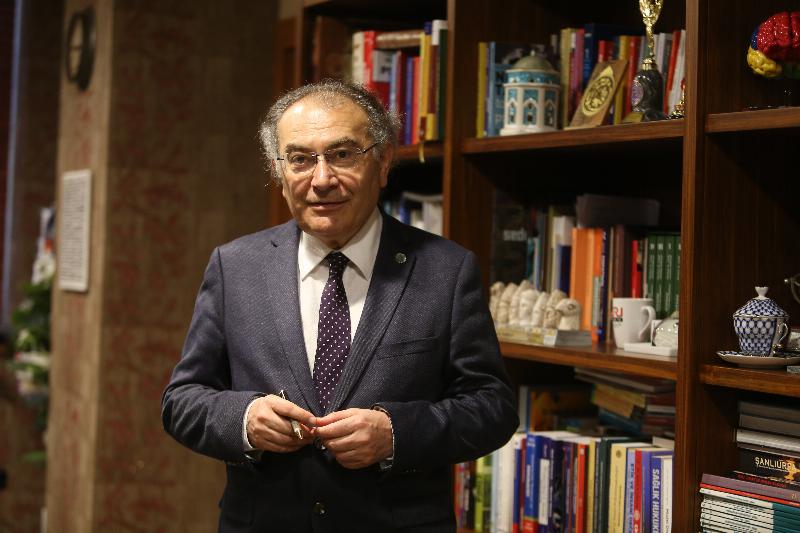
Very little time is left until YKS, which university candidates eagerly await. The TYT session of YKS will be held on June 26, and the AYT and YDT sessions on June 27. Stating that experiencing exam anxiety is an extremely normal and natural situation, Psychiatrist Prof. Dr. Nevzat Tarhan warned, “Everyone feels anxiety in such situations, but this is natural. The problem is when anxiety is at uncontrollable limits.” Prof. Dr. Nevzat Tarhan noted that 24 hours before the exam, one should distance themselves from thoughts of the exam, saying, “They should get together with their friends, but absolutely not talk about the exam. Because it is necessary to rest the brain.”
Anxiety is normal, inability to control it is the problem
Stating that experiencing exam anxiety is an extremely normal and natural situation, Prof. Dr. Nevzat Tarhan, “Because an exam requires a certain performance and accumulated effort, ultimately creating a feeling of accountability in the student. Everyone feels anxiety in such situations, but this is natural. The problem is when anxiety is at uncontrollable limits. Controllable anxiety dilates the vessels in the frontal region of our brain, increases attention, and accelerates learning. Carefree, unconcerned people cannot learn anything. Because a small amount of anxiety is necessary.”
A tempo is needed for the bicycle to move
“Progressing on the path of life is like riding a bicycle,” said Tarhan, adding, “A constant tempo is needed. An excessive tempo causes one to tumble, while being without tempo causes the bicycle to fall over. For this reason, expecting no anxiety at all during the exam is not realistic, but whether I can control this anxiety or not is what matters. Am I riding my bicycle at a good tempo, towards the right goal? Or am I not? For a person to ride a bicycle well, their goal must be clear when they get on it. Otherwise, if they go randomly, they will be affected by whatever comes their way.”
The meaning attributed to the exam increases anxiety
Emphasizing that the goal is very important for an individual, Prof. Dr. Nevzat Tarhan said, “Setting medium, long, and short-term goals is important. Now, the most significant thing that increases anxiety and disrupts the sense of control during an exam is the meaning attributed to the exam. Some people attach such a meaning to the exam that it’s as if it’s a matter of life and death, an apprehension that if they fail this exam, their life will end, or their environment and family unknowingly instill this meaning. The family constantly asks, ‘Did you study, son? How was it today? Is it going well?’ or to reassure them, some say, ‘Don’t worry about it, you are important, the exam is not.’ If the child has a sense of responsibility, that anxiety increases even more.”
Tarhan noted that the exam is one of the steps of success we encounter while progressing on the path of life, saying, “If you fail at one of these steps, there is a chance to recover later.”
Instead of thinking about the result, focus on the roadmap
Tarhan noted that one of the reasons the exam turns into anxiety is acting result-oriented, saying, “However, it is necessary to act process-oriented. In result-oriented thinking, feelings like ‘Will I win or will I not? What if I don’t win? I will be embarrassed, I will be disgraced. I won’t be able to look anyone in the face, I will feel shame’ emerge. However, one should focus on the process. One should draw a roadmap, saying, ‘I have an exam at this time, I will solve 100 questions a day until then. I will review these topics,’ and not think about the result. One should think about the roadmap. The word ‘vision’ has a beautiful equivalent in Turkish: for a person to imagine what they can become. Mission is the goal of realizing what one can do. Usually, in this exam, there is a mixture of vision and mission. A person imagines what they can become.”
Reminding of Rumi's compass example, Prof. Dr. Nevzat Tarhan said, “Rumi says, ‘Let one foot be on the ground, in reality, and the other foot in the world of dreams.’ Being able to establish this balance is important. Exams teach students this. They teach life. Dreaming also has its own balance and system. Humankind learns that. Let them dream about school and life, but they must not forget the compass example. Let one of their feet be in the realities of life, and one in their dreams.”
Differentiate treatment between those with and without responsibility
Stating that parents also have duties in reducing exam anxiety, Prof. Dr. Nevzat Tarhan said, “Mothers and fathers should also pay attention to this: if a young person has a sense of responsibility, they are approached differently; if they do not have a sense of responsibility, they are approached differently. If the child has a sense of responsibility, the child is already studying and anxious. The symptoms of exam anxiety are not just worry and excitement. There are also physical symptoms. The heart races, the hand trembles. One might frequently go to the restroom at the exam venue. The brain then secretes stress hormones. It secretes stress hormones like oxytocin and vasopressin. When these stress hormones are in small amounts, they increase attention. Being in excessive amounts, however, causes a loss of control and leads to panic. It is sufficient for the parent to be calmly by the child's side. It is enough for them to give the child the feeling of ‘I am with you, you did everything you could. We are behind you.’”
Prof. Dr. Nevzat Tarhan noted that the most significant obstacle before the exam right now is smartphones, saying, “Young people should keep them at arm's length while studying. If they are close, they will immediately attract their attention because they pull like a magnet. These types of devices are the reality of our time. So, instead of ignoring them, young people should be their subjects, use them for their purpose, but only if they have a purpose. That's why we tell young people to remember their purpose.”
No exam thoughts 24 hours prior
Prof. Dr. Nevzat Tarhan noted that 24 hours before the exam, one should distance themselves from thoughts of the exam, saying, “They should get together with their friends, but absolutely not talk about the exam. Because it is necessary to rest the brain. On the morning of the exam, they should definitely have breakfast at home. If possible, they should take a healthy snack with them. When attention is focused on one place for a long time, blood sugar can drop. This can lead to distraction. If they have something sweet, dopamine in the frontal region of the brain will immediately be stimulated, increasing attention even more. Before the exam, they can try to calm themselves by saying, ‘I did my best.’”
Share
Update Date: February 27, 2026
Creation Date: June 16, 2021
Request a Call
Other News
- The book that read today's digital threats in 2014: Being a Conscious Family
- Experts warn: 'Instead of memorizing letters, teach pencil grip, scissor use, and coloring'
- School fear and school love both start in the family!
- Family is not merely transforming, it is being battered under a serious assault
- Artificial intelligence opens the door to early diagnosis in autism!