

Noting that wisdom teaches the happiness of meaning, not the happiness of pleasure, Psychiatrist Prof. Dr. Nevzat Tarhan said that everyone needs wisdom in this era. Instead of saying "let me find a wise person and ask them," individuals should strive to develop themselves on the path of wisdom, said Tarhan, who stated that wisdom is about recognizing the limits of one's own knowledge, accepting uncertainty and change, and being able to consider the big picture within its context. Tarhan also added that wisdom is not a state but a journey, being on the path.
Content
Prof. Dr. Nevzat Tarhan: “Everyone should develop themselves on the path of wisdom”
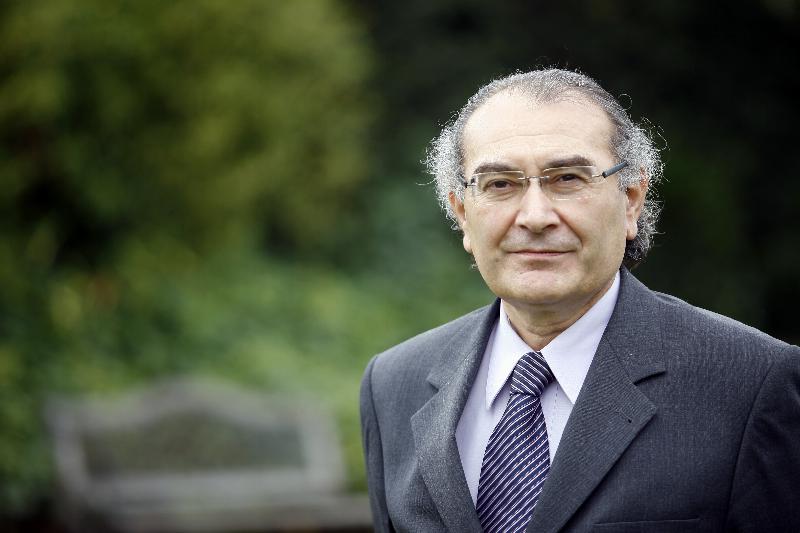
Üsküdar University Founding Rector, Psychiatrist Prof. Dr. Nevzat Tarhan, made evaluations on the topic of wisdom.
It is not easy to distinguish correct information
Prof. Dr. Nevzat Tarhan noted that the 20th century was particularly the century of wisdom and that the 21st century was entered with a significant information database. He said, “We have entered a period in human history where a large database is the greatest power. Information is very easily accessible, but distinguishing what is good, true, beautiful, and useful within this information has become much more important. Previously, in such situations, wise people were consulted. Now, instead of these people, you go to search engines, you easily access a lot of information, but humanity cannot decide if this information is good, useful, valid, safe, valuable, worthless, or harmful for me.”
Information and wisdom are separate concepts
Prof. Dr. Nevzat Tarhan stated that information and wisdom are separate concepts, adding that even individuals known to be very intelligent can sometimes make very big mistakes. Prof. Dr. Nevzat Tarhan, stating that “in the 21st century, wisdom will be more of a necessity,” said, “Wisdom will be needed because within such an abundance, even pollution, of information, how will we be able to find and extract useful, accurate, and valid information? Currently, there are serious deficiencies in this regard. Not everyone can access it.”
Summary of true wisdom: An Azerbaijani proverb
Referring to an Azerbaijani proverb included in his latest book series, Psychology of Wisdom, Prof. Dr. Nevzat Tarhan said, “There is a beautiful Azerbaijani proverb. I started that book with it: ‘If I eat little, I won't have business with the doctor; if I walk straight, I won't have business with the judge.’ Here, 'straight' is used in the sense of righteousness. 'If you go straight, if you are honest, you won't have business with the judge, the court, chaos, or the law. If you eat little, it won't harm your health.' In a way, this is wisdom. This is a summary of Eastern wisdom.”
We have lost wisdom in this age of hedonism
Prof. Dr. Nevzat Tarhan stated that this wisdom has been lost in today's world, saying, “In this age of information, an era of pleasure and speed, we live so fast that we have lost wisdom in this age of hedonism. For example, Plato, a student of Socrates, divides human happiness into two: hedonistic happiness and eudaemonic happiness. Hedonistic happiness is when a person pursues pleasure and becomes happy upon reaching it, but this fades, and pleasures do not bring happiness. Today, the number of people who say, 'I have reached all pleasures, yet I am still not happy,' has increased.”
The happiness that will satisfy a person is the happiness of meaning
Prof. Dr. Nevzat Tarhan noted the importance of happiness tied to meaning, stating, “This is what wisdom teaches. It teaches the happiness of meaning. It teaches the happiness of meaning, not the happiness of pleasure. In pleasure happiness, a person wants a house, a car. Material expectations arise. One day, a lady from a wealthy family approached us. She said, 'I have diamond rings, a sports car, a villa with a pool. I have everything, but I am still not happy.' The answer here is actually within the question. She has tied happiness to a material thing. It's not meaning happiness, meaning happiness is concrete happiness. The happiness that will satisfy a person is abstract happiness; that is the happiness of meaning. It is being able to live one's life in accordance with meaning. Wisdom is the path that teaches this.”
An 'alim' shapes others, an 'arif' shapes himself
Prof. Dr. Nevzat Tarhan drew attention to the terms “alim, arif, and hikmet” found in our culture, stating, “An alim is someone knowledgeable and learned in a particular subject. For example, if you are an alim regarding earthquakes, you have the final say on that matter, your opinion is sought, you have knowledge. An alim tries to convey the best information to people. Socrates' definition of wisdom also aligns very well with an arif. An arif is someone who knows himself. He is someone who shapes himself. An alim is someone who shapes others like a statue. An arif is someone who shapes himself.”
Wisdom is to do no harm and do good
Prof. Dr. Nevzat Tarhan stated that if wisdom were to be summarized in one sentence, some summarize it as “Do no harm to others, do good,” adding, “Do no harm to anyone, do good. Do no harm to anything, do good. In summary, it can be said: do no harm, do good.
Being useful to others is also wisdom
Prof. Dr. Nevzat Tarhan stated that in addition to a person being a good individual and having good moral and fundamental values, being useful to others is also wisdom, saying, “Those who are only useful to themselves are self-centered individuals. These people do not adhere to the principle of 'do no harm, do good'. Being in search of wisdom (hikmet) is important. That means it's important to know ourselves, to know others, and to think about how we should do things in the most correct and best way. To be able to act by asking what, how, where, when, and why to do something, in the right place and at the right time, is to act with wisdom. The 5W1H (Who, What, When, Where, Why, How) are actually questions of wisdom. Therefore, these questions allow us to synthesize the accumulated knowledge from centuries and the truths of this era as we learn wisdom.”
Prof. Dr. Nevzat Tarhan also stated that what is understood by wisdom is important, saying, “Therefore, wisdom should not be seen as simply a person who withdraws and lives apart. Confucius defines wisdom as follows: 'A person who brings order to their inner world first brings order to their social life and household affairs. Then they bring order to state affairs.' He described wisdom in this way.”
Prof. Dr. Nevzat Tarhan stated that wisdom is a concept that should be applied in all areas of life, saying, “If a person is a manager and manages their own work, their internal order, social affairs, and company affairs, being able to carry these out in an orderly manner is actually wisdom. Vision is important for the wise. It is not enough to manage today well; long-term thinking and foresight for five to ten years ahead are very important.”
One should have a goal of self-development
Prof. Dr. Nevzat Tarhan stated that in the age of information, it is very important for an individual to develop themselves in all matters related to wisdom and to have a goal of being on the path of wisdom, saying, “In recent years, the psychological dimensions of wisdom have also come to the fore. If a person cannot be their own leader, they cannot be the leader of a family, nor the leader of a society. A person also needs to empathize with themselves. We define empathy as taking into account the feelings and needs of others. Empathy is an important concept in wisdom, mental health, and society. Empathy is the most fundamental of moral foundations. In psychology, a person needs to empathize with themselves but also not do injustice to themselves. They need to consider their own legitimate needs. This allows a person to be at peace with themselves. That is why we emphasized the psychology of wisdom.”
Psychology found the remedy in wisdom
Prof. Dr. Nevzat Tarhan noted that despite the significant rise in humanity's welfare level today, crime and violence have increased. He said, “Globally, suicides have increased, divorces have increased. In such a situation, people are wealthy but not happy. Psychology researched wisdom. It found the remedy, the solution, in wisdom. A scientific branch related to this has developed, called 'happiness unit' or 'positive psychology'. Leading universities around the world offer this as a course. It is also known as the science of goodness. This teaching of wisdom is an expression of a global need. We all need it.”
Prof. Dr. Nevzat Tarhan noted that a person progressing on the path of wisdom is someone who strives to develop themselves. He said, “Because a person's place is determined at the end of their life. Their positives are placed on one side of the scale, and their negatives on the other. This person is weighed on a scale to see what they contributed to humanity, what kind of life they lived, what kind of traces they left, whether their good deeds outweigh the negative impacts they had on people. A general opinion about this person is formed.”
Emotions are also added to reason in wisdom
Prof. Dr. Nevzat Tarhan stated that a person's problem-solving ability is also a kind of wisdom,
“In philosophy, there are no emotions. There is only thought, reason, but in wisdom, emotions are also added to reason. This is what positive psychology did. There is a need for psychology. Wisdom incorporated emotions into philosophy. Emotions were also understood as a scientific category. The neuroscience of emotions emerged.”
Emotions have also become an important area of philosophy
Prof. Dr. Nevzat Tarhan said, "The subject of belief was always accepted as: belief has no connection with reason. People believed and did not walk the path with reason, it was said. After emotions were evaluated in a scientific category, they became not only a subject of wisdom but also an important area of philosophy. Arizona University published a manifesto in recent years. Its name is 'post-materialism science manifesto'. This means there is now a science beyond materialism. This also requires rational belief. A belief consistent with reason is a solid belief. If a person cannot provide an explanation for what comes after death, they cannot be happy, they cannot grasp meaning."
The book Psychology of Wisdom consists of two parts
Prof. Dr. Nevzat Tarhan stated that he divided his book, Psychology of Wisdom, into two parts, with the first part titled “Rational belief, Spinoza's fallacy, and the evolution of evolution.” Prof. Dr. Nevzat Tarhan also stated that in the second book, he addressed the concepts of the art of finding good, true, and beautiful, noting that in this book, he tried to combine some wisdom stories with the concepts of human happiness under the title “the art of finding good, true, and beautiful.”
Wisdom is a universal truth
Prof. Dr. Nevzat Tarhan noted that wisdom means the correct use of knowledge, and stated the following:
“In this era, everyone needs wisdom. That is, instead of saying, 'let me find a wise person and ask them,' a person should try to develop themselves on the path of wisdom. This wisdom leads to more beautiful lives, they become happier, both happy and successful. They become useful both to others and to themselves. We have a very serious need for such a type of person. Selfishness and wisdom do not go hand in hand. Someone who forgets that they are a part of the society they live in loses their wisdom. Wisdom is about recognizing the limits of one's own knowledge, accepting uncertainty and change, being able to think of the big picture within its context, and developing new problem-solving styles by bringing different perspectives to an event. In wisdom, looking at the big picture is very important. Therefore, wisdom needs to be learned. Wisdom is not a state but a journey, being on the path. Let us embark on the path of wisdom. See then how information appears before us and what beautiful meanings we find. A person becomes at peace with themselves and becomes someone who gives positive energy to their surroundings, who gives happiness. For example, Mother Teresa was a wise nun. They ask, 'How can the world be livable?' She says, 'It becomes livable by doing good, one-on-one.' Therefore, wisdom is a universal truth, and we will do this.”
Share
Update Date: February 28, 2026
Creation Date: January 28, 2022
Request a Call
Other News
- The book that read today's digital threats in 2014: Being a Conscious Family
- Experts warn: 'Instead of memorizing letters, teach pencil grip, scissor use, and coloring'
- School fear and school love both start in the family!
- Family is not merely transforming, it is being battered under a serious assault
- Artificial intelligence opens the door to early diagnosis in autism!