

Üsküdar Üniversitesi Founding Rector, Psychiatrist Prof. Dr. Nevzat Tarhan, met with spiritual counselors assigned to many regions of Turkey in a program organized by the Presidency of Religious Affairs. Tarhan, who met with experts under the title "Spirituality-Focused Psychological Counseling and Guidance," stated that illnesses should be seen not as a threat, but as an opportunity for self-improvement. Emphasizing patience and gratitude as two magical words, Tarhan also noted that every illness is a form of resilience training.
Content
Prof. Dr. Nevzat Tarhan: 'Every illness is resilience training.'
'We don't call them addicts; we call it reward deficiency syndrome'
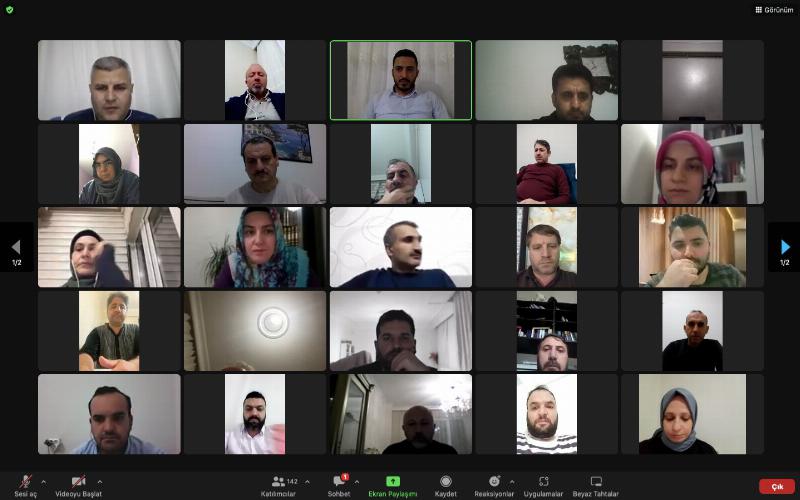
Tarhan made important remarks during a meeting with a special group consisting of personnel assigned to provide spiritual counseling services in hospitals affiliated with the Directorate of Religious Affairs, disability coordinators, and provincial addiction combating coordinators.
In the online meeting, which saw participation from many cities across Turkey, Üsküdar Üniversitesi Founding Rector, Psychiatrist Prof. Dr. Nevzat Tarhan emphasized that the synthesis of religious knowledge with scientific knowledge is more effective for people of this era. Tarhan stated: “Scientific soundness has replaced religious soundness in this era. Therefore, when we synthesize and present religious knowledge with scientific knowledge, it is more effective for people of this age. Ultimately, when approaching this patient group, it is important for you to correctly understand and address their needs. The addiction group, however, is a completely different group. In addicts, the reward-punishment system in their brains is disrupted. In fact, we no longer call them addicts; we call it reward deficiency syndrome. These individuals are not satisfied with rewards; if the reward-related area in their brains is normally like a path, in these individuals it is like a highway. Therefore, you can only help them after they have passed the acute treatment method. If these individuals have a quest for faith, a spiritual quest, that is a great chance.”
'Those who will deal with addicts need to specialize'
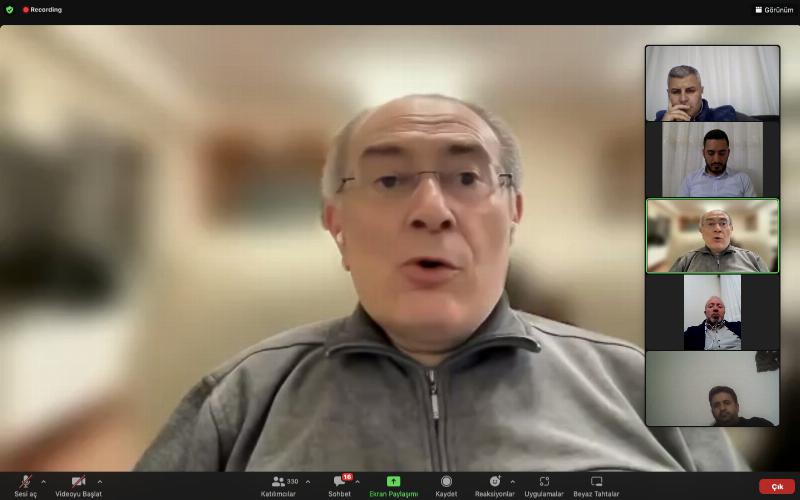
Speaking at the heavily attended program, Prof. Dr. Nevzat Tarhan stated that it would be impossible to help addicted individuals if their feeling of loneliness is not addressed; “As with other patients, the biggest problem is loneliness. When they feel down about something or things go wrong, there are former addicted patients in such situations. They help these individuals free of charge. In a way, they try to do what you are trying to do. When someone feels down about something, they say, 'There's no other way out,' and start looking for alcohol and substances as a stress reduction technique. At that moment, they need to have someone they can call. If there is someone they can call at that moment, they call that person and give up on turning to substances. We need to alleviate their feeling of loneliness. If we cannot alleviate their feeling of loneliness, we cannot help them. Those who will deal with addicts need to specialize. A system where an addict can reach you anytime, on call, is important to establish. Therefore, when approaching addicts, there is a need for a rehabilitation system that makes them feel they are not alone. There are, in a way, three types of protection; primary, secondary, and tertiary protection. What is primary protection? People strive not to get sick; that's the ideal. What is secondary protection? Risk groups are identified, and the disease is treated with early diagnosis. Tertiary protection, on the other hand, aims to prevent recurrence after the disease has occurred. Your approach is more like tertiary protection, aiming to prevent the disease from recurring and to make them feel they are not alone during the difficult periods of their lives. Therefore, a study that can make them feel they are not alone is important, and you cannot reach everyone individually here, but it is important for the person to feel the Creator's presence by their side in such situations.”
Two magical words: 'Patience and gratitude'
Tarhan touched upon the idea that illness is not an enemy or something that can harm us, but merely a difficulty that accompanies us at some point in our lives, which we need to accept and manage. Tarhan stated: “Whoever has Allah by their side is a majority of one, and these individuals can overcome illness and fight it. They need to know this very well; that is, illness is not an enemy for us, not something that can harm us. It is merely a difficulty, a challenge that accompanies us at some point in our lives, which we need to accept and manage. In such situations, there are two magical words that you undoubtedly use. One of the two magical words is patience, and the other is gratitude. For example, regarding the word patience in such situations; it is said, 'Patience is bitter, but its fruit is sweet.' In such situations, we say, 'I can't be patient,' but patience is such a thing that it is a meditative act. Patience is not enduring. It is stepping aside and conforming to the speed and rhythm of nature. A sick person in such situations is going through a difficult period in their life. In such situations, they need to act in accordance with the speed and rhythm of nature. When you can say, 'Instead of seeing this coming my way as an enemy and fighting it, I need to manage this; leadership will be with me, I need to manage it, leadership will not be the illness,' that's when it becomes resilience training. In such situations, the second is gratitude, which means knowing the value of what you have.”
'Illnesses should be seen not as a threat, but as an opportunity for self-development'
Prof. Dr. Nevzat Tarhan drew attention to the fact that every illness is a form of resilience training. Tarhan stated: “An illness, a calamity, any life event one experiences, is a trauma. Trauma is twofold: Every trauma has a risk aspect and a danger aspect. And also an opportunity aspect... What is the danger aspect? The illness will progress and become a bad illness. What is the opportunity aspect? After this passes, I will emerge stronger from it, and this will cause a reshaping in my life, I will implement plan B instead of plan A. Therefore, you can enable them to see illnesses not as a threat, but as an opportunity for self-development. Generally, when illness comes, humankind sees it as a threat, and a materialistic perspective also makes illness perceived as a threat. However, illnesses are not threats; illnesses are also opportunities. They are an opportunity for one's spiritual advancement, an opportunity for psychological maturation, and an opportunity for psychological well-being. Every illness is resilience training. Many illnesses teach something that we try to teach in therapies.”
'Overly interventionist treatments increase the disease in the person'
Prof. Dr. Nevzat Tarhan, addressing the point that establishing good cooperation with the physician greatly facilitates treatment, stated: “There are two types of medicine. What was old medicine? Aggressive medicine in the style of 'we hang, we cut, we look' surgical medicine, but the current understanding of medicine is treatment without making incisions, a respectful approach to tissues. Now, what does this understanding of medicine entail? For example, stomach surgery is no more; it's a thing of the past. In abdominal surgeries, three small holes are opened, the gallbladder is removed from there; there are no longer such large incisions. Why? Because they are trying to treat without making wounds. All those heavy surgical interventions disrupt the immune system. The same applies to psychological and psychiatric treatments. These are called aggressive treatments and invasive treatments. Overly interventionist treatments increase the disease in the person. Therefore, in what we call non-invasive treatments, people in such situations can try to treat the person without harming their wound, similar to tissue-respectful medicine. We do this. This, of course, requires compassion; the physician's compassion comes into play here. Establishing good cooperation with your physician greatly facilitates treatment.”
Share
Update Date: March 01, 2026
Creation Date: January 16, 2023
Request a Call
Other News
- The book that read today's digital threats in 2014: Being a Conscious Family
- Experts warn: 'Instead of memorizing letters, teach pencil grip, scissor use, and coloring'
- School fear and school love both start in the family!
- Family is not merely transforming, it is being battered under a serious assault
- Artificial intelligence opens the door to early diagnosis in autism!