

Üsküdar University Founding Rector, Psychiatrist Prof. Dr. Nevzat Tarhan was a guest on Diyanet TV’s program ‘Kahve Bahane’. In the program, where many topics related to life were discussed, Tarhan stated; “This is truly an interesting time. First, the truths of this era are different. We need to provide new answers to old questions. When we give old answers to old questions, we create a distance between generations. Young people ask such questions and ponder such topics that currently every high school student is like Ibn-i Sina… Therefore, we need to provide answers to these new questions based on Anatolian wisdom, which has ancient roots. If we give new answers disconnected from the past, then we will be swept away by the winds of popular culture.”
Content
Prof. Dr. Nevzat Tarhan; “Every High School Student is Like Ibn-i Sina…”
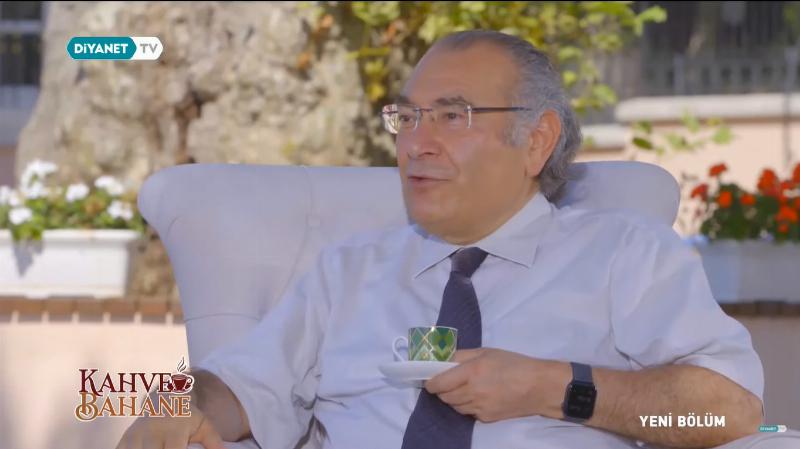
“We learn more than 50% of the information we acquire in life between the ages of 0-3”
Emphasizing the importance of the family environment provided alongside motherhood and fatherhood, Prof. Dr. Nevzat Tarhan stated; “Raising children actually means a warm family environment. Without a warm family environment, children grow up on the streets like this. Or they grow up in institutions. Recent studies encompassing all human values include nearly 60 cases of wild children. There are children found in forests who were lost and later found, but they cannot be taught humanity or motherhood. Sexual roles or male and female roles cannot be taught to them. These people completely act like the animal they were with. These are studies that have entered the literature. A person's entire humanity is formed between the ages of 0-6, and now this age range has been narrowed to 0-3 years. We learn more than 50% of the information we acquire in life between the ages of 0-3. This has become such a period. Therefore, 0-3 years are crucial in parenting. Motherhood and fatherhood are serious matters, and investment is needed in them. In this process, there is a need for a stable, consistent, and continuous relationship.”
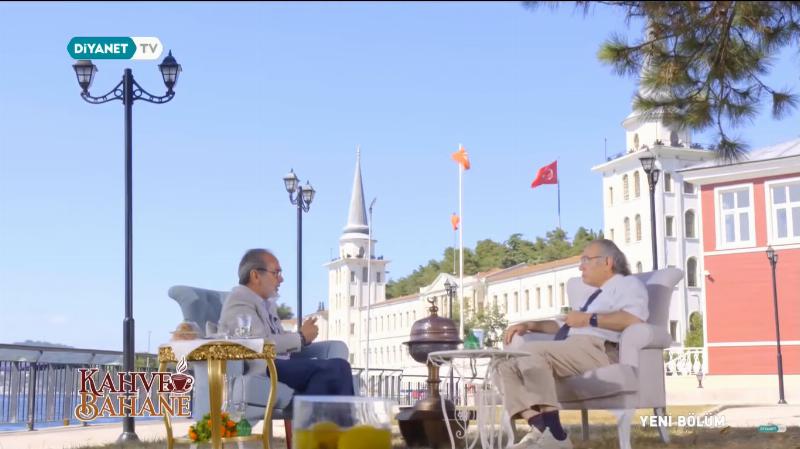
“We need to provide new answers to old questions”
Drawing attention to the subject of his book ‘Psychology of Belief: Humanity in the Triangle of Soul, Brain, and Mind’, published in July 2021, Prof. Dr. Nevzat Tarhan stated; “Generally, there is always religious psychology. However, the biggest pillar of religious psychology is actually the psychology of belief. For example, the subject of Ilm al-Kalam should be taught in high schools for this reason. Even in Imam Hatip schools, it was only available in the 12th grade. Yet, young people ask such questions and ponder such topics that currently every high school student is like Ibn-i Sina. Therefore, this is truly an interesting time. First, the truths of this era are different. We need to provide new answers to old questions. When we give old answers to old questions, we create a distance between generations. Therefore, we need to provide answers to these new questions based on Anatolian wisdom, which has ancient roots. If we give new answers disconnected from the past, then we will be swept away by the winds of popular culture. Currently, global capital, through Hollywood, is moving towards a single-culture society. Perhaps many cultures will disappear in 50 years. If we do not want to be among the cultures that will disappear, we need to modernize along with our own cultural values.”
“Positive psychology is often misunderstood as being like Pollyannaism, but it is not”
Prof. Dr. Nevzat Tarhan, discussing the emergence and foundation of Positive Psychology, stated; “Positive psychology is often misunderstood as being like Pollyannaism, but it is not. For example, what does classical psychology do? It corrects pathology, faults. It brings it to zero. Positive psychology, on the other hand, raises this state above zero. ‘How can you live happier?’ ‘How can you avoid getting sick?’ It provides individuals with education on questions like these. Therefore, this state of raising above zero is called Well-Being, or a manifesto of recovery, goodness. Harvard University introduced the science of happiness as a course in 2015, and Yale University in 2018. Yale University even made this course available to the public for free. 3.5 million people registered for the course. This March, the New York Times also reported on this situation. As Üsküdar University, we launched this course in 2013, before Harvard University. We uploaded its videos. And do you know what the content of that course is? It is entirely based on Anatolian wisdom and Mevlana. There are modules like gratitude training, stress management, anger control, and sharing. By incorporating these, it has systematized the wisdom of our Anatolian tradition. It develops and presents it this way. It's a good thing it does, because this situation arose due to our laziness. In fact, one of my reasons for writing the book Mesnevi Therapy is this.”
“Narcissism, selfishness, and opportunism have increased in epidemic proportions, there is an erosion of empathy”
Prof. Dr. Nevzat Tarhan, drawing attention to the cultural change experienced today, stated; “California syndrome has 4 characteristics. First, hedonism (pleasure-seeking). The individual chooses the pursuit of pleasure as their life's purpose. Second, narcissism (self-centeredness). The individual has made focusing on their own interest a life philosophy. Humans are beings who pursue their own interests, but currently, the Western world is under the influence of an existentialist philosophy that says ‘you will not help anyone, you will work for your own interest’. In this situation, the third characteristic emerges as loneliness. Loneliness is the biggest social psychology problem of the West. The fourth is unhappiness, depression, suicide. Currently, narcissism is a disease like the social cancer of the West. A book titled ‘The Narcissism Epidemic’ was published. I have it on my desk right now. An epidemic is called a smaller version of a pandemic. Narcissism, selfishness, and opportunism have increased in epidemic proportions. They say there is an erosion of empathy. That means there is no empathy. People cannot read the rights or feelings of the other side. They only think of themselves. This is a cultural change created by the ruthless competition of the capitalist system. As a result, the first victim was the family.”
Share
Request a Call
Other News
- Prof. Nevzat Tarhan: “Those with a mental filter are not afraid of the digital”
- Artificial intelligence doesn't eliminate the translator, it transforms their expertise!
- Social responsibility courses moved to the field
- Erasmus+ Orientation Week completed at Üsküdar
- Prof. Nevzat Tarhan: “Brain secretes ‘dark glue’ in social media lynchers!”