

Psychiatrist Prof. Dr. Nevzat Tarhan stated that individuals subject themselves to self-control during the month of Ramadan, adding that Ramadan's most significant effect is protecting people from making mistakes. Tarhan stated, “In this defensive effect, it is undeniable that a person reconciles with their own ego, their desires, and their impulses. During Ramadan, a person performs self-reckoning. They subject themselves to self-control. They say, 'Where did I go wrong? Stop, think, re-evaluate.' They pause the things they do automatically.” Prof. Dr. Tarhan drew attention to the increase in feelings of empathy and forgiveness during the month of Ramadan.
Content
Prof. Dr. Nevzat Tarhan: “Empathy and Forgiveness Increase During Ramadan”
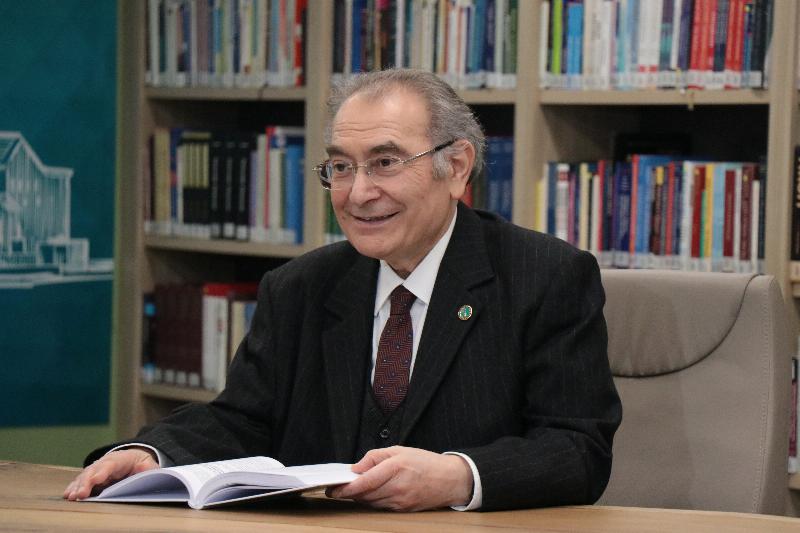
Founding Rector of Üsküdar Üniversitesi, Psychiatrist Prof. Dr. Nevzat Tarhan, evaluated the effects of Ramadan on emotions and anger management.
Prof. Dr. Nevzat Tarhan stated that the meaning of the Ramadan fast is not only about eating and drinking but also about re-evaluating emotions and behaviors. He said, “There's always something said: when fasting, it's not just our stomachs that fast, but also our eyes, ears, and all our limbs. If the fast is observed in this manner, it aligns with the divine objective of Ramadan.”
How Does Ramadan Affect Self-Perception?
Referring to scientific studies on how Ramadan particularly affects human emotions, Prof. Dr. Nevzat Tarhan stated that a decrease in negative self-perception among individuals is observed during the month of Ramadan. Prof. Dr. Nevzat Tarhan said the following:
“In studies conducted by Çanakkale and Pamukkale Üniversiteleri, the effects of Ramadan fasting on positive self-perception, feelings of hostility, and anger control were investigated. These were examined individually, and scientific studies were carried out. Studies were conducted on groups of men and women who observed the Ramadan fast and optional fasts. Pre-tests and post-tests are administered. Tests are repeated at the beginning and towards the end of Ramadan, and a decrease in negative self-perception is determined. Negative self-perception refers to individuals with low self-esteem viewing themselves negatively or as worthless. Changes in feelings of hostility are also measured. In the study conducted by Pamukkale Üniversitesi, a decrease in these two emotions was observed in both men and women during Ramadan. This is very important. In negative self-perception, individuals do not value themselves; especially, we see that most of these people lack forgiveness, have no mercy, and do not forgive. During Ramadan, empathy increases, and forgiveness increases. When these emotions increase, a mental burden is lifted, a load is taken off one’s back. Consequently, a person who constantly felt bad begins to feel good.”
Cells Regenerate When the Body Is Hungry
Prof. Dr. Nevzat Tarhan noted that fasting has neurobiological effects as well as biological effects, stating, “In 2016, a Japanese scientist received the Nobel Prize for discovering autophagy. In autophagy, the diet system changed, and an intermittent fasting system is now globally practiced. Individuals are kept hungry for specific hours. Cell biologists and cytology specialists have determined that when the body is hungry, the cell itself begins autophagy, meaning it converts unused proteins and certain unused particles into energy. Just as you burn other things when you run out of wood at home, the body also renews its own cells. Furthermore, studies reveal that even DNA damage is repaired.”
Prof. Dr. Nevzat Tarhan emphasized that hunger regenerates cells in humans, saying, “To make a flower bloom that isn't opening, they place it in darkness. When a flower remains in darkness for three days with no light entering, it says, 'Oh no, I'm in danger,' and begins to open. When we subject a human to hunger stress, our body regenerates cells. This is also one of the most important methods of fighting cancer. Why does cancer occur? In cancer, uncontrolled proliferation occurs, and DNA is damaged. In hunger stress, because the system renews itself, the body repairs DNA damage. For all these reasons, the month of Ramadan has such a biological benefit in this regard.”
Anger Control Increases in Those Who Fast!
Prof. Dr. Nevzat Tarhan stated that despite claims of increased anger during Ramadan, the situation is actually the opposite. He said, “In conducted studies, measurements are taken according to an anger control scale. During Ramadan, the suppression of anger, outward expression of anger, and the ability to control anger are investigated in individuals. It is determined that anger control increases in those who fast during Ramadan. These tests are conducted at the beginning and towards the end of the Ramadan fast, with an interval of 3-4 weeks. The first few days might be an adaptation period. If a person fasts with belief during the adaptation period, it becomes beneficial. If they fast without belief, meaning for social reasons or 'what will people say,' the fast becomes difficult because they observe it reluctantly. When observed reluctantly, the brain does not assist. Above our consciousness, there is our free will, and we use it to command our brain to 'control hunger.' During Ramadan, you no longer feel the urge to seek food. That feeling occurs for the first few days, and then the body adapts. By saying 'I will eat in the evening now,' the brain is conditioned. When a person believes, they change the program in the brain. This is also not external control but internal control. External control is external discipline imposed by peer pressure. Internal control is self-discipline. The ideal discipline training and ideal will training that a person performs with belief happen in this way.”
Peace Is Different from Happiness
Prof. Dr. Nevzat Tarhan noted that belief makes a person peaceful, stating, “There is something that belief provides. The most important need for a human is peace. Peace is different from happiness. Happiness in Western culture is usually understood as coming from external reasons. In the style of 'wear this, be happy; buy this, be happy; eat this, be happy.' However, being happy for internal reasons, being happy with the small things you possess, being happy thinking about working limbs instead of non-working ones, even from a cup of tea you drink, also makes a person peaceful.”
During Ramadan, Individuals Subject Themselves to Self-Control
Prof. Dr. Nevzat Tarhan stated that individuals subject themselves to self-control during the month of Ramadan, saying, “Ramadan’s most significant effect is protecting people from making mistakes. In this defensive effect, it is undeniable that a person reconciles with their own ego, their desires, and their impulses. In therapies, therapists try to be a mirror to the person. By being a mirror to the person, factors such as their strong and weak points, problem-solving style, and stress management style in their personality are examined. According to this, attempts are made to guide the person. During Ramadan, a person performs self-reckoning. They subject themselves to self-control. They say, 'Where did I go wrong? Stop, think, re-evaluate.' They pause the things they do automatically.”
Ramadan Promotes Delayed Gratification
Prof. Dr. Nevzat Tarhan noted that this is also a revision of oneself, saying, “If a person makes a mental renewal within themselves, they ask questions like, 'Where did I go wrong? Whom did I hurt so far? I should be more optimistic towards people; I should appreciate the things I have.' At this point, patience and resilience are important. Ramadan enforces delayed gratification. It enforces the mandatory postponement of pleasures. There is a delayed gratification module. Especially adolescents fall into pleasure traps because they lack delayed gratification skills. They want something they like to happen immediately. The human brain says, 'Immediately, now.' However, in childhood and youth, you will learn to live in the present.
Adulthood signifies spiritual maturity. A person with spiritual maturity possesses maturity in delayed gratification. A person with maturity in delayed gratification has the skill of resilience against stress. They learn something from stress and return to their original state after stress. Someone who is vulnerable to stress loses their ego strength. They conduct a marshmallow test with kindergarten children. Those who manage to wait for 15 minutes are given more marshmallows. Those who want it immediately are given one. Twenty years later, the same individuals are measured again. Individuals with delayed gratification skills show emotional intelligence that is 20 percent higher. They are more balanced in relationships with the opposite sex. Not only academic success, but also their social and emotional skills are more developed,” he said.
Share
Update Date: March 01, 2026
Creation Date: April 03, 2023
Request a Call
Other News
- The book that read today's digital threats in 2014: Being a Conscious Family
- Experts warn: 'Instead of memorizing letters, teach pencil grip, scissor use, and coloring'
- School fear and school love both start in the family!
- Family is not merely transforming, it is being battered under a serious assault
- Artificial intelligence opens the door to early diagnosis in autism!