

Üsküdar University Founding Rector Prof. Dr. Nevzat Tarhan met with religious officials within the scope of the "Imam Hatip Schools Administrator Meetings Program," held in cooperation with the General Directorate of Religious Education of the Ministry of National Education and Samsun Governorship. Tarhan, who participated online in the meetings that started in Samsun, made important evaluations to the participants regarding 'Emotional Intelligence in Leadership.' Emphasizing that emotional intelligence is essentially the education of multi-intelligence emotions, Tarhan stated that educators are bearers of values.
Content
Prof. Dr. Nevzat Tarhan: "Educators are bearers of values"
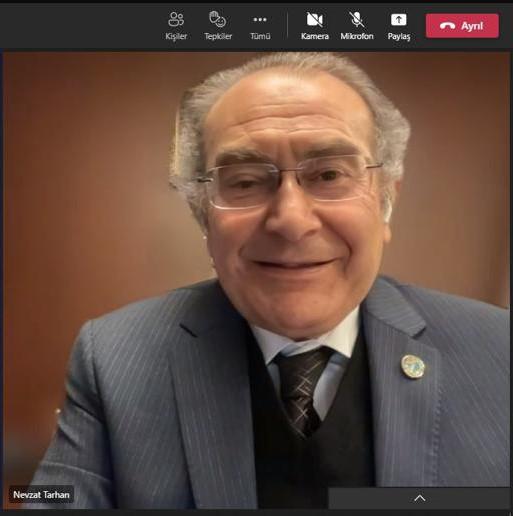
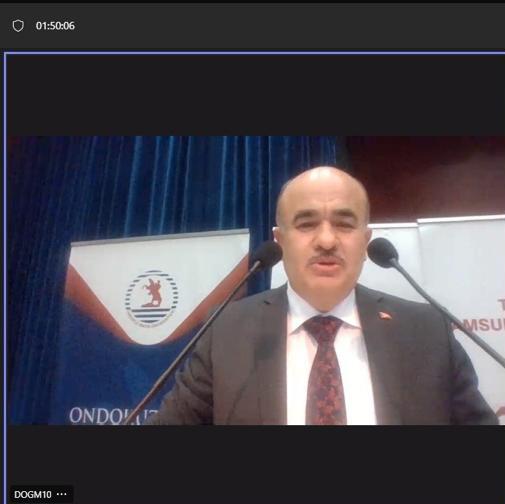
Samsun Governor Assoc. Prof. Dr. Zülkif Dağlı, President of Religious Affairs Prof. Dr. Mehmet Görmez, Ondokuz Mayıs University Rector Prof. Dr. Yavuz Ünal, Samsun Provincial Director of National Education Dr. Murat Ağar, Director General of Religious Education Mehmet Nezir Gül, and ÖNDER Honorary President İbrahim Solmaz also attended the opening of the "Imam Hatip Schools Administrator Meetings Program" held at Ondokuz Mayıs University Atatürk Congress and Culture Center.
6 Virtues Important in Every Person's Life…
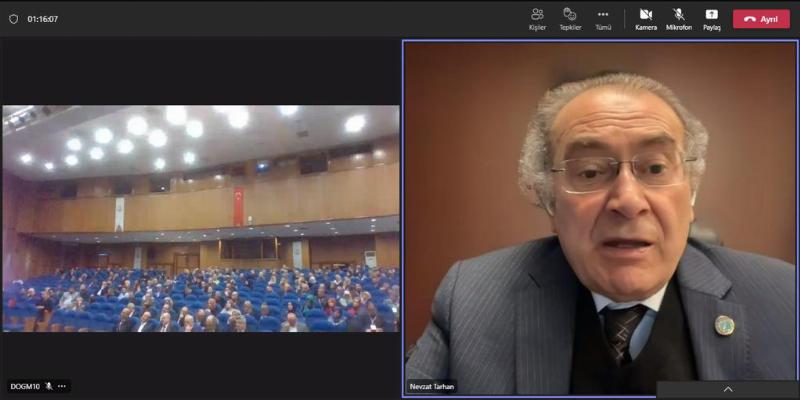
Following the opening speeches, Üsküdar University Founding Rector Prof. Dr. Nevzat Tarhan gave a seminar to the administrators titled 'Emotional Intelligence in Leadership.' Tarhan, who connected online to the congress center, spoke about 24 values under 6 virtues. Tarhan said; 'Emotional intelligence essentially means the education of multiple intelligence emotions, and psychology encompasses emotions, thoughts, and behaviors. Now, the importance of values has also been understood. Here, the left brain is concerned with logic, reasoning, analysis, speech, and calculation. The right brain is concerned with emotions, excitements, music, art, and understanding problem-solving. Gardner talks about 6 virtues and 24 values in the brain. The 6 virtues are: wisdom, courage, humanity, justice, temperance, and transcendence. These 6 virtues are important in every person's life. Gardner is the person who developed the theory of multiple intelligences at Harvard in 1980. So, it develops wisdom, courage, humanity, justice, temperance, and transcendence. Human values do not occur spontaneously. They are not innate or genetic; they are learned. For example, mating is genetic, but marriage is cultural. Eating, drinking, reproduction are biological, but being human, being a good person, being wise in human values, being courageous by making the right decisions at the right place and time, having humanity, being just, being temperate, believing in transcendent values are values that humans learn. Humans are only born with a predisposition to learn these. If there are children lost in the forest, they cannot learn the cooperation of the 6 virtues. Human values are learned when a child starts walking. In fact, they are learned from birth, during pregnancy.'
"Educators are bearers of values"
Stating that values-based education is an education demonstrated through experience and transmitted through behavior, Tarhan said; 'What has been the role of humanity in a changing world? In what role is humanity in a changing world? In the USA, they make statistics for everything. Between 1950 and 2000, the per capita income (gross national product) in the USA increased from 20 thousand dollars to 35 thousand dollars, but the happiness curve is not parallel. Statistical data confirms the American saying 'Money can't buy happiness.' So why can't it make people happy? We set happiness as an ego ideal for people. The capitalist system set pursuing pleasure as a goal. Despite this, happiness is declining. Why? Meanwhile, there are generally accepted 21st-century skills. One is emotivism, meaning social and emotional skills have become as important as technical and academic skills. The primary bearer of values is the mother, father, i.e., the family. The second bearers of values are teachers. Educators are bearers of values. While carrying these values, by living those values, for example, if a student in the classroom treats their deskmate with value and respect, they will treat their spouse the same way after marriage. This needs to be taught in the classroom. Teaching only academic knowledge is not enough. Transmitting these values to students in this way constitutes values-based education. It cannot be done by giving conferences saying 'Values are so beautiful, values are so beautiful.' Values-based education is education demonstrated through experience and transmitted through behavior. And that happens with emotional and social skills.'
"The greatest truth in the universe is the truth of connectedness"
Emphasizing that social media is the open door of the home, Prof. Dr. Nevzat Tarhan stated that with children using smartphones, the concept of boundaries no longer exists. Tarhan said; 'One of the 21st-century skills is connectivism, i.e., connectedness. The concept of individualism or rigid discipline in science has disappeared. The greatest truth in the universe is the truth of connectedness. Everything is connected and intertwined with everything else. The apple in Japan and the apple here are connected. They all operate within a certain quantum system. If we understand connectedness, we can understand teamwork. If the aspect of our work facing us is 1, the aspect facing society is 2, the aspect facing humanity is 3, and the aspect facing the universe is 5. In every work you do, there is a role as part of the whole. The other is innovation and entrepreneurship. Never before in human history has technology entered human life to this extent. Social media is now the open door of the home. With smartphones in children's hands, the concept of boundaries no longer exists. Social norms have changed. Family norms have also changed. Technology did this. Will technology use us? Or will we use technology? That needs to be considered. Objectivism also comes to the fore in this era. There is connectedness, a holistic perspective. Therefore, the need for justice comes to the fore. In human history, the need for justice has become even more visible. Because previously, the central authority did everything. Other people obeyed it. The governed could not understand if it was just, but now the governed can perceive whether the rulers are just. Children can question their parents. In such an era, this has also come before us as a 21st-century skill.'
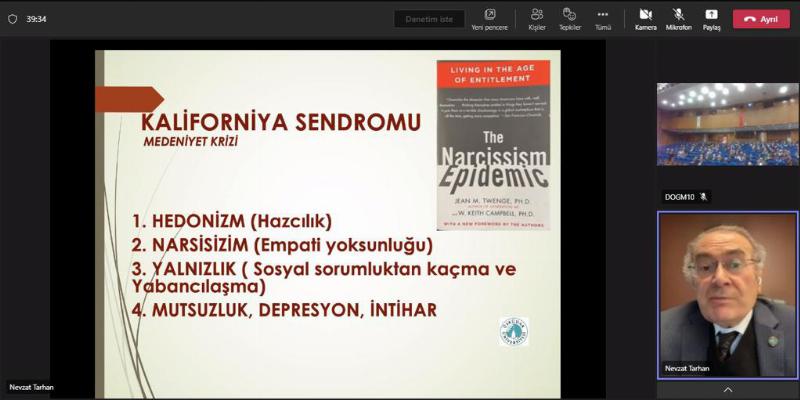
"Narcissism is a social cancer"
Emphasizing that there would be no civilization without the frontal lobe of the brain, Prof. Dr. Nevzat Tarhan said; 'The unhappiness, depression, and suicide brought about by hedonism, lack of empathy, and selfishness are growing increasingly as a global wound. Like a global cancer, this syndrome swallows cells like cancer, grows, and grows, and we are not aware of it. If we realize it when the disease is advanced in the body, it will be too late. That is why narcissism is a social cancer. It also has a biological dimension closely related to the brain. People are asked to imagine: 'I am walking calmly and peacefully inside the house.' Then, healthy people are asked to imagine playing tennis, and also to imagine being calm and peaceful at home. These red areas, stressed workers, active and fast, meaning areas where the brain's metabolic rate increases, red areas that consume a lot of oxygen and glucose, are visible here. In tennis, the brain becomes lively as if playing tennis. Inside the MRI machine, while walking calmly at home, the healthy group can calm their brain, but the patient group cannot calm their brain. Therefore, many diseases are new to the brain. In this regard, if we didn't have the frontal lobe of our brain, there would be no civilization. In fact, our frontal lobe is what makes us human. In a normal brain, all parts work equally. The frontal lobe in a schizophrenic brain is almost dysfunctional.'
"Someone who can achieve teamwork becomes a better leader"
Prof. Dr. Nevzat Tarhan talked about how cooperation manages skills in social intelligence. Tarhan said; 'Brain functions best determine the fıtrat (innate disposition). Innate records in our brain are called learned genetics and epigenetics. Innate genetic records are specific, but epigenetic records are evidence taught to the brain by society. If they continue, they last for one or two generations; if they don't, they disappear. Society creates a genetic polymorphism in the brain. An example of teamwork: geese are called "goose-headed," but geese are not goose-headed. Geese are very intelligent animals, and when the lead goose gets tired, it switches places with the one next to it. By switching places in turn, the lead goose flaps its wings more, clearing the way for others, gets tired, and by switching, they can fly across continents. This teamwork means that after the 21st century, someone who can achieve this becomes a better leader. Compatibility with a charismatic leader works with control. This is useless in social life and makes people make mistakes. Therefore, in the neuro-supervision diagram, logical intelligence, bodily intelligence, social intelligence – all these need to have a central conscience-based intelligence connected to the leader. It means adding unity to the work we do. Acting with the help of a guardian in one's conscience, a jury in one's mind. Here, logical intelligence emphasizes being idealistic, dreaming, etc. Emotional intelligence emphasizes being an activist, spending time with oneself. Bodily intelligence emphasizes discipline, time management. Social intelligence manages cooperation skills.'
The Dark Triad: Selfishness, Perfectionism, and Machiavellianism
Prof. Dr. Nevzat Tarhan, mentioning that trust is at the center of the leadership circle, pointed out that if a leader inspires trust, that person is a good leader, and if trust weakens, leadership gradually diminishes. Tarhan said; 'If there is honesty, trust is formed; if there is trust, fear decreases, and entrepreneurship increases, and that person loves their job more and is dedicated to it. In corporate loyalty studies, the first place is occupied by loving the job, the second by feeling secure about one's future, and the third by the salary received. A leader does not intimidate; they inspire trust. This is a charismatic leader. You manage teamwork and togetherness, and trust is at the center of the leadership circle. If they inspire trust, this person is a good leader; if trust weakens, leadership gradually diminishes. Therefore, even if a leader taking steps that shake trust seems to be winning on one side, Machiavellianism, for example, here we have a triad that we call a dark superiority. In this, there is selfishness, in its second leg there is perfectionism. The person is selfish; they want everything to be perfect and good. In the third leg, there is Machiavellianism. They say everything is permissible to achieve the goal. A primary perfectionist but Machiavellian person – beware of this person. Because they are both hardworking, they do good things; because they are selfish, they always carve things out for themselves; and because they are Machiavellian, they easily use people. Great attention must be paid to the dark triad.'
"If the strategy is wrong, success is irrelevant"
Tarhan, mentioning that a transformative leader uses long-term planning ability in strategic goals, said; 'A classical leader fears problems, approaching them with a palliative method. They do not want to take cultural steps. They emphasize curative treatment. When a patient comes, what does a classical physician do? They treat with surgery. But a more visionary physician works to prevent the person from getting sick, emphasizing early diagnosis. However, there is an even better medical practice, preventive medicine, which works to prevent people from getting sick and emphasizes preventive healthcare. They ponder more on preventing the recurrence of the problem. Planning ability, operational ability – classics focus more on these. In strategic goals, a transformative leader uses long-term planning ability and is a visionary. They take a step back for the strategic goal. If the strategy is wrong, the success achieved is irrelevant.'
"Leadership means being able to use the ability to make decisions"
Emphasizing the importance of making importance and priority rankings, Prof. Dr. Nevzat Tarhan said; 'In the time pyramid, there are 5Ws and 1H. Who, what, where, when, and how. Importance and priority rankings are made. The most time is allocated to the most important issue. The most important issue, the second less important issue, and in ordinary situations, they act accordingly. This person focuses more on the most important issue; in the goal hierarchy, the most important issue is at the top of their mind in the time pyramid. If a person can do this, then their success in making correct decisions becomes easier. Because leadership means being able to use the ability to make decisions. There is also a pyramid of attention. The essence is important, but the method is prior to it. Here, too, there is a pyramid of attention and a pyramid of priority, and many search engines even say 'our only competitor is sleep.' Why? By attracting people's attention, they manage people. In the pyramid of attention, the most time is allocated to the highest priority issue. They keep them in the cache. Other things are stored in the medium to long-term memory, and the ranking in the cache is decided according to priorities. Timing and sequencing appear before us as more prioritized, less prioritized, and ordinary situations if the person has complete free will.'
Share
Update Date: March 01, 2026
Creation Date: December 16, 2022
Request a Call
Other News
- The book that read today's digital threats in 2014: Being a Conscious Family
- Experts warn: 'Instead of memorizing letters, teach pencil grip, scissor use, and coloring'
- School fear and school love both start in the family!
- Family is not merely transforming, it is being battered under a serious assault
- Artificial intelligence opens the door to early diagnosis in autism!