

Psychiatrist Prof. Dr. Nevzat Tarhan, evaluating the psychology of children rescued from the rubble days after the Izmir earthquake, points out the importance of family and close environment support for children in the period ahead. Tarhan notes that in strong trauma situations, the brain shuts itself down as a defense mechanism, and reminds that reactions after an earthquake are normal, but expert support is important for effects lasting longer than 6 weeks.
Content
Prof. Dr. Nevzat Tarhan: “Early Intervention for Childhood Traumas is Important”
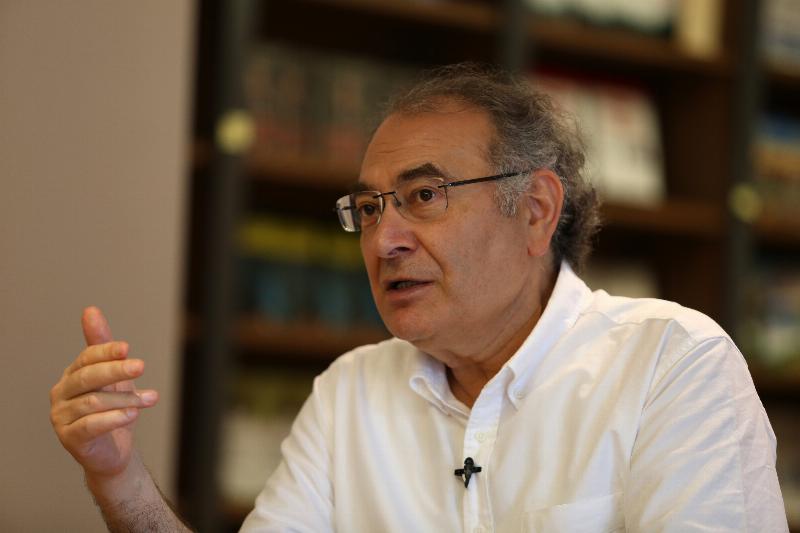
Üsküdar Üniversitesi Founding Rector, Psychiatrist Prof. Dr. Nevzat Tarhan, made evaluations regarding the psychology of children most affected by the earthquake that occurred in Izmir on Friday, October 30, resulting in the death of 114 people and the injury of thousands.
Prof. Dr. Nevzat Tarhan, making evaluations regarding young children rescued from the rubble days later and their psychology, said, “Among the children, 3-year-old Elif Perinçek was rescued after 65 hours. Ayda Gezgin, also the same age, was rescued after 91 hours. This means almost two, three days. For a child to be able to stay alone in an isolated, sudden, uncertain, and completely dark environment for about three days. This situation certainly has a traumatic value for the child. However, the children being rescued alive from under the rubble, and receiving very good care after being rescued, is an approach that will help resolve this trauma.”
Prof. Dr. Nevzat Tarhan reminded that the children were rescued unharmed by great chance, adding that this situation, of course, reduced the trauma burden for the children.
The Attitude of the Environment Hereafter is Important
Stating that children in this age group have not yet developed their perception of reality, Prof. Dr. Nevzat Tarhan said, “If we consider the children's state of mind, they are waiting in a dark environment and cannot explain it. A child aged 2-3 has not yet developed a perception of reality. The child cannot define such a situation but waits. This situation can create a traumatic effect on the child. What is important here is how the child's environment analyzes this event. If the message is given that they were finally rescued from this uncertainty, and if it is transformed into a feeling of hope and trust that the outcome was good, this trauma can be turned into a resilient learning experience.”
Positive Messages Should Be Given to the Child
Tarhan noted that the support of their families and close environment is important for children to return to normal life after such traumatic events, and stated: “Children now feel safe. They experienced a great fear, but they were finally rescued, and everyone started to show more interest, perhaps our children started to be treated with more care. In some cases, children may now see these traumas as learned behaviors, and unconsciously use them as a childlike defense to attract attention. Therefore, families and relatives should give the message, ‘You experienced such a trauma, but you overcame it. You are fine now.’”
Prof. Dr. Nevzat Tarhan noted that information about death should be explained to the child in a way they can understand, otherwise, the child experiences a greater loss of control when confronted with this reality.
The Joy of Rescue Facilitates Resolving Past Trauma
Stating that the feeling of attachment is very important in children, Prof. Dr. Nevzat Tarhan warned, “The image of the rescue worker, who has become a symbol of the earthquake, holding the children’s fingers actually expresses everything. The child has a need for attachment, wrapping their finger around the rescuer's. Here, the child has a tremendous need to overcome loneliness. They experienced severe fear and are rescued as a result of that fear. The joy of being rescued facilitates resolving past trauma. What could happen to this child next? There could be a fear of being alone. There could be a fear of no one leaving their side, or a constant reliving of the earthquake, thinking 'I will experience it again'.”
Prof. Dr. Nevzat Tarhan emphasized that traumas experienced in childhood affect the individual in the future, saying, “It can have a physical trauma effect. For this, a safe environment must be provided right now.”
This Trauma Taught Us All to Be Prepared
Prof. Dr. Nevzat Tarhan noted that the Izmir earthquake made it clear that sometimes unavoidable events can happen in life, unforeseeable situations can occur, and that these are realities. He said, “This event, this trauma taught us all that we need to be prepared for the uncertainties we will face in life. After this, social support that keeps the feeling of hope and trust high for the future is needed.”
It Is Necessary to Return to Normal in 6-8 Weeks
Prof. Dr. Nevzat Tarhan stated that the effect of trauma can last for 6 weeks, saying, “It is important not to exaggerate this. This is generally a 6-week process. It is natural for this topic to be discussed excessively during this period, but after 6-8 weeks, it is necessary to return to normal life. It is not right to discuss this event frequently unless the child brings it up. If the child brings up the topic or asks about it now, it is necessary to approach them in a way that maintains their sense of hope and trust.”
Managing Earthquake Fear Depends on Parental Attitudes
Prof. Dr. Nevzat Tarhan emphasized the importance of parental attitudes in managing fear and anxiety about earthquakes, especially in children, warning, “Children of that age generally observe their parents regarding earthquakes. When there is a slight tremor, the child looks at the mother and father. How they react determines how the child reacts; if they are calm, the child will also approach it calmly. If the mother and father are in a panic, the child will also approach it with panic. Here, it is important for the people the child lives with to be calm.”
Prof. Dr. Nevzat Tarhan stated that it is also important for traumas like earthquakes to have a strengthening effect on family bonds, adding, “It is important for the child to experience the feeling, ‘We went through something like this, but I am not alone.’ These feelings develop in the child's imagination.”
Psychological Support Would Be Beneficial
Prof. Dr. Nevzat Tarhan noted that various methods are used to help children overcome trauma, one of which is play therapy. He said, “Children are asked to draw pictures and play games. The goal is for them to resolve their trauma within these games. While playing, a child can turn that trauma into resolved trauma. Currently, this trauma is raw in these children. To create resolved trauma, post-traumatic growth work is needed. Therefore, psychological support and help for post-traumatic growth work would be beneficial for these children who were trapped under the rubble in the earthquake.”
The Brain Shuts Down in Strong Traumas
Prof. Dr. Nevzat Tarhan also evaluated the fact that Elif Perinçek and Ayda Gezgin, the symbolic children of the Izmir earthquake, emerged from the rubble extremely calmly, saying, “For children under 5-6 years old, because there is a feeling of uncertainty, the effects of light appearing, someone caring for them arriving, and engaging in pleasant conversation with them are very significant. A very professional rescue operation was carried out for these children. The entire team should be congratulated. The work was carried out by making the child feel that they were not alone and that they would be reached eventually. The children were extracted smoothly and without rough handling. While they were there, the children might have focused most on the extraction process. Then there's the process of getting an IV and going to the hospital. For example, how nicely he extends his arm for the IV. Under normal circumstances, if told to extend his arm for an IV, the child would resist, throwing a tantrum. At that moment, he experiences this with the shock caused by fear. The brain also shuts itself off against pain in strong traumas. The brain becomes desensitized. It becomes unable to feel any fear. The brain has such a defense mechanism. This situation arises due to the brain's excessive cortisol secretion. The brain puts itself on defense in such situations, shutting itself off to stimuli. As a result, the child feels no pain, no fear.”
Support Should Be Sought from Therapy
Prof. Dr. Nevzat Tarhan noted that endorphins secreted by the brain in such traumas might also have an effect, saying, “Endorphin is a hormone that acts as both a painkiller and a muscle relaxant, providing comfort. The brain offers such help to a person experiencing trauma. I believe the children were under its influence. They appear relaxed at that time due to it, but later, as they confront and experience the event, and see images, fears may emerge. Therefore, one should not be deceived by their calmness; support should be sought from therapy.”
Share
Update Date: February 26, 2026
Creation Date: November 05, 2020
Request a Call
Other News
- Prof. Nevzat Tarhan: “Those with a mental filter are not afraid of the digital”
- Artificial intelligence doesn't eliminate the translator, it transforms their expertise!
- Social responsibility courses moved to the field
- Erasmus+ Orientation Week completed at Üsküdar
- Prof. Nevzat Tarhan: “Brain secretes ‘dark glue’ in social media lynchers!”