

The week of May 10 – 16 is celebrated as “Disability Week” in 156 countries that are members of the United Nations. Psychiatrist Prof. Dr. Nevzat Tarhan emphasized that people are divided into two groups: those who are currently disabled and those who are candidates for disability, adding that even the healthiest person has the potential to become temporarily or permanently disabled. Citing the famous physicist Stephen Hawking as an example, he stated that being disabled does not pose an obstacle to human life and that disability is a part of the universe's perfection. Prof. Dr. Nevzat Tarhan said, “Individuals with disabilities are most afraid of loneliness. They can experience emotional exhaustion more than physical exhaustion. The greatest help that can be given to people with disabilities is silent acts of kindness, invisible aid, and random acts of kindness.”
Content
Prof. Dr. Nevzat Tarhan: "Disability is a part of the universe's perfection…"
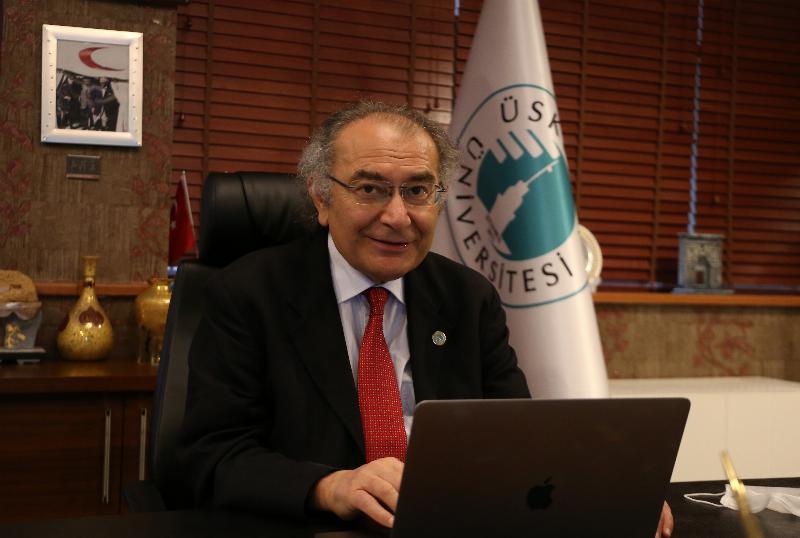
Üsküdar University Founding Rector, Psychiatrist Prof. Dr. Nevzat Tarhan, addressed the importance of the approach to individuals with disabilities within the scope of May 10 – 16 Disability Week and offered important advice.
Even the healthiest person is a candidate for disability
Stating that people are of two kinds in terms of disability, Prof. Dr. Nevzat Tarhan said, “The first group consists of those who are currently disabled. The second group consists of people who are candidates for disability. So, we can say that people fall into two groups. Even the person who claims to be the healthiest actually has the potential to become temporarily or permanently disabled at some point in their life. It is important to understand this well. When one thinks of disability or disabled people as something very distant, a problem far away from themselves, a mental blindness towards people with disabilities develops.”
People with disabilities also need to show effort and patience
Prof. Dr. Nevzat Tarhan stated that just as people cannot understand individuals with disabilities, they also do not do what they should. He continued, “The situation of disabled people requires effort and patience to be included in social life and to adapt. If it is their test, it is also the test of healthy people. Others should also think, ‘What are my responsibilities while trying to understand people with disabilities? What can I do?’ Therefore, more important than being disabled is correcting wrong perspectives. This is also the most important goal of Disability Week. That is, it aims to dispel people’s prejudices and perceptions about disability and to facilitate the adaptation of people with disabilities to life.”
Exclusion occurs through automatic stereotyping
Emphasizing that one should not touch a person's essence, privacy, and sacredness, Prof. Dr. Nevzat Tarhan said, “When encountering a person with a disability, mentioning their disability at first leads to starting with a negative. It starts with incorrect communication. The most common mistake is trying to slip past or get ahead of a disabled individual to avoid difficulty while walking. In reality, their essence, privacy, and sacredness are being touched. Opening a conversation about a person's religious or ethnic background, or a topic directly related to their disability, also constitutes social barriers for that person. In fact, there are studies on this in the field of political psychology. It is called automatic stereotyping. For example, when a mother sees a Black individual approaching while walking with her child, she pulls her child closer. She does this unconsciously. She sees them as a threat there, and a situation of exclusion occurs.”
There are also automatic incorrect behaviors towards people with disabilities
Underlining that there are also automatic incorrect behaviors towards people with disabilities in society, Prof. Dr. Nevzat Tarhan said, “There are automatic incorrect reactions and behaviors, which we call automatic stereotyping. There are approaches like making individuals with disabilities feel bad while approaching them with compassion. These deeply offend people with disabilities. More than the disability itself, these actions are hurtful and damaging to them. Therefore, we need to know what we understand by disability. We generally see being disabled as a disease and a defect. In fact, disability is a difference. That is why it is called 'feasibility' in English. It is defined as 'impairment' differently. The term in Turkish is also 'yeti yetimi' (loss of ability). It means that a person has lost certain abilities in a specific way, meaning that person has been hindered.”
It is not realistic to think that disability is an obstacle to human life!
Prof. Dr. Nevzat Tarhan stated that even if some abilities of human beings are lost, certain other abilities come to the forefront, and he continued: “Prof. Dr. Nevzat Tarhan, “For example, Stephen Hawking was a physicist who discovered the Big Bang. He passed away in 2018. He had a full chronic 'ALS' disease. Nothing below his neck was working. Eventually, even his facial muscles started to stop working. He couldn't do anything. His disability led him to dream, think excessively mentally, and achieve things in theoretical physics. If he had not been disabled and lived a normal life, he might not have made these discoveries. He did not fall into pessimism; on the contrary, with his mental efforts, mental objections, and mental rebellions in his disabled state, he questioned and pioneered in theoretical physics. He used to say, 'My mathematical mind finds this world so dynamic, alive, and joyful. With such diversity, it is impossible for this vast universe to be empty.' By dreaming, he saw what no one else saw and thought what no one else thought. Many discoveries have been made in difficult times and in disabled conditions. Therefore, it is not realistic to think that being disabled is an obstacle to human life, to humanity.”
They continue to produce by revealing their character strengths
Prof. Dr. Nevzat Tarhan stated that disability is also a part of the perfection in the universe and said, “We need to care about how we truly behave in the universe. Research shows that approximately 45% of disabilities are mental and psychological disabilities, and about 35-40% are physical, bodily, and orthopedic disabilities affecting movement. The remaining approximately 20% consist of disabilities such as visual and hearing impairments. The main mental and psychological disabilities of individuals include autism, cerebral palsy, and learning difficulties. Pervasive developmental disorder includes many disabilities. All of them are indeed disabled, but these individuals continue to produce when they reveal their character strengths and demonstrate positive qualities.”
Humans are relational beings
Drawing attention to research on what individuals with disabilities fear most, Prof. Dr. Nevzat Tarhan said, “Individuals with disabilities are most afraid of being alone. Generally, since humans are relational beings, they want to be a part of the social structure. This is also related to a person's level of development. The situation is the same for people with disabilities. They were asked, ‘If you had a magic wand, what would you change?’ Their answer is no different from that of other people. They don't just live with their own disabilities. We assume they do. Most individuals with disabilities have accepted this situation. They want to live like other people.”
They should not be prevented from looking to the future with hope
Prof. Dr. Nevzat Tarhan emphasized that despite their disadvantages, individuals with disabilities should not be prevented from looking at life with hope and towards the future with hope, and he continued: “Individuals with disabilities, therefore, state that what they fear most is being alone and losing their loved ones. In fact, what is important in disability is the right to basic freedoms and basic needs that all other people have. They need to meet their basic needs, basic human rights, and essential requirements. The United Nations made a decision in 2016. It published a convention on the basic freedoms and human rights of individuals with disabilities worldwide and began to make them state policies. All these state policies provided new gains for people with disabilities. Significant progress has also been made in training specially qualified educators for people with disabilities and care and support staff working in this field.”
Emotional exhaustion affects individuals with disabilities
Stating that emotional exhaustion is also frequently experienced by individuals with disabilities, Prof. Dr. Nevzat Tarhan said, “It's not their inability to walk, work, or do things that affects them, but emotional exhaustion. They suffer more when they fall into hopelessness and pessimism, constantly complain, and look at events negatively, asking ‘Why was I born like this? Why am I disabled like this? Why did this happen to me?’ Whereas, they have many positive aspects. It is necessary to bring out and reinforce those positive aspects.”
They highly value self-compassion
Expressing that self-compassion is very important for individuals with disabilities, Prof. Dr. Nevzat Tarhan said, “Individuals with disabilities who develop their self-compassion understand other people with disabilities better and can empathize. More people emerge who can support them in adapting to social life and meeting their daily needs. Whatever the common rights and other freedoms of all people are, people with disabilities should benefit from these fully and equally. We can say that our culture has a high social sensitivity in this regard.”
Random acts of kindness should be done without making it obvious
Prof. Dr. Nevzat Tarhan said that disability is a part of being human and concluded his words as follows: “Disability can always be temporary or permanent at some point in our lives. When helping a disabled person, it should be done without making it obvious. Silent kindness is needed. When done demonstratively, it leads to the disabled person feeling secondary and their self-confidence being damaged, and they also feel the need to be dependent on the person who is showing it. People with high egos do this unconsciously. They keep disabled people dependent on them and thus satisfy their ego. Therefore, the greatest help that can be given to people with disabilities is silent acts of kindness, invisible aid, and random acts of kindness.”
Share
Request a Call
Other News
- Prof. Nevzat Tarhan: “Those with a mental filter are not afraid of the digital”
- Artificial intelligence doesn't eliminate the translator, it transforms their expertise!
- Social responsibility courses moved to the field
- Erasmus+ Orientation Week completed at Üsküdar
- Prof. Nevzat Tarhan: “Brain secretes ‘dark glue’ in social media lynchers!”