

The 5th Psychology Days, organized with the theme of “Extraordinary Psychology,” brings together experts in their fields. Psychiatrist Prof. Dr. Nevzat Tarhan, who gave an opening conference titled “Difficult Personalities” in the two-day program, listed difficult personalities as paranoid suspicious, passive-aggressive oppressive, narcissistic grandiose, antisocial crime-prone, histrionic theatrical, and borderline inconsistent personalities. Stating that paranoid individuals can be encountered in daily life, Tarhan said, “Paranoid individuals are around us. Paranoid personality is not a mental illness, but a personality trait. It should not be confused with paranoia. These individuals are suspicious, distrustful, sensitive, vengeful, secretive, and angry.” Tarhan noted that 5 things should not be forgotten when dealing with paranoid individuals, saying, “If one can be open, honest, natural, not getting angry, able to stay calm, and make decisions based on behavior when dealing with a paranoid person, it may be possible to manage them.” Tarhan said, “The greatest need here is dialogue, our biggest enemy is prejudice. Dialogue is the cure for paranoia and personality disorders.” Prof. Dr. Nevzat Tarhan also noted that opposition is needed in democracies, adding, “Mothers-in-law openly state the truths in marriages. In democracies, opposition is like a mother-in-law. There is a need for opposition; if it doesn't speak up, it makes mistakes.”
Content
Prof. Dr. Nevzat Tarhan: “Dialogue is the cure for paranoia and personality disorders”
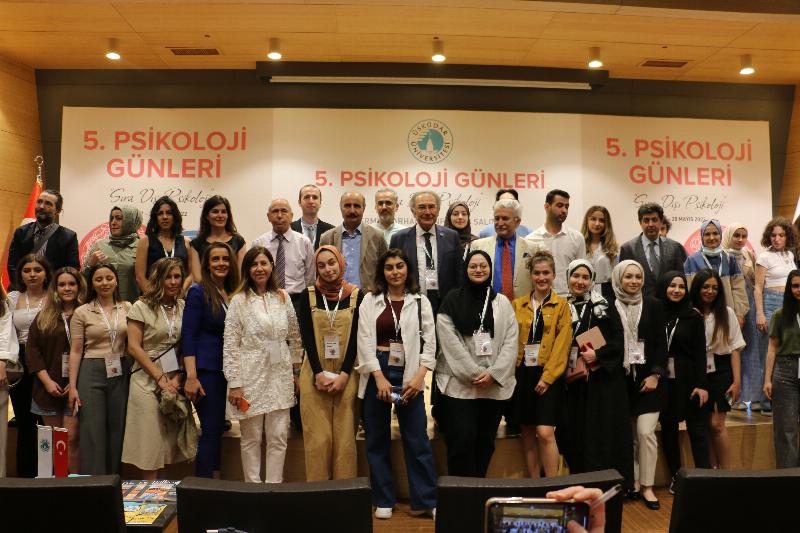
The opening conferences of the “5th Psychology Days,” organized with the theme of “Extraordinary Psychology” at the Üsküdar Üniversitesi Altunizade Campus Nermin Tarhan Conference Hall, were given by Üsküdar Üniversitesi Founding Rector, Psychiatrist Prof. Dr. Nevzat Tarhan and Dean of Humanities and Social Sciences Prof. Dr. İbrahim Özdemir.
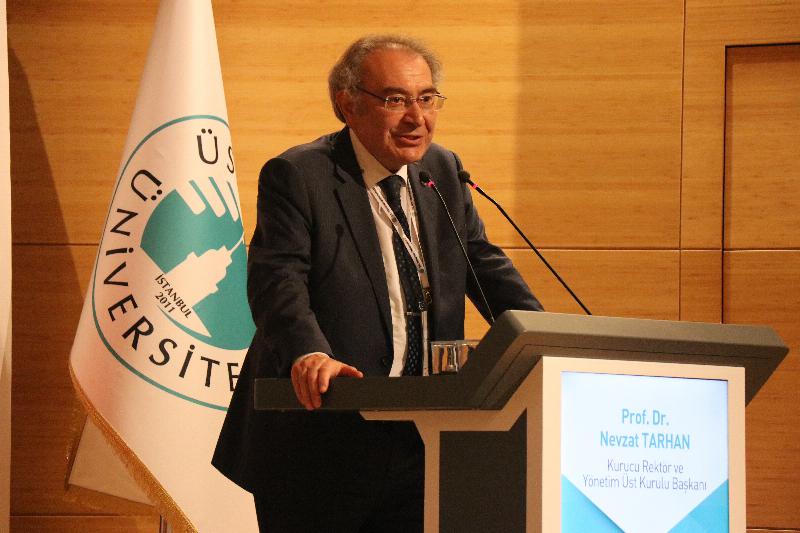
Prof. Dr. Nevzat Tarhan: “60-70 percent of personality consists of changeable traits”
In his presentation titled “Difficult Personalities,” Prof. Dr. Nevzat Tarhan stated that the main difficult personalities can be listed as paranoid suspicious, passive-aggressive oppressive, narcissistic grandiose, antisocial crime-prone, histrionic theatrical, and borderline inconsistent.
Prof. Dr. Nevzat Tarhan stated that there are some people with difficult personalities, saying, “There are people with difficult personalities whom we have to live with. First, it is necessary to understand personality. Personality has two main dimensions: nature and nurture. If we think of a building, 30-40 percent of it consists of the load-bearing system, which includes columns, beams, and the foundation. 60-70 percent consists of equipment features like electricity, water, and paint. The same applies to the human personality structure. When we say nature, genetics constitute 30-40 percent. However, nurture occurs through epigenetics and social learning. The 60-70 percent part constitutes the changeable traits of our personality. The 30-40 percent part does not change.”
Prof. Dr. Nevzat Tarhan: “Those who say ‘I won't change’ are deceiving themselves”
Prof. Dr. Nevzat Tarhan noted that human children come into the world to learn, stating, “Psychologically, human children come into the world prematurely, unlike animal offspring. Animal offspring are born having already learned. For example, a duck hatches from an egg and immediately starts swimming. A horse, for instance, stumbles a bit after birth and then stands up, but a human child learns to stand up after 1 year. Within 15 years, they can only distinguish between right and wrong, good and bad. Humans are beings who come into the world to learn. 60-70 percent of personality is formed through learning. Some of these are epigenetic. Epigenetics is known as the quantum of genetics. Those who say ‘I won't change, this is how I am’ are deceiving themselves. If a person wants to, they can change many of their habits and behaviors, but the person must allow this.”
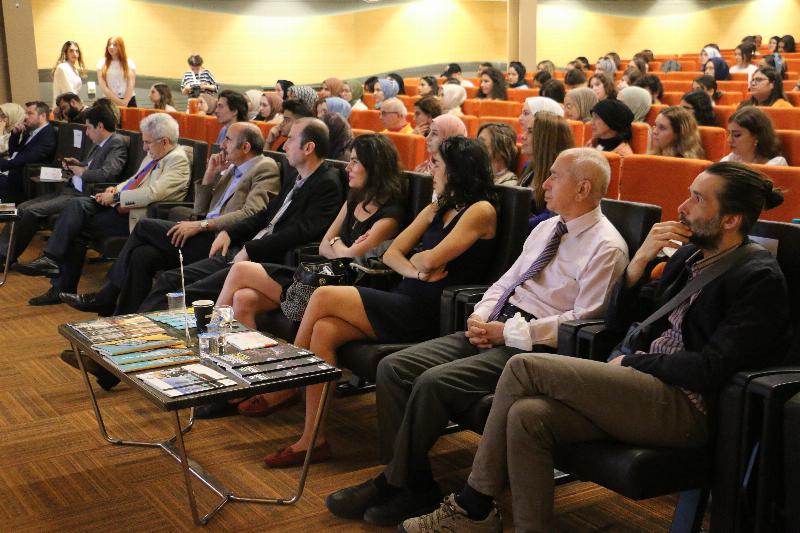
Prof. Dr. Nevzat Tarhan: “30-40 percent of genes are related to social learning”
Prof. Dr. Nevzat Tarhan emphasized the importance of being an observer, saying, “The observer finds the truth. Discussions about sexual identity are very common. In sexual identity discussions, biological gender, being male or female, is completely genetic. A third gender has not been found. We can say that 30-40 percent of genes are related to social learning. We learn the roles of men and women from society, from our mothers and fathers.”
Prof. Dr. Nevzat Tarhan: “Opposition is needed in democracies”
Prof. Dr. Nevzat Tarhan stated that we form networks in the brain by learning from the environment and continued his words as follows:
“When we believe in something, we create a network in the brain related to it. The best model explaining how the brain works is the network model. In schizophrenia, one part of the brain does not communicate with other parts, or even fights. Aphasia is the inability of the brain's word-producing area to function. Bipolar disorder is defined as the logical left brain and the emotional right brain working independently of each other, and the prefrontal cortex being unable to balance them. The prefrontal cortex is actually considered the captain's bridge. For a person to know and learn to manage themselves is to learn to manage the prefrontal cortex. There are 3 realities: dream reality, imaginary reality, and physical reality. Someone living in imaginary reality disregards physical reality. Schizophrenic individuals dream and cannot transition from imagination to reality; they continue to live in their imaginations. This is also true in marriage. They say ‘love is blind, if there were no mothers-in-law.’ Because mothers-in-law openly state the truths. In democracies, opposition is like a mother-in-law. There is a need for opposition; if it doesn't speak up, it makes mistakes.”
Prof. Dr. Nevzat Tarhan: “Everyone has a narcissistic part within them”
Prof. Dr. Nevzat Tarhan stated that there is a difference between personality disorder and personality traits, saying, “Everyone has a narcissistic part within them. We have negative and positive emotions. If we feed the bad part within us, it grows; if we feed the good part, it grows. All of us have jealousy as a personality trait. A person who says ‘I am not jealous’ is not telling the truth. Everyone has a jealous core within them. The important thing is to recognize it; ignoring it is a method of self-deception. Humankind is a master of self-deception. People who deceive themselves make big mistakes. These individuals can also be very intelligent and smart. The reason for this is emotional blindness. Emotional literacy and emotional intelligence can be learned. Logical intelligence is innate, but other types of intelligence are learned later. If a person can manage their jealousy, that jealousy becomes a motivation technique for them.”
Prof. Dr. Nevzat Tarhan: “Gardner paved the way for positive psychology”
Prof. Dr. Nevzat Tarhan stated that Howard Gardner, by introducing the theory of multiple intelligences in the 1980s, paved the way for positive psychology, saying, “Seligman's name is always mentioned, he is emphasized, but Gardner made a great contribution to positive science by revealing character strengths. Previously, psychology was reduced to emotion, thought, and behavior. However, Gardner also introduced the concept of values. 24 values have been proposed.”
Prof. Dr. Nevzat Tarhan: “Paranoid personality is not a mental illness, but a personality disorder”
Prof. Dr. Nevzat Tarhan, who divided difficult personality types into 6, continued his words as follows:
“Difficult personalities can be expressed as paranoid suspicious, passive-aggressive oppressive, narcissistic grandiose, antisocial crime-prone, histrionic theatrical, and borderline inconsistent personalities. In a home, family, society, daily life, social life, and political life, these individuals are personalities that cause conflict and disturb peace. Paranoid individuals are around us. Paranoid personality is not a mental illness but a personality trait. It should not be confused with paranoia. These individuals are not labeled as sick; they are diagnosed with a personality disorder. They become suspicious, distrustful, sensitive, vengeful, secretive, and angry. People should first look for these traits in themselves and then in their environment. These individuals make necessary and unnecessary connections between events. They cannot tolerate uncertainty and want to learn everything. 5 things should not be forgotten when dealing with paranoid individuals. If one can be open, honest, natural, not getting angry, able to stay calm, and make decisions based on behavior when dealing with a paranoid person, it may be possible to manage them. If you pay attention to these 5 points, the leadership will be with you, not with the paranoid person. If you don't pay attention to these 5, you will lose leadership in the relationship to the paranoid person. They will use and manage you. If you have these qualities, paranoid individuals will believe you and remove you from the enemy category.”
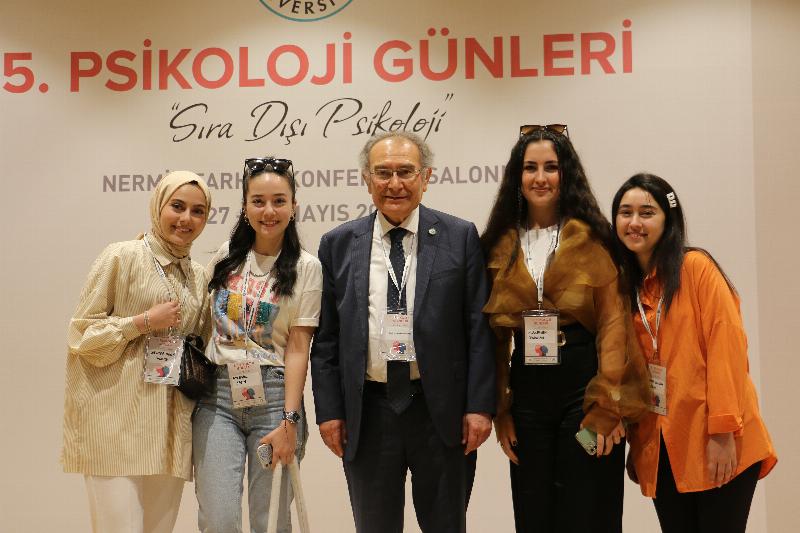
Prof. Dr. Nevzat Tarhan: “Cowardly and unclear attitudes increase paranoia”
Prof. Dr. Nevzat Tarhan stated that individuals with paranoid personality disorder are changeable, saying, “People in this state of mind have a sense of grandiosity, meaning they see themselves as great. They know everything themselves and create social problems. We saw these individuals during the pandemic. There is a segment that believes in conspiracy theories about vaccines. Conspiracy theorists who do not believe in something scientifically proven like a vaccine should question themselves. The attitudes of the people living with paranoid individuals are very important. The behavior of relatives can increase or decrease the paranoia of paranoid individuals. Therefore, these individuals should be approached with a gentle, decisive, and clear method. Cowardly, compromising, and unclear approaches increase paranoia. The greatest need here is dialogue; our biggest enemy is prejudice. Dialogue is the cure for paranoia and personality disorders.”
Prof. Dr. Nevzat Tarhan: “Dictators have paranoid personality disorder”
Prof. Dr. Nevzat Tarhan stated that if those who govern states have paranoid thoughts, they can confuse friends and enemies with misguided governance, saying, “Smart politicians do not multiply enemies, but those in a paranoid state need enemies. They become uncomfortable when their enemies are gone. They create their own enemies. This is also a requirement of military intelligence. After the Cold War, NATO convened and concluded that they needed a new enemy with the dissolution of the Soviet Union. Operations in the Middle East are political paranoia. This is needed for selling weapons. Paranoid leaders do this believingly. In politics, it is preferred to exploit the world. The paranoid method is also the method of dictators. The emergence of opposition and the emergence of democracy against this are important. For example, Hitler had both narcissistic and paranoid traits. Dictators believe they have the right to immediately eliminate the disloyal and do not forgive betrayal. Paranoid thought is also the personality structure of dictators.”
Prof. Dr. Nevzat Tarhan: “It is important to remove these individuals from their battleground”
Tarhan also touched upon what should be done if paranoid individuals are armed, saying, “If these individuals are powerful and in authority, it is necessary to know their psychology. These individuals feel threatened. Determine your battle method not according to them, but according to yourselves. Their battle method is to cause incidents and fights. To these, you should say, ‘I want to understand you. Can you speak slowly?’ Then they act with their emotional brain. Their battleground is anger. You should draw them to your battleground. What is your battleground? The thinking brain, make them think. Cause-and-effect relationship. You draw them to your battleground by engaging the thinking brain. This is certainly not easy. One should not give these individuals the impression that something is being hidden.”
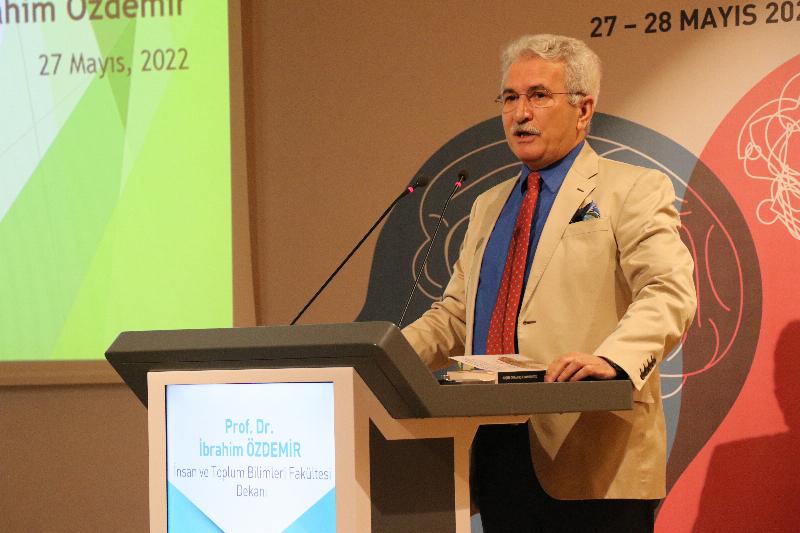
Prof. Dr. İbrahim Özdemir explained the effects of ecopsychology on well-being
Prof. Dr. İbrahim Özdemir, Dean of the Faculty of Humanities and Social Sciences at Üsküdar Üniversitesi, in his opening conference titled “Ecopsychology and Well-being,” drew attention to the positive effects of human connection with the environment, nature, and wilderness on human health, especially psychology.
Prof. Dr. İbrahim Özdemir stated that being at peace with nature ensures human survival and said that many philosophers throughout history have discussed the relationship between humans and nature.
Prof. Dr. İbrahim Özdemir: “Trees are a source of inspiration for thinkers”
Prof. Dr. İbrahim Özdemir noted that trees have been a source of inspiration for many thinkers in the East and West, and said that the 18th-century Sufi poet Abdülgani Nablusi saw everything in the universe as divine letters. Prof. Dr. İbrahim Özdemir said, “Nablusi's lines, ‘Ponder deeply on the pages of the book of the universe; / For they are the lines of the letter coming to you from the spiritual realm,’ are very meaningful. When the letter is from a sublime مقام (station), it is for us to contemplate deeply. The invitation is clear and precise: to read the universe like a book, to decipher its codes.”
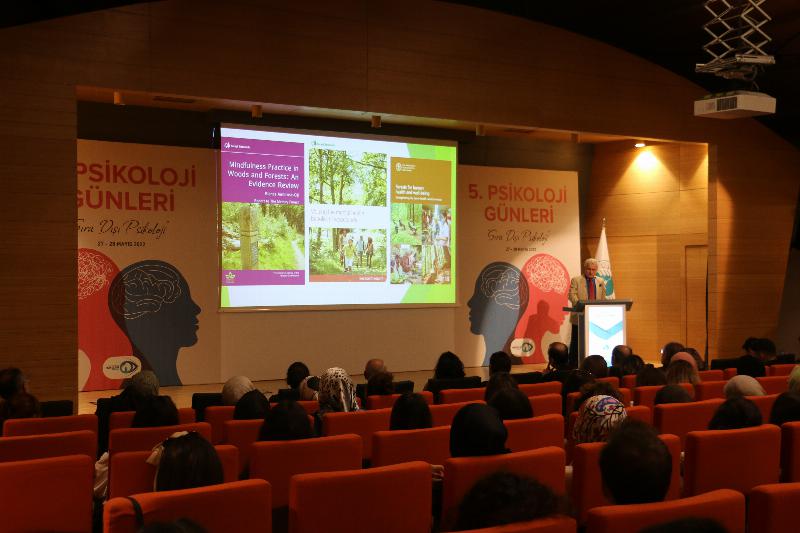
Prof. Dr. İbrahim Özdemir: “Spending three days in nature increases creativity”
Prof. Dr. İbrahim Özdemir, referring to the words “Trees have always been the most impressive preachers for me” in the book “Trees” by Nobel laureate Hermann Hesse, one of the most important writers of the 20th century, said, “Nature has been a source of inspiration for many artists in the past. Today, many writers still go to the forest to listen to the sound of trees for inspiration and focus on their writing. A scientific study also shows that the creativity of individuals who spend three days in nature increases by 50%.”
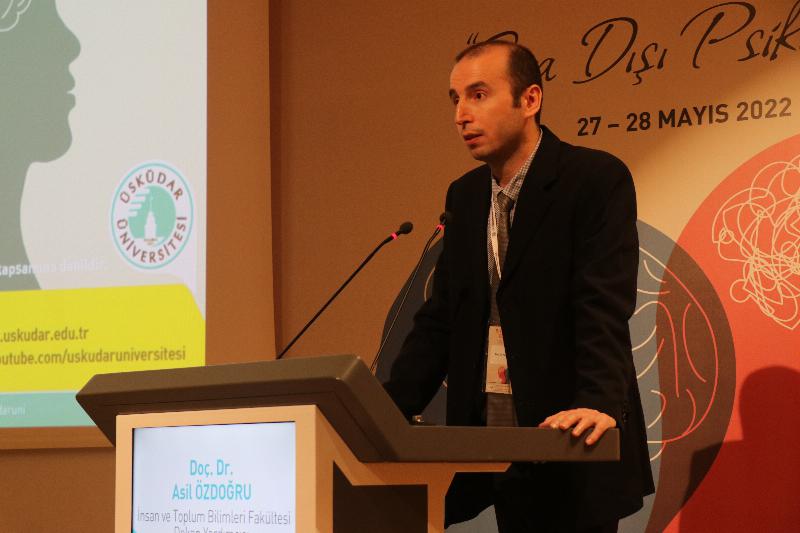
Associate Professor Dr. Asil Özdoğru, Vice Dean of the Faculty of Humanities and Social Sciences at Üsküdar Üniversitesi, said in her opening speech that the Psychology Days, which they first organized in 2017, were not held in 2020 due to the pandemic and took place online last year. Assoc. Prof. Dr. Asil Özdoğru noted that she believes the Psychology Days will make significant contributions to psychology students.
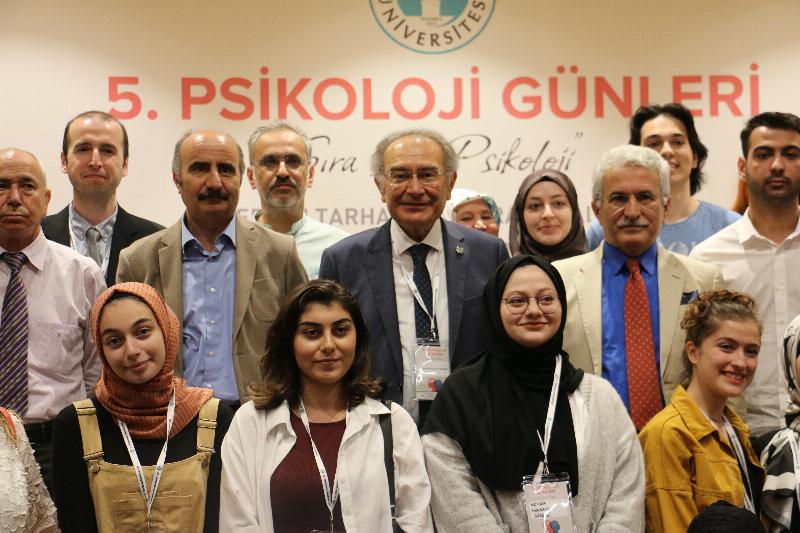
The 5th Psychology Days, bringing together psychology students with academics from various universities, will continue for two days. On the first day of the 5th Psychology Days, sessions titled “Suggestions for Psychologists Who Want to Be Extraordinary,” “Strange Neuropsychological Syndromes: How Do They Happen?” and “Schema Therapy” took place.
Prof. Dr. Gökben Hızlı Sayar to explain “Extraordinary Brains”
In tomorrow's program of the 5th Psychology Days, Prof. Dr. Gökben Hızlı Sayar from Üsküdar Üniversitesi Faculty of Medicine will participate with her presentation titled “Extraordinary Brains.” The second day will continue with sessions on “Dreams,” “Animal Psychology,” “Art Therapy,” “Psychological and Criminological Profiling,” “Psychological Resilience in Creative Drama-Supported Group Psychotherapy,” and “Storytelling.” A graduates' panel will also take place on the second day.