

Psychiatrist Prof. Dr. Nevzat Tarhan stated that the school adaptation process can differ in each child and emphasized the importance of individuation in school adaptation. Prof. Dr. Nevzat Tarhan noted that a child begins to individuate from the age of 3, and this period must be supported by the mother. Prof. Dr. Nevzat Tarhan stated that if the mother-child relationship is dependent, a lack of self-confidence emerges in the child, warning, “This situation can affect the school adaptation process in the long run and school phobia may emerge.” Tarhan also advised sending children to school from the age of 3 for the development of their social and emotional skills.
Content
Prof. Dr. Nevzat Tarhan: “The dependent relationship between mother and child leads to school phobia”
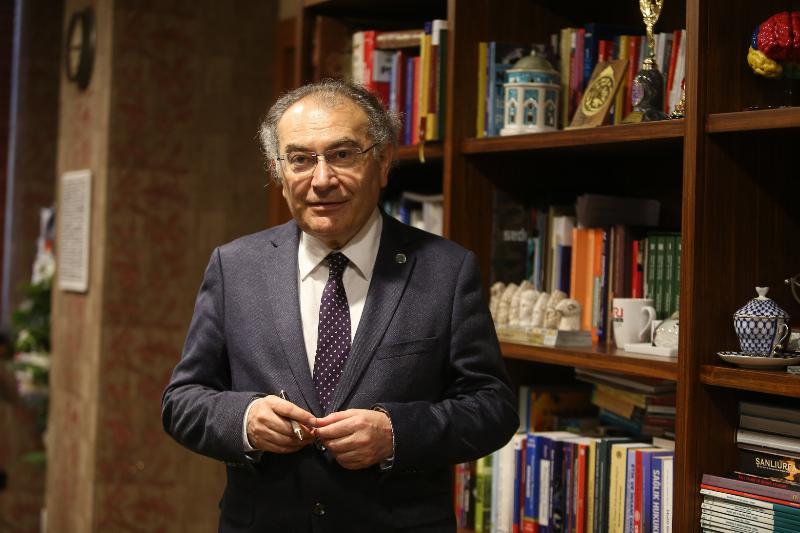
Üsküdar Üniversitesi Founding Rector, Psychiatrist Prof. Dr. Nevzat Tarhan, made assessments regarding the difficulties experienced during the school adaptation process.
The child should be mentally accustomed to school
Prof. Dr. Nevzat Tarhan stated that the school adaptation process can develop differently in each child, saying, “Starting school means a new period for the child. Going to and from a different place than a familiar, safe environment is like going to a foreign planet if the child is not mentally ready. You are currently on Earth, accustomed to its air and oxygen. What would you feel if you went to the Moon? For a child, going to school also creates such a feeling and fear if they are not mentally ready. If they are mentally ready, the child easily adapts in such situations. Therefore, taking a child like a kitten and abruptly dropping them off from one place to another without preparing them for school causes a shock and trauma effect for the child.”
The period of individuation begins after age 3
Prof. Dr. Nevzat Tarhan noted that the child enters the individuation process after the age of 3,
“Between 0-3 years old, the child sees themselves as a part of the mother. The mother also sees the child as a part of herself, but from the moment the child starts walking, they begin to learn that they are a separate individual. They learn that they are a separate person, the difference between other people's emotions and their own. If you put all 1-year-old children in the same room, if one starts crying, they all start crying at the same time. This is because they have not yet learned the difference between someone else's pain and their own. There are mirror neurons in the brain. These mirror neurons perform what we call theory of mind, mind-reading. They read the mind of the other person, read their own mind, and give the correct response. Since this is not developed in children, when someone else feels pain, they think they also feel pain and start crying. However, after a while, they learn to differentiate, saying, ‘Someone else is hurting, but that’s not my pain, it’s theirs.’ Children usually learn this by the age of three.”
The dependent relationship between mother and child leads to school phobia
Psychiatrist Prof. Dr. Nevzat Tarhan noted that if the mother-child relationship is a dependent one, meaning the mother is anxious and overly protective, a lack of self-confidence emerges in the child, and this situation can affect the school adaptation process in the long run, stating:
“After the age of three, the child needs to socialize, gradually moving away from the mother. A large portion of mothers often cannot do this. The mother’s relationship with the child is often so strong that the mother also enjoys it. The child sleeps in the same bed. From the time the child starts to enter one year of age until seven years old, when school begins, they can be in the same room, but being in the same bed is problematic. The child’s relationship with their mother becomes clingy. If the child has not developed self-confidence, they start crying all day when they go to school. We know many families who waited at the door for three or five years. If the mother is not there, the child causes trouble in class. This is called school phobia.”
The mother should support the child's individuation
Prof. Dr. Nevzat Tarhan stated that when school phobia emerges in a child, they are forced to get on the school bus and cry constantly, adding that in such situations, if the mother gives up on sending the child to school, the child cannot learn individuation, and self-confidence cannot develop. Prof. Dr. Tarhan added that the child's individuation must be supported by the mother.
The child should climb onto that armchair by themselves
Prof. Dr. Nevzat Tarhan stated that the common “armchair experiment” in our culture is an important example of this, saying, “It is necessary to contribute to the child’s individuation. For example, a child wants to climb onto an armchair. They walk and begin to discover life. They try and try to climb onto the armchair but can’t. What does our traditional mother do? To prevent the child from falling, she lifts them onto the armchair. The child is on the armchair, happy, but the child hasn’t achieved it themselves. However, if that child had climbed onto the armchair themselves, they would be happy after succeeding. We take that feeling away from the child. This is the foundation of self-confidence.”
The mother should be next to them while climbing the armchair
Prof. Dr. Nevzat Tarhan noted that in Western societies, children are left alone while climbing onto an armchair, saying, “They don’t interact with the child there. The child falls, gets up, and climbs, but this time, the mother-child bond weakens. Therefore, the ideal approach here is for the mother to stand by while the child tries to climb the armchair and say, ‘Go ahead, you can do it. If anything happens, I’ll hold you.’ In such a situation, the child will climb it themselves, succeed, and say, ‘I did it.’ The mother-child bond will also be healthy. If we create a parenting model like this, the child goes to school easily after a while and adapts.”
The child learns social and emotional skills at school
Prof. Dr. Nevzat Tarhan also pointed out the importance of children learning social and emotional skills, saying, “Children today cannot learn social and emotional skills spontaneously. Children can learn to understand others' emotions and empathize through social contact. Nowadays, there are 'apartment children' and 'television children'. There is no longer the concept of neighborhood children or a neighborhood environment as there used to be. That's why we recommend sending children to kindergarten as soon as they turn 3. Even if a child goes to kindergarten for half a day, they immediately learn social skills there. They learn to play together and share there. Human children are born psychologically premature. That is, they are born early, born without having learned. For this reason, a child needs a mother, father, and family psychosocially until the age of 15. They need to be within a social structure, to learn social skills, and emotional skills.”
Mother and father will be pilot guides for the child
Psychiatrist Prof. Dr. Nevzat Tarhan, giving the pilot guide model as an example to families in supporting children, said, “On ships, in addition to the captain, there is a pilot guide. The pilot guide is senior and experienced. Mother and father will be pilot guides. In our culture, mothers and fathers take the helm and manage the child's life. They interfere with everything, saying ‘Don’t do that, don’t touch that, don’t wear that.’ The child cannot learn on their own. However, the mother and father should be pilot guides. The child needs their guidance.”
Primary school teachers are the child's heroes
Psychiatrist Prof. Dr. Nevzat Tarhan stated that in addition to families, teachers also have duties in school adaptation, saying, “Teachers become the second person children choose as role models. Especially primary school teachers are the heroes of our children. Teaching is a sacred profession. Primary school teaching, especially class teaching, is a very sacred profession. Because those children learn most about life from their teachers after their mothers and fathers; they take their teachers as examples.” Prof. Dr. Nevzat Tarhan emphasized that it is especially important not to change teachers frequently in primary school.
Teacher's guidance is very important
Psychiatrist Prof. Dr. Nevzat Tarhan also stated that an experienced teacher should understand a child's problem from their behavior, saying, “The teacher will notice it. Education is like medicine. Doctors are like butterfly hunters. They catch diseases and symptoms. They search, find, catch, and solve the problem. That is, a teacher should understand the problem a child is experiencing from their behavior. Children of that age cannot express themselves verbally. Since they cannot express themselves verbally, they express themselves through behavior. Therefore, the teacher's guidance is very important here. That is, their pedagogical experience is important. Why is this child afraid? They are afraid of being alone. They lack self-confidence; perhaps this child is separating from their mother for the first time. They may have such fears. The child needs guidance.”
Share
Update Date: February 28, 2026
Creation Date: September 13, 2021
Request a Call
Other News
- Social responsibility courses moved to the field
- Erasmus+ Orientation Week completed at Üsküdar
- Prof. Nevzat Tarhan: “Brain secretes ‘dark glue’ in social media lynchers!”
- Prof. Nevzat Tarhan: “Every segment of society should be able to say, ‘This constitution is my constitution!’”
- OHS releases guide for safe operation of industrial robots