

Üsküdar University’s Human Rights Studies Application and Research Center and the Human Rights and Equality Institution of Turkey (TİHEK) organized the December 10 World Human Rights Day Panel under the title “Current Human Rights Issues During the Pandemic Process”. Psychiatrist Prof. Dr. Nevzat Tarhan, stated, “If we neglect the psychological aspect of the pandemic, we will also seriously neglect its human rights dimension.” Tarhan, noting that crisis management should be addressed worldwide, warned, “Crisis management is very important concerning human rights. Measures taken against the virus should not increase or deepen inequalities in society. They should not create new inequalities.”
Content
Prof. Dr. Nevzat Tarhan: “Crisis management should also be addressed in human rights”
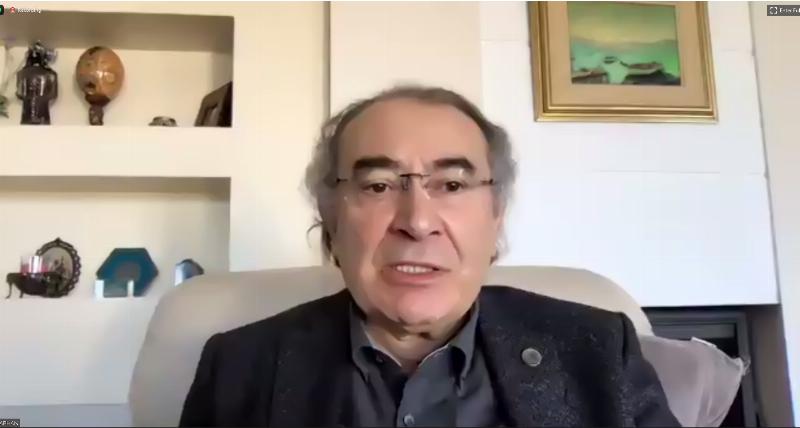
Üsküdar University Human Rights Studies Application and Research Center Director, Head of the Sociology Department Prof. Dr. Ebulfez Süleymanlı moderated the panel, while Üsküdar University Founder and Chairman of the Board of Trustees Prof. Dr. Nevzat Tarhan delivered the opening speech; Süleyman Arslan, President of the Human Rights and Equality Institution of Turkey (TİHEK), and Türkan Halilova from the Faculty of Law at Hamburg University participated as panelists.
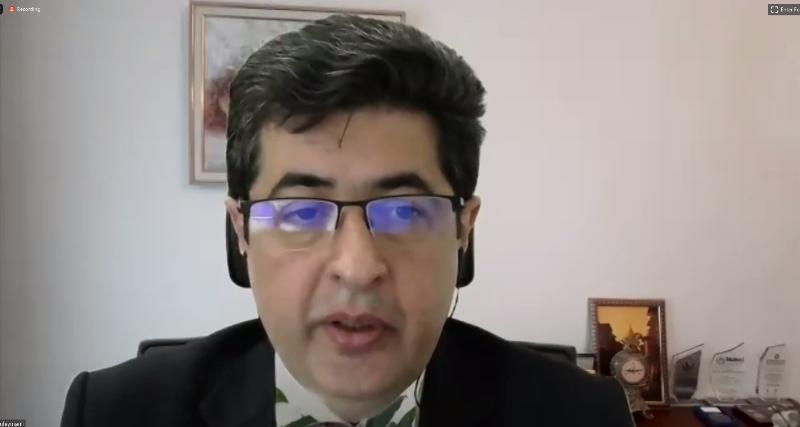
Prof. Dr. Ebulfez Süleymanlı: “Human rights should be kept on the agenda during pandemic days”
Moderator Prof. Dr. Ebulfez Süleymanlı, in the online panel held due to pandemic conditions, stated that the coronavirus outbreak constitutes the most important item on the world's agenda, saying, “The Covid-19 pandemic, which emerged at the end of 2019 and rapidly spread worldwide, has changed the usual life cycle and habits of all segments of society. Following the globally impactful corona outbreak, risks regarding international human rights have also begun to increase. Especially the necessity for countries to take extraordinary measures while trying to cope with the pandemic has led to these measures being implemented in very different ways, both in terms of their application and nature. Legal regulations implemented worldwide due to the epidemic also vary. Although we do not yet have concrete data on the problems experienced during the pandemic process, it is the general opinion of experts that discriminatory practices and human rights violations, which occurred in normal times, have intensified and increased during this period. In these crisis days we are experiencing, it is high time for lawyers, human rights defenders, professional organizations, universities, and all civil society to remind and insistently defend fundamental rights and freedoms, keeping them on the agenda. We dedicated today's panel to this agenda item.”
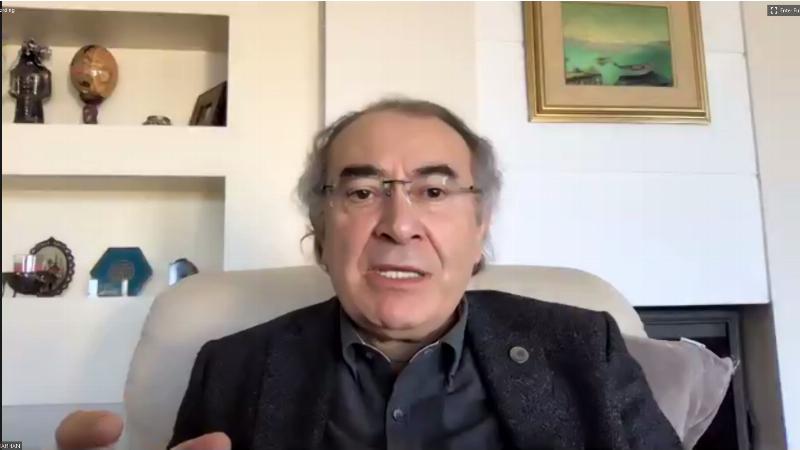
Prof. Dr. Nevzat Tarhan: “Justice and equality are essential for global peace”
Üsküdar University Founder and Chairman of the Board of Trustees, Psychiatrist Prof. Dr. Nevzat Tarhan, pointing out the importance of ensuring human rights under equal conditions for global peace, said, “If we want global peace, we also need to want global justice and equality. We especially need this regarding fundamental rights. There is a study conducted with kindergarten children. In this study, each child in a class of 40-50 children is given four chocolates. Observations are made throughout the lesson. After eating their chocolates, the children play calmly. A harmonious classroom environment is formed. Later, to the same group, some are given one chocolate, some seven, while others are given no chocolate at all. They observe fights, arguments, and tension in the same classroom. Voices are raised. What happens when conditions are not provided equally, when children cannot share chocolates equally, is there a genetic code here, this is being researched. This means that humans inherently have a biological and psychological inclination to have equal rights. This is a genetic tendency, and when it is obstructed, it is met with a reaction.”
Prof. Dr. Nevzat Tarhan: “The psychological aspect of the pandemic should not be neglected”
Emphasizing that this era is now the age of freedoms, Prof. Dr. Nevzat Tarhan said, “It is an era where the world is a global village. An era where it is an electronic village. In such an era, no state can manage its society in isolation; it is not possible. That is why human rights are sacred in this era. Just as we cannot change our skin on our bodies, human rights cannot be abolished. A state cannot say 'I have abolished human rights'. Can human rights be restricted? Yes, they can be restricted in extraordinary circumstances, and this is determined. An epidemic is one of them. Is coronavirus infection a biological condition, a medical issue? It is a medical issue, but the Covid-19 pandemic is a psychological phenomenon. Therefore, it is very closely related to human rights. It is very closely related to human social behavior. For this reason, in infectious diseases, infectious disease specialists should have the final say, but in pandemic management, epidemiologists, meaning epidemic specialists, should have the final say. The biggest helpers for epidemic specialists should be psychology and sociology professionals. Decisions regarding this should not be made without consulting sociologists and psychologists. If we neglect the psychological aspect of the event, we will also seriously neglect its human rights dimension.”
Tarhan reminded that people have fundamental rights such as fair trial, life, travel, access to health, freedom of expression, freedom of religion and conscience, and the right to expression, saying, “Access to these rights has been disrupted due to the pandemic. However, this access has also created serious inequality. Children are experiencing problems in accessing education.”
Prof. Dr. Nevzat Tarhan: “Inequality is the weakest link in the pandemic”
Tarhan stated that there are two important points in crises: “The strongest link in the chain is the weakest link in the chain. When a crisis occurs, it breaks from the weakest link. In the pandemic, the weakest link for society and humanity is inequality. Approximately 2 billion people in Africa do not have access to clean water. A very small segment of society lives at a high level. Currently, the US accounts for 5% of the world's population but consumes 25% of the world's resources. There is such an income injustice.”
Tarhan stated that if measures are not taken in societies where there is no income, justice, and equality worldwide, social explosions may occur, saying, “In America, in France, street protests seem anti-discrimination on the surface, but there is a disproportionate reaction from society. There is an accumulation of anger in society. Even in US society, there is an accumulation of anger, there is serious injustice in access to healthcare. Covid causes explosions in such weak points. Globally, generally 50% of societies are disadvantaged. This group includes the unemployed, disabled, sick, elderly, and children. Societies that do not consider this group experience collapse.”
Prof. Dr. Nevzat Tarhan: “Decision-making mechanisms need to take precautions”
Emphasizing that precautions should be taken now regarding problems that will emerge later in the pandemic crisis, Prof. Dr. Nevzat Tarhan said, “The second thing to do in crises is to take precautions. If events are left to their natural course in crises, problems remain. If you do not treat a person with a broken leg in time, if you do not put the leg in a cast, the leg will remain lame when the fracture heals. Precautions must definitely be taken. In crises, management and decision-making mechanisms need to find the breaking points and inequality points of society and act proactively and take precautions.”
Prof. Dr. Nevzat Tarhan: “Crisis management should be addressed worldwide”
Tarhan stated that crisis management should be addressed worldwide, saying, “Crisis management is also very important in terms of human rights. Measures taken against the virus should not increase or deepen inequalities in society. They should not create new inequalities. These temporary measures should not turn into de-democratization. For this, it is necessary to establish a relationship of trust with society. There are three ways to build a relationship of trust with society: Being open, transparent, and honest.”
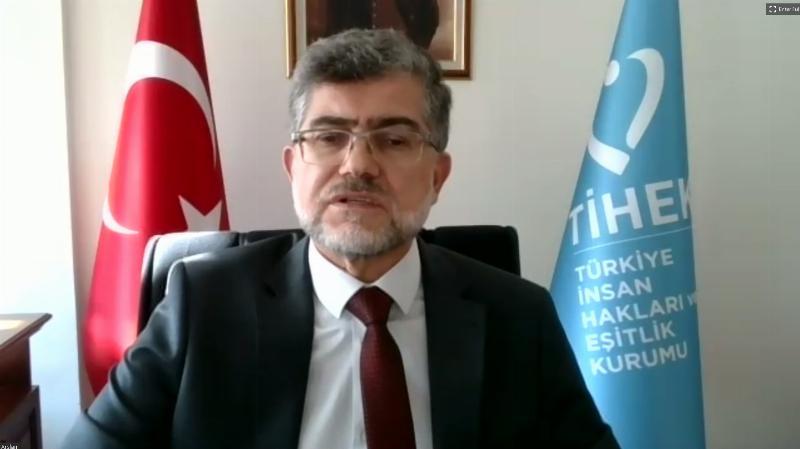
Süleyman Arslan: “Human rights have entered a very delicate period with the pandemic”
Süleyman Arslan, President of the Human Rights and Equality Institution of Turkey (TİHEK), stated that as a result of the pandemic causing a global crisis, as of December 8, 2020, 68 million confirmed cases were observed worldwide, 47 million people recovered, and 1.5 million people lost their lives due to the virus. Arslan said, “Due to the pandemic, societies worldwide have faced very serious devastation. In the face of such a major humanitarian crisis, states have taken measures to the extent of their capabilities to protect and guarantee the right to life and the right to health. Undoubtedly, the situation arising with the Covid-19 pandemic constitutes one of the crisis moments that highlight the need for human rights. Thus, human rights have entered a very delicate period. Every one of the fundamental rights, from the right to life to ill-treatment, discrimination violation, and restriction of freedoms – civil and political rights, economic, social, and cultural rights – has had to be restricted. Sometimes they have been entirely violated.”
Süleyman Arslan: “Those responsible for the pandemic should be punished”
Stating that the rights of people worldwide have been violated by the pandemic, Süleyman Arslan emphasized that the cause of the pandemic should be investigated, saying, “In an event that caused the deaths of millions of people, omitting or ignoring the origin of the virus could become an indicator that other problems will continue tomorrow. We do not know whether it emerged through natural means or as a planned development, as has been frequently expressed in public, but in any case, we believe it needs to be clarified. In any case, to clarify that it is a situation that violates human rights. I believe that those responsible for an epidemic in which 1.5 million people died should be punished, and sanctions should be applied to states.”
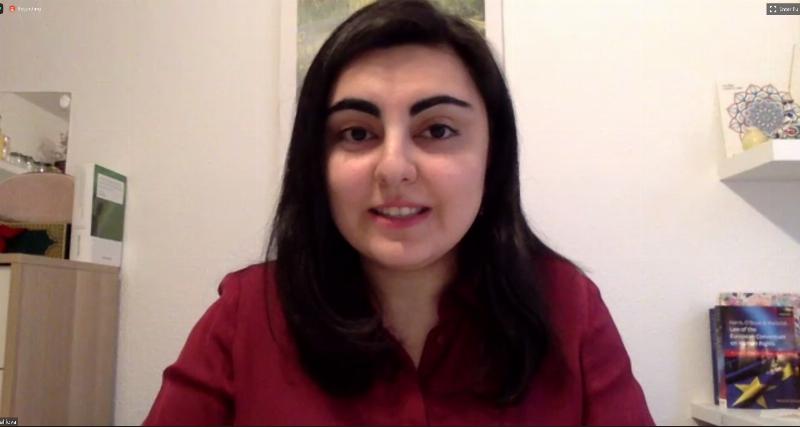
Türkan Halilova: “95 states declared a state of emergency during the pandemic”
Türkan Halilova from the Faculty of Law at Hamburg University said that developments concerning human rights violations occurred in many countries around the world during the pandemic process. Türkan Halilova stated, “It has been observed that 95 states declared a state of emergency, restrictions on freedom of expression were imposed in 47 countries, 128 states restricted freedom of assembly, and 50 states imposed some restrictions on private life.” Türkan Halilova noted that the most disadvantaged segments were affected by human rights violations, including the elderly, especially those living in nursing homes, prisoners, disabled individuals, foreigners and refugees, minorities, women, and children.
Share
Update Date: February 27, 2026
Creation Date: December 09, 2020
Request a Call
Other News
- Experts warn: 'Instead of memorizing letters, teach pencil grip, scissor use, and coloring'
- School fear and school love both start in the family!
- Family is not merely transforming, it is being battered under a serious assault
- Artificial intelligence opens the door to early diagnosis in autism!
- Artificial intelligence doesn't end engineering, it transforms it!