

News of violence against children from many cities has recently caused outrage in public opinion. Reactions poured in from all segments of society, especially regarding news of infants and children subjected to violence by their parents. Stating that domestic violence has 5 types: physical violence, physical abuse, sexual abuse, emotional abuse, and emotional neglect, Prof. Dr. Nevzat Tarhan said that love and trust are two important nutrients for a child's psychological development. Tarhan noted that a child who cannot receive the nourishment of love and trust will grow up amidst traumas, adding that treatment is more important than punishment in the fight against domestic violence. Tarhan also drew attention to the effect of group stress on violence.
Content
Prof. Dr. Nevzat Tarhan: “If a child doesn't receive the nourishment of love and trust, they grow up amidst traumas”
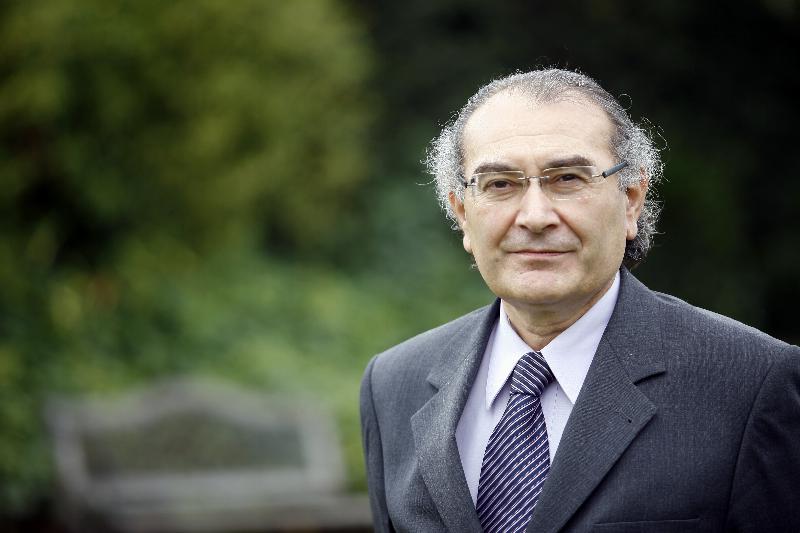
Üsküdar Üniversitesi Founder Rector, Psychiatrist Prof. Dr. Nevzat Tarhan, drew attention to the negative impact on the brain development of infants and children, especially those subjected to violence by their families.
There are 5 Types of Domestic Violence
Prof. Dr. Nevzat Tarhan stated that the type of violence, which includes violence against children, is referred to as “domestic violence” in the literature. He said, “Domestic violence, just like violence against women, can also be directed at unprotected and defenseless children and children in early childhood. As mental health professionals, we refer to the Childhood Trauma Scale in every case. Five types of violence are mentioned here: physical violence, physical abuse, sexual abuse, emotional abuse, and emotional neglect.”
In Emotional Neglect, the Child is Left Without Love
Prof. Dr. Nevzat Tarhan noted that physical abuse can take the form of starving, confining to a room, or scaring and threatening. He said, “Locking a child in a room, threatening 'I will burn you' constitutes physical abuse. In emotional abuse, there is no physical violence, but the child is deprived of many emotions, left hungry. For example, they can be subjected to emotional threats like 'I won't love you.' Or they can suffer emotional abuse through threats that harm might come to their mother. One of the most common types of this violence is emotional neglect. In this, too, the child is left without love.”
Love and Trust are Two Important Psychological Nutrients
Prof. Dr. Nevzat Tarhan noted that meeting a child's emotional needs is as crucial as meeting their physical needs for their development. He warned, “If you do not adequately provide a child with their food, drink, and necessary nutrients as they grow, they will get sick, fail to develop, and sudden deaths may occur. Similarly, it should not be forgotten that a child has psychological nourishment and food, just as they have physical nourishment. There are two most important psychological nutrients: one is love, the other is trust. If a child cannot receive the nourishment of love and trust, cannot feel safe, and is in an unloving environment, that child grows up amidst traumas.”
Prof. Dr. Nevzat Tarhan noted that according to recent research, childhood traumas experienced between the ages of 0 and 6 leave permanent marks on the brain. He stated, “Traumas experienced during this period disrupt the child's brain network. That child will later experience learning difficulties. Various developmental disorders emerge in the child later on, and intellectual disabilities appear. Problems arise in some verbal, emotional, and social skills.”
If a Child Doesn't Feel Safe, it Can Lead to Autism and Schizophrenia
Emphasizing that shock experiences during the 0-6 age period involve a child feeling unloved and unsafe, Prof. Dr. Nevzat Tarhan warned, “Indeed, an unloved and unsafe child is described in the literature as follows: The child constantly cries. This condition is called maternal deprivation syndrome. When someone approaches them, they stop crying and look. If it's not their mother, they start crying again. This is sometimes mistaken for naughtiness. In reality, when there is no secure attachment, a child feels like they have been abandoned in a forest. In children stimulated by violence, the child feels insecure. Fear, not trust, becomes the dominant emotion in the child. Because they do not feel safe in life, they withdraw, and if this situation persists, continuously and permanently, it leads to childhood autism and childhood schizophrenia.”
A Violent Parent Sees Their Child as a Slave…
Prof. Dr. Nevzat Tarhan stated that children subjected to intense and continuous violence are taken under state protection. He said, “These children would be healthier growing up without a mother and father. By court order, they are taken from their families and placed under state protection. The mother of these children cannot fulfill her motherhood or protect them. The father applies violence. In such a situation, it is quite natural and a right for the state to take the child, stating that the parents cannot parent. Serious legal regulations need to be made regarding this in Turkey. Everyone needs to learn that children also have rights. A parent who shows violence towards a child sees the child as their slave. Or they see the child as an extension of themselves, like an arm or a leg.”
Evaluating the recent increase in such acts of violence in society, Prof. Dr. Nevzat Tarhan said, “In such situations, group stress can generally be mentioned. There are reports of individuals who have never before resorted to violence now doing so. These incidents usually occur with anger. These individuals largely suffer from anger control disorder and impulse control disorder. They cannot control their anger and later regret it. Such situations require treatment. The child is taken from them. Compulsory treatment and rehabilitation for the parents should be implemented by court order.”
Probation Should Be Applied to Violent Parents
Noting that the infrastructure for mandatory rehabilitation for such situations has not yet been established in our country, Prof. Dr. Nevzat Tarhan warned, “Courts make decisions on this matter but find themselves helpless. The biggest point and most significant deficiency that Turkey is currently missing in the fight against domestic violence are probation practices. A person who commits violence against a child should not be able to reclaim their child without undergoing mandatory treatment and education in rehabilitation centers and receiving a report stating that they can parent again. The probation system applied in substance addiction should also be applied here. If we do not do this, children may turn into repeat offenders in the future. Child victims of violence often become perpetrators of violence themselves later in life.”
The Spread of Violence is Linked to Group Stress
Prof. Dr. Nevzat Tarhan noted that the widespread increase of violence in society is linked to group stress. He said, “When does the practice of violence increase in a culture? It increases when there is group stress. If there is stress in the family, if there is violence in the family, if there is stress in the work environment. When there is group stress, arguments increase, and violent crimes increase. If we consider Turkey as a whole, if there is general group stress in the country, it could be the 'last straw' effect in the recent incidents of violence. This needs to be analyzed carefully. Is there an increase in societal stress? It appears there is. We see that these incidents are statistically increasing. In such a situation, practices that instill trust and reduce fear in society need to be implemented.”
An Approach That Explains Everything Economically Would Be Wrong…
Prof. Dr. Nevzat Tarhan stated that looking to the future with hope, people feeling secure, and loving one's job increase civic loyalty. He said, “What increases civic loyalty? Firstly, loving one's homeland; secondly, feeling secure about one's future; thirdly, having one's belly full. An approach that explains everything economically would be wrong.”
There is a Need for Trust-Building Policies in Society…
Prof. Dr. Nevzat Tarhan noted that the perspectives of younger generations are different from those of adults. He said, “The younger generation is a global generation that aligns with global truths. What we refer to as national character, the ideal of homeland and nation for older generations, is secondary in the current generation. We cannot convince this young generation with the ideal of homeland and nation. We need to provide reasons for them to love their homeland and their future. Trust-building policies in society are needed for these policies to change again.”
Prof. Dr. Nevzat Tarhan stated that treatment is more important than punishment as a solution in the fight against domestic violence, saying, “A treatment decision should be made for parents, which is more important than punishment. If approved, treatment should be provided.”
Motherhood and Fatherhood Must Be Taught
Prof. Dr. Nevzat Tarhan noted that recent events within families indicate a crisis in this institution, stating the following:
“Such incidents emerging from the family mean there is a crisis in the family. It means there's a fire. Our Ministry of Family and Social Policies cannot produce solutions for this fire. A child growing up in a safe environment is paramount. A child's greatest need is to be in a safe environment and have a loving and valuing family environment. If you cannot create an environment for secure attachment within a family, those individuals are not good parents. If a child comes home in fear, or runs away from home, you are not a good parent. Motherhood and fatherhood must be taught. A license is issued for driving a car, but there is no license to be a parent. Such individuals, if they went through a marriage maturity process and were educated, would also produce other solutions. Maslow has a saying: ‘To a man with a hammer, everything looks like a nail.’”
Share
Request a Call
Other News
- Prof. Nevzat Tarhan: “Those with a mental filter are not afraid of the digital”
- Artificial intelligence doesn't eliminate the translator, it transforms their expertise!
- Social responsibility courses moved to the field
- Erasmus+ Orientation Week completed at Üsküdar
- Prof. Nevzat Tarhan: “Brain secretes ‘dark glue’ in social media lynchers!”