

Psychiatrist Prof. Dr. Nevzat Tarhan, stating that there are three important points in ensuring social cohesion, listed these as common culture from the past, common aspirations and ideals for the future, and common sense formed regarding current events. Prof. Dr. Nevzat Tarhan, stating, “If these three come together, it creates national unity,” added, “If we interpret the past differently, this negatively affects national unity. If our national ideals are different, it is also misinterpreted.” Tarhan emphasized that the Çanakkale Victory is the prologue to the birth of a new Turkey, and underscored the importance of explaining and conveying the spirit of Çanakkale to young generations, as this victory created a national consciousness in all segments of society.
Content
Prof. Dr. Nevzat Tarhan: Çanakkale Victory is the Prologue to the Birth of Turkey…
Common culture, common ideals and common sense…
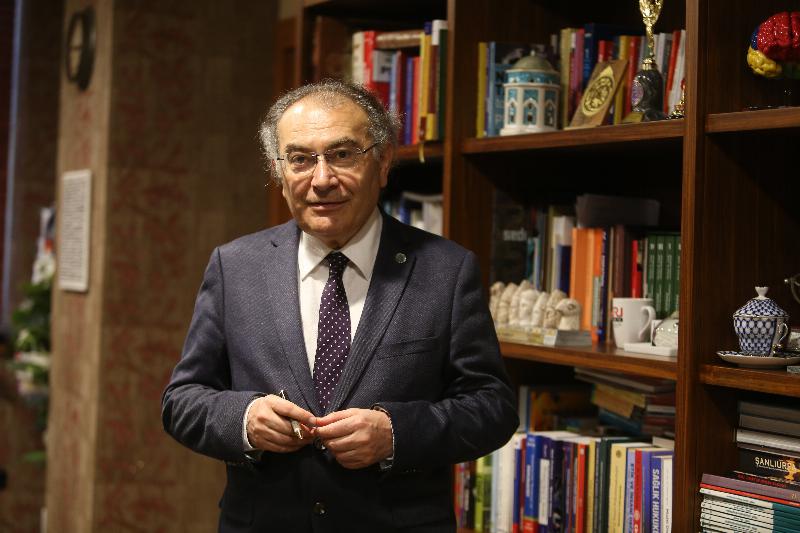
Üsküdar Üniversitesi Founding Rector, Psychiatrist Prof. Dr. Nevzat Tarhan, made evaluations regarding the importance of the spirit of unity and solidarity on the 108th anniversary of the March 18 Çanakkale Victory.
Prof. Dr. Nevzat Tarhan noted that the Çanakkale wars lasted more than a year, stating, “Roughly one month after the naval battles of Çanakkale began on March 18, 1915, the naval battles had to end. The French and British had formidable preparations consisting of a powerful navy and armored ships. There was a force that had reached the ultimate power of the industrial revolution. Such a great force seemed unstoppable. Before this war, serious psychological operations had occurred on both sides; especially many Greeks who had migrated from the Ottoman Empire to Greece and knew Turkish well were sent as spies to gather information about the front. The Ottomans also conducted psychological operations in the same way. They particularly did this in land battles.”
His success at Anafartalar becomes a kind of birthday for Mustafa Kemal
Prof. Dr. Nevzat Tarhan stated that the Allied Powers' navy was forced into a ground operation after failing to pass Çanakkale on March 18 due to mines laid by the Nusret minelayer, and that this situation was a historical turning point in the Çanakkale War. He said, “The land battles lasted for approximately one year. The Allied Powers were also unsuccessful in these and retreated. In the land battles, Mustafa Kemal, while a largely unknown Staff Colonel, achieved tremendous fame within Ottoman administrative circles with his high success, intelligence, and achievements at Anafartalar. It became a kind of birthday for him.”
It is necessary to understand the spirit of the Çanakkale Wars
Tarhan said, “It is necessary to approach the Çanakkale wars with inquiry. We were successful in the Çanakkale wars. We were successful in many battles, but because our strategic goal was wrong, these local successes we achieved did not prevent us from losing the war. Therefore, having the right strategic goal is actually important. Rushing into war to ally with Germany, the strategic goal here was wrong. The staff officers debate this. This is one of the lessons to be learned. The Çanakkale wars were a serious defensive war. In this defensive war, it is necessary to know what the spirit of Çanakkale was.”
In the spirit of Çanakkale, martyrdom is seen as a high rank
Prof. Dr. Nevzat Tarhan stated that the Çanakkale War was a conflict in which soldiers from different geographies, including all four corners of Anatolia within the Ottoman borders, participated. He said, “Those who go to the martyrs' cemetery on the Gallipoli peninsula see the tombstones of soldiers who came to fight from all over Anatolia. There are martyrs from Idlib, from Syria. How could these soldiers resist an enemy with powerful weapons? I summarize the spirit of Çanakkale under three main headings: First, they view martyrdom as a high rank and can smile in the face of death. Because Mustafa Kemal knew this very well, he said, ‘I am not ordering you to attack. I am ordering you to die.’ This order shows the impact of the feeling of martyrdom on the soldiers.”
Prof. Dr. Nevzat Tarhan stated that the Allied Powers were conducting a siege over a very wide area, adding, “Mustafa Kemal moved early in the morning with all the soldiers behind him, and he himself was on the front line. He attacked while the other side was sleeping and dispersed them in that manner. Therefore, this is military genius, a tactic. His presence on the front line was very important; it mobilized the entire army.”
The feeling of devotion creates the spirit of Çanakkale
Prof. Dr. Nevzat Tarhan stated that the second characteristic of the Çanakkale spirit is resisting the oppressor, and the third is the spirit of devotion to the homeland. He said, “All these characteristics are unique to our society. The ability to say no to the oppressor exists in our society. The ability to say no to the death when seeing the other side as tyrannical, it's as if this is in our genetic code. This feeling also increased the power of resistance in Çanakkale, and the tyranny of the other side awakened the feeling of being able to protect the homeland in this nation. The third is a devotion related to the homeland being a sacred trust. That feeling of devotion creates the spirit of Çanakkale.”
The spirit of Çanakkale should be explained to children
Prof. Dr. Nevzat Tarhan emphasized the importance of explaining and conveying the spirit of Çanakkale, especially to young generations. He said, “The feeling that this homeland is a sacred trust, which is part of the Çanakkale spirit, needs to be taught to students and children as national consciousness. This has now been realized, meaning almost all schools visit the martyrs' cemetery in Çanakkale during these periods. They should do this because it is necessary to remember those days and to convey their spirit. This should start at primary school age. Children should be taken to Çanakkale to show them the spirit of national consciousness, the spirit of unity and solidarity. At the martyrs' cemetery, one should tell them about the soldiers who came from different geographies across the entire Ottoman Empire and fell as martyrs for these lands.”
Prof. Dr. Nevzat Tarhan, underlining that with these characteristics, the spirit of Çanakkale also stands as a symbol of the concepts of national unity and solidarity, said, “This spirit of national solidarity must be taught starting from primary school. Young medical students from Istanbul went to the front as doctors, and the stories of the 'hennaed lambs' were written during the Çanakkale War.”
The values learned in Çanakkale should merge with our social self
Prof. Dr. Nevzat Tarhan stated that the values experienced and learned in Çanakkale should be a part of our social self. He said, “The merging of these values with our social self has a great impact on the formation of our feeling of unity and solidarity. Three things are important for national solidarity: common culture from the past, common aspirations and ideals for the future, and common sense formed regarding current events. If these three come together, it creates national unity; if we interpret the past differently, it negatively affects national unity. If our national ideals are different, it is also misinterpreted. Currently, especially regarding Çanakkale, there is a national consciousness about this in every segment of society.”
The Çanakkale Victory is the prologue to the birth of Turkey…
Prof. Dr. Tarhan said, “The Çanakkale Victory shattered the British prestige. This victory is the prologue to the birth of a new Turkey.” Prof. Dr. Nevzat Tarhan stated that the Çanakkale Victory was a great success, especially in the fight against colonialism and imperialism, and that it is a symbol not only for us but also for all nations fighting against colonization. He said, “The spirit of Çanakkale has a symbolic value. It is proof that it is possible to say 'stop' to the oppressor and to fight against colonialism all over the world. The spirit of Çanakkale is a beautiful immune system against those who try to disrupt our social and national philosophy. For this reason, it is necessary to narrate the Çanakkale Victory and similar victories, and to overcome common social traumas together. We transitioned from the Ottoman Empire to the Republic. We could not mourn the Ottoman Empire. When we cannot mourn, unresolved trauma occurs in society, and national unity does not exist.” Prof. Dr. Nevzat Tarhan stated that achieving social consensus on issues related to the Ottoman Empire is important, emphasizing its significance in ensuring national unity consciousness.
Share
Request a Call
Other News
- The book that read today's digital threats in 2014: Being a Conscious Family
- Experts warn: 'Instead of memorizing letters, teach pencil grip, scissor use, and coloring'
- School fear and school love both start in the family!
- Family is not merely transforming, it is being battered under a serious assault
- Artificial intelligence opens the door to early diagnosis in autism!