

With the support of the Directorate of Health, Culture and Sports of Üsküdar Üniversitesi, the ‘Psychology Conversations from Existence to the Search for Meaning with Prof. Dr. Nevzat Tarhan, Founding Rector of Üsküdar Üniversitesi’, organized by the Conscience of the Age Club, took place this week with a strong participation of students, as it does every week. The program, which addressed the topic of ‘Prophet Job and Patience’ in the previous session, continued this week with examples from the life of Prophet Job, an embodiment of patience. Speaking in the context of the importance of patience in the face of calamities, drawing from the life of Prophet Job, Tarhan emphasized that those who endure disasters with patience will be rewarded in this world and the hereafter.
Content
Prof. Dr. Nevzat Tarhan: “Calamities are an opportunity to bring out the beauties within a person”
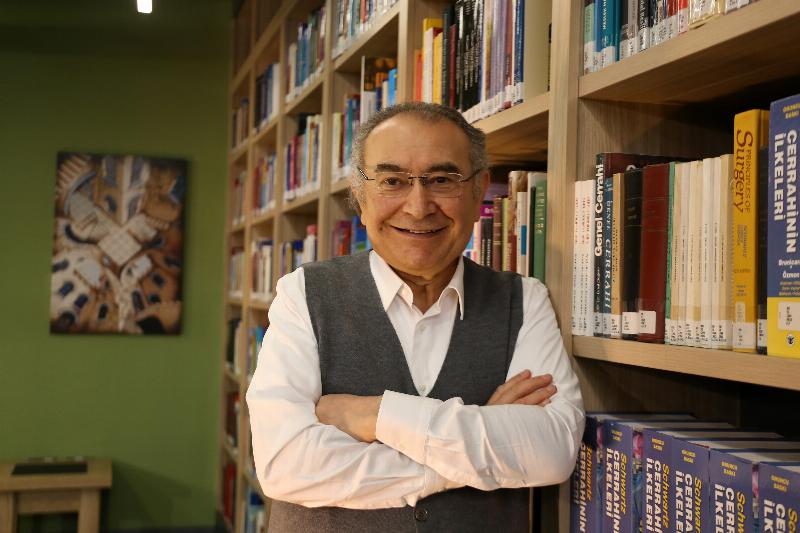
“We can turn calamities into gains”
Delving deeply into the concept of patience based on the story of Prophet Job, Tarhan underlined that patience is not withdrawing but rather a ‘meditative act’. Stating that one of the greatest lessons to be learned from this story is to learn from disasters, Tarhan focused on the concept of ‘growth trauma’. Tarhan said; “The story of Prophet Job was a very different story. There is serious suffering, and towards the end of this period of suffering, some lessons emerge. Two points remained from those lessons that we needed to elaborate on, let's continue to explain them. There are two powers a person can use during illness and calamity. If a person can use these powers well, there is a possibility of turning the life event they experienced, the calamity, and the situation that puts them in a difficult position, into a gain in their life. In psychology, we call this ‘growth trauma’. In growth trauma, a person experiences pain and sadness. If they cannot change their life and its flow after experiencing that sadness, they change their perspective. When they change their perspective, that life event, that sadness, turns into a gain for them. Patience is not retreating and waiting; patience is a meditative act. Patience is for a person to take a position in the face of a certain life event and to adopt an attitude that life can endure this situation. This power, defined as the power of patience, does not mean enduring, but ‘conforming to the speed and rhythm of nature’. Someone who uses the power of patience well knows when to accelerate and when to slow down. If a person uses the power of patience correctly, they can control the past and the future better.”
“Calamities are an opportunity to bring out the beauties within a person”
Emphasizing the need to be patient and learn from the calamities that befall us in life, Tarhan stated that in the end of patience, the beauties within a person will emerge. Tarhan said; “Bediüzzaman Hazretleri says that instead of being upset about the calamities that befall us, communicating with that event makes the transient life behind it a happy life through the calamity. When a person endures the life event they experienced, the wounds on their body, the calamities, and then recovers, it becomes a thing of the past for them, but for the future, it transforms into a kind of gain for that person. Patience is beneficial not only for eternal life but also for worldly life. As it is said in Anatolia; ‘Patience is bitter, but its fruit is sweet.’ Instead of thinking about the calamity they experienced from the perspective of ‘why did this happen to me?’, a person should use what we call the ‘accept, manage’ method in psychology therapy schools. Old psychology schools used to say to see life events and illnesses as ‘enemies’. They said ‘fight, struggle, defeat’ them, but there are things a person can defeat and things they cannot; there are things within their power and things beyond it. In such situations, the power of patience means being patient and enduring things within one's power, and for things beyond one's power, instead of asking ‘why did this happen to me?’, it is very important for the person to activate the power of patience and think, ‘I had to experience this, there was a wisdom in it.’ Illnesses and calamities are actually an opportunity to bring out the beauties within a person. However, fate grants this to those who take the right position; in the wrong position, you suffer.”
“Modernism suggests a selfish life”
Regarding the importance of patience, Tarhan underlined that the modern age pushes people towards selfishness and impatience. Tarhan said; “Modernism suggests a selfish life. In contrast, what does our culture, the teachings of the Holy Quran, say about how to position ourselves in the face of such events so that this power of patience develops and educates us? ‘How foolish is it to constantly drink water and eat bread today thinking, ‘I will be hungry, thirsty tomorrow or the day after’.' Unfortunately, civilization makes us think this way now. It causes us to think incorrectly about the future; the modern age has made us greedy and insatiable. One of the most frequently used areas for the power of patience is the fear of being penniless. Some people save money fearing they will be penniless, and then that money they saved not only doesn't benefit them but mostly pleases their heirs. They do this out of fear of being penniless, thinking ‘What will I do if I run out of money, what will become of me?’ Saving is a good thing, saving money and spending it wisely is a good thing, but it is important for a person to do this in a way that they can account for; if they make savings they cannot account for, there is certainly a price for that too. From this perspective, resilience training is very important for individuals. A person being ambitious and greedy also weakens people's trust in them.”
“The secret to a successful marriage is to resist life's events together”
Tarhan made striking statements about the concept of patience in marriage, emphasizing that the secret to a successful marriage is for couples to be patient in the face of life events and act together. Tarhan said; “Patience is a very important issue in husband-wife relationships. Those who have trouble with patience are generally seen more in men in situations we call prolonged adolescence. The parties to be married normally need to have marital maturity. The most important point of marital maturity in both parties is the presence of the power of patience. They will now embark on the journey of life together. In such situations, if one of the parties has prolonged adolescence, it's as if there are two children at home. They manage both their spouse and their child. Such difficulties are always experienced, but this power of patience also adds quality to marriage. If, within the family, one person is in trouble and the two parties can endure each other, they progress on the journey of marriage, through these steps of life, feeling that they are not alone. Their resilience against difficulties increases. It is harder to progress on that path alone. Strong resilience in marriage and mutual support between the parties is a feature that greatly strengthens marital relationships. Look at many successful marriages; behind them, couples have been able to resist life's events together. They have been able to oppose them together. It is always said, for example, that the wind does not fly the kite. The position the kite takes against the wind makes it fly. The power of patience is like this too. The winds of life are blowing; if we take the right position against these winds of life, it will carry us forward. If we take the wrong position, it will make us fall head over heels. Therefore, in such situations, the power of patience means that a person takes the right position against life events, stands firm, and moves forward. What was the opposite of impatience? Ungratefulness. What is patience? It is a person's ability to appreciate the small things they have. To be able to tolerate these. When a person starts to complain about their situation, their present weakens. Because their present weakens, the person begins to see themselves as a god on earth. Thoughts like ‘I deserve everything, everything should be given to me’ only increase their calamities. While other people should be compassionate, they develop a negative attitude towards these suffering individuals.”
Share
Request a Call
Other News
- Social responsibility courses moved to the field
- Erasmus+ Orientation Week completed at Üsküdar
- Prof. Nevzat Tarhan: “Brain secretes ‘dark glue’ in social media lynchers!”
- Prof. Nevzat Tarhan: “Every segment of society should be able to say, ‘This constitution is my constitution!’”
- OHS releases guide for safe operation of industrial robots