

Üsküdar Üniversitesi at the 8’th commemoration and understanding program organized this year, Bediüzzaman Said Nursi’s “approach to illnesses and afflictions” was evaluated by experts. Üsküdar Üniversitesi Founding Rector, Psychiatrist Prof. Dr. Nevzat Tarhan said that Bediüzzaman is the Imam Ghazali of this era, and by synthesizing the esoteric and rationalist approaches that Imam Ghazali performed in his own era, he answered old questions with the truths of this era. Emphasizing that Bediüzzaman Said Nursi taught how to add meaning to life through his perspective on illness, Tarhan said, “Bediüzzaman enables people to discover the need to add meaning to life and provide solace. He teaches those who use their minds to draw lessons and wisdom from illness and suffering.”
Content
Prof. Dr. Nevzat Tarhan: “Bediüzzaman Teaches Those Who Use Their Minds to Learn Lessons from Illness”
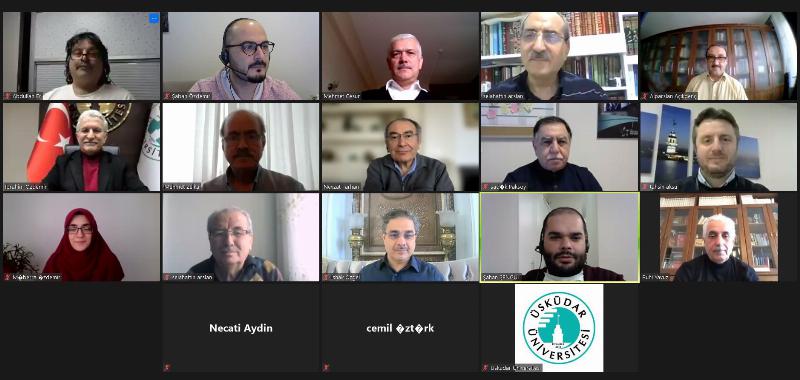
A ‘Calamities and Illnesses’ Panel was organized by Üsküdar Üniversitesi on the 61st Anniversary of Bediüzzaman Said Nursi's passing. The commemoration and understanding program, held for the 8th time this year by Üsküdar Üniversitesi Risale-i Nur Research Platform (RİNAP), the Conscience of the Age Club, and the Health, Culture, and Sports Directorate, was held online within the framework of pandemic conditions.
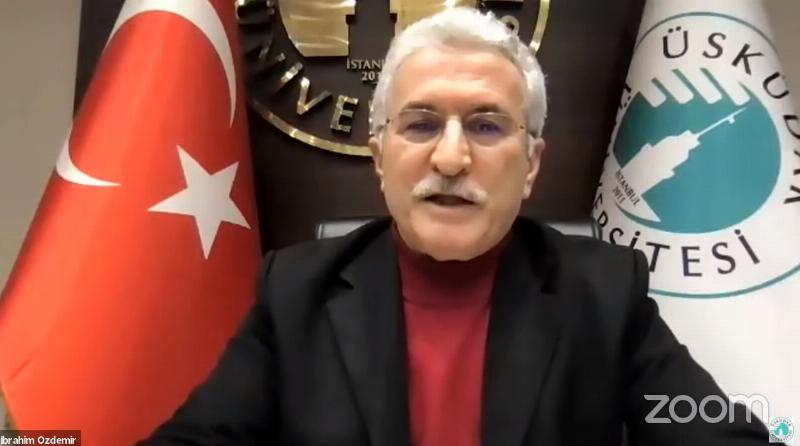
Prof. Dr. İbrahim Özdemir: “Bediüzzaman sought to understand the universe and humanity in the light of the Quran”
Üsküdar Üniversitesi Head of Philosophy Department Prof. Dr. İbrahim Özdemir stated in his opening speech that the world has been facing the Covid-19 pandemic for a full year and said that humans are the only beings who question, try to understand, and treat afflictions and illnesses. Prof. Dr. İbrahim Özdemir said, “Throughout history, many philosophers, thinkers, poets, and writers tried to solve this problem. Bediüzzaman Said Nursi, in his life of over 80 years, sought to understand the universe, humanity, and the human condition in the light of the Quran and within the path of the Sunnah. He left us the results he reached in the 6,000-page Risale-i Nur Collection.” Prof. Dr. İbrahim Özdemir noted that Bediüzzaman provided answers to existential questions with his treatises for the sick and elderly and his youth guide written for young people, and added that they would also try to understand the pandemic affliction affecting the world during the panel.
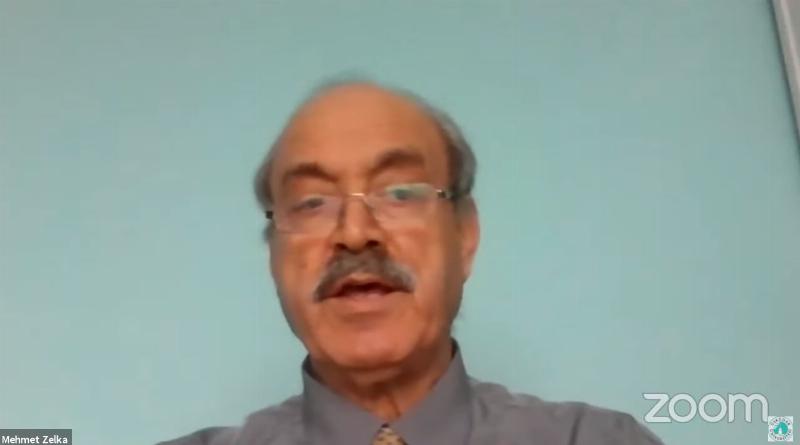
Prof. Dr. Mehmet Zelka: “Bediüzzaman Said Nursi teaches reconciliation instead of conflict with illness”
Üsküdar Üniversitesi Acting Rector Prof. Dr. Mehmet Zelka said in his opening speech that the Covid-19 pandemic, which emerged a year ago, is a global threat affecting the whole world, creating sudden and unexpected effects on individual and social life, and changing our habits. Prof. Dr. Mehmet Zelka noted that today, more than ever, there is a need for role models of societal consciousness who enlighten and guide humanity, and said that Bediüzzaman Said Nursi is one of these figures. Prof. Dr. Mehmet Zelka said, “It is our humanitarian duty to always remember and understand these people who carried the burden of all humanity in their minds and hearts, who were the stars of humanity and the suns of centuries, and to convey them to future generations. Bediüzzaman Said Nursi Hazretleri is one of these exceptional individuals who must be understood and explained. Bediüzzaman, with his treatise for the sick written approximately 90 years ago, offered true solace, a beneficial prescription, and a proven remedy to the sick and those suffering from afflictions. He advises people to first read and know themselves, and to develop awareness, which is the first cure for every ailment. He teaches reconciliation instead of conflict with illness, submission and reliance on God, and to be hopeful instead of despair and hopelessness.”

Prof. Dr. Nevzat Tarhan: “Countries are trying to take measures against suicides”
Üsküdar Üniversitesi Founding Rector, Psychiatrist Prof. Dr. Nevzat Tarhan, in his opening speech titled “The Pandemic and the Treatise for the Sick,” pointed to the ongoing Covid-19 pandemic for the past year, stating, “For a year, there has been a global illness, an affliction. Faced with this global illness, humanity fell into terrible helplessness and began to search for answers. Finland announced its statistics: suicides have increased by 15 percent. In Japan, a ‘Ministry of Loneliness’ has been established due to the rise in suicides. In such a time, what message might Bediüzzaman have for this? When we examined Risale-i Nur to see what Bediüzzaman might have said, we saw that he had recommendations for the sick and the elderly. These recommendations precisely show us how to approach this situation.”
Prof. Dr. Nevzat Tarhan: “Imam Ghazali tried to understand people at two poles”
Prof. Dr. Nevzat Tarhan, likening Bediüzzaman Said Nursi's approach to that of Imam Ghazali, the Islamic scholar of the Great Seljuk Empire era, said, “In Imam Ghazali’s era, there were the Esotericists on one side. In the Middle East of those periods, in Iran during the Great Seljuk time, there was tremendous chaos. On the other side, there was an understanding that exalted only reason through philosophy, viewing Allah only as the first intellect and unable to explain anything beyond that. These two storms clashed. In such a situation, the state at that time wanted to collect and burn all the books of the Esotericists. Imam Ghazali opposed this. He said that these books should be collected, read, and examined. He stated that all of them needed to be answered. Similarly, books from the age of Aristotle, Plato, and ancient Greece were being translated. In these situations, there were seriously divided poles. In an era where the Esotericists clashed only with Greek philosophy, Imam Ghazali said, ‘If we do not lay out the mental foundations of that event, we cannot build the structure.’ Bediüzzaman made the synthesis of the Esotericists and rationalists that Imam Ghazali made in his era, answering old questions with the truths of this era. He gave new answers regarding afflictions. Bediüzzaman is the Imam Ghazali of this era. It is impossible not to admire and be astonished when reading Bediüzzaman’s views.”
Prof. Dr. Nevzat Tarhan: “Research shows that money does not bring happiness”
Prof. Dr. Tarhan drew attention to research conducted in the United States between 1950 and the 2000s, stating, “The proportion of people in society who say ‘I am very happy’ has always remained at the same level between 1950 and 2000, and sometimes even decreased. The per capita national income increased from 20 thousand dollars to 35 thousand dollars. However, happiness remains at a constant level. This research finding reminds us of the saying ‘Money does not bring happiness.’ It also brings to mind the American saying ‘Money can’t buy happiness.’ In a study conducted between 1980 and 2015, the frequency of young people in 8th, 10th, and 12th grades saying ‘We meet almost every day’ was revealed. They constantly analyze to make correct decisions about the future. The rate of young people saying ‘We meet almost every day’ has rapidly decreased since 2010. This means there is social isolation among young people. A serious change is being experienced among young people.”
Prof. Dr. Nevzat Tarhan: “The West enriched people but failed to make them happy”
Prof. Dr. Nevzat Tarhan also pointed to statistics on depression, indicating that the rate of clinically diagnosed depression in women and men progressively increased between 2013 and 2016. He said, “Western values enriched people but failed to make them happy. In such a situation, Covid-19 occurred. The picture we face with Covid-19 shows the following: Less economic prosperity – more poverty, less psychological well-being – more income inequality, less physical comfort – more health problems, fewer social relationships – more social isolation, less trust – more loneliness and anxiety about the future, less happiness – more fear of death and more severe events, less entertainment – more frequent occurrence of depression, panic disorder, and other problems. The World Health Organization also points out that there may be an increase in psychiatric illnesses after the pandemic.”
Prof. Dr. Nevzat Tarhan: “A tendency towards maturation was observed in approximately 60 percent of society”
Referring to Üsküdar Üniversitesi’s research on the Coronavirus pandemic conducted in April 2020, during the initial period of the pandemic, Prof. Dr. Nevzat Tarhan stated, “We used 6 questions from the ‘Perceptions, anxieties, fears, and post-traumatic growth scale during the epidemic.’ We wanted to measure our post-traumatic growth perception rate. In this research, the rate of those who said ‘The priority of things I care about has changed’ was 59%, those who said ‘My interest in spiritual matters increased’ was 49%, those who said ‘I understood that I can cope with difficulties’ was 56%, those who said ‘I can accept events as they are’ was 56%, those who said ‘I started to spend more time and effort on my relationships’ was 48%, and those who said ‘I better understood the value of what I have’ was 74%. In fact, the goals in our hospital and the goals in the post-traumatic growth scale are very similar. This means that 50-60% of our society showed an initial inclination towards post-traumatic maturation. This is a very good sign. But 40% are experiencing the trauma more severely, in the opposite situation.”
Prof. Dr. Nevzat Tarhan: “Bediüzzaman gave messages to society through illness”
Asking, “So what does Bediüzzaman do in this situation?”, Prof. Dr. Nevzat Tarhan said, “Bediüzzaman states for his thesis that ‘It was written as an ointment, a consolation, a spiritual prescription, a restoration for inheritors, and a get-well message for the sick.’ This booklet, consisting of 25 remedies, was written in 4.5 hours without referring to any sources. Here, important topics stand out as follows: explanations such as ‘Illness allows one to reach their Lord like a ladder,’ ‘Illness shows a path to find truth through its rope,’ and ‘Changing the perception of illness to reduce pain and accelerate healing.’ Bediüzzaman enables people to discover the need to add meaning to life and provide solace. With the burden of illness, he stops time and redefines it. He stops time, re-assigns meaning to the past, and makes one look at the future according to that meaning. He brings such a perspective. By looking at life through the eyes of illness, he tries to explain the end of eternity. He describes the illness of a person with a fatal disease as a one-way ticket to meet their beloved, thus alleviating their despair. He teaches those who use their minds to draw lessons and wisdom from illness and suffering.”
Prof. Dr. Nevzat Tarhan: “Third-generation psychotherapies do not see illness as an enemy”
Tarhan stated that people usually focus on illness health rather than health health, and said: “After an illness passes, one should be able to ask what it gained for them. Now, there are third-generation psychotherapies used in psychiatry. These are also called Mindfulness and metacognitive therapies. These therapies have five characteristics. First, they enable acceptance of an affliction, a trauma, an illness, for example, the pandemic. That is, in these third-generation psychotherapies, you will not see illness as an enemy. Classical psychotherapy saw illness as an enemy. It said it should be eliminated, it saw death as an enemy, it said it should be eliminated. They said, ‘Fight death and win.’ Since it is not possible for a person to 'kill death,' they fell into greater despair. They tried to numb themselves with drugs or forget by using narcotics and alcohol in entertainment. Thus, they escaped and drifted away from the world.”
Prof. Dr. Nevzat Tarhan: “Acceptance of illness and death is taught”
Third-generation psychotherapies say, ‘First, accept that illness, the life event you experienced, the trauma, the illness, death. The second step after that is to re-frame its meaning.’ It says, if you need to forgive someone now, and that person deserves forgiveness, then forgive them. If they don't deserve forgiveness, simply accept it, then put it on a shelf, analyze what it taught you, and move on. If what you experienced is a threat, it says every event has a threat dimension and an opportunity dimension.”
Prof. Dr. Nevzat Tarhan: “Bediüzzaman gave positive psychology trainings”
Prof. Dr. Nevzat Tarhan noted that Bediüzzaman gave positive psychology trainings in his Treatise for the Sick, stating, “There are things people can control, and things they cannot. There are things one has the power to do, and things one cannot. What does an intelligent person do? In situations where they cannot control something, where their power is insufficient, they re-frame its meaning, set positive goals for themselves, add positive meaning, and make positive interpretations. Bediüzzaman gave positive psychology training to the sick in his Treatise for the Sick. We see that he provided training in third-generation therapies, in the style of positive psychotherapy, even though positive psychotherapy emerged less than 10 years ago. Here, he teaches to focus on opportunity, not threat. In the 4th step, he teaches to keep hope high. What will you do to keep that person’s hope high? In such situations, third-generation psychotherapies suggest looking if the person has a strong mental refuge. It is checked if they have a strong belief. It is checked if their belief includes a supernatural night. In therapies, patients are told, ‘Seek refuge in whichever higher power you believe in.’ Some have a belief in guardian angels, some have a mental refuge.”
Prof. Dr. Nevzat Tarhan: “Humans should be able to use the feeling of secure attachment against afflictions”
Tarhan stated, “Bediüzzaman’s greatest discovery is his description of Allah’s attributes, his successful conceptualization of Allah, and that his conceptualization of Allah is the most rational one.” He added, “Humans have a feeling of secure attachment. If a person cannot use this feeling of secure attachment during times of illness and affliction, they cannot keep their hope high and fall into despair. There is an unseen power, an unseen reality. It sees me, I am not alone, it can help me, they say. Therefore, in such situations, that person feels incredibly relieved because they feel they are not alone.”
Prof. Dr. Nevzat Tarhan: “Bediüzzaman viewed life as capital”
Prof. Dr. Nevzat Tarhan said, “Bediüzzaman’s concept of ‘life capital’ is very interesting to me. Capital is entirely a capitalist terminology. Bediüzzaman took and used capitalist terminology. What do you do when you have capital? You invest, you try to utilize the capital in the most profitable way. Bediüzzaman says, ‘Life is capital for us; turn it into the most profitable investment.’ He says illness is an opportunity for this. For example, this is present in resource management.”
Prof. Dr. Nevzat Tarhan: “The most profitable investment is the one made for the afterlife”
Prof. Dr. Nevzat Tarhan noted that the most strategic thinker is the long-term thinker, and said, “So, if we ask what the most profitable investment in the world is, it is the investment made for the afterlife. The second most profitable investment is in family. Because family is a safe space, a haven of peace. The third investment after that is material investments. Bediüzzaman, in the context of human life capital resource management strategy, says ‘invest in the afterlife,’ which is the smartest investment.”
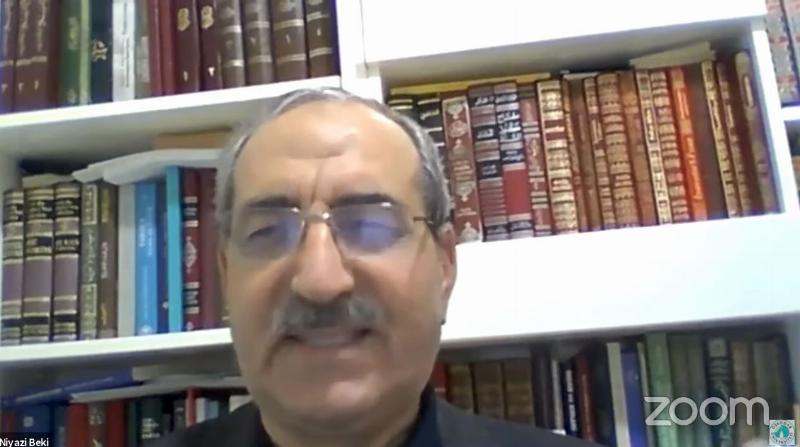
Prof. Dr. Niyazi Beki: “People are tested with afflictions and difficulties at least once or twice every year throughout their lives”
The first session, titled “Humanity in the Face of Calamities and Illnesses,” was moderated by Dr. Lecturer Ercüment Asil from the History Department of Ibn-i Haldun University. Üsküdar Üniversitesi Risale-i Nur Platform President Prof. Dr. Niyazi Beki gave examples from verses and hadiths related to afflictions and illnesses to show that Risale-i Nur is a true exegesis of the Quran. Prof. Dr. Niyazi Beki said, “A noble verse showing that trials will not leave a person can be seen here: ‘Do they not see that they are tried with various calamities once or twice every year? Yet they neither repent nor take heed.’ This verse refers to the religious trial. It is understood from the expression of the verse that people are tested with afflictions and difficulties at least once or twice every year throughout their lives. The goal of this trial is to make people regret their sins and faults and repent, and to lead them to reflect on the results of this tough trial and question their mortal life in order not to lose eternal life.”

Prof. Dr. Mykhaylo Yakubovych: “Said Nursi draws attention to the relationship between science and religion“
Prof. Dr. Mykhaylo Yakubovych from the University of Freiburg, Germany, said that wars, migrations, and illnesses are experienced in many parts of the world. Yakubovych said, “In this life, honors and felicities are very important. However, when we look at this life and see that everything changes, a person inevitably seeks and desires the imperishable, eternal happiness, eternal felicity. One of the important issues that Said Nursi Hazretleri draws attention to and perhaps explains here is the relationship between science and religion, between reason and revelation. Bediüzzaman states that many miracles in the Quran point to scientific developments. That is, he states that the development of science and technology is not contrary to the spirit of the Quran, but that it is not sufficient on its own.”
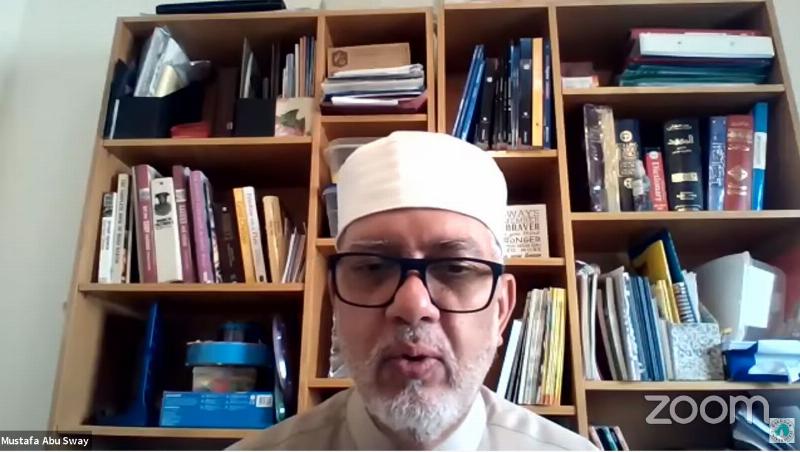
Prof. Dr. Mustafa Abu Sway: “Pandemics and disasters are a divine message”
Prof. Dr. Mustafa Abu Sway from the Al-Aqsa Mosque and Al-Quds University (King Abdullah II Endowment) United Chair for Imam Ghazali Studies said, “Sometimes we can fall into the misconception that the wealth, property, and status we possess in this world can save us from illnesses. The world is mortal and temporary. We need to deeply reflect on what the life of the world and our own lives mean. Sometimes we may have difficulty understanding afflictions and illnesses. This stems from our ignorance. Here, I want to recall what Imam Ghazali said. Injustice is seizing someone else’s property, causing harm. However, just as Allah is just, the property and ownership belong to Him. The owner of the property can dispose of it as they wish. This must be stated first and foremost. Disasters, including pandemics, are a call for people to heed the divine message and turn to Allah. The Quran states, “And indeed, We seized them with adversity, but they did not submit to their Lord, nor did they humble themselves in supplication.”
During the program, Hafız Cemil Öztürk recited verses 153 and 157 of Surah Al-Baqarah from the Holy Quran; Müberra Özdemir, President of the Conscience of the Age Club, stated that they see Bediüzzaman Said Nursi’s messages, which have reached today, as an important resource for solving today’s problems. The second session of the program, broadcast live on ÜÜ TV and ÜÜ YouTube channel, was held under the title “Calamities and Illnesses and Their Impact on Social Life.” The session, moderated by Süleyman Demirel University Lecturer Prof. Dr. İshak Özgel, included Prof. Dr. Necati Aydın from the Economics Department of 100. Yıl University, Prof. Dr. Mehmet Cesur from Gaziantep University Faculty of Medicine, and Psychiatrist Prof. Dr. Ruhi Yavuz as panelists. The panel concluded with the closing speech of Prof. Dr. İbrahim Özdemir.
Share
Request a Call
Other News
- The book that read today's digital threats in 2014: Being a Conscious Family
- Experts warn: 'Instead of memorizing letters, teach pencil grip, scissor use, and coloring'
- School fear and school love both start in the family!
- Family is not merely transforming, it is being battered under a serious assault
- Artificial intelligence opens the door to early diagnosis in autism!