

The study conducted nationwide by Üsküdar Üniversitesi's Department of Sociology to assess the second wave effects of the Covid-19 pandemic, which is effective all over the world, drew attention with its interesting results. The research, first conducted in April 2020, is also important for comparing the effects during that period. The general anxiety level, which was at 60% in April 2020, decreased to 48% with the normalization during the summer months but rose again to 59% after the second wave.
Content
Prof. Dr. Nevzat Tarhan: “Bad World Syndrome Will Accelerate During Covid-19 Period”
While 60% of the participants stated that their biggest fear related to the pandemic was losing their loved ones, 48% expressed concerns about experiencing health problems. The rate of those who always and very often felt lonely rose to 30% after the second wave, compared to the pre-pandemic period. The age group most intensely experiencing loneliness was identified as 25 years and younger, with the rate reaching 44% among young people, significantly above the Turkey average. While our consumption of tea, coffee, and junk food increased; the song that best reflected our mood regarding the pandemic was Mümin Sarıkaya's “Ben Yoruldum Hayat”.
Üsküdar Üniversitesi Founder Rector, Psychiatrist Prof. Dr. Nevzat Tarhan, stated the importance of feelings of love and trust in society, saying, “These feelings are the most important emotions that hold society together. It is important to be able to revive these feelings in society.” Tarhan also pointed out that young people were the group experiencing loneliness the most during this period, emphasizing the importance of understanding young people. Tarhan drew attention to the fact that the 'bad world syndrome', which has been on the agenda in recent years, will accelerate during the Covid-19 period.
The 'Turkey Research After the 2nd Wave', conducted by Üsküdar Üniversitesi Department of Sociology faculty member Dr. Tuğba Aydın Öztürk, Method Research Company Project Director Hale Aslı Kılıç, and Marketing Specialist Şeyda Aydın, has been completed.
The research, conducted throughout January 2021 with 3,500 participants aged 18 and over living in 56 cities across Turkey, aimed to understand the effects of the pandemic, especially after the second wave.
Under the consultancy of Üsküdar Üniversitesi Rector's Advisor and Dean of the Faculty of Humanities and Social Sciences, Prof. Dr. Deniz Ülke Arıboğan, numerous topics were examined in the research, such as anxiety, trust in individuals, institutions, and media organizations, thoughts on measures taken within the scope of Covid-19, positive and negative expectations for the future, vaccine studies, distance education, and consumption habits. Furthermore, the data obtained is also important for providing comparisons with the results of the 'Life in Coronavirus Days Research' conducted in April 2020.
Results shared with the public at a press conference…
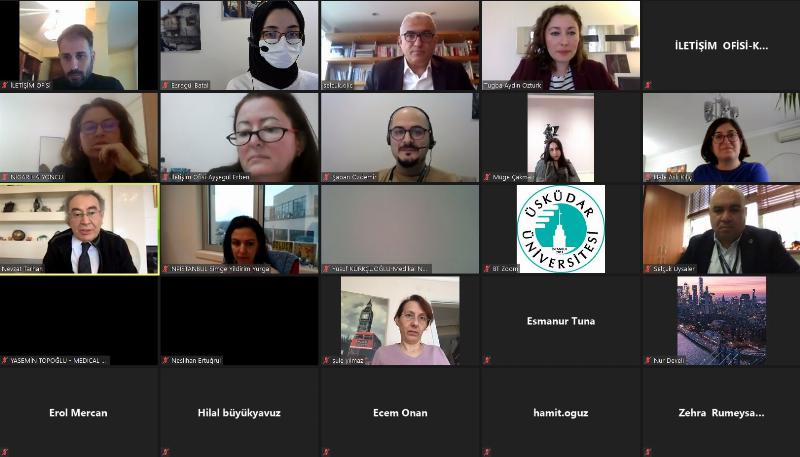
The results of the research were announced at an online press conference organized by Üsküdar Üniversitesi. The press conference was attended by Üsküdar Üniversitesi Founding Rector, Psychiatrist Prof. Dr. Nevzat Tarhan, Dr. Lecturer Tuğba Aydın Öztürk from the Department of Sociology, and Method Research Company Co-founder Selçuk Kılıç.
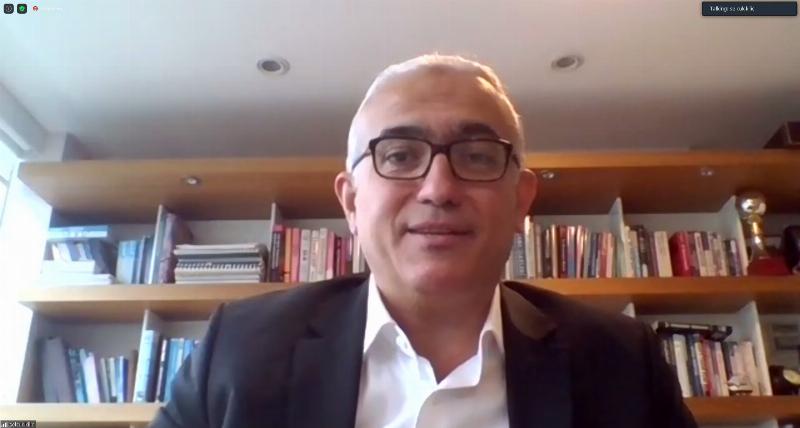
Method Research Company Co-founder Selçuk Kılıç: “Pandemic is the crisis of the century”
Selçuk Kılıç, Co-founder of Method Research Company, stated that this research was based on 3,500 observations, conducted across Turkey among individuals aged 18-65. Kılıç, stating that the pandemic is the crisis of the century, said, “It is truly very important because it coincides with a period when all countries are simultaneously shrinking and all countries are simultaneously experiencing health-related problems. As everyone knows and experiences in their own world, our understanding of happy and unhappy concepts, previously, a year ago, in April, at the beginning of the pandemic, 6 out of 10 people expressed being happy, but this figure dropped to 4 out of 10. That means now, instead of 6 out of 10 being happy, 6 are unhappy. In the April research, everyone thought it would end in 5 months. Now, a year has passed, and people are saying it will only end in a year and a half. Therefore, this psychology needs to be further monitored in future research, but I can say that our unhappiness rate has increased. In all groups, entrepreneurs, students, housewives, civil servants, workers, everyone has an increase in their unhappiness rate. Everyone is experiencing a decline in happiness. But entrepreneurs and students catch our attention the most.” Selçuk Kılıç noted that in April, 3 out of 5 people were anxious, and people are still anxious now, but the dimension of anxiety has shifted to fear.
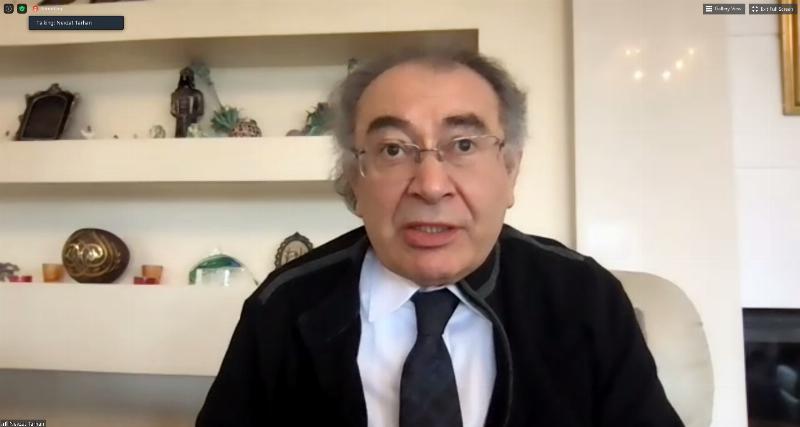
Prof. Dr. Nevzat Tarhan: “It was a guiding research with meaningful results”
Üsküdar Üniversitesi Founding Rector, Psychiatrist Prof. Dr. Nevzat Tarhan, stated that the research drew attention with its very important results and should be taken into consideration for its guiding nature.
Prof. Dr. Nevzat Tarhan noted that this research is a study that will facilitate the work of responsible authorities in Turkey in determining policies related to public health during and after the pandemic, saying, “There is a saying in crises; ‘Life is like a chain, and the strongest point of the chain is its weakest link.’ This pandemic period is a period of global tension and crisis. In these crises, detachments from the weakest links are expected. This weakest link varies according to society, age group, and income level of the individual. Breakages will occur at these points. These breakages were observed during the economic crises of 1929 and 2008. The emergence of the processes of collapse after a plague in Rome, and after a plague epidemic during the Persian Empire in Iran, are events of great historical significance. The same applies to the pandemic. These sociological studies are frequently used methods, especially in developed countries, for data collection. We, as Üsküdar Üniversitesi, carried out this study within our means in cooperation with Method Research Company.”
Prof. Dr. Nevzat Tarhan: “Public information on vaccines should be rapidly evaluated”
Prof. Dr. Nevzat Tarhan also drew attention to some important points highlighted in the research, stating, “For example, we see that 39% of people do not intend to get vaccinated. Very serious conspiracy theories are being written about vaccines. Along with the results, we can say that these theories are still effective among 39% of the public. Public information activities regarding vaccines need to be rapidly evaluated. Opinion leaders in society need to make statements and take steps on this matter. When we consider reliability, we see that specialist doctors are trusted the most. The fact that an institution ranks second in trustworthiness for the first time in health crisis management policies, and that society trusts those who implement these policies, can be considered a great opportunity. If you trust the captain while traveling on a bus, plane, or ship, you feel at ease; if you don’t, you constantly fear and are apprehensive. Currently, high trust in health officials and policies is important in health policies. We can also say that the Scientific Committee has a significant strategic impact and is valued for discussing and analyzing every issue.”
Tarhan: “It is important not to turn fear into panic and keep it within rational limits”
Noting that one of the research results was the highest level of fear among people, Tarhan said:
“The prominence of fear is very significant, not only in Turkey but globally. The emotion of fear is natural and enables people to take precautions. Rational fear is beneficial. Irrational fear pushes people to avoidance and mental health deterioration. Therefore, it is important not to turn fear into panic and to keep it within rational limits at a reasonable level. For this, public information activities should be continued. In the post-pandemic period, there is a need for public health specialists and mental health specialists, rather than infectious disease specialists, to continue informing the public more. Because serious disruptions occur in the post-pandemic period. Only a year has passed, but there are expectations that its effects will continue for a few more years. This is a risk management that should not be neglected. Situations of fear and distress pose a risk. Policy makers and decision makers need to take this situation into account regarding risk management.”
Tarhan: “The behavior of thinking about the family is a positive dimension”
The behavior of thinking about the family more than oneself is high in our society. This situation is not negative but a positive dimension. If a person goes bankrupt in the family, they are helped; when there are behavioral changes, withdrawal, or suicidal tendencies, other family members immediately try to help. This is an added value of our society. In developed countries, suicides are very prominent because this value has been lost. Japan has weak social support systems and culturally encourages individualism. This is the situation in North Europe and most developed countries. Loneliness emerged under the guise of individualism. The weakening of social support systems is also one of the three main factors in the increase of psychiatric illnesses. We can clearly state these factors as: increased expectations from life, weakened social support systems, and the development of a consumption-oriented life philosophy.”
Tarhan: ”Production-oriented life philosophy has been replaced by consumption-oriented life philosophy…”
Tarhan noted that the production-oriented life philosophy has been replaced by a consumption-oriented life philosophy in the last decade, stating, “When we questioned what is talked about most in the family, consumption emerges. There is a thought like ‘I will buy this, I will wear that’ and a beauty fetishism. There is a display fetishism. During this period, people felt bad because they could not consume as they wished. The decrease in sales of cosmetic products also shows this. Globally, an increase in unhappiness means an increase in depression and mental problems,” he warned.
Prof. Dr. Nevzat Tarhan: “Psychosocial risks will increase”
Tarhan stated that in the research, 20-25% of the society chose not to leave home at all, and said, “Similarly, the same proportions of people exhibited behavior of never entering home. There are always 3% marginals in society. There are 3% of people with below-average intelligence and 3% with above-average intelligence. Both are considered special groups. In intelligence tests, both ends of the bell curve are 3%. Here, we see that both ends of the bell curve are rising. This means that more psychosocial risks will come our way. The perception among 71% of people that things will get worse points to what we call the 'bad world syndrome'. The 'bad world syndrome', which has been on the agenda in recent years, seems to accelerate during the Covid-19 period. There are three types of reactions in the bad world syndrome. Some retreat and flee. Those with means plan to flee to different places. Other masses fall into depression. These individuals have a feeling that the future and life are not safe. One group of people also becomes aggressive, and crime and violence increase.”
Prof. Dr. Nevzat Tarhan drew attention to young people and the elderly age group
Prof. Dr. Nevzat Tarhan drew attention to the increasing feeling of loneliness among young people, stating, “There is an increase in the proportion of young people who say ‘I feel lonely very often’. The rate is 44%. This situation was most frequently observed among young people. Among other people, this rate emerged at 30%. We saw that older people used antidepressants for the first time in their lives. The elderly feeling useless, their children not visiting them as before, and feeling excluded by society negatively affected them greatly. Policies for people over 60 need to be reviewed.”
Tarhan: “Feelings of love and trust in society should be strengthened”
Prof. Dr. Nevzat Tarhan stated that the feelings of love and trust in society are important, saying, “These feelings are the most important emotions that hold society together. To revive these feelings in society, there are two concepts we mention in a family crisis. Compassion is greater than love. Because it contains unconditional love. The feeling of kindness is also greater than respect. It involves showing respect by thinking about how to discuss every problem without breaking or damaging. If policies are determined by emphasizing how to increase feelings of compassion and kindness in society, we will have given the best answer to those who want to achieve provocative results against unnecessary tensions in society.”
Tarhan: “During the pandemic, we must value young people and their needs”
Prof. Dr. Nevzat Tarhan noted that the group he values most during the pandemic is young people, saying, “Young people are currently the age group closest to fragility. Especially the 16-24 age group needs particular attention. This age group has three characteristics. It has always been this way in every period. It was the same during the last period of the Ottoman Empire and during the French Revolution. If they feel excluded and unimportant, they become rebellious. To prevent them from being rebellious, they need to feel that income equality, income justice, and non-discrimination are important, that is, the feeling of justice. This builds trust in them. The other feeling that builds trust is the feeling of freedom. If they feel that their freedom is not restricted, they feel secure about their future. If there is an increase in young people who want to study abroad, this indicates high future anxieties.”
Our biggest fear: “Losing our loved ones”
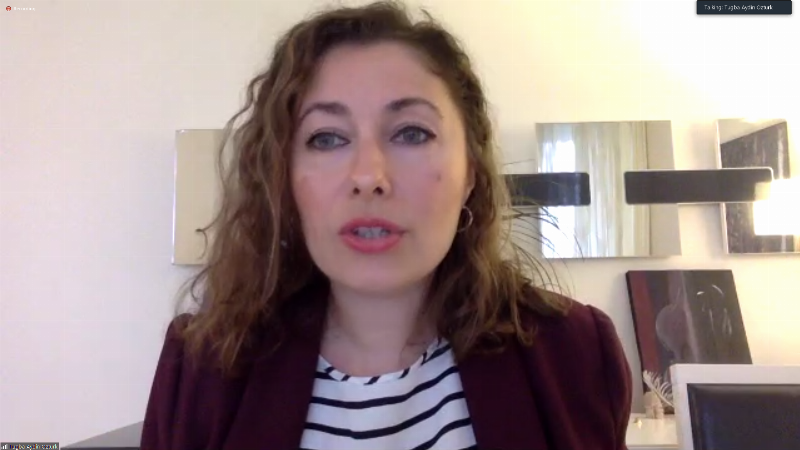
Dr. Lecturer Tuğba Aydın Öztürk shared the research results. According to the research results, 60% of the participants stated that their biggest fear related to the pandemic was losing their loved ones, while 48% expressed concerns about experiencing health problems. The rate of those afraid of experiencing economic problems was 37%; 7% of the participants noted that their obsession with cleanliness would remain in their lives for a long time.
Anxiety that receded in summer, rose again to 59%
The general anxiety level, which was at 60% in April 2020, decreased to 48% with the normalization during the summer months but rose again to 59% after the second wave.
Anxiety levels increased in middle and old age
According to the research, the anxiety level, which was 55% among those aged 46-55, rose to 63%; the anxiety level of the 56 and older age group, which was 64%, became 77%.
Anxiety level is at its highest
Similarly, while all negative expectations regarding economy, politics, public health, and psychology declined between May and September 2020; they reached their highest level again towards the end of 2020.
Social relations are expected to weaken
Dr. Lecturer Tuğba Aydın Öztürk stated that people in Turkey are currently experiencing the period with the highest anxiety, fear, and negative thoughts since March 11, 2020, when the first case was observed, adding, “To this negative picture, thoughts of weakening social relations and deterioration of the education system have been added in the post-second wave period. While the rate of those who said family communication would strengthen after the pandemic was 70% in April 2020; today, this rate is only 40%. 71% of the participants believe that interpersonal social relations will weaken.”
The rate of those who think the pandemic is not exaggerated increased
The rate of those who thought the pandemic was not exaggerated was 70% in April 2020 and 45% in May 2020; in January 2021, this rate reached 76%.
Life satisfaction decreased, we speak with negative words
According to the research results, while the rate of those who stated they were satisfied with their life before the pandemic was 57%, this rate decreased to 38% in January 2021. The biggest change in satisfaction rates occurred among young people, students, and business owners/entrepreneurs. This rate decreased from 52% to 23% among young people and students; and from 65% to 31% among business owners/entrepreneurs.
The rates of finding pandemic-related measures sufficient also increased compared to April 2020. The rate of those who thought the measures were sufficient increased from 23% to 30%.
Regarding the directive “Imposing a weekday ban on everyone,” 59% of participants stated “Yes, it should be imposed,” 33% said it should not be imposed; and 8% noted they were undecided.
Distance education found inefficient
Unlike the first research, this study also included an evaluation of the efficiency of distance education and working from home.
Student participants stated that they found distance education inefficient. While this rate was 35% in April 2020, it increased to 41% in January 2021. Working from home was found 36% efficient and 36% inefficient. The rate of undecided participants was 28%.
The rate of those feeling lonely increased
The research also compared the feeling of loneliness before and after the pandemic. Accordingly, the rate of those who always and very often felt lonely rose to 30% after the second wave, compared to the pre-pandemic period. The age group most intensely experiencing loneliness was identified as 25 years and younger, with the rate reaching 44% among young people, significantly above the Turkey average.
Words that best describe the pandemic: Fear and anxiety
In April 2020, during the initial months of the pandemic, participants frequently used words such as uncertainty, anxiety, apprehension, and worry regarding the epidemic, but a large majority also explained the epidemic with words like introspection, understanding the importance of health and family, strengthening spiritual feelings, environmental awareness, and gratitude. In the research conducted in January 2021, the words used by participants to describe the pandemic period were “fear, especially anxiety, worry, loneliness, weariness, distress, unhappiness, and economy,” and almost all participants used no positive expressions.
As education increases, vaccine is approached more positively
Participants in the study were also asked for their opinions on vaccine efforts, which are the hope of combating the pandemic. 39% of participants stated that they intended to get vaccinated, 22% were undecided, and another 39% stated that they did not intend to get vaccinated. Supporters of vaccination included 59% of professionals with higher education and 55% of participants aged 56 and over. The tendency to get vaccinated was 43% among men, while this rate was 35% among women.
Domestic and German vaccines are mostly preferred
Participants were also asked which country's vaccine they preferred to receive. 38% of participants answered domestic, 38% Germany, China, 8% America, 7% England, 3% Russia, while [percentage missing in original, assuming it means 0%] answered that it wouldn't matter. While participants aged 45 and over preferred the German vaccine, which had the highest rates, those under 45 stated that they preferred the domestic vaccine.
Politicians are trusted the least, academics and specialist doctors the most
According to the research results, academics and specialist doctors ranked first among the most trusted individuals and institutions during the pandemic, with a rate of 60%. 36% of participants stated that they found public institutions, including the Ministry of Health and the Scientific Committee, trustworthy. 63% of participants stated that they did not trust politicians. The research revealed that the general level of trust in media channels, including traditional tools such as television, radio, and newspapers, as well as new media tools, decreased.
Consumption of cleaning and hygiene products increased
According to the research, cleaning and hygiene materials ranked first among the most consumed products after the epidemic, with a rate of 63%. Online shopping and e-commerce options came next with a rate of 42%. The most widespread use of e-commerce was observed among individuals belonging to the AB, meaning upper-middle and upper economic classes, professionals, and young people. Virtual consumption among young people increased to 60%. The research results also indicated that 42% more tea/coffee and 36% more junk food/sweets were consumed across Turkey. These rates exceeded 50% among young people. Another important issue regarding youth consumption was video and computer game playing habits at a rate of 44%.
Turkey’s song became “Ben Yoruldum Hayat”
Participants were also asked an open-ended question: ‘Which song best reflects you when you think about yourself during the pandemic?’ It was observed that a large majority of the songs were in the arabesque music genre and represented negative emotions. However, songs reflecting feelings such as hope, patience, and consolation also took their place on the list. Accordingly, the song that best reflected our mood across Turkey was Mümin Sarıkaya’s song titled ‘Ben Yoruldum Hayat’. Women most frequently said that Göksel’s song ‘Depresyondayım’ and men said Müslüm Gürses’s song ‘İtirazım Var’ best reflected them.
Our song list related to the pandemic
Looking at the overall average, the ranking of songs that best describe Turkey’s feelings and thoughts related to the pandemic was as follows:
1. Mümin Sarıkaya- Ben Yoruldum Hayat
2. Göksel- Depresyondayım
3. Edip Akbayram- Güzel Günler Göreceğiz
4. Sezen Aksu- Geçer
5. Müslüm Gürses- İtirazım Var
6. Pinhani- Dünyadan Uzak
FOR THE PRESS CONFERENCE VIDEO:
Share
Update Date: February 27, 2026
Creation Date: February 24, 2021