

Mustafa Kemal Atatürk, the founding leader of the Republic of Turkey, was commemorated on the 83rd anniversary of his passing with an online panel titled “Atatürk and the Psychology of Leadership” organized by Üsküdar Üniversitesi. Üsküdar Üniversitesi Founding Rector Prof. Dr. Nevzat Tarhan, stated that Atatürk's military leadership aspect was strong. Prof. Dr. Nevzat Tarhan said that Gazi Mustafa Kemal Atatürk made decisions with his emotions in military leadership but with his mind in political leadership. “Unlike many charismatic leaders who make sudden decisions and take excessive risks, he was a good team leader who combined emotion with reason,” he said. Psychiatry Professor Vamık Volkan also stated that Atatürk consciously and unconsciously linked his mother with the homeland, and it can be seen how he wanted to save the mother he saw as his homeland.
Content
Prof. Dr. Nevzat Tarhan: “Atatürk was a good team leader”
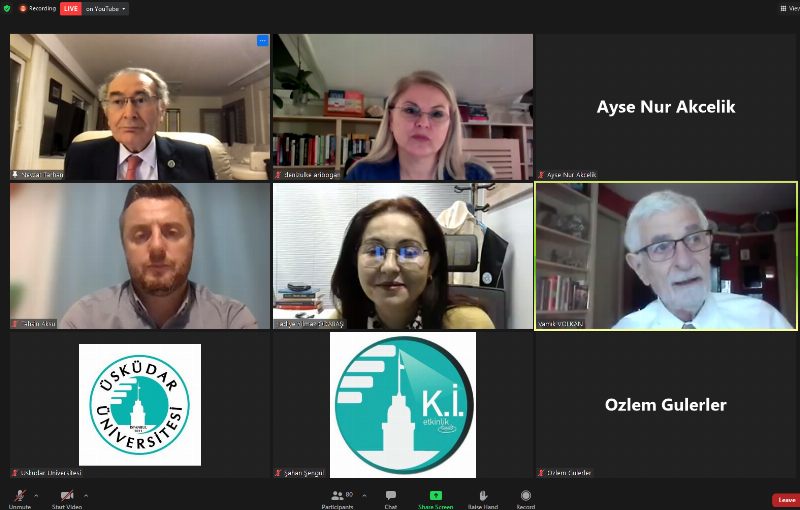
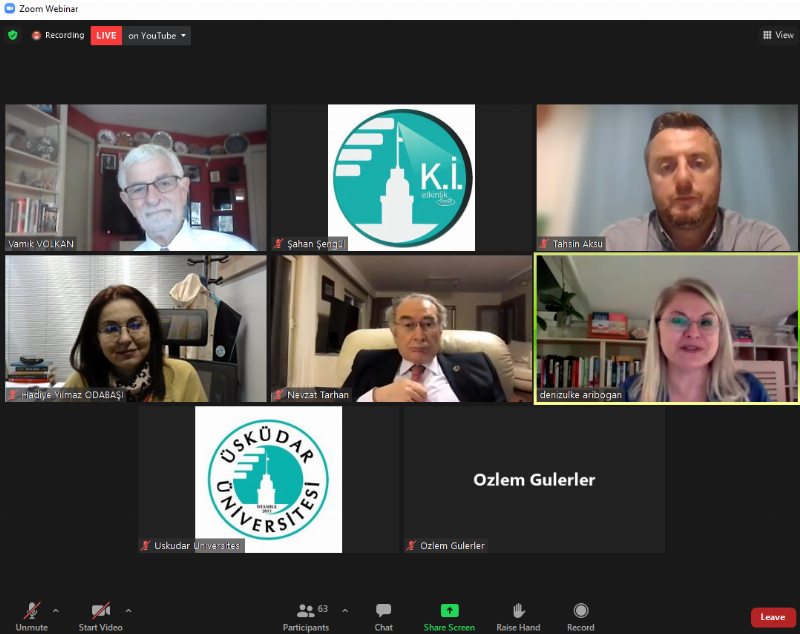
Üsküdar Üniversitesi organized a panel titled “Atatürk and the Psychology of Leadership” on the 83rd anniversary of Atatürk's passing. The online panel was moderated by Associate Professor Hadiye Yılmaz Odabaşı, Assistant Dean of the Faculty of Humanities and Social Sciences and a faculty member of the History Department at Üsküdar Üniversitesi.
Prof. Dr. Nevzat Tarhan: “Atatürk left reason and science as his spiritual legacy”
Psychiatrist Prof. Dr. Nevzat Tarhan, Founding Rector of Üsküdar Üniversitesi, delivered the opening speech of the panel, evaluating Atatürk's leadership from the perspective of his military genius. Beginning his speech by respectfully commemorating Gazi Mustafa Kemal Atatürk, Prof. Dr. Nevzat Tarhan said, “In fact, it needs to be emphasized as understanding. I want to remind you of Atatürk's words, which we use as a motto at our university: ‘I leave no verses, no dogmas, no frozen and stereotyped rules as a spiritual legacy. My spiritual legacy is science and reason. Those who wish to adopt this after me, if they accept the guidance of reason and science on this fundamental axis, will be my spiritual heirs.’ He did not want attachment or respect for him to be a dogmatic attachment. He considered it important to connect using non-dogmatic reason. In this context, we have inscribed his words ‘My spiritual legacy is reason and science’ on our university campuses.”
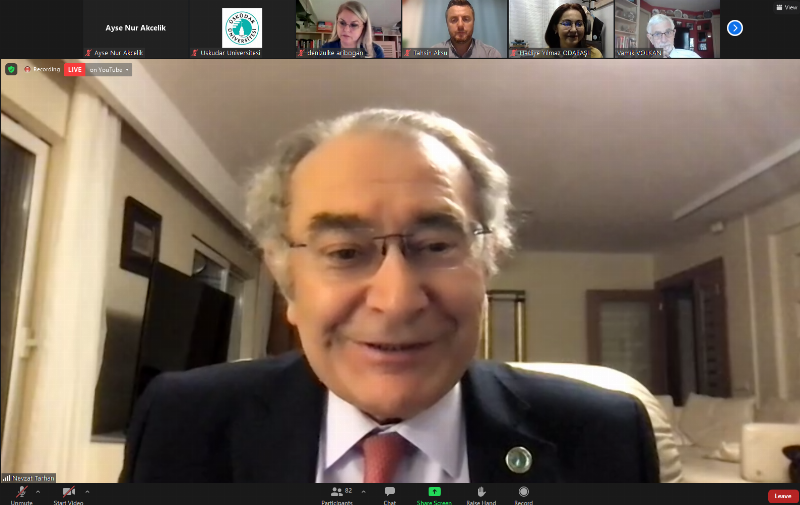
Prof. Dr. Nevzat Tarhan: “What made Atatürk, Atatürk, was Anafartalar”
Tarhan, who spoke about the concepts of military leadership and political leadership from a psychological perspective in leadership, continued his words as follows:
“People make decisions with their emotions or their minds. We are an emotion-based Eastern society. In thought-based societies, decisions are mostly made with reason. When we look at Gazi Mustafa Kemal Atatürk, we see that he made decisions with his emotions in military leadership but with his mind in political leadership. In military leadership, he acted not only with emotion but always primarily with reason, judgment, and strategic thinking. Unlike many charismatic leaders who suddenly emerge and make decisions, taking excessive risks, he was a good team leader who combined emotion with reason. In military academies, it is always said, ‘What made Atatürk, Atatürk, was Anafartalar.’ Before Anafartalar, hardly anyone in the Ottoman army knew Atatürk. In 1915, at Anafartalar, the third front of the Çanakkale Battles, the entire army recognized Atatürk, he attracted attention, and everyone started talking about him. We can say that he had serious foresight as a military leader on that front. At the very front of the battle, he told the soldiers, ‘I am not ordering you to attack, but to die.’ It is very important that he said these words at the very front of the battle, not in a tent or trench. His chest injury also occurred at that time. When he raised his whip and commanded the soldiers, the soldiers moved into action, and the opposing British and French forces were put out of action by bayonet charges before they even had a chance to use their weapons. Atatürk's simultaneous command of the war on 3 fronts greatly astonished the enemy forces.”
Prof. Dr. Nevzat Tarhan: “The Çanakkale Victory saved Istanbul from plunder and occupation”
Prof. Dr. Nevzat Tarhan stated that those who knew Atatürk closely said, 'He made decisions thoughtfully, he would not lift one foot until the other was firmly placed, he was a cautious person.' “It is said that Atatürk balanced very well the times he used his mind and the times he used his emotions. The success at Anafartalar is an example of leadership, and his success there made him Mustafa Kemal Atatürk. The action that led Sultan Vahdettin to say, ‘Atatürk is the best person to lead the War of Independence in Anatolia,’ was actually the tremendous leadership he displayed at Anafartalar. Those who dogmatically adhere to Atatürk, those who try to make him a god or king on Earth, should actually consider him a leader who used reason. There is no need to attribute supernatural powers to Atatürk and make a leadership claim. The fact that the Çanakkale War was won on the front saved Istanbul from plunder and occupation. It is important to view Atatürk's successes in many fields from this perspective,” he stated.
Prof. Dr. Vamık Volkan: “Atatürk considered it necessary to be civilized in every aspect”
Psychiatry Professor Prof. Dr. Vamık Volkan drew a portrait of Atatürk and evaluated his life in the context of political psychology. Volkan began his speech by stating that his father tried to imitate Mustafa Kemal Atatürk in his childhood, “On August 25, 1925, Mustafa Kemal went to Kastamonu and the next day addressed a group at the municipality. In his speech, he said, ‘We must be civilized people in every aspect. We have seen much suffering. The reason for this is our inability to understand the state of the world. Our idea and intention will be to be civilized from head to toe. We do not and will not care about what others say.’ On the same day, Mustafa Kemal left Kastamonu to go to İnebolu. But in his subsequent speeches, he continued to emphasize the necessity of civilization and progress.”
Prof. Dr. Vamık Volkan: “I worked on Atatürk’s life for 7 years”
Stating that he graduated from Ankara University Faculty of Medicine in 1956, Professor Vamık Volkan continued his words as follows: “However, at that time I was a British subject. There was a situation in America called 'brain drain.' There weren't many doctors in America, and they were recruiting doctors from around the world. Half of my class went to America, and 10-12 of us stayed there. I stayed there, but I started questioning, 'What is my Turkishness, who is my father, who is Atatürk?' I studied Atatürk's life for 7 years. I stayed in Turkey for 13 months, and Sabiha Gökçen became my greatest helper. We spent a long time with her, and one day she told me to see Atatürk's adopted son. At that time, most people did not know that Atatürk had an adopted son, and those who did know were not saying anything. His name was Abdurrahim Tuncak. I also found Atatürk's neighbors from when he was alive and healthy. After working on Atatürk for a long time, I wrote the books ‘Immortal Atatürk,’ ‘Atatürk Anatürk,’ and ‘Identity Problems in Turkey.’”
Prof. Dr. Vamık Volkan: “Atatürk united the mother and the homeland”
Prof. Dr. Vamık Volkan stated that one of the reasons that made Mustafa Kemal, Atatürk, was that he was born in a house of the dead, “His father, Ali Rıza Bey, was 20 years older than Zübeyde Hanım. When they married, Zübeyde Hanım was only 14-15 years old. She had 3 children without even knowing what womanhood was. There were times when she was alone. Later, her sons passed away. When they came to Thessaloniki, Atatürk was born. When Mustafa Kemal was 7 years old, his father Ali Rıza Bey also passed away. By the time Atatürk reached adolescence, only his sister Makbule Hanım and his mother Zübeyde Hanım were alive. This was a complete trauma for his mother, who had lost her children and her husband. Therefore, we can say it was a house full of death and mourning. When you read the books, you can see how Atatürk directly, both consciously and unconsciously, sensed this and united his mother with the homeland, how he wanted to save the mother he saw as his homeland, and how he wanted to give her joy.”
Prof. Dr. Deniz Ülke Arıboğan: “Atatürk is a symbol of victory”
Prof. Dr. Deniz Ülke Arıboğan, Dean of the Faculty of Humanities and Social Sciences at Üsküdar Üniversitesi, spoke about the environment in which Atatürk emerged, whom she described as the founding leader of Turkey and the founding father of the Republic. Prof. Dr. Arıboğan said, “Among the things that made Mustafa Kemal a leader, undoubtedly, is his being a symbol of victory, a commander who achieved victories. Why was the issue of victory so important in Ottoman society and subsequently in the Republican society? Can every victor become a leader to the same extent? Can we say that every commander who wins on a front will be a leader in the future? We cannot.”
Prof. Dr. Deniz Ülke Arıboğan: “Atatürk, the commander identified with victory in a period of losses”
Arıboğan noted that the currents of liberalism, egalitarianism (i.e., socialism), and nationalism, which shaped the 20th century, led to many consequences, dismantled empires, and enabled the emergence of new states, “Mustafa Kemal Atatürk is a commander identified with victory within this period of fragmentation, this period of mourning, this period of losses. The people need him. He is spreading as a legend among the people. Mustafa Kemal Atatürk will gain his political leadership with a victory story of defeating the great powers on this front and that front, but this is not solely due to his military genius.”
Prof. Dr. Deniz Ülke Arıboğan: “Atatürk was a forward-looking, restorative, energizing, and joyful leader”
Noting that Prof. Dr. Vamık Volkan stated Atatürk tried to cheer up his mother, Prof. Dr. Arıboğan said, “He was born into a house of the dead and identified his homeland with his mother, wanting to add joy and energy there. He had to change the atmosphere of mourning. He had to create new energy. He treated the homeland, which he placed in his mother's stead, the same way. In other words, he actually wanted to cheer it up and give it energy. He told it, ‘You are great, stand up.’ On the one hand, he tried to boost its self-confidence by saying, ‘You are intelligent and hardworking.’ A joyless, grieving society cannot be energetic and productive. Just as grieving families don't even cook at home for 40 days. They shut themselves off from the past. They enter a regression. They remember the good old days. Turkey's new founding cadres had no time to mourn the Ottoman Empire. They had to activate their energy and production as soon as possible. That's why he had no interest in the past and focused directly on the future. Therefore, another characteristic of Mustafa Kemal is that he was a forward-looking, restorative, energizing, and joyful leader.”
Prof. Dr. Arıboğan noted that another characteristic of Atatürk was his understanding of strategic diplomacy, stating, “He was a statesman who was very open to the outside world. He was definitely not a local figure. He sat at the same table with the people and countries he fought, striving to work in cooperation with them without entering into a process of hostility or revenge.”
Assoc. Prof. Dr. Hadiye Yılmaz Odabaşı: “Atatürk and the Republic should be evaluated from a 150-year perspective”
Assoc. Prof. Dr. Hadiye Yılmaz Odabaşı stated that to understand and evaluate Mustafa Kemal Atatürk and the Republic of Turkey, one should not start from 1919 or 1923, but go back at least 150 years, saying, “What brought Mustafa Kemal into that big picture are the events that took place within his own country and geography. If we see it this way – they always try to divide us as a society, making the Ottoman Empire one part and the Republic another part. I believe such attempts will not be successful.”