

Üsküdar Üniversitesi Founding Rector, Psychiatrist Prof. Dr. Nevzat Tarhan, made striking evaluations regarding 'Substance Addiction' on the program 'Alişan ile Hayata Gülümse' broadcast on TRT 1. Emphasizing the importance that no child or young person would be beyond recovery if there is an aware parent regarding addiction, Tarhan pointed out that people should not be pessimistic. Highlighting the importance of a child being able to maintain their sense of belonging, Tarhan stated; “If a child loves their home, they make mistakes, they do… then they return home again. They say, ‘It was wrong for me to leave my parents,’ and they come back. For a child to love their home, to be able to maintain their sense of belonging, is very important in such situations.”
Content
Prof. Dr. Nevzat Tarhan: “An addicted person is not a criminal, but a patient”
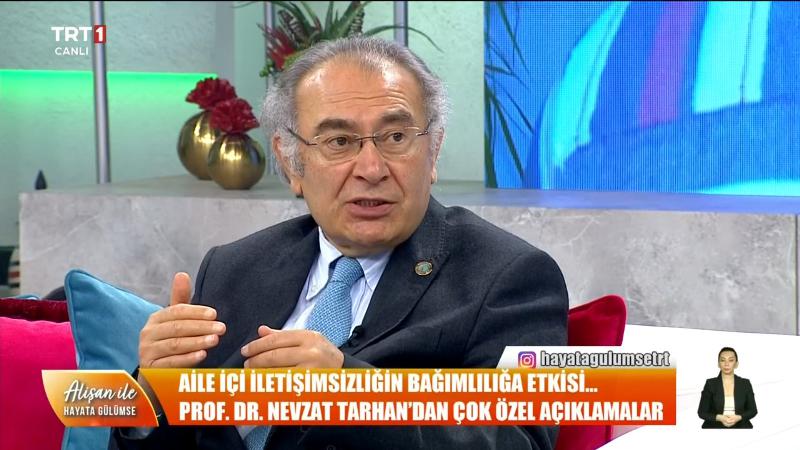
“Now the definition of addiction is called loss of control”
Üsküdar Üniversitesi Founding Rector, Psychiatrist Prof. Dr. Nevzat Tarhan, spoke about how the definition of addiction has changed in the current era during the live broadcast he participated in. Tarhan; “Age 14 is the exact beginning of adolescence, the period when a child seeks and finds their own identity. During that period, the child asks themselves; ‘Who am I, where should I belong, why?’ With attitudes unknowingly formed by many families and the environment during that period, the child suddenly finds themselves using substances. At first, they think they are not addicted to substances. However, the definition of addiction has now changed. Previously, addiction was referred to as withdrawal, etc. Now it is called loss of control. The moment a person starts using uncontrollably, addiction begins. They turn to substances as a stress reduction technique. They feel bad, demoralized, and joyless. They take the substance as a technique to reduce stress and relax, and they see that it provides a false relief in the short term but causes damage in the medium and long term. They cannot think about that at that moment. Adolescence is a period without consequence awareness; adolescence only thinks about the present moment.” he said.
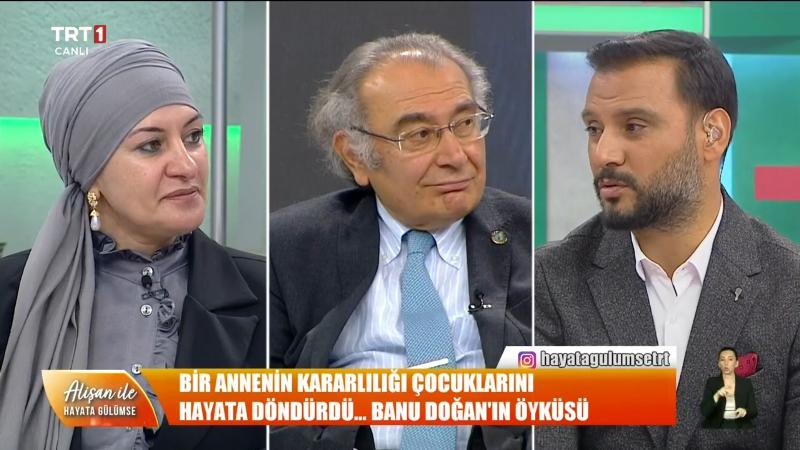
“Addiction causes mental blindness”
Prof. Dr. Nevzat Tarhan also made evaluations regarding addiction leaving irreversible damage in the brain; “The most important cause of addiction is attachment, an attachment disorder. In other words, it is a psychological need of two people. They feel an attachment. A child attaches to their mother at 10-12 years old, but after 12, they start new quests outside of their parents. That is, friends start to come to the forefront more than parents. They start choosing them as examples. They observe elders, mothers, fathers, look at society, and look at role models. They ask, ‘Who am I, what should I be?’ Meanwhile, a pleasure trap appears before them. When they get caught in that pleasure trap, it's like a chain reaction. Once it starts, the person cannot stop themselves. It gives immense pleasure. There's also a serious subculture of friends. The addiction subculture. In this peer group, they gather incredibly, feeling intense camaraderie. Dealers already sell varieties like 'do you want a conversation pill or a sedative pill'. In the end, that pill seems to meet the child's immediate need. But after a while, irreversible damage occurs in the brain. They cannot stop; then it gets out of control. They find an excuse, saying 'nothing will happen from one time,' 'I'm not that addicted,' 'I can quit whenever I want.' They just don't know... The biggest characteristic is that addiction causes mental blindness. The person is unaware, they don't see it.” he said.
“After the family bond is broken, the child becomes a lost case”
Prof. Dr. Nevzat Tarhan spoke about the precursors of addiction. Tarhan; “An addicted child and a young person in love are very similar to each other. For example, what does someone in love do? They constantly think about them, they are distracted. That is, their movements, personality, etc., seem to change. They shut themselves in their room, don't come out. They listen to and say the same thing for hours. They stay in the bathroom for a long time. They start getting sick frequently. They start losing weight. When this happens, it's so common that a mother doesn't want to associate it with her child. It should cross their mind. ‘Could such a thing be happening?’ But the child makes a mistake in such situations. Mother-child wars begin. They become antagonistic, and fights occur. The child now starts taking substances in reaction to their parents. If the family bond breaks, the child then becomes a lost case. It reaches the point where they are left to their own devices on the street.” he stated.
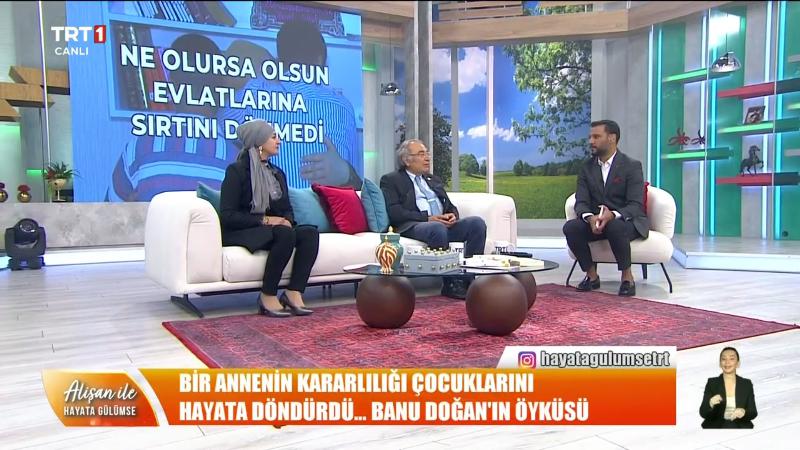
“Their brains are sensitive until the end of their lives”
Tarhan provided information about starting substance use again after a certain period of abstinence; “Substance users quit substances, they abandon them... But their brains remain sensitive until the end of their lives, they can relapse at any moment. It can happen after 5 or 10 years. When does it happen? Under stress. There are substances like serotonin and dopamine in the brain. These are substances related to happiness and pleasure. They decrease under stress or for any reason. When they decrease, the brain immediately reacts by recalling the old, learned behavior it is accustomed to. There's a shortcut in the brain. The brain immediately says, 'go take substances and relax.' The brain plays tricks on them at that moment. When it says that, on one hand it says so, but because they later received rehabilitation, they think; ‘If I start this, I will relive many of the pains I lost and experienced. Either my family, or this.’ In that dark moment, if they can connect with their family, they can find a solution. They overcome their problem in some way, or if they can't, there are anonymous narcotics, like unnamed narcotics groups that we form. People who have used and quit voluntarily call the person immediately. That person, for example, suddenly rushes to the park, comes, talks to them, tries to alleviate their loneliness, tries to solve the problem. In other words, to alleviate loneliness at that moment, the mother doesn't have to do anything; it's enough for her to say, ‘I am with you, you are important to me, you are valuable.’ ” he stated.
“The brain does not forget addiction but sends it to long-term memory”
Prof. Dr. Nevzat Tarhan mentioned that a person can achieve self-control when they learn their perception of harm. Tarhan; “The brain does not forget; it accepts it like a diabetic patient for the rest of their life. If it deviates in a different way, after deviation, we call it retraining, or putting it back on track. That needs to be done, which is why a person’s brain does not forget after experiencing addiction. It doesn't forget but sends it to long-term memory; the brain doesn't forget it. When sent to long-term memory, it doesn't resurface unless there's a trauma. Of course, there's no life without trauma. Events happen, but if a person's intention is right in such situations, they conduct a cost-benefit analysis. What I will gain if I quit, what I will lose if I don't quit – if they analyze this well and list it, a self-persuasion process occurs. We call this harm perception. When a person learns the perception of harm, they can achieve self-control and self-discipline by remembering that harm perception,” he said.
“A person should not lose hope”
Tarhan also drew attention to the importance of the addiction treatment process and the functioning of AMATEM; “The AMATEM period is a 2-3 week period. That period is carried out in a clinical setting; it is not a very difficult period, it is easy and comfortable. The rules are clear, it is done under clinical conditions. The follow-up system after that is important; here, TUBİM, established by the ministry, has a wonderful system. So, I congratulate them again for that. It would be much better for such a digital follow-up system to be continued with a healthcare team. In such situations, a clinical component may also be necessary. In developed countries, social workers also get involved, and in addition to psychotherapists, addiction therapists get involved. Additionally, there are addiction therapists, and they get involved. Together with them, a team is formed. When a person trusts that team, they create a safe space in their life, and in such situations, by saying 'there are people who can help me, there are experts, I have my family,' they gain the potential, acquire, and strengthen their capacity to overcome that distress. The first condition is that they should not lose the feeling of hope. The second condition is that they should not break their intention, saying 'it won't happen, it's not working,' and fall into despair.” he stated.
“When the relationship is based on the problem, the problem is reinforced”
Tarhan, speaking about the need for families to build a positive relationship with their children; “An addicted person is not a criminal; they are a patient. They should not be seen as a mischievous, wayward, or delinquent youth. They should be seen as a patient, and approached as one should approach a patient. For example, if you have a wounded pet and it's injured, that animal won't even let itself be petted; it will react immediately when wounded. Now, an addicted patient, an addicted person, is like that; if you say 'my dear' to them, they will interpret it as 'go to hell'. Motherhood and fatherhood are very different for them, the approach is different. Those children usually approach their parents through the problem. An interaction focused on the problem, asking 'why are you drinking, did you drink, didn't you drink, did you take it, didn't you take it, did you come late, didn't you come late, why are you in this miserable state, why are you like this'. When the relationship is based on the problem, the problem is reinforced. Instead of establishing a relationship based on the problem, if the child comes home early one day, brushes their teeth one day, does their work well one day, they should build a positive relationship with their children, saying 'look how good that was, well done'.” he said.
Share
Request a Call
Other News
- The book that read today's digital threats in 2014: Being a Conscious Family
- Experts warn: 'Instead of memorizing letters, teach pencil grip, scissor use, and coloring'
- School fear and school love both start in the family!
- Family is not merely transforming, it is being battered under a serious assault
- Artificial intelligence opens the door to early diagnosis in autism!