

Psychiatrist Prof. Dr. Nevzat Tarhan states that with globalization, the world's youth is undergoing a significant transformation, noting that young people are inclined towards a 'getting rich quick' mentality, also influenced by globalization. Prof. Dr. Nevzat Tarhan, offering advice to parents, said, "What parents should do is act not with pressure or fear tactics, but by reinforcing good behaviors. We call this not 'taking the child against us and correcting them,' but 'taking them by our side and walking together.' We call it 'journeying together.' If we use this method, we can ensure that young people are at peace with our own cultural and ethical values, and at the same time, we can make them young people who have caught up with this era."
Content
Prof. Dr. Nevzat Tarhan's Advice to Families: 'Journeying Together…'
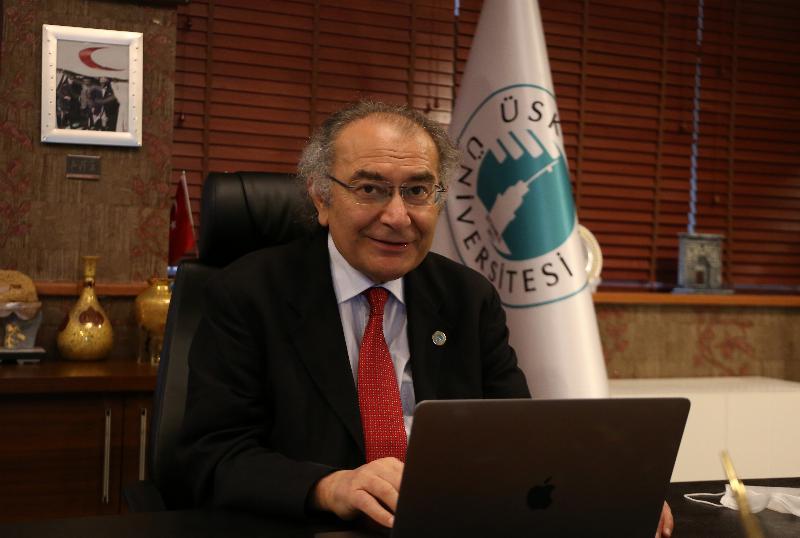
Üsküdar Üniversitesi Founding Rector, Psychiatrist Prof. Dr. Nevzat Tarhan made evaluations regarding Youth Week and the future of young people.
Prof. Dr. Nevzat Tarhan stated that May 19 Commemoration of Atatürk, Youth and Sports Day is very meaningful, saying, "It is the dedication of the liberation movement in Anatolia to youth; it is very meaningful. In other words, the foundation of the Republic was built upon the rebuilding of young people. We need to identify our shortcomings in building these young people and our cultural identity, and then rebuild them."
World Youth Entered a Similar Cultural Universe
Prof. Dr. Nevzat Tarhan noted that the future of youth is a subject extensively researched by social scientists, psychological scientists, spiritual scientists, and all of them, stating, "In these studies, previously, each society had its own distinct cultural characteristics. But recent studies now show that all the world's youth have entered a similar cultural universe. They wake up to similar music in the morning, wear similar clothes, put on their backpacks, and go to work."
A Transformation is Occurring in the Life Philosophies of Young People
Prof. Dr. Nevzat Tarhan stated that the life philosophies of young people have also begun to seriously transform, saying, "This was previously different in Northern Europe, different in our Eastern societies, and different in America. But now, they all have begun to have a similar universality. This is interesting, meaning the world is undergoing a serious transformation towards multiple identities. It is very interesting how young people all over the world seem to live as if in a parallel universe."
Prof. Dr. Nevzat Tarhan noted that Protestant ethics gave rise to capitalism, saying, "Protestant ethics, or in psychology, we often call it Puritan ethics. What characteristics did Puritan ethics have? Puritan ethics specifically involved working hard, producing a lot, consuming little, and achieving success. And here, there is working hard for religious reasons. It even has a characteristic of seeing doing one's job well as a divine command. One of our professors in Germany had a memory related to this. In Germany, a gardener continued to water flowers while it was raining. The professor went and asked, 'It's raining, why are you watering?' The gardener replied, 'I have to.' He sees it as a divine command, meaning there is no flexibility. There was such a Puritan ethic. Initially, they did it for religious reasons; later, they do it for ethical reasons."
Puritan Moral Understanding Began to Change into Capitalist Morality
Prof. Dr. Nevzat Tarhan stated that this understanding has begun to rapidly change into capitalist morality not only in Turkey but all over the world, saying, "In other words, the principles of Puritan morality, such as working hard, being a good person for high ideals, performing one's profession as a divine command, and being honest, have been replaced by the understanding of consuming a lot, producing little, and earning a lot."
Prof. Dr. Nevzat Tarhan stated that areas of life have somewhat Americanized today, saying, "With Americanization, the consumer became a global group, becoming global morality. Here, Puritan morality was replaced by Hedonistic morality. In other words, while the philosophy of life in Protestant morality was to work hard, be honest, and produce for religious reasons, it has now transformed to aim for the pursuit of pleasure."
Prof. Dr. Nevzat Tarhan stated that globally, the principle of "you exist as much as you consume" is becoming a global ethic, saying, "This also affects our youth. Instead of ideas of doing things for society, for existence, they adopt an understanding of doing something for themselves. Living the moment, living today. In other words, seeing work as a virtue has begun to devalue."
Entertainment-Oriented Approach is Globally Widespread
Prof. Dr. Nevzat Tarhan pointed out that instead of a strict work discipline, producing a lot and consuming little, and rationally using one or two available resources, a life philosophy focused on "how do I spend, how do I have fun" has emerged. Emphasizing that this understanding is globally widespread among young people, Prof. Dr. Nevzat Tarhan said, "For example, young people don't want to get married. They see family as a burden. They don't want to get into debt and be under mortgage for 10 or 20 years to pay it off. They want to earn and have fun. When a hardworking young person working at our institution leaves for no apparent reason, the relevant departments ask the reason for leaving due to quality management. They replied, 'I earn well here, but I can't enjoy what I earn.'"
Prof. Dr. Nevzat Tarhan stated that the number of people who think this way has increased in recent years, saying, "Such people were previously marginal, at 10-20 percent, but now they have risen above 50 percent."
The Proportion of Young People Who Say "Everything in Life is Money" Has Increased
Referring to a study conducted by İnönü Üniversitesi, Prof. Dr. Nevzat Tarhan said, "In the 1990s, the rate of young people who said 'The most important thing in life is money' was 30%, whereas now this rate has risen to around 50-60-70%. They say, 'Everything in life is money.' This is globally valid, not just in Turkey. There is a change in life philosophy. In popular psychology, we even call this the California Syndrome. This syndrome is named this because it is very common in California. California is a place where entertainment is the biggest and most widespread. It's where Hollywood is. They glorify Hedonism there. In an interview with a 40-year-old cinema artist, they asked, 'What is a woman's nightmare?' She replied, 'Turning 40.' To the question 'Why?', she answered, 'We don't get applauded like we used to.'"
Prof. Dr. Nevzat Tarhan stated that the number of young people in new generations who want to get rich quick has increased, but this understanding has become very widespread globally. Tarhan said, "In this global trend, ethical values are undergoing a negative transformation. The wisdom we call Anatolian wisdom (Anadolu irfanı) is currently the remedy for ethical values."
The West is Discovering the Values We Possess
Prof. Dr. Nevzat Tarhan stated that the Slovenian Marxist philosopher Slavoj Žižek expressed that the new refuge for those who want to escape capitalism is the approach that forms the basis of the Masnavi, saying, "Žižek says, 'It is currently the new refuge of capitalism.' When he says this, we will listen. There is also self-knowledge and self-development, like gratitude. In other words, they are trying to rebuild our values. We are sitting on them."
Prof. Dr. Nevzat Tarhan noted that ethical values are learned in the family between the ages of 0-6, but the situation is not the same now, saying, "Ethical values should also be taught in schools. When teaching in schools, it is necessary to teach them because they are needed."
Prof. Dr. Nevzat Tarhan noted that one of the theories of change among young people is referred to as the "Google effect," saying, "Everything is easily accessible on Google. With the influence of various social media channels on Google, a serious cultural modernism has transformed into postmodernism. Puritan ethics gave way to hedonistic ethics. Its negative aspects began to emerge more."
It is Important to Bring the Values of the Past to the Present
Prof. Dr. Nevzat Tarhan noted that defending traditional culture is "anachronism," saying, "That is, living with a broken chronology. It means bringing the past to the present and living in the present. However, instead of bringing the past to the present, it is important to stand in the present and bring the values of the past to today. There is a need for a Renaissance. We don't need a Reformation. A lot of responsibility falls on mothers and fathers too. They want their child to be smart and hardworking. The education system also raises them in this direction. The child becomes smart and hardworking, but what happens if you surrender this child to the ethical values of popular culture? They become smart and hardworking, but they become a child with a 'get rich quick' mentality. The understanding that 'anything goes' emerges," he warned.
We Need to Protect Our Own Culture with Modernization
Therefore, Prof. Dr. Nevzat Tarhan emphasized that with modernization, we need to protect our own cultural values and our own culture, saying, "There is a serious need for this right now. Those in the education bureaucracy are also responsible for doing good and right things. In other words, not doing what needs to be done is also a sin. That's why scientific references in the education system have now increased significantly. A generation that says 'The most important thing in life is money' cannot serve the future of Turkey. I especially want to state this."
Prof. Dr. Nevzat Tarhan stated that Generation Z is an egocentric, controlled, yet likable generation, saying, "They want to live comfortably, as if thinking of their own interests, without much effort or getting too tired. We cannot correct these young people by scaring them. What is the classical traditional approach? You will be authoritative, oppressive, strict, and bring the child into line with rules. But what is in the current new scientific approach? You need to persuade children."
The "Journeying Together" Method Should Be Used
Prof. Dr. Nevzat Tarhan, offering advice to parents, said, "What parents should do is act not with pressure or fear tactics, but by reinforcing good behaviors. We call this not 'taking the child against us and correcting them,' but 'taking them by our side and walking together.' We call it 'journeying together.' If we use this method, we can ensure that young people are at peace with our own values, our cultural values, and our ethical values, and at the same time, we can make them young people who have caught up with this era. Trying to manage young people in this era by prohibiting and scaring them is a method that will not work."
One Cannot Be Universal Without Being Local
Prof. Dr. Nevzat Tarhan also pointed out the disadvantages of prohibition and fear, saying, "One effect of this can lead to political alienation. It causes psychological isolation, and sociologically, it leads to violence and suicide. In other words, a generation is growing up that is alienated from our own values. So, it's not enough to have technological advancements, our domestic UAVs, SIHAs, and roads; our youth also need to be 'local' (rooted in their own values). One who is not 'local' cannot be universal. Therefore, it is essential to become universal by protecting our local values, and all our values are needed by humanity. I think it would be beneficial for us to set such a goal for our youth."
Share
Request a Call
Other News
- Social responsibility courses moved to the field
- Erasmus+ Orientation Week completed at Üsküdar
- Prof. Nevzat Tarhan: “Brain secretes ‘dark glue’ in social media lynchers!”
- Prof. Nevzat Tarhan: “Every segment of society should be able to say, ‘This constitution is my constitution!’”
- OHS releases guide for safe operation of industrial robots