

Stating that individuals lacking self-discipline easily fall into pleasure traps, Psychiatrist Prof. Dr. Nevzat Tarhan pointed out that the current epidemic level of addiction worldwide, especially in developed countries, is no coincidence. Tarhan noted that modernism is currently regressing people towards childishness, adding that if there are 100 presentations at conferences in America, 60-70 of them are related to addiction, and that the entire psychiatric community is now seeking solutions for addiction.
Content
Prof. Dr. Nevzat Tarhan: “The addiction epidemic is no coincidence!”
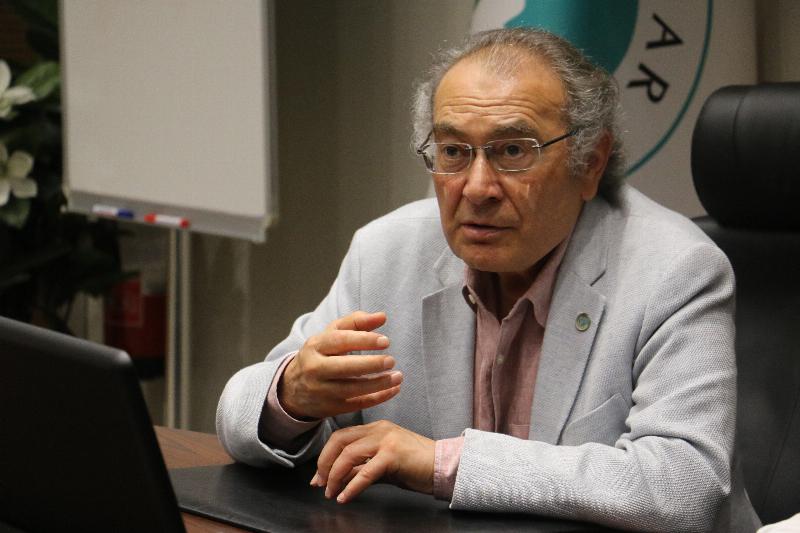
“As the psychiatric community, we are seeking solutions for addiction…”
Üsküdar Üniversitesi Founding Rector, Psychiatrist Prof. Dr. Nevzat Tarhan, made striking evaluations regarding Attention Deficit and Hyperactivity Disorder, addiction, and its causes.
Prof. Dr. Nevzat Tarhan stated that ADHD has three areas, listing them as attention deficit, impulsivity, and hyperactivity. Tarhan said, “In ADHD, sometimes hyperactivity is dominant, sometimes impulsivity is dominant, and sometimes both can be combined. But attention deficit and hyperactivity are often seen together. A person with attention deficit is also restless.”
Dopamine deficiency lies at the root of ADHD
Prof. Dr. Nevzat Tarhan noted that research on ADHD has identified dopamine deficiency in the frontal region of the brain related to attention. He said, “The dopamine substance is low. When this person pays attention to something, the dopamine in the brain runs out. When dopamine runs out, other parts of the brain or other motor areas become active. The person wants to do that. They become restless. Their hands, feet, arms, and legs start moving. Hyperactivity emerges because they cannot pay attention.”
Focus can be maintained on areas of interest
Prof. Dr. Nevzat Tarhan stated that these individuals can focus on things they like and are interested in, but cannot focus on subjects they dislike. He said, “Some parents bring their child and complain, ‘He sits at the computer for hours but cannot sit still while studying.’ The child can actually sustain attention on subjects they like and enjoy. At that moment, the brain produces dopamine. But the main thing is being able to pay attention to subjects they don't like. Attention deficit essentially appears there.”
Self-discipline is required…
Prof. Dr. Nevzat Tarhan stated that a person cannot always do what they love throughout life; sometimes, they may have to do things they dislike. He said, “A person cannot always do what they love in life… For example, you might not like math, but you are obliged to study. When a person always does what they like or enjoy, events start to drag them along. However, a person has a goal, and when pursuing that goal, they sometimes need to do work they dislike, and even sometimes work they hate. Self-discipline is necessary for work discipline. Always wanting to do what one desires or finds enjoyable is childishness.”
Modernism regressed people towards childishness
Prof. Dr. Nevzat Tarhan noted that modernism unfortunately has regressed people towards childishness. He said, “The hedonistic approach views chasing pleasure as the purpose of life. This has led to a false increase in attention deficit and hyperactivity, especially in America… There is no real attention deficit or hyperactivity. There is a lack of inner discipline as a life philosophy. In fact, open classroom policies were implemented in the 70s concerning this. In open classroom policies, students enter and leave class whenever they want. They stretch their legs whenever they want, or not. They throw gum at the teacher, for example… This system says, ‘You will not get angry at students.’ Open high schools that glorified excessive freedom were opened, saying, ‘You will not even teach students the responsibility to say thank you.’ They have slowly closed down now, but they continue in some places.”
The thesis “The more freedom, the more success” collapsed
Prof. Dr. Nevzat Tarhan stated that parallel to the open high school policy, open marriage was practiced in the 70s, where both spouses had lovers despite being married. He said, “In these approaches, namely open marriage and open classroom policies, it was understood that a child would not be disciplined unless they wanted to be. Swiss psychologist Jean Piaget, known for his work in child development, had a thesis: ‘The more freedom, the more success.’ There is no such thing. A balance of freedom and responsibility is needed. There must be discipline with love. Discipline with love prepares a child for life.”
The addiction epidemic is no coincidence…
Tarhan stated that individuals lacking self-discipline easily fall into pleasure traps, adding, “The most important of these pleasure traps is substance. It is no coincidence that addiction is currently at epidemic levels worldwide, especially in developed countries. If there are 100 presentations at conferences in America, 60-70 of them are related to addiction. Addiction is so widespread that the entire psychiatric community is now seeking solutions for it.”
“I am sitting, but my inside is not sitting still…”
Prof. Dr. Nevzat Tarhan underlined that attention deficit and hyperactivity are also related to addiction. He said, “Because these individuals cannot control their impulses. Firstly, they have attention and focus problems. For example, there is an example of a 4-year-old girl. Her teacher or psychologist gives her homework for hyperactivity. She is a very active child, mixes up everything, and cannot sit still. They say, ‘Give her a 4-minute sitting punishment.’ Her mother asks her to sit for 4 minutes. The child sits. The child says, ‘Mom, I’m sitting, but my inside is not sitting still. Is this a punishment?’ The child is restless inside.”
It is observed as ‘internal hurry’ in adults
Prof. Dr. Nevzat Tarhan stated that a similar situation is observed in adults. He said, “In adults, this is referred to as ‘internal hurry.’ There isn't much external hurry in adults. It's internal. They are restless but don't show it much externally. As they grow and mature, they become internally hurried.”
Many tests are applied for hyperactivity diagnosis
Prof. Dr. Nevzat Tarhan stated that the prevalence of Attention Deficit and Hyperactivity Disorder in children is 5-7%. He said, “They are getting what we call 'overdose hypnosis,' meaning many of my colleagues immediately diagnose hyperactivity for everyone who comes in. However, hyperactivity cannot be diagnosed with just one consultation. How is the child at home, how are they at school? We get age group teacher information forms. Many attention tests are conducted. Both the child's or person's attention and their timing are measured. That is, how is their time management? Do they use time well? Are they hurried? Are they impatient? We try to determine this.”
Complex and aimless movement is a symptom of attention deficit
Prof. Dr. Nevzat Tarhan stated that these tests also try to identify whether the person has various behavioral disorders. He said, “Behaviors such as acting without thinking of the consequences, always doing the first thing that comes to mind, and believing the last thing heard are investigated. There is also adult hyperactivity. They do these things. Here, we differentiate movement as follows: if it is complex and aimless movement, it is attention deficit. However, if the movement is goal-oriented, it is considered normal. For example, a child aimlessly wanders between desks in the classroom. They throw erasers at friends, talk a lot, interrupt everyone, and are noisy. This can be considered hyperactivity.”
Share
Update Date: March 01, 2026
Creation Date: September 16, 2022
Request a Call
Other News
- Prof. Nevzat Tarhan: “Those with a mental filter are not afraid of the digital”
- Artificial intelligence doesn't eliminate the translator, it transforms their expertise!
- Social responsibility courses moved to the field
- Erasmus+ Orientation Week completed at Üsküdar
- Prof. Nevzat Tarhan: “Brain secretes ‘dark glue’ in social media lynchers!”