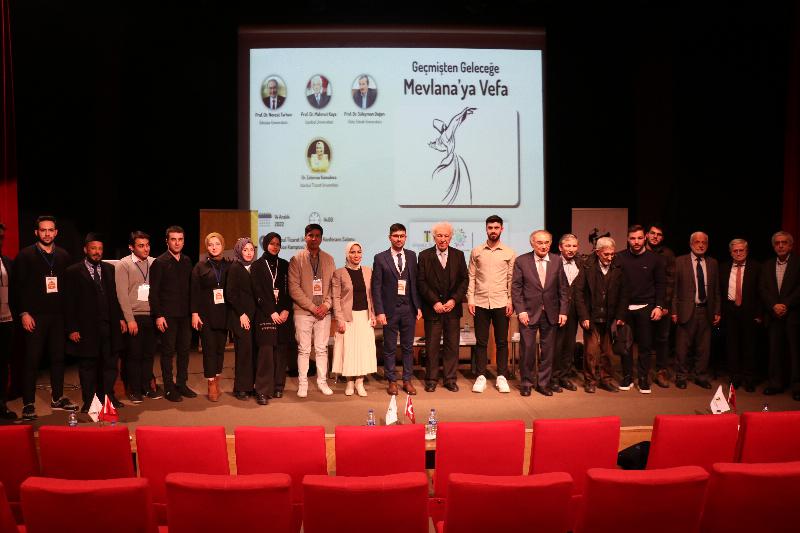
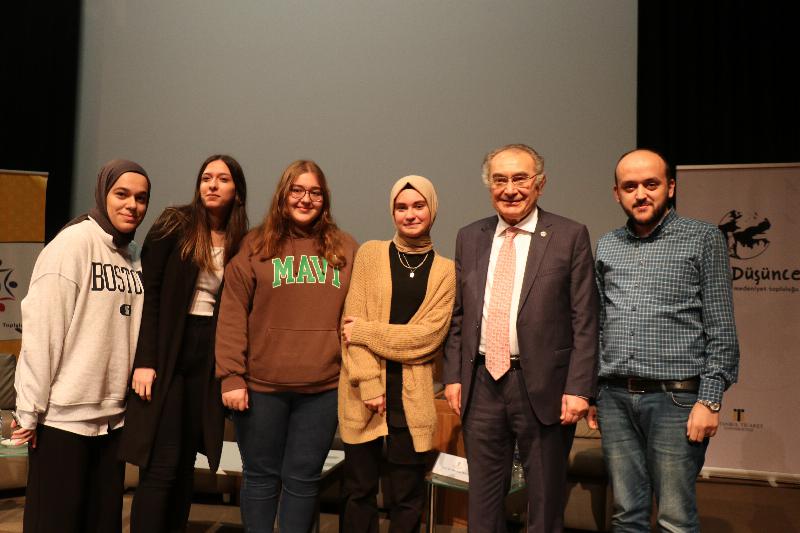
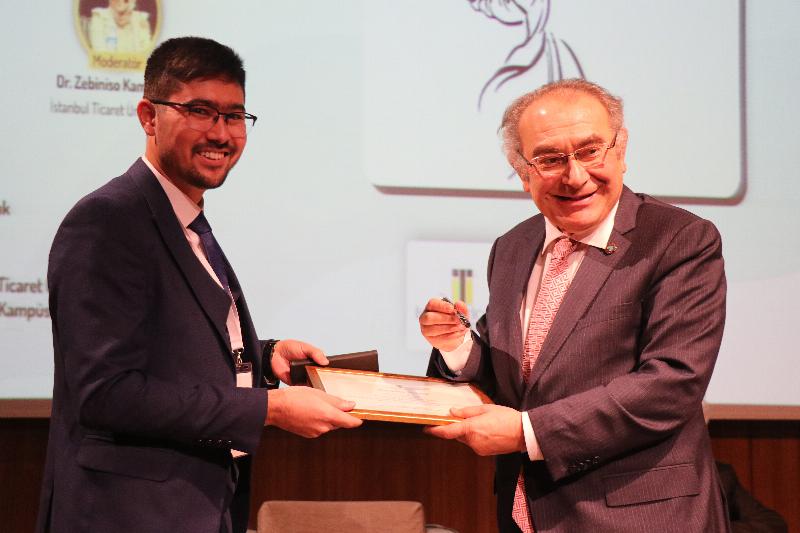
Üsküdar Üniversitesi Founding Rector Prof. Dr. Nevzat Tarhan participated in the program “Loyalty to Rumi from Past to Future,” organized by İstanbul Ticaret Üniversitesi, International Student Community, and the Thought, Art and Civilization Club. At the event held in the İstanbul Ticaret Üniversitesi Conference Hall, Prof. Dr. Nevzat Tarhan delivered a speech titled “The Mevlana School as a Psychotherapy and the Conception of Sufism Today.” Tarhan stated; “To understand Rumi, we don't need to go back to Rumi's time and wear Rumi's clothes. We need to take Rumi’s principles and adapt them to today’s context, living them in today's attire, which means, in short, understanding Rumi correctly.” Tarhan also drew attention to the need for creating a vision by combining Rumi, Imam Ghazali, and Ibn Khaldun.
Content
Prof. Dr. Nevzat Tarhan: “A vision combining Rumi, Ghazali, and Ibn Khaldun is needed”
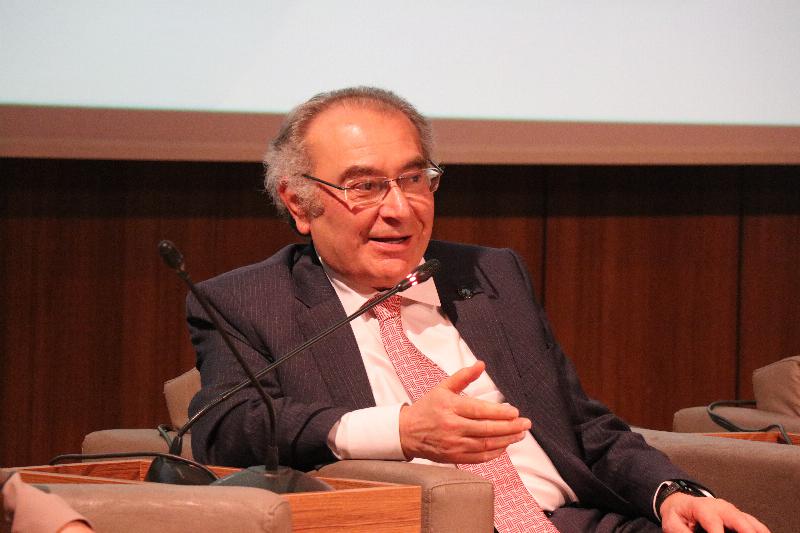
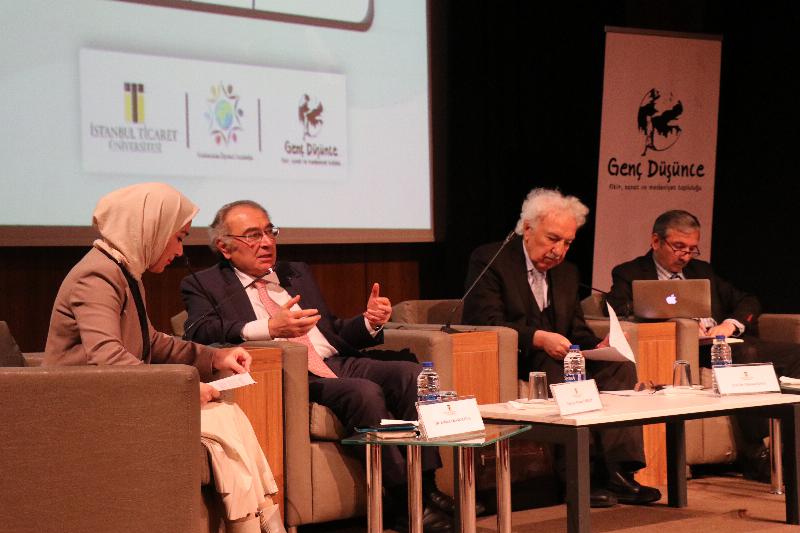
In addition to Üsküdar Üniversitesi Founding Rector Prof. Dr. Nevzat Tarhan, Prof. Dr. Mahmut Kaya, a researcher of Islamic Philosophy at İstanbul Üniversitesi, and Prof. Dr. Süleyman Doğan, an academic from Yıldız Teknik Üniversitesi, participated in the program moderated by İstanbul Ticaret Üniversitesi Dr. Lecturer Zebiniso Kamalova.
Prof. Dr. Tarhan: “They have systematized our Anatolian Wisdom”
Prof. Dr. Nevzat Tarhan made evaluations regarding “The Mevlana School as a Psychotherapy and the Conception of Sufism Today” during the “Loyalty to Rumi from Past to Future” program. Firstly, Tarhan shared information about his own book, ‘Mesnevi Therapy,’ and emphasized the importance of the concept of Positive Psychology. Prof. Dr. Tarhan stated; “I actually had to write a book called Mesnevi Therapy. In the 2000s, when I received such an offer from a publishing house, a Positive Psychology Congress was held in America. I looked at the topic of the congress; a theory was emerging for the first time. I examined the content of this theory. It was as if they had taken our Anatolian Wisdom, put it on tracks, systematized it, and developed a methodology. They introduced it as a course under the name of Mindfulness. Currently, it is taught in all high schools. What is Mindfulness? In Positive Psychology, they have written about self-awareness, empathy, anger, controlling anger, managing anger, stress management, forgiveness, gratitude – all these things. They took it from us and turned it into science. At that time, in third-wave psychotherapy, there is a cognitive belief scale that we use. A scale of personal beliefs, erroneous beliefs. I looked at the scale, and Rumi, like a folk psychologist, answered the questions on this scale back then. He managed to satisfy people's psychological needs in a way. He is rediscovering this, creating a kind of synthesis of positive psychology with the brain, or rather, the synthesis of Anatolian Wisdom. He links the management of human emotions to God. He placed divine love at the top of the pyramid of love. After that come other loves, such as for the Prophet, homeland, nation, family, mother, father, spouse… According to him, he established a hierarchy of love and managed love. He taught us the management of love, the management of emotions.”
Prof. Dr. Tarhan: “The expression ‘I know everything, my own mind is enough for me’ is very wrong”
Drawing attention to the fact that our education system is based on Western thought, Tarhan said, “Rumi's works were never taught in our classes in our time. There were none in military high school. You read about Western artists, but Rumi was absent. It was entirely with a Western mindset. Even now, we cannot say that our education system has changed much. Within this education, only those who are curious and interested become aware of it. For example, when I applied this test, he gives the example of a donkey. When the donkey, loaded with salt, enters the water, the salt dissolves. It emerges from the water feeling lighter. After that, when another load is put on it, it likes this feeling. Because it came out lighter, for another reason, its owner loaded it with sponges. For this reason, it plunged into the water, thinking its load would lighten with sponges. The sponge absorbed water, and the donkey died. Now, what message does this story want to convey? I looked at our cognitive belief scales. On those scales, if someone says, ‘I know everything, my own mind is enough for me,’ that is an erroneous thought pattern for us. By giving such an example of erroneous thought patterns in people, it shows that what a person knows is not enough for them. He must have given a lesson in crisis management. He explained that one should learn from a crisis. People will read this and say, ‘Indeed, let's not act like a donkey, pardon the expression.’ Let's go and ask for advice. This situation encourages people to consult.”
Prof. Dr. Tarhan: “One of the fundamental concepts of positive psychology is happiness based on internal causes”
Prof. Dr. Nevzat Tarhan gave examples from the education based on the Rumi school of thought, narrating a story. Tarhan said, “In another lesson, he goes to a mental hospital and sees that one of the patients has his hands and arms tied. He sees that he is cheerful. He asks, ‘Your hands and arms are tied, you are not moving, but you are still cheerful. Why are you cheerful?’ The patient replies, ‘They tied my hands and arms. They didn’t tie my soul.’ This means you should learn to be happy even if you are in prison. Do not be happy based on external causes. Be happy based on internal causes. It teaches to appreciate what you have and be happy. One of the fundamental concepts of positive psychology is happiness based on internal causes, not external causes. A lady came and said, ‘I have a sports car, diamond rings, a villa with a pool, I have everything.’ Yet she said she wasn't happy. She had linked happiness to external causes. This situation is the teaching of the capitalist system. It is secularism in the philosophical sense. Secularism, which means thinking worldly, means living without ever considering the afterlife. The person is deceiving themselves. When a calamity occurs, they become helpless and experience trauma at that moment. Most of the time, it's too late.” he explained.
Prof. Dr. Tarhan: “We need to create a vision by combining Rumi, Imam Ghazali, and Ibn Khaldun”
Drawing attention to the importance of correctly understanding Rumi, Tarhan said, “Some people feed their lives with appreciation, approval, and praise. One day, a businessman went fishing in Marmaris for the weekend and said, ‘I caught very beautiful fish.’ His friend said, ‘Since you catch such beautiful fish, live there.’ He replied, ‘But the fish don't applaud me.’ This is an emotional thought trap. It is also used in psychological warfare. They praise and elevate a person. Then they say, ‘If you don't do what I say, we will turn against you.’ Unprincipled people fall into this trap. This situation is a trap of praise. Narcissistic people, in fact, feed on praise. Then they do anything just to receive praise. There is arrogance in this. No matter how much a person rinses their mouth after eating onion and garlic, it still smells. Arrogant people speak very attractively at first. Rumi took the metaphor in psychotherapy, likening it to an analogy, and revealed an uncertain truth like a telescope. This metaphor is used in therapy. Rumi does this. Therefore, to understand Rumi, we don't need to go back to Rumi's time and wear Rumi's clothes. We need to take Rumi's principles and adapt them to today's context, living them in today's attire. If we don't do this, we cannot explain Rumi correctly to new generations. We need to look at its meaning. We need to look inside, not at the shell. In this era, we need Rumi, but we also need Imam Ghazali. In this era, we need to create a vision by combining Rumi, Imam Ghazali, and Ibn Khaldun so that we can understand the truths we stand for.”