

Üsküdar Üniversitesi is contributing to the 747th Anniversary of Union celebrations with a new book. Head of Philosophy Department Prof. Dr. İbrahim Özdemir's new book “Rumi and Confucius: The Meaning of Life” was published in English in America, and its Turkish version by Akıl-Fikir Yayınları. Prof. Dr. İbrahim Özdemir stated that it is very significant that Rumi, a thinker who lived in Konya in the 13th century, is followed all over the world, and pointed out that Rumi used a language that everyone can understand. Noting that many Westerners who read, love, and are devoted to Rumi have developed positive relationships with Muslims living in their countries, Prof. Dr. İbrahim Özdemir said, “Rumi, eight hundred years later, has brought closer different segments separated and excluded due to religion, language, and race. He has contributed to their living together in a multicultural society.”
Content
Prof. Dr. İbrahim Özdemir: “Rumi brings different segments closer after eight hundred years”
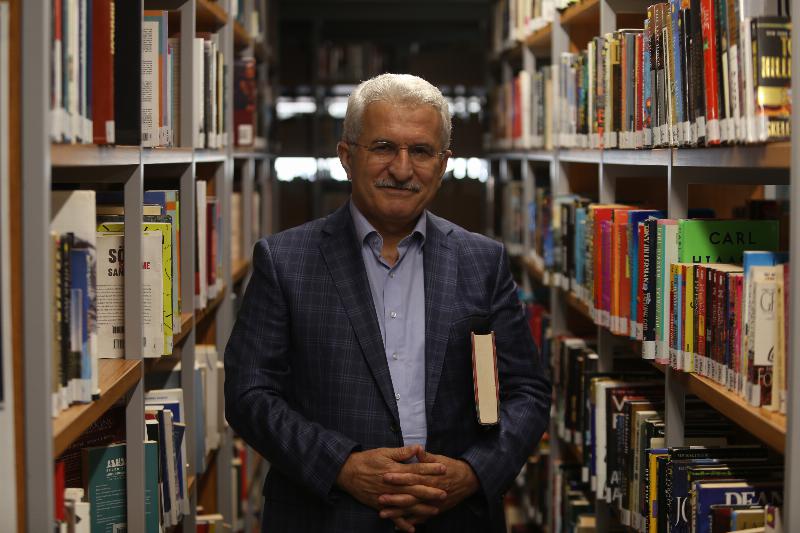
Prof. Dr. İbrahim Özdemir, Head of the Philosophy Department at Üsküdar Üniversitesi, made evaluations regarding his book titled “Rumi and Confucius: The Meaning of Life.”
Rumi, a bridge between the Confucian tradition and Islamic civilization
Prof. Dr. İbrahim Özdemir, who addressed the fundamental ideas of two thinkers from different periods in his book, stated that Rumi could be a bridge between the Confucian tradition and Islamic civilization. He mentioned, “I first presented this work as a paper at the Second Asian Philosophies Conference held in South Korea on October 26-29, 2006.” He added, “The theme of the conference was 'The Rise of Asian Society and a New Dialogue Between the Past and Future of the World.' I believed that examining the worldviews and teachings of Rumi and Confucius could lead to a meaningful and constructive dialogue between the Confucian tradition and Islamic civilization. Following the interest in my paper, I further developed my main theses and first published its English version, and then its Turkish translation. The book is now in its third edition.”
The world's interest in Rumi is immense
Noting that he received invitations from many countries around the world, Prof. Dr. İbrahim Özdemir stated that Rumi receives great interest all over the world and said: “After South Korea, I gave talks about Rumi as much as I could in Australia, Malaysia, Hong Kong, Germany, Sweden, Russia, and Finland. I could never forget an American's words, 'Rumi is the master of us all.' I found Prof. Dr. Arthur J. Arberry's observation about Rumi, who has deep works on Islamic Sufism and Rumi, very meaningful: 'Rumi saved the world from great chaos seven centuries ago. Today, the only thing that will save Europe is his works.'
While the material civilization of the West dazzles the eyes of Muslims, the lights reflected from Rumi's Masnavi dazzle the eyes of the West. Prof. Dr. Arthur J. Arberry's foresight has proven correct. For years, Rumi has maintained his place among the most read poets in America. When you enter the Amazon site, the number of books published about Rumi will surprise you.”
How does Rumi, who lived in the 13th century, appeal to contemporary man?
Prof. Dr. İbrahim Özdemir also touched upon the reasons for Rumi's great interest abroad, saying, “When I went to America for the second time in 1997, I asked this question: What are the reasons for Rumi's interest abroad? His translations, made with excellent English, sell hundreds of thousands. His poems are read on cassettes and CDs. I saw that famous artists like Madonna included his poems in their albums. So, why do people read Rumi?
What do they find in him and his poems? What can Rumi, who lived in 13th-century Konya, offer to the globalized world and contemporary man? In fact, Americans themselves wondered why Rumi is so widely read. Shahram Shiva, when he first heard Rumi's poems, was fascinated by him and translated many of his poems into English. He reads Rumi's poems in stand-up shows and private meetings. To satisfy his curiosity about why people read Rumi and to learn the truth, he organized a workshop attended by about 50 people. He asked the participants to define why they read Rumi. What each participant said was carefully recorded, classified, and evaluated,” he said.
Rumi uses a language everyone understands
Prof. Dr. İbrahim Özdemir stated that these studies revealed many reasons why people read Rumi, adding, “If we briefly look at these, we can also find clues as to what Rumi offered to Western people and what he can offer us.” Prof. Dr. İbrahim Özdemir listed these results as follows:
“They were very impressed by Rumi's non-intellectual approach and his use of a language that everyone understands. They stated that Rumi appealed to their hearts, emotions, inner worlds, and almost to themselves, rather than their minds.
Just like the layers of petals surrounding a rose, they discovered various dimensions of meaning in his poems. As they read and learned about Rumi, they better understood his depth.
The unity, harmony, and wholeness reflected in Rumi's poems were very appealing to them.
While reading Rumi, they saw him as a friend and companion.
Reading Rumi became a personal experience and process. Under his guidance, they questioned the meaning of life; they tried to be his fellow traveler.
The title of our book, “The Meaning of Life,” comes from this.
Every time they read Rumi, they personally experienced their hearts and souls being filled with mercy and peace.
The latest example of this is the famous American female poet Mary Oliver, who passed away last year. In an interview she gave to NPR radio, widely listened to in America before her death, she said that for 10 years she started every new day by reading Rumi. Her statement, “Rumi allows me to look at the universe from a completely different perspective every time I start a new day; I learned from him that I have 100,000 reasons to kiss the earth,” is very meaningful.”
Rumi contributed to unity and solidarity
Prof. Dr. İbrahim Özdemir stated that the love, longing, and yearning for the absolute beloved in Rumi's poems deeply affected American readers, saying, “Some participants confessed that they fell in love with Rumi as they read and got to know him. Many Westerners who read, love, and are devoted to Rumi have developed beautiful and positive relationships with Muslims living in their countries.
Rumi, eight hundred years later, has brought closer different segments separated and excluded due to religion, language, and race. He has contributed to their living together in a multicultural society.
Some also stated that Rumi provided excellent answers to the question “Who am I?” mentioned above; that he expressed himself perfectly, and that they merely joined him in this process by reading him. Many people also specifically emphasized that they saw Rumi as a spiritual guide and mentor for themselves,” he said.
Prof. Dr. Talat Halman's definition of "Rumi Season" is important
Prof. Dr. İbrahim Özdemir pointed out that Prof. Dr. Talat Halman, who stated that the West is in search of something "spiritual beyond its institutional religions and beliefs," beautifully summarized this interest, which he defined as "Rumi Season": "Sufism is respected and loved because it emphasizes a direct spiritual bond, a love relationship between man and God, transcending traditional religious rules and institutions. Add to this Rumi's humanism, his passionate and affectionate poetry, his spirit of forgiveness and peace, his ecstasy that takes man far beyond mundane, bland experiences. And the celestial grandeur of sema…"
Reasons for the West reading Rumi contain important messages for us
Prof. Dr. İbrahim Özdemir noted that the reasons why the West reads Rumi are different and contain important messages for us, saying, “The words of Kabir Helminski, one of the pioneers among Rumi admirers and experts in the West, resonate in my ears: 'Rumi has risen from his grave and is explaining Islam.' And to all humanity. It is our greatest wish that our book be a modest contribution to the understanding of Hz. Pir (Rumi).”
Man is the only being who questions the meaning of life
Prof. Dr. İbrahim Özdemir stated that people have been in search of meaning throughout ages, noting that Confucius and Rumi answered this question clearly and explicitly: “I would like to remind you of two important books by the famous Psychiatrist Viktor E. Frankl: Man's Search for Meaning and The Unheard Cry for Meaning. According to Frankl, man is the only being who questions the meaning of his life. No other living creature questions the purpose of its life; it continues to live as it was born.
But man cannot live without asking, without questioning. Who am I? Where do I come from? Where am I going? What is the meaning of the universe? When he cannot find satisfactory answers to these questions, he falls into depression. As in the famous song beautifully and emotionally sung by Adnan Şenses,
He always asks himself, “For years I have been asking myself this question, I don't know why I came to this world.” Money, wealth, position, status, fame, and state-of-the-art technological gadgets may postpone this questioning but can never stop it. Confucius and Rumi, two great sons of Eastern culture, answer this question clearly and explicitly. They offer us the key to understanding ourselves and the universe. With these qualities, they maintain their relevance for centuries.
I visited China twice. I went to their schools. The influence of Confucius still continues. Cruel Mao has died, but I witnessed Confucius practically living. The Mongol leaders and powerful commanders who ravaged Anatolia died and passed away. Rumi, however, continues to live with his Masnavi, Divan-i Kebir, and other works.”
We need to read and try to understand Rumi
Prof. Dr. İbrahim Özdemir stated that for the world to be a more livable place, the ideas, tools, and worldviews offered by these thinkers should be utilized, and noted that for this, these thinkers must be read and understood.
Prof. Dr. İbrahim Özdemir said, “I would like to state that our Üsküdar Üniversitesi Sufi Studies Center is a great opportunity in this regard. These great authors are not writers to be read once and set aside. If the American poet starts every new day by reading Rumi, why shouldn't we? Of course, we need minimum livelihoods to live honorably. However, we should not forget that man has a heart next to and even above his stomach, and a brain even higher, and that he has a soul,” he said.
Rumi answers Tolstoy's questions
“While trying to meet the needs of our stomach, we cannot neglect the needs of the heart, mind, and soul,” said Prof. Dr. İbrahim Özdemir, adding, “Tolstoy faced the same situation after writing War and Peace and reaching the peak of fame. He began to ask himself: What will be the result of what I do today, what I will do tomorrow? What will be the end of my whole life? Why do I live? Why do I desire? Why do I work? Is there a meaning in my life that will not be annihilated by inevitable death? Rumi answers precisely these questions. He calls out to us from across ages: “Come, come, whoever you are, come again, / Even if you are an infidel, a fire-worshiper, or an idolater, come again, / Our sanctuary is not a sanctuary of despair, / Even if you have broken your vows a hundred times, come again.” he said.
Now is the time to read Rumi
Prof. Dr. İbrahim Özdemir stated that Rumi's call of "come," made from across ages yet so intimately and from the heart, should not be postponed any longer, and concluded his words as follows:
Start reading today!
And read with the accompaniment of the Ney!
Try to understand the meaning of life under his guidance.
All this depends on a small and determined step we take today.
December is Rumi's month.
I hope it leads to a better remembrance and understanding of him.
How wonderful it is to try to understand while remembering!
In conclusion, let's not postpone reading and understanding him; let's not postpone giving meaning to our lives by understanding him.
Now is the time to read Rumi.”
Share
Request a Call
Other News
- Social responsibility courses moved to the field
- Erasmus+ Orientation Week completed at Üsküdar
- Prof. Nevzat Tarhan: “Brain secretes ‘dark glue’ in social media lynchers!”
- Prof. Nevzat Tarhan: “Every segment of society should be able to say, ‘This constitution is my constitution!’”
- OHS releases guide for safe operation of industrial robots