

We spoke with Prof. Dr. İbrahim Özdemir, Head of the Philosophy Department at Üsküdar Üniversitesi, about the work of the Üsküdar Üniversitesi Turkish World Philosophy Research and Application Center.
Content
Prof. Dr. İbrahim Özdemir: "Leaving a Clean and Livable World to Future Generations Must Be Our Most Important Moral Duty"
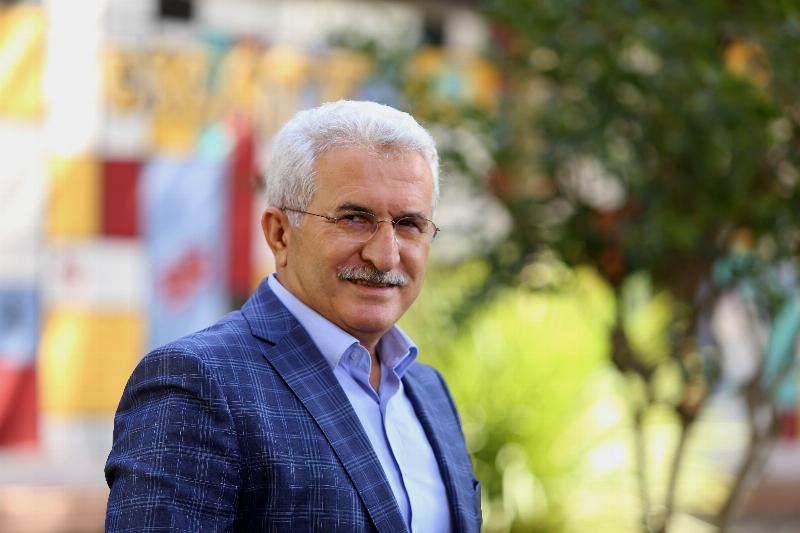
Prof. Dr. İbrahim Özdemir, who carries out important studies in the field of environmental philosophy and environmental ethics and supports global projects in this area, emphasizes the necessity of leaving a more beautiful world to future generations.
Question: Could you tell us a little about yourself?
Prof. Dr. İbrahim Özdemir: I was born in Gaziantep in 1960. I completed my undergraduate education at Ankara University, and my Master's and Ph.D. at the METU Philosophy Department. During my academic career, I served as a 'visiting faculty member' at world-renowned universities. I participated in scientific meetings in many countries, including universities in the USA, South Africa, Indonesia, Australia, Russia, Sweden, Switzerland, Germany, and South Korea.
I gave lectures as an invited speaker on environmental issues at the Russian Academy of Sciences and the Swedish Academy of Sciences. This was a great honor for me. After returning from the USA, where I was a visiting faculty member, in 2003, I was appointed as the Director General of Foreign Relations at the Ministry of National Education (MEB). I held this position for approximately seven years. In addition to my academic and administrative work, I served as a board member in organizations such as the UNESCO Turkish National Commission Board of Directors, YÖK (Council of Higher Education) Scientist Training Board, OECD, CERI (Centre for Educational Research and Innovation) Board of Directors, and Fulbright Board of Directors.
I served as the Founding Rector of Gazikent (Hasan Kalyoncu) University (January 2010-July 2013). My contribution to establishing such a scientific institution in my hometown, Gaziantep, will be my greatest reward moving forward. I have been working at Üsküdar Üniversitesi since 2016.
Question: We know that you completed your undergraduate education, which began at Ankara University Faculty of Divinity, with philosophy at the master's and doctoral levels. What was the reason for you to turn to this field?
Prof. Dr. İbrahim Özdemir: My field is environmental philosophy and environmental ethics. I completed my master's and doctorate degrees on ethics. The reason for this particular focus on the environment was my conviction that this issue would become a priority for all of us in the future. I was concerned that we were heading towards a different world from the one I experienced in my childhood; that my children and grandchildren would not see the world as clean and unspoiled as I did. The past 30 years have unfortunately confirmed this. Our waters have diminished and become polluted compared to before. There are no fish in our streams, rivers, or creeks. We frequently read news reports of mass fish deaths due to excessive chemicals dumped into rivers.
The reason is the waste from the factories of greedy businessmen who feel no responsibility and can do anything for their own interest and profit.
They dump waste into rivers without any filtration, without making additional investments to protect the natural environment. And we remain silent in the face of this. With these chemicals and poisons, not only fish but all living creatures are dying. Seas and oceans are being polluted by toxic waste mixing with rivers and seas; seafood is being poisoned. The moment we start consuming seafood, this poison returns to us. Vegetables and fruits poisoned with excessive chemical pesticides come to our tables. You need to be aware and careful about these issues. With all these concerns, I started working on this topic. My work in this context has received positive responses from all over the world. I traveled to over 70 countries and, as Üsküdar Üniversitesi, was part of the team that prepared the UN Islamic Environmental Declaration. Next year, this document will be presented to the United Nations. Thus, our efforts, within the framework of Üsküdar Üniversitesi, will have contributed to the creation of an international document.
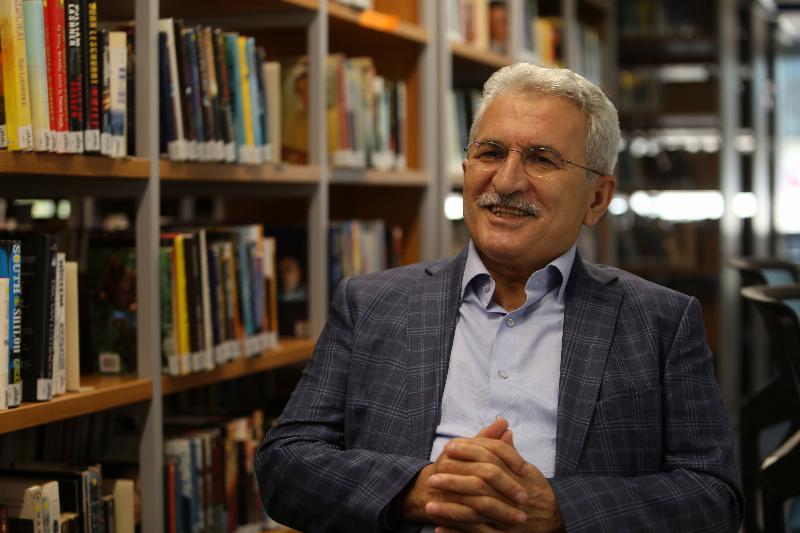
Question: You served as a visiting lecturer at many world-renowned universities. Could you tell us a little about your experiences there?
Prof. Dr. İbrahim Özdemir: One reason for this is being a philosopher on one hand, and an environmental philosopher on the other. We can also add my being an educator to this. My understanding of education is that Allah created humans with unlimited talents. These talents only emerge through education. With good and quality education, these talents develop. Just as healthy seeds won't flower or sprout if planted in infertile soil, our very talented children have little chance of success in a poorly designed education system. Recently, our founding rector Nevzat Tarhan made a statement: 'Those who go from Turkey to America receive Nobel prizes. Those who go to Germany find the Covid-19 vaccine.' Prof. Dr. Aziz Sancar also made references to Turkish scientists Uğur Şahin and Özlem Türeci, who found the Covid-19 vaccine in Germany. By making these references, he implied that we have problems in our education system. In other words, we need to educate our children to solve problems.
When I traveled around the world and taught in various places, I learned a lot from the people I met there: Seeing the results of what I gave them also made me very happy. To give an example, I first went to South Africa to teach in July 1998. I taught for a month. 15 years later, I returned as an invited speaker to a scientific conference. Before me, a young African Black lady, like yourselves, came to the podium to present her paper.
Her starting her speech by saying, “I am very happy today. I see Prof. Dr. İbrahim Özdemir, who taught at our university 15 years ago. In İbrahim Özdemir's lectures, I heard about the meaning and importance of the environment for the first time. Following this, I dedicated all my studies to the environment. Professor İbrahim, I am speaking now as an environmentalist with a doctorate in environmental studies,” deeply moved me. In my opinion, for a scientist, this is a Nobel Prize.
Let me also state this: Every problem, if well understood and managed, is also an opportunity.
We need to clearly understand the lesson that Covid-19 has taught us.
We have responsibilities towards ourselves, our families, and other people. For this reason, we wear masks; we warn those who don't.
The same applies to the environment: Will our grandchildren live in a healthy world? No one considers that their future is under threat. With daily worries about making a living and other difficulties, no one thinks ahead.
Yet, every day our air, water, natural beauties, and natural resources are being depleted. They are threatened, polluted. Some derive great profits from this. Large corporations and some industrial products are, of course, necessary for our development. We will utilize natural resources, but we must use them sustainably. Until 1980, we didn't know the concepts of sustainable development or sustainable economy.
Because we didn't think the natural world would degrade. We thought that seas would never be polluted, never run out. Forests wouldn't be depleted, and the species of game animals in them wouldn't go extinct. Yet, some animal species are already extinct. I feel very sad when I see people hunting without any need for sustenance. I suffer greatly from this. Our Prophet says, 'You may only hunt when there is a necessity.' Today, it is unacceptable for many unconscious Muslims to hunt merely for sport or to satisfy certain urges.
Therefore, my message is clear and unambiguous: As Covid-19 has shown us once again, if we live until 2040, 2050, or 2060, will we be able to meet our children and grandchildren on a holiday without masks? Will we be able to drink the water from a stream? Will we be able to go fishing with them? Or will we be able to see deer in a forest? Will we be able to see wild animals?
If we reflect on these and similar questions, I believe the message will be delivered. I have seen this: There are sensitive people all over the world who have taken this issue to heart. For instance, I can never forget what a Native American said to me after embracing me at a meeting in America, after I had presented Rumi's environmental philosophy: “We also think like Rumi.”
Rumi tells us, “Nature is our mother; if a child bites its mother's breast while nursing, the mother will give it a slap. Likewise, if we hurt Mother Nature, if we destroy nature, we will see the consequences; we will suffer the punishment for it.”
The Native American told me, “We share the same understanding; we think in the same way.” I have environmentalist friends from Abrahamic religions, as well as Hindu, Buddhist, Shinto, in short, from many religions. Although our worldviews may differ, our concerns for the future of the world and for future generations are the same.
Question: You participate in scientific meetings in many countries, especially at universities in America, as well as in South Africa, Indonesia, Australia, Russia, Sweden, and Switzerland. What kind of work do you do at these scientific meetings?
Prof. Dr. İbrahim Özdemir: I mentioned some of it. My previous work asks: can we accurately perceive environmental problems? Just as there are still people who do not accept the threat of Covid-19. A nurse said that an elderly lady refused to accept she had Covid-19, saying 'This is a conspiracy theory,' didn't use her medication, and passed away. Now, in my opinion, producing such conspiracy theories is a deviation of the mind.
We are philosophers. We base our work on science; we do not doubt proven scientific matters. We conduct hundreds and thousands of studies to reach a conclusion. You see the vaccine stage now; they can't just say 'We've found a vaccine' and release it to the market immediately. Scientists don't work like those who say 'Do this, it will help; drink that, it will help,' as some people do. How can we understand environmental problems? As people from different countries, different religions, and different cultures, we discuss these. What can be done next?
Again, as a result of these efforts, in the places we visit, we meet with young people like yourselves and explain the problems to them. We discuss whether it is right to trust politicians 100% on this matter, or to leave everything to them. Politics is a profession. Every politician's goal is to be re-elected.
There was an election in the United States. You see what kind of competition it was. We see in our elections: Everyone is striving to be elected, to be a candidate in their own party. Later, there is also a struggle to be re-elected. This is understandable. Their efforts to be re-elected and this being their priority is also understandable. But we must protect our right to critical thinking and oversight. We need to observe what politics is doing and how far its vision extends. More importantly, we need to offer solutions to politics.
For example, as environmentalists, we are working in many parts of the world to produce alternative solutions for sustainable energy resources and lifestyles. For instance, how can we sustain our forests and natural resources?
We are thinking about what can be done regarding abandoning investment in fossil fuels, offering alternatives like solar energy and wind energy, and investing in renewable and harmless energy sources. Fossil fuels were an alternative of the past; their cost to us and natural resources is clear and evident. Developed democracies are abandoning this. We should focus on the future; we must invest in sustainable resources.
As environmentalists, we exchange ideas on these issues. Some implement it, others do not. For example, the Dutch Government committed to gradually reducing fossil fuels. In 2015, all countries, 189 nations in Paris, signed the Paris Climate Accord. Some countries, including the United States, India, and China, withdrew their signatures. They said, 'No matter the cost; we will continue to use fossil fuels for development.'
Something interesting happened in the Netherlands. Young people like you started a campaign in the Netherlands. They collected over eight hundred signatures and applied to the constitutional court; saying, 'No measures are being taken regarding fossil fuels, our future is under threat. This is a human right. To live in a healthy environment today and in the future is a human right.' The Constitutional Court, evaluating this request, fined the government 3.5 billion Euros to be invested in alternative renewable projects.
Now that this has happened, scientists will develop new projects related to this issue. What we do as environmentalists is to create such a common awareness. We have done this up to a certain point. As Muslim environmentalists, we have done this up to a certain point; however, we still have a lot of work to do. For example, Muslim environmentalists proposed establishing the International Islamic Environmental Ethics Platform at Üsküdar Üniversitesi. Our efforts to establish this are ongoing. The day we establish this, Üsküdar Üniversitesi will become the global center for Muslims' work on environmental ethics. I am preparing the establishment work for this.
Question: What kind of work are you doing in philosophy, both in Turkey and globally? Are there any other works you are conducting apart from these?
Prof. Dr. İbrahim Özdemir: One of the best things we do as Üsküdar Üniversitesi is offering a critical thinking course. At our university, not only philosophy students but also students from other departments take this course. Socrates says, 'An unexamined life is not worth living.' This observation from a philosopher considered the father of philosophy is important. With this spirit, we are a modest department that works to make philosophy understandable.
My colleagues have articles published in national and international journals. Accepting our different views and philosophical understandings as richness, we work with our students in a pluralistic environment. We also provide service courses to other departments.
We also have the Üsküdar Üniversitesi Turkish World Philosophy Research Center, established in 2014. We have activities that we conduct here. We conducted one of these in September, together with the Sociology Department. We organized a Turkish World Philosophers Panel. The second was an international symposium held on October 23-24 in cooperation with the Uzbekistan Academy of Sciences and the Kazakhstan Information University and Academy of Sciences.
Question: Could you tell us a little about the Turkish World Philosophy Research and Application Center?
Prof. Dr. İbrahim Özdemir: The Turkish World Philosophy Research and Application Center has been continuing its activities since its establishment on October 26, 2014. The main objectives of the center, established in the early years of Üsküdar Üniversitesi, are: 'To conduct research and application in the fields of philosophy, science, and education, and to support and coordinate research and applications to be carried out in the aforementioned fields by universities, research and application centers, non-governmental organizations, public and private institutions within the Turkish World and its cultural geography.' In this context, many studies have been carried out so far.
Finally, with our faculty member and TÜBA Honorary Member Prof. Dr. Alparslan Açıkgenç, we participated in the 'Symposium on Global Cooperation as a Condition and Guarantee of Sustainable Development,' organized by the Uzbekistan Academy of Sciences and Tashkent National University on October 23-24, 2020. The symposium's objective is characterized by the transformation of the 20th and 21st centuries, marked by profound social changes occurring everywhere in the world. In public consciousness, the idea that humanity is at a sharp regressive turning point is increasingly affirmed, not only by social disasters but also as evidenced by the global crisis expressed through an impending environmental catastrophe, depletion of resources, and drug addiction.
Just as in the alienation of humanity from moral values, the tendencies of family and individual degradation have brought humanity closer to the destruction of personality. This leads us to think together and seek solutions. I participated in the symposium with a paper titled 'The Role of Education for Sustainable Development.' Thus, as the Üsküdar Üniversitesi Turkish World Philosophy Research and Application Center, we contributed to an important meeting.
Question: As a final question, would you like to share a story or an experience that has affected you globally? You have an example from Finland.
Prof. Dr. İbrahim Özdemir: Indeed, there are many memories. I just shared an anecdote from my time in South Africa. Another was the hospitality I encountered when I went to Finland as a visiting faculty member for two years. I was met with great interest and respect. When I asked the reason, they said, 'You had been very helpful to one of our students who came to Turkey to conduct research on the environment. She told us about you.'
Initially, I thought there was a misunderstanding. I didn't remember anything. Later, when they hosted a dinner in my honor, they also invited the lady I had helped (now a faculty member at Helsinki University). We were in a city about 2.5 hours away. Before dinner, I asked this academic colleague. 'Lest there be a mistake; frankly, I don't remember you. I guess I'm getting old. Is what I'm being told true?'
She said, 'Yes,' it's true.
'When you were rector in Gaziantep, I came to Istanbul for research. I was studying Muslims' perspective on the environment. When I called you, you said, 'Either come to Gaziantep and I'll answer your questions, or I have a meeting in Istanbul next week, and I can answer them there.' When you came to Istanbul, you invited me to the hotel where the meeting was held; you answered my questions and gave me suggestions on who else I should talk to. I never forget that.'
However, I had helped her as part of my duty. When the good deeds we do reappear elsewhere, it makes one happy. I have many memories like this, many incidents I've encountered. Also, regarding environmental issues and global warming, when you take it to heart, you realize that we share a common destiny. That is, for us, there is one sun, one atmosphere. Clean air and healthy seas are essential. Without oxygen or water, none of us can survive. I have been to places with water scarcity. You can't go to the toilets; you can't wash your hands; the stench is unbearable. There are also places with water scarcity. But our people don't know the value of water.
In short: We are all on the same ship called Earth. If something happens to this ship, we all sink. Like the movie Titanic, the orchestra might be playing while it sinks, and the captain might be saying there's no problem. In reality, a very important message is being conveyed there:
Acting as if there are no problems harms us all. If we can draw the necessary lessons from the COVID-19 pandemic; we can take more concrete steps regarding the environment.
Question: Thank you, Professor, we appreciate it.
Prof. Dr. İbrahim Özdemir: You're welcome.
Share
Update Date: February 26, 2026
Creation Date: December 01, 2020
Request a Call
Other News
- Social responsibility courses moved to the field
- Erasmus+ Orientation Week completed at Üsküdar
- Prof. Nevzat Tarhan: “Brain secretes ‘dark glue’ in social media lynchers!”
- Prof. Nevzat Tarhan: “Every segment of society should be able to say, ‘This constitution is my constitution!’”
- OHS releases guide for safe operation of industrial robots