

Emphasizing that 'peace' is the first of the 8 indispensable conditions for health in the Ottawa Charter, published under the leadership of the World Health Organization, Prof. Dr. Haydar Sur said, “One cannot speak of the health of individuals in a society without peace, because in a war environment, it becomes uncertain who will die, when, where, and how. Peace has an indispensable priority for the protection of public health and the maintenance and development of healthy conditions.” Sur stated, “Health is undoubtedly humanity's greatest treasure. Wars, in all circumstances, are the relentless enemy of health. A war starting in a society paves the way for social breakdowns, divisions, internal conflicts, and hostilities.” Noting that the conditions for healthcare workers to provide services in war zones have become increasingly difficult, Sur noted that psychological support for health professionals should be provided to prevent them from entering burnout syndrome.
Content
Prof. Dr. Haydar Sur: “Priority for the protection of public health is ‘peace’”
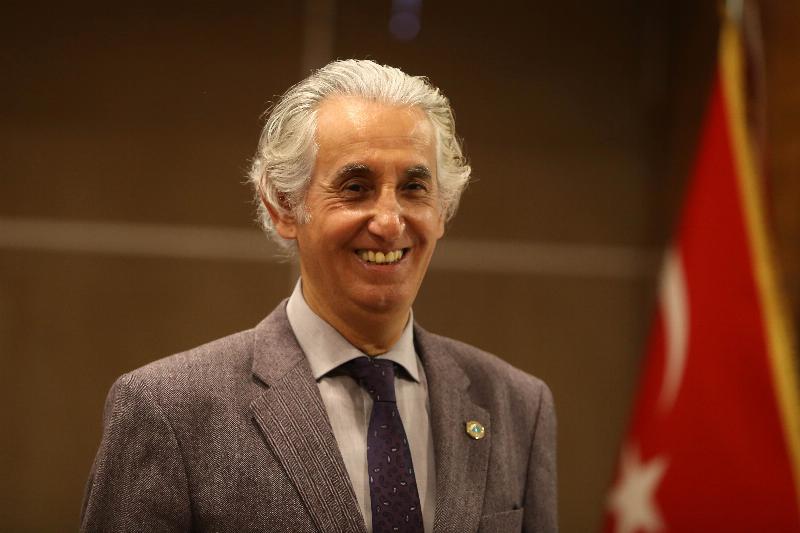
Üsküdar University Faculty of Medicine Dean Prof. Dr. Haydar Sur emphasized the importance of peace in the protection and improvement of public health and touched upon the damages wars inflict on societies.
The greatest treasure humanity possesses is health
Emphasizing that health is undoubtedly humanity's greatest treasure, Prof. Dr. Haydar Sur said, “No wealth acquired without health can hold any meaning for a human being. In the 21st century, it is one of the rare topics on which health philosophers and researchers have reached a complete consensus: that protecting and improving health is definitely easier, more effective, and less costly than treating illness and injury when they occur.”
War is the relentless enemy of health
Prof. Dr. Haydar Sur stated that the Ottawa Charter, published in 1986 under the leadership of the World Health Organization, listed 8 indispensable conditions for health, and continued:
“The first of these conditions is peace. One cannot speak of the health of individuals in a society without peace, because in a war environment, it becomes uncertain who will die, when, where, and how. War is, in all circumstances, the relentless enemy of health. Problems arise in finding food, homes are destroyed, schools cannot continue education, health services or facilities are ruined, plundered, and services are paralyzed. Alongside fighting soldiers, many civilians also lose their lives or are severely injured. Among these civilians are healthcare workers. Thus, a catastrophe of dwindling and disappearing healthcare capacity is experienced in response to a rapidly and greatly increasing need for healthcare services. It has never been seen to date that societies can protect their health from adverse effects during wartime.”
Wars lead to social breakdowns
Prof. Dr. Haydar Sur, pointing out that within society, particularly the elderly, disabled, babies, children, pregnant women, and mothers experience the adversities even more severely, stated, “Societies that have lost peace not only lose their current social welfare and ability to live but also lose their ability to recover and create positive reflexes in the future. It should not be forgotten that a war starting in a society also paves the way for social breakdowns, divisions, internal conflicts, and hostilities. In a peaceful environment, individuals and families ready to support each other and help those in need become preoccupied with their own troubles when war comes, and the desire for mutual assistance disappears. In fact, everyone turns to snatching food, medicine, shelter, and fuel from each other. Repairing these adversities and regaining an environment of peace and tranquility can take decades.”
Public health has a philosophy of ‘not losing hope’
Prof. Dr. Haydar Sur stated that public health considers peace an indispensable priority for the protection of health and the maintenance and development of healthy conditions, and continued:
“In the Russia-Ukraine war, we also saw that families, while leaving their homes and homelands to seek refuge in safe places, prioritized the evacuation of children and women from the war zone. Because public health has a philosophy of not losing hope even in all adverse conditions, it has tasks to perform even in a war environment. Particularly, food and water aid, solving heating problems in cold weather, taking environmental health measures to prevent outbreaks of infectious diseases, delivering essential medications to those with chronic illnesses, providing financial, human resource, and material support to revive collapsed healthcare systems, supporting the mental health of the community, and providing care and rehabilitation services to the wounded and those who have lost organs are among the first tasks to be undertaken within international aid efforts.”
Psychological support should be provided to health professionals
Üsküdar University Faculty of Medicine Dean Prof. Dr. Haydar Sur said, “To regain the disrupted peaceful environment as soon as possible, if necessary, the concrete outcomes of the damage war inflicts on public health should be clearly demonstrated to political and diplomatic decision-makers.” He added, “As the conditions for healthcare workers to provide services have also become increasingly difficult, psychological support for health professionals should be provided to prevent them from entering burnout syndrome.”
Share
Request a Call
Other News
- The book that read today's digital threats in 2014: Being a Conscious Family
- Experts warn: 'Instead of memorizing letters, teach pencil grip, scissor use, and coloring'
- School fear and school love both start in the family!
- Family is not merely transforming, it is being battered under a serious assault
- Artificial intelligence opens the door to early diagnosis in autism!