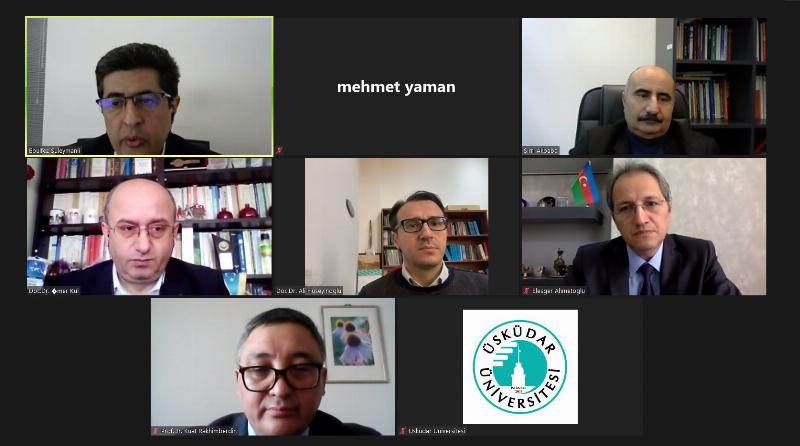
Üsküdar Üniversitesi Human Rights Studies Application and Research Center organized the panel “The Current Situation and Problems of Human Rights in the Turkic World," which was held online as part of pandemic measures.
Prof. Dr. Ebulfez Süleymanlı: “The unity and solidarity of the Turkic world are very important”
Prof. Dr. Ebulfez Süleymanlı, Director of Üsküdar University Human Rights Studies Application and Research Center and Head of the Sociology Department, moderated the panel.
Prof. Dr. Ebulfez Süleymanlı noted that the Turkic world is a large political geographical union covering an area exceeding 11.2 million square kilometers and with a population reaching 250 million. He said, “The borders of this cultural and ethnic union begin from the shores of the Adriatic Sea and extend to the famous historical Great Wall of China near Beijing, the capital of China. Within its borders, there are 8 independent Turkic states, but these, of course, constitute only 43.7% of the Turkic world's territory. The remaining 56.3% continue their existence within different countries in various geographies. Today, many regions of this geography face various problems stemming from ethnic, religious, economic, and political processes that have been carried over from the past or have transformed in different ways in our current era. Therefore, for the Turkic nation of more than 240 million people living in such a vast geography, achieving unity and solidarity, especially national consensus on national issues, is very important and necessary. Our panel today was actually born out of this necessity.”
Prof. Dr. Sırrı Akbaba: “Struggle is important in dealing with human rights issues”
Prof. Dr. Sırrı Akbaba, Faculty Member of the Psychology Department at Üsküdar University Faculty of Humanities and Social Sciences and Advisor to the Rector, stated in his welcoming speech that human rights issues are among the most prominent problems worldwide, emphasizing the importance of such a critical topic being addressed specifically by experts. Prof. Dr. Sırrı Akbaba stated that these problems must be well-analyzed in the struggle against human rights issues faced by the Turkic world. He noted that although human rights are generally a matter of importance for the whole world, poor countries, especially those with underground and above-ground wealth, are exploited through human rights violations. Prof. Dr. Sırrı Akbaba emphasized the importance of the young generation being knowledgeable about these violations and said that the struggle can only be possible through continuous effort.
Prof. Dr. Kuad Rakhimberdin explained the reforms in Kazakhstan
Prof. Dr. Kuad Rakhimberdin from Amanzholov East Kazakhstan State University, in his speech titled “Social Control Mechanisms in Kazakhstan's Prisons,” said that significant steps have been taken in the country over 20 years with measures and reforms. He stated that the issue of prison oversight came to the agenda twenty years ago in the country, and at that time, Kazakhstan ranked third in the world with approximately 100,000 prisoners based on the number of detainees in prisons.
Prof. Dr. Kuad Rakhimberdin noted that the practices towards prisoners during that period were negative in terms of human rights, and the conditions were very unfavorable. He stated that the reforms made since then have led to a threefold reduction in the number of prisoners and Kazakhstan's drop to the 100th rank globally in terms of prisoner count. Prof. Dr. Kuad Rakhimberdin stated that in 1998, Kazakhstan joined the United Nations Convention Against Torture. He said, “It established social control mechanisms to prevent violence in prisons. It enacted its laws and formed oversight boards. Civil society organizations also provided significant support in this regard. In 2013, a law regarding the Independent Monitoring Institution was adopted in Kazakhstan. Since then, this institution, composed of civil society organization members and independent legal professionals, has been able to conduct inspections in prisons. Members of this Independent Institution, consisting of the Ombudsman and 16 Independent Monitors, can conduct independent monitoring and control in state penal and enforcement institutions.”
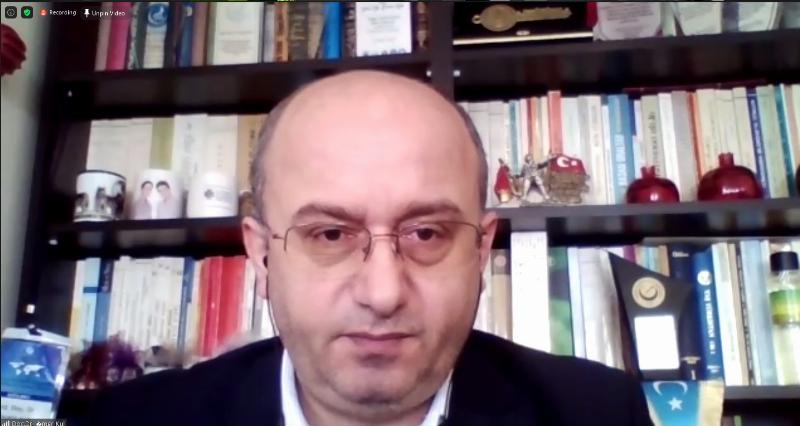
Assoc. Prof. Dr. Ömer Kul: “Violations in East Turkistan must be brought to the UN agenda”
Assoc. Prof. Dr. Ömer Kul from Istanbul University, in his speech titled “Human Rights Issues in East Turkistan,” stated that there are many human rights violations in East Turkistan, drawing attention to significant violations particularly in the areas of family life, freedom of belief, abortion issues, education, economy, and freedom of travel. Assoc. Prof. Dr. Ömer Kul emphasized the need to create public awareness to eliminate human rights violations in East Turkistan, saying, “The issue must be brought to the UN agenda, scholarships should be provided to East Turkistani university students in our country, assistance should be given to East Turkistanis in our country, and the legal status of East Turkistanis in our country must be legally secured.”
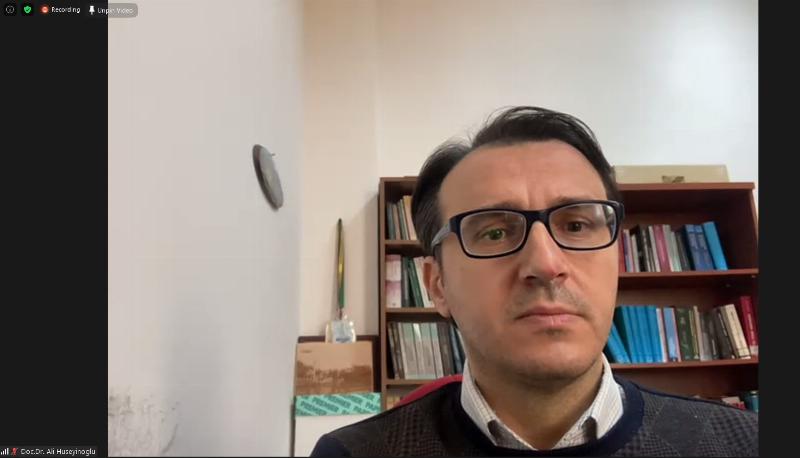
Assoc. Prof. Dr. Ali Hüseyinoğlu highlighted the problems experienced in Western Thrace
Assoc. Prof. Dr. Ali Hüseyinoğlu from Trakya University, in his speech titled “Minority Rights of Turks in Greece,” spoke about the human rights violations suffered by Turks in Western Thrace. Assoc. Prof. Dr. Ali Hüseyinoğlu stated that the problems of Western Thrace Turks have not been sufficiently addressed, especially by academic circles, in the last 20-30 years. He drew attention to the fact that despite positive developments after the 90s, problems persist particularly regarding the rights of the Muslim and Turkish minority. He emphasized that there are specific issues concerning mosques and cemeteries in Athens, and that the state must listen to minorities and minority NGOs in addressing their problems.
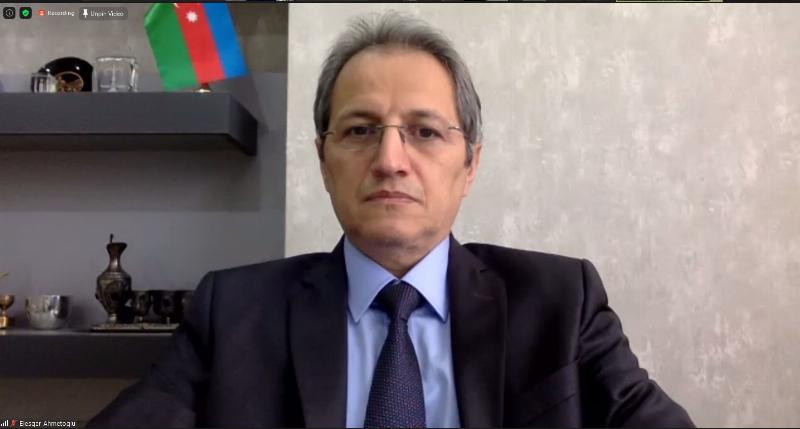
Aliasker Ahmetoğlu: “Turkey should provide investment support to Azerbaijan”
Lawyer-Human Rights Expert Aliasker Ahmetoğlu, in his speech titled “Human Rights Issues in the Context of Karabakh,” stated that the occupation of Karabakh was ended in 44 days and thanked the Turkish state and people for their support during this process. Aliasker Ahmetoğlu stated that the conflict and occupation in Karabakh between 1988 and 1994 were halted with a temporary ceasefire agreement in 1994. He said that during the occupation period, 20% of the territory of the Republic of Azerbaijan was occupied as a result of Armenian military attacks, over 23,000 people lost their lives in military operations, and 20,000 people were left disabled. Ahmetoğlu noted that thousands of people were injured from the signing of the 1994 ceasefire agreement until the September 27th operation. Aliasker Ahmetoğlu stated that 1 million people were displaced as refugees, adding, “These people's freedom of religion, freedom of thought, and freedom of expression were destroyed.”
Aliasker Ahmetoğlu stated that Turkey's support is very important for Azerbaijan, saying, “The Azerbaijani army was clearly able to demonstrate its presence in the region and that it is the guarantor of its own lands. This is, of course, because a great brotherly country like Turkey is by our side. The Turkish public and the Turkish state should support Azerbaijan for investment. You, esteemed academics, should also encourage this. All wounds must be healed together in the coming years.”

