

Uskudar University Faculty of Medicine organized an event titled “History of Infectious and Epidemic Diseases”, where the historical process of epidemic diseases and the COVID-19 pandemic were discussed. Prof. Dr. Gülten Dinç, one of the lecturers from the Department of Medical History and Ethics at Cerrahpaşa Faculty of Medicine, who participated as a speaker in the program moderated by Dr. Lecturer Zozan Güleken from Uskudar University Faculty of Medicine; “The virus declared by the World Health Organization in 2020 can be called ‘the plague of the 21st century’,” she said.
Content
Prof. Dr. Dinç: “COVID-19 can be called the plague of the 21st century”

“Epidemic diseases have existed throughout world history”
Dinç stated that in the early periods of world history, microbes could not be identified and were called ‘evil spirits’; “Epidemic diseases have existed since the early periods of history. In Mesopotamia, epidemics spread through migration and trade routes. The relationship between plague and rats was estimated from the behavior of rats before the plague. In these periods, because the cause of diseases and epidemics was not fully known, they were attributed to dangerous and invisible beings. Diseases such as plague, malaria, and cholera devastated humanity during the Hittite period. The plague prayer learned from the tablets of Hittite King Mursili II is among the first known texts related to epidemic diseases in history.” she said.

“Vaccination was carried out in India and China to prevent smallpox”
Emphasizing epidemic diseases seen in different civilizations, Dinç stated that these diseases did not stop where they originated but spread to other civilizations through human interaction. Dinç; “We see that epidemic diseases occurred in Egypt in papyri. In India and China, vaccination is performed to prevent smallpox. These are the first immunization efforts in the world. Epidemic diseases in Greek civilization are mentioned in Herodotus' history. Soldiers are known to have contracted the plague in the Persian and Greek wars. The commander who left his soldiers in villages along the way for treatment caused the plague to spread over a very wide area. In Ancient Greece, the goddess known as Hygieia was considered the representative of public health, and attention was drawn to the importance of cleanliness. Hippocrates has a book written about epidemics. Due to increasing epidemic diseases, hygienic structures were given importance in Rome. With the measures taken, aqueducts were built, the dead were buried outside the cities, and a sewage system was developed. A hygienic toilet system was established in Ephesus, and waste was removed with a canal system.” she said.
“The Middle Ages began with the Justinian plague and ended with the Black Death”
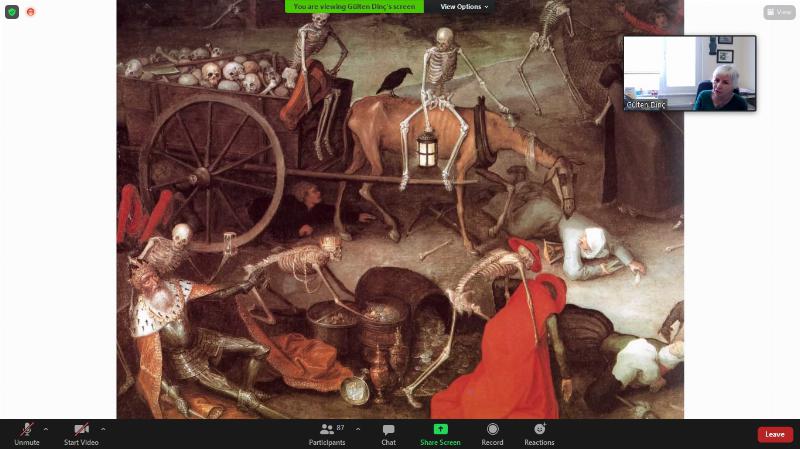
Dinç stated that an epidemic ravaged Mediterranean countries in the 2nd century AD; “In Rome, the plague, which had been endemic until then, turned into a pandemic. It is said that the malaria epidemic that occurred after the plague caused the collapse of Western Rome. In the Middle Ages, while the West was plunged into great darkness, a brilliant period was experienced in the East with Islamic civilization. Razi, one of the scientists raised by Islamic civilization, described smallpox and measles in his book. He used mercury ointment for scabies and eye diseases. Ibn-i Sina, whose books were translated into Western languages and whose works were taught as textbooks throughout the Middle Ages, stated that diseases spread through water and that these organisms were water spirits. In addition, Ibn-i Sina provided information about meningitis and the mode of spread of epidemic diseases. He stated that infectious diseases could be transmitted to the fetus. From the perspective of medical history, the Middle Ages began with one disease and ended with another. The Middle Ages, which began with the Justinian plague, ended with the Black Death. During the plague epidemic of this period, it is said that nearly 10,000 deaths occurred daily in Istanbul, and since there was no place to bury them, they were sent to the waters of the Bosphorus.” she said.
“Epidemics affect economy, art, and human psychology”
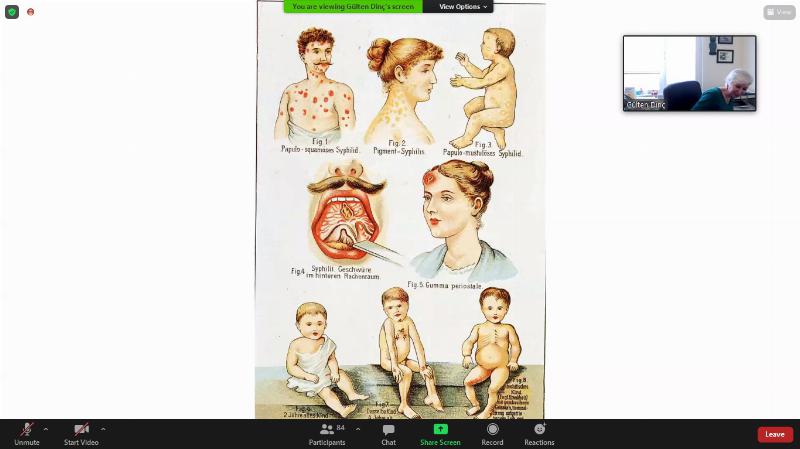
Dinç stated that epidemic diseases negatively affected the economy, literature, population, and human psychology; “The plague spread to Europe from Central Asia in 1347 and caused the death of 24 million people. The social impact of the plague was enormous. People's psychology, population, and economy were affected by it. The influence of the plague can be seen in the works of art produced during this period. Albert Camus' 'The Plague' is an example of this. These effects are also seen in painting and sculpture.” she said.
“To prevent the plague, people were admitted to the city after quarantine”
Dinç stated that prevention methods against the plague were very limited in Europe; “Protection was achieved with the discovery of antibiotics. Among the measures taken during this period were the 'Plague Treatises' published to advise the public. Among the measures to be taken against the disease in city councils were decisions not to admit plague victims into the city, to immediately remove the dead from the city, and to filter water due to the waterborne spread of the plague. These measures are known to have been more or less effective. It was later understood that the main cause of epidemics was ports and ships, a 30-day quarantine was implemented, and people disembarking from ships were not allowed into the city. This method was shown to be quite effective in overcoming the plague.” she stated.
“COVID-19, the plague of the 21st century”
Dinç stated that the virus declared by the World Health Organization in 2020 could be called ‘the plague of the 21st century’; “It is unknown to what extent this virus will affect the world. In this process, we have come to understand the importance of science. Such diseases are beyond traditional methods of solution. Pandemics affect all components of society in demographic, economic, psychological, and social terms. In this process, we also saw that health systems worldwide are fragile. It is very important to learn lessons from this process.” she said.
Share
Update Date: February 27, 2026
Creation Date: April 21, 2021
Request a Call
Other News
- Social responsibility courses moved to the field
- Erasmus+ Orientation Week completed at Üsküdar
- Prof. Nevzat Tarhan: “Brain secretes ‘dark glue’ in social media lynchers!”
- Prof. Nevzat Tarhan: “Every segment of society should be able to say, ‘This constitution is my constitution!’”
- OHS releases guide for safe operation of industrial robots