

An event titled “Minimizing Target Damage in Organic Farming” was organized by the Üsküdar University Molecular Biology and Genetics Club. Professor of Biological Sciences Tariq Butt from Swansea University participated in the event as a speaker. Butt stated that the goal in pest control in organic farming is not to completely eliminate the target pest, but to minimize the damage level caused by the pest.
Content
Organic Farming Discussed with Prof. Dr. Butt…
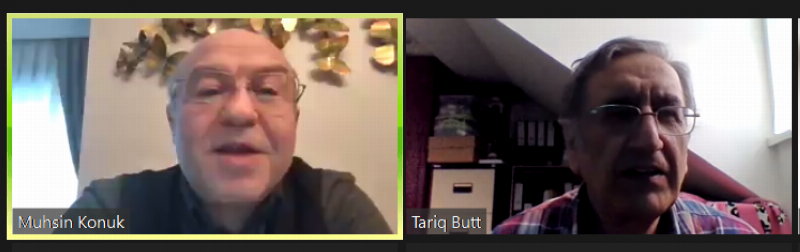
“The goal is not to eliminate the target pest, but to minimize the damage level caused by the pest”
In the program moderated by Üsküdar University Vice-Rector Prof. Dr. Muhsin Konuk, Prof. Dr. Tariq Butt made evaluations about organic farming:
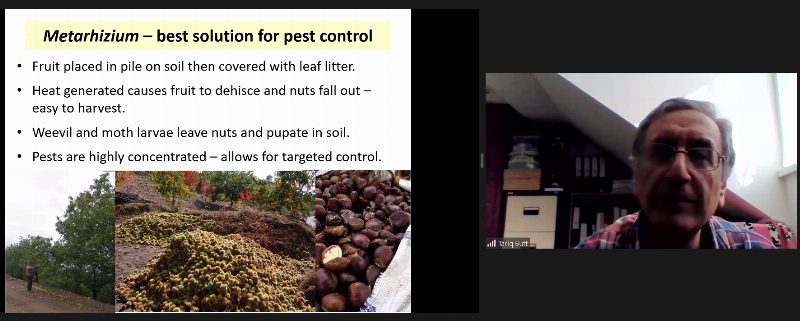
The goal is not to completely eliminate the target pest, but to reduce its damage
“Restrictions have been placed on the use of chemical substances for sustainable organic farming. The most important alternative method to chemical pesticides is the biological control method, which uses natural enemies. Organic farming can be defined as an approach that aims to create an environmentally and economically sustainable agricultural production system. In organic farming, biological control yields much more effective results when applied with other appropriate control methods. In pest control in organic farming, the goal is not to completely eliminate the target pest, but to minimize the pest's damage level. Additionally, entomopathogens are used to combat pests on plants cultivated in an organic farming area during a production season. Entomopathogenic fungi are fungi that can function as a parasite of insects, killing or severely disabling them,” he said.
Üsküdar University graduates also took part in the study!
While it is known that Prof. Dr. Butt has conducted not only academic but also field studies in Turkey, it is also known that in his studies on chestnuts, which are quite expensive and rare in the United Kingdom, Butt obtained chestnut aphids and chestnut tortrix larvae from a chestnut processing factory in Aydın, Turkey, and used them in his research. Furthermore, Üsküdar University graduates Yarkın Çetin and Merve Gözdenur Demirbek collaborated with Butt and published an article in this field.
Representatives of the Molecular Biology and Genetics Club stated that similar events will continue in the spring semester.
Butt's areas of expertise are known to include leading the Biocontrol and Natural Products (BAP) group. The aim of this group, established at Swansea University, is to develop sustainable, environmentally friendly products and strategies for the control of arthropod pests of global and socio-economic importance.
Share
Update Date: February 28, 2026
Creation Date: March 31, 2022
Request a Call
Other News
- Experts warn: 'Instead of memorizing letters, teach pencil grip, scissor use, and coloring'
- School fear and school love both start in the family!
- Family is not merely transforming, it is being battered under a serious assault
- Artificial intelligence opens the door to early diagnosis in autism!
- Artificial intelligence doesn't end engineering, it transforms it!