

Üsküdar University Faculty of Medicine held an online commemoration program for the 107th Anniversary of the 1914-1915 Sarıkamış Field Battle. The event, which hosted Cardiovascular Surgeon Prof. Dr. Bingür Sönmez, was moderated by Vice Rector, Faculty Member of the Department of Cardiovascular Surgery Prof. Dr. Hikmet Koçak. Making statements about Sarıkamış's tragic history and stating that a generation lost their lives there, Bingür Sönmez said; “The young generation should never forget the poor peasant children who became martyrs by freezing to death in the Allahuekber Mountains, whose names and faces are unknown, and who are practically a mystery."
Content
Prof. Dr. Bingür Sönmez: “The Young Generation Should Never Forget the Peasant Children Who Are a Mystery”
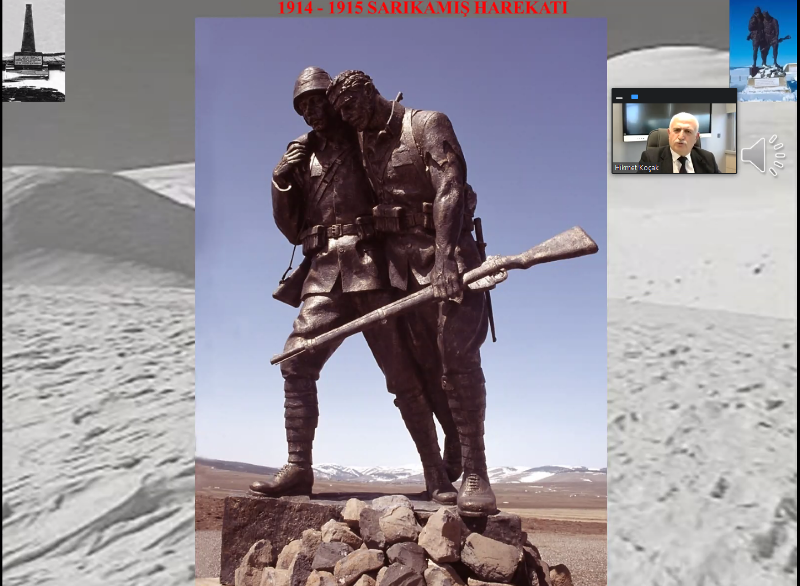
“The symbol of Sarıkamış martyrs is the snowdrop flower”
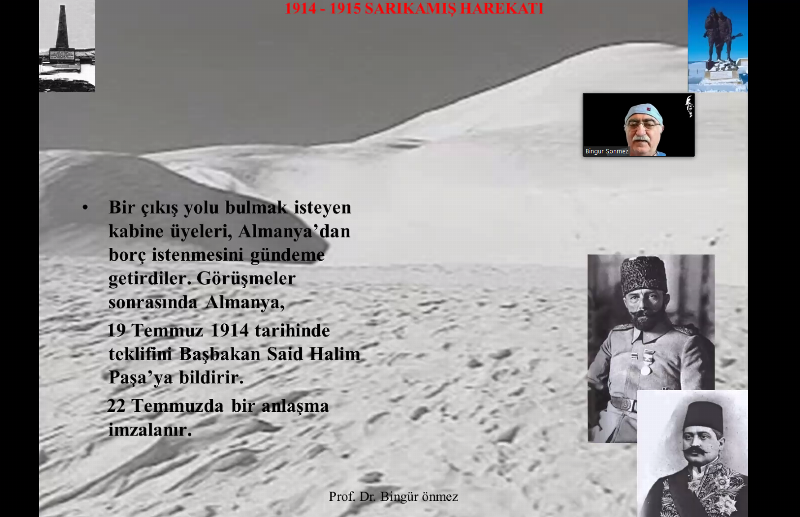
Touching upon the history of the Sarıkamış Operation, Prof. Dr. Bingür Sönmez said; “The Sarıkamış Operation was a war that lasted 4 years. The magnitude of the event should never be underestimated. The snowdrops that bloomed at that time became the symbol of the Sarıkamış martyrs. Sarıkamış is a place where great suffering was experienced; sources state that flocks of crows damaged the bodies of our martyrs. Young people, if you haven't seen the Allahuekber Mountains, it means you haven't seen anything. If the Ottoman Empire had not allied with Germany in the war, Germany would have collapsed in 6 months or less. In line with Germany's wishes, the Turkish army's operational plans were jointly prepared. According to this plan; our navy would attack the Russian fleet in the Black Sea, and with the declaration of war, the Ottoman Sultan would declare 'jihad' against his enemies and win the war. The Turkish Army would engage the Russian army on the Caucasian border in Eastern Anatolia.”
“Sarıkamış awakened a national consciousness that was in a deep slumber”
Stating that the devotion shown by the army in the Sarıkamış Operation cannot be fully expressed, Sönmez said; “No pen will be able to adequately describe the effort, fearlessness, adventure, courage, and success shown by the 3rd Army during the Sarıkamış Operation. The Sarıkamış Epic was only recognized in 1919 with the information provided by those returning from captivity. The effects of hunger, freezing cold, and defeat, just like Çanakkale, led to the awakening of a national consciousness that was in a deep slumber, revived the power of resistance, and greatly contributed to the writing of the Turkish War of Independence epic.”
“If the young generation knows what war is, they will grasp the value of peace”
Touching upon the importance of telling our history to young generations, Sönmez said; “We must convey the important events in our history to future generations. Our children should learn about war, not how to wage war. They must know what war is to grasp the value of peace. Only then can they understand what freedom in their lands was gained at what cost and by whom, and therefore how sacred it is. They should know that while at least the photos and names of elite urban youth lost in the Çanakkale War are in martyr albums, the martyrs who froze in the Allahuekber hell were poor peasant children whose names and faces are unknown, practically a 'mystery'. The young generation should never forget that Sarıkamış is a mass grave dug by the clash of imaginary goals and realities, and that this country had a generation that perished in Sarıkamış.”
Share
Update Date: February 28, 2026
Creation Date: December 24, 2021
Request a Call
Other News
- The book that read today's digital threats in 2014: Being a Conscious Family
- Experts warn: 'Instead of memorizing letters, teach pencil grip, scissor use, and coloring'
- School fear and school love both start in the family!
- Family is not merely transforming, it is being battered under a serious assault
- Artificial intelligence opens the door to early diagnosis in autism!