

Experts state that preschool education contributes to a child's development in many ways, including cognitive, social, physical, and linguistic aspects, and that 36 months is an appropriate age to start preschool education. Experts underline that preschool education creates positive effects on a child's development, from cognitive to social development, emphasizing that children who receive preschool education have higher future academic success and noting that preschool education is also the first step in socialization.
Content
Preschool education: The first step in socialization…
 Preschool education impacts from social to academic development
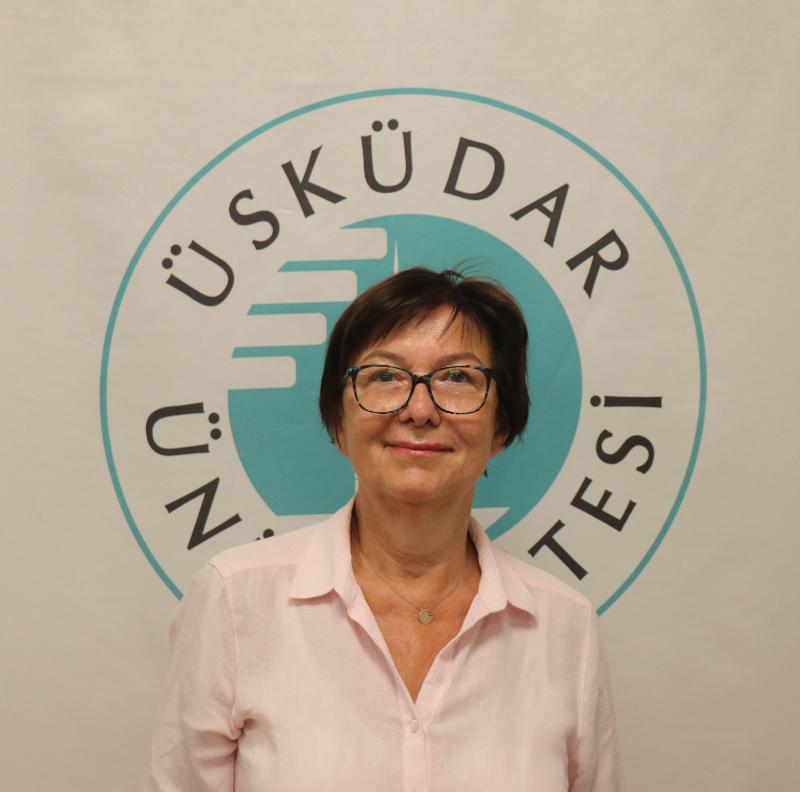
Üsküdar University Faculty of Health Sciences, Child Development Department, Dr. Lecturer Semiha Füsun Akdağ Aycibin, highlighted the importance of preschool education in a child's development.
36 months is suitable for preschool education
Reminding that preschool education covers the education of children in the 36–72 month age group who have not yet reached compulsory primary school age, Dr. Lecturer Semiha Füsun Akdağ Aycibin said, “Therefore, 36 months is suitable for starting preschool education. The purpose of preschool education is to ensure children’s physical, mental, emotional development and acquisition of good habits, preparing them for primary school. We can say that the importance of preschool education has been emphasized in recent years in our country, as it has been all over the world.”
Positively affects in many ways
Stating that preschool education contributes to a child’s development in many ways, including cognitive, social, physical, and linguistic aspects, Dr. Akdağ evaluated them as follows:
A large part of brain development is completed by age 6
Cognitive development: “When we investigate where the importance of preschool education comes from, we see that two-thirds of brain development is completed by age 6. We see that preschool education is essential to not lose these valuable years, for neurons in the brain to connect with each other through learning and form a strong network. Because at this age, children’s sense of curiosity and learning capacity are very high. Maximizing the benefits of the fastest learning period cognitively occurs with preschool education. During this process, a correct and healthy flow of information should be provided to their constantly developing brains.”
The first step in socialization: Preschool education
Social development: As is known, school is a child’s first social environment outside of their family. With the new knowledge and acquisitions learned in this environment, the child will also gain the ability to solve problems they will encounter in adulthood and will develop unique coping methods. According to research, children attending such an educational institution grow up as individuals who live in harmony with their environment, both mentally and psychologically. Because preschool education is the first step in socialization. Being in a community, sharing, communicating, and societal rules (washing hands before eating, waiting in line, etc.) are learned through preschool education.
They gain physical resistance
Physical resistance: It is observed that children attending preschool educational institutions are physically stronger than their peers in the future. Environments like schools have a very important function in this regard, and although children often get sick when they start school, they also gain resistance to these illnesses.
Preschool years are also important for language development
Language development: Scientists working on language acquisition and development agree that the preschool years, in particular, are a critical period for language development. Furthermore, language is a very important factor in a child’s learning. For these reasons, it is necessary to give importance to a child’s language development in the preschool years and to prepare teaching-learning environments that support language development. The quality of experiences a child gains at these ages largely affects their later learning.”
Should participate in activities that help language development
Dr. Lecturer Semiha Füsun Akdağ emphasized the importance of organizing activities in preschool education that will help a child’s language development, stating, “It is beneficial for these activities to be those that enrich the child’s vocabulary (word games, talking about pictures, finger plays, rhymes, dramatization, listening to records, reading books).”
Preschool education facilitates adaptation
Dr. Lecturer Semiha Füsun Akdağ stated that research indicates individuals who start education with preschool education at an early age adapt better to both learning at different educational levels and to society, adding:
“It has been determined that the social and academic skills of these individuals are more developed compared to their peers who have not received preschool education. Similarly, quality education provided in early years is known to contribute to an individual being more active and productive in social and community life. Some studies on the return rates of education investments show that the results of investments made in different types and levels of education vary. Accordingly, it has been determined that the return rates of investment in human capital are higher in preschool education than in other educational levels and post-school training.”
Also determines a child’s future
Dr. Lecturer Semiha Füsun Akdağ stated that research has observed that a significant portion of skills acquired during childhood guide individuals in adulthood and shape their personality, beliefs, and values, adding, “Qualified preschool education enables the emergence of skills in language, literature, mathematics, and science, and at the same time supports the development of children’s social competence and self-efficacy skills.”
Also significantly affects student success
Üsküdar University Faculty of Health Sciences Child Development Dr. Lecturer Semiha Füsun Akdağ concluded her words as follows: “It is known that quality preschool education prepares children for the next level of education, affects their success at their current level, and increases success in primary schools. Similarly, according to data from the Organisation for Economic Co-operation and Development (OECD, 2012), among 15-year-old students from Turkey participating in PISA assessments, the average score of those who received one year or less of preschool education is 42 points higher than those who received no preschool education. Likewise, the OECD (2015) report states that students in Turkey who received 1-2 years of preschool education performed higher than students who did not, and there was a significant difference of 17 points between these students.”
Share
Update Date: March 01, 2026
Creation Date: September 15, 2022
Request a Call
Other News
- Social responsibility courses moved to the field
- Erasmus+ Orientation Week completed at Üsküdar
- Prof. Nevzat Tarhan: “Brain secretes ‘dark glue’ in social media lynchers!”
- Prof. Nevzat Tarhan: “Every segment of society should be able to say, ‘This constitution is my constitution!’”
- OHS releases guide for safe operation of industrial robots