

Psychiatrist Prof. Dr. Nevzat Tarhan emphasized that mental health professionals should first take off their own worldviews like a hat and hang them up when facing clients, warning, “If you enter without taking off that hat, you cannot find the truth.” Tarhan noted that clients are human beings with both a worldview and cultural identity, as well as a patient identity, stating, “We must respect that person's teachings based on their cultural identity. We might be prejudiced against them; in that case, we will put our prejudices in the cloakroom.” Prof. Dr. Tarhan, noting that prejudices can be resolved through dialogue, said, “To say that everyone in Turkey will think the same is totalitarianism. This is a one-size-fits-all human ideology.”
Content
A Physician Should Take Off Their Worldview Like a Hat and Hang It in the Cloakroom
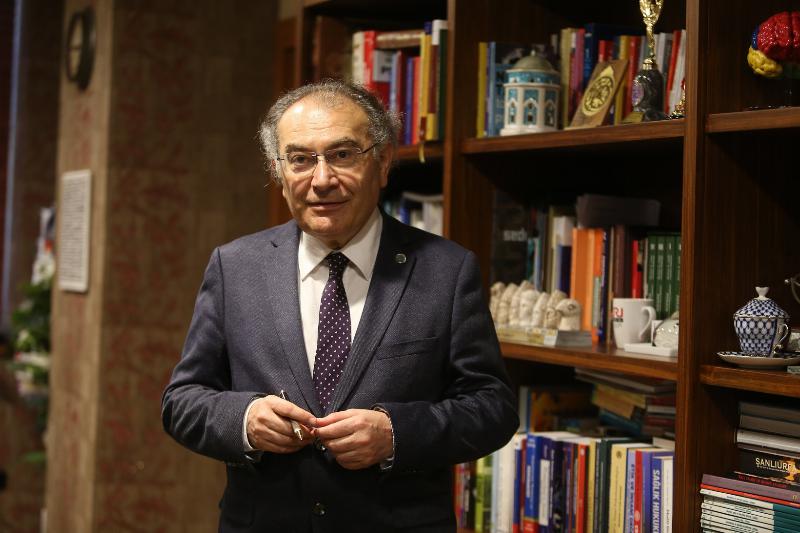
Üsküdar Üniversitesi Founding Rector, Psychiatrist Prof. Dr. Nevzat Tarhan commented on academician author psychologist Prof. Dr. Üstün Dökmen’s remarks: “A veiled psychologist, psychiatrist, or PDR specialist cannot exist. If I empathize or sympathize during a session, then I cease to be a psychological counselor.”
Clients should be evaluated based on their patient identity
Prof. Dr. Nevzat Tarhan stated that individuals applying to mental health professionals are there with their patient identity, saying, “We evaluate this person with their patient identity. Since that person is before us as a patient, there is no need for us to conduct an analysis like questioning their beliefs. If the patient or client brings up that topic themselves, meaning if they have conflicts, obsessions, or other issues related to it, then that topic is addressed. Psychology has a definition. Psychology is summarized in three words: mind, brain, culture. The culture aspect is very important. The environment and culture in which a person lives influence their current decisions, affecting their illnesses or health. Therefore, knowing the culture they live in is important. The American Psychiatric Association advised colleagues to learn about their patients' cultures to be helpful and beneficial to them. America is a multicultural society. There are people from various cultures in terms of worldviews and religious views. For this reason, they were advised to learn their cultures and not make wrong decisions or misguide them.”
It may be a professional thought disorder
Prof. Dr. Nevzat Tarhan noted that a psychologist, psychiatrist, or any psychology professional considering themselves superior to their client indicates the possibility of a professional thought disorder, saying, “If they have rigid beliefs about this and defend these beliefs as if they are proven truths without any discussion, then in such a situation, when they do something that will upset or anger the other party, they attribute it to the person's illness and do so due to their own prejudice. Most importantly, due to their rigid beliefs and harboring such prejudices, these individuals also deny that they think this way.”
A psychologist who cannot overcome their own narcissism cannot be a psychologist
Tarhan emphasized that for a specialist to be a psychologist, they must overcome their own narcissism, stating, “For this psychologist to be a psychologist, they need to lie on the couch for a year or two. They must overcome their own narcissism. Someone who cannot overcome their own narcissism cannot be a psychologist. What is narcissism? It is the ability to self-criticize and be open to criticism. A psychologist cannot diagnose themselves; they need help from a third colleague.”
Shock experiences change prejudices
Prof. Dr. Nevzat Tarhan noted that shock experiences short-circuit the brain, saying, “There is learned helplessness. There is a monkey experiment where monkeys are given an electric shock when they try to take a banana. After a while, because the monkey receives an electric shock every time it reaches for the banana, it stops reaching for it. The banana is there, but it doesn't reach because it hurts. That's the learned helplessness experiment. Then something interesting happens; the laboratory floods. After the laboratory floods, everything gets mixed up, and they reorganize the laboratory. They put the same monkey back in the cage. The monkey with learned helplessness starts reaching for the banana again. It undoes the 'broken' behavior. This is because shock experiences change prejudices. Shock experiences are the greatest remedy for prejudices. Shock experiences initiate questioning. They activate the 'stop, think, re-evaluate' system.”
Being unveiled is accepted as the norm
Prof. Dr. Nevzat Tarhan noted that Prof. Dr. Üstün Dökmen accepts being unveiled as the norm, saying, “He says this is normal. He and people who think this way have such a stereotype in their minds. These are modernist dogmas. In modernist doctrine, modernist dogmas, this is dogmatic knowledge, sacred, closed to discussion. This is a rigid belief, a blindly held belief. In such situations, it is a dogmatic prejudice for that person. It is a dogma. The person does not question that dogma. And because they do not question it, they cannot change it.”
The world is moving towards multiculturalism
Prof. Dr. Nevzat Tarhan noted that the world is currently moving towards multiculturalism, stating, “For example, in France, these types of prejudices are more common, but in the multicultural system represented by England, every culture, different cultures, can live together more. For instance, the Ottoman Empire achieved this. There was a census in 1894. In the census, 44% of Istanbul's population was non-Muslim, but they lived together very harmoniously for centuries. Many cultures were able to express themselves and live without feeling oppressed.”
Automatic prejudice is overcome through dialogue
Prof. Dr. Nevzat Tarhan pointed to the concept of “Automatic Stereotype” in political psychology, saying, “There is an example in political psychology books. A white mother is walking with her child, and a Black person approaches from the opposite direction. Without realizing it, completely unconsciously, the white mother takes her child's hand and pulls her child closer. Automatic prejudice says that a Black person is a danger; she has learned this as a threat and pulls her child closer. This automatic prejudice, how is it overcome? It is overcome through dialogue.”
Prejudices show a person how to think
Prof. Dr. Nevzat Tarhan stated that automatic prejudices and value judgments unconsciously show us how to think, just like traffic signs, and said that through training, individuals learn to remain independent of prejudice. Tarhan said the following:
“Our prejudices, our value judgments show us how to think and in which direction to make decisions. If a person has prejudices, their thinking automatically remains within a dogmatic area. They are unaware of their own dogma. However, a professional, whether a lawyer, a psychologist, or a psychiatrist, psychology is a basic science; psychiatry is a medical science, curative and clinical. If a master's degree in psychology is pursued in clinical psychology, those in clinical psychology already go through this training. They receive supervision, and in supervision, they learn to remain independent between the patient-client relationship, their prejudices, and their own prejudices.”
One must take off their worldview like a hat and hang it up
Prof. Dr. Nevzat Tarhan noted that mental health professionals should see their own worldviews as a hat when facing a client, and should take off that hat and hang it up, saying, “Let's say someone is dogmatically against headscarves, and a veiled patient comes to them. That person, when entering the office, must take off their worldview like a hat and hang it in the cloakroom across the way. They will hang that hat, and then they will act as if entering a laboratory. When entering a laboratory, you leave your prejudices in the cloakroom. If you don't enter that way, you can't find the truth. Now, the person before us is both a human being with a worldview and cultural identity, and a human being with a patient identity. We must respect that person's teachings based on their cultural identity. We might be prejudiced against them; in that case, we will set aside our own prejudices. For example, if someone with a sexual identity issue, a transgender person, comes, one might be prejudiced about that. They will take that prejudice and hang it aside, evaluating the person based on the current patient dynamic. If they cannot put aside their own prejudice and cannot be impartial, then that person already has a professional thought disorder. That person cannot practice that profession. There are ethical discussions regarding banning them from the profession in this regard.”
This person has prejudice
Prof. Dr. Nevzat Tarhan noted that this person has Islamophobia, saying, “These types of people, when they see someone wearing a headscarf, react as if they've been hit by 220 volts of electricity. We experienced those periods; they seem to be shocked. They have prejudice. Someone with this prejudice means they already see a part of the public and society as an enemy. It means they see a part of society as second-class human beings, they have 'othered' them. That is, like a white person seeing Black people as second-class, they see themselves as superior, special, and important. They see themselves as intellectually and morally superior to the client. Ethically, they should say, ‘I see myself as superior. I cannot treat you’.”
It is necessary to show respect for differences
Tarhan noted that when evaluating a patient or client, they should naturally be considered with their pros and cons, adding, “To evaluate solely based on that is also a prejudice. We can think differently. We have many colleagues who think differently. We also have colleagues with whom we work under the same roof. We think differently, but ultimately, we work together for the same purpose. This is a very natural situation, but in such cases, it is necessary to show respect for differences. This signifies a level of development. If a person tells another, ‘Change and then come,’ then that person is a totalitarian.”
To say “Everyone will think the same” is totalitarianism
Tarhan noted that democratic thought has four characteristics: “Firstly, being open to criticism; secondly, being accountable. Thirdly, being liberal, meaning granting the right to life to those who do not think like oneself; and fourthly, being pluralistic. In a democracy, a person who thinks differently can also express themselves. To say that everyone in Turkey will think the same is totalitarianism. This is a one-size-fits-all human ideology. This is entirely an ideological prejudice remaining from the one-party republic. This is the thought of the one-party republic. Therefore, if this person insists on such thoughts and does not apologize, they are extremely prejudiced.”
A segment of society is being demonized
Prof. Dr. Nevzat Tarhan noted that currently, psychiatry associations and psychology associations in Turkey should issue warnings to their colleagues due to professional prejudice, stating, “Because with what you are doing, you are demonizing a segment of society. You are categorizing society. You are dividing the clients who come to you into two groups: those I approve of and those I do not approve of. It's the same logic as the 'acceptable citizen.' That is also a type of prejudice. That's a sexist prejudice; this is entirely an ideological judgment.”
As a result of their prejudice, they ask wrong questions
Tarhan noted that the most important thing in such a situation is that the person does not realize their prejudice, saying, “They accept this as a rigid belief, a piece of knowledge. In such a case, due to their prejudice, they ask the other party wrong questions. They can unconsciously cause prejudice towards the other party. That patient will not come to that person again. For example, if a prejudiced person provides a public service, operates a kindergarten, when a veiled mother brings her child to the kindergarten, how can they be impartial and independent towards her? If this person has prejudice, then they should hang a sign on the school gate saying, ‘Veiled individuals cannot enter here.’ A person must be independent of their own self-judgment.” Tarhan added, “Let’s say you are in America. A Black patient comes. Will you say, ‘I don’t like Black people. I hate them,’ and not give them an appointment? It could be a very honest thing. If they say, ‘I cannot provide therapy to Black people. I am prejudiced against them,’ the person might have a past trauma related to it. If there is past trauma, that also creates prejudice.”
Prof. Dr. Nevzat Tarhan expressed his concern that this issue, which has recently come to the agenda, might become politicized, warning, “We might experience a new debate like the February 28 discussions in Turkey. That's why this issue should not be politicized. Social scientists should discuss this issue, and prejudices should dissipate. Currently, this person is being insulted, which is wrong. Insults should not be made.”
Evidence, counter-evidence, truth emerges
Tarhan noted that he posted 7 tweets on Twitter regarding the issue and that Prof. Dr. Üstün Dökmen should also present evidence for his own truths, saying, “Evidence, counter-evidence, truth emerges. If the counter-evidence says, 'This is not my prejudice, it is a real truth,' then they need to present evidence for this truth. According to what is it true? Why is it true? Are other people second-class human beings? In 2008, during these discussions, I wrote a long article titled ‘Those who cover their heads and those who oppose it.’ In that article, I analyze the opponents in perhaps 8-10 points. They are individuals who have overcome themselves; this friend of ours has not overcome themselves. They cannot question themselves. They see themselves as special, important. In my opinion, this is called professional narcissism. They see their own profession as special, important, superior. A person seeing themselves as superior to their clients, defending this as an undisputed rigid belief, and thinking that everyone should adhere to it. Just as racism is ethnic narcissism, this is professional narcissism.”
Prejudices must be suspended for empathy
Prof. Dr. Nevzat Tarhan stated that such individuals cannot empathize, saying, “For a person to empathize, they need to succeed in suspending their own prejudices. That is, they need to become aware of themselves and be able to say, ‘I am prejudiced about this, I am sensitive, I cannot be objective about this.’ They might get angry or upset with them because of their clothing. For example, they don't allow touching their body, they don't allow examination. However, in such a situation, the person needs to tell them, ‘I cannot help you, I apologize,’ and explain their reasons.”
Prof. Dr. Nevzat Tarhan noted that according to this view, a person being veiled is already a pathological condition, saying, “It means accepting a kind of labeling for that person. They categorize society into Class A, Class B, in the style of ‘This person, despite being veiled, does not deserve many rights.’ They categorize like Black-white categorization, or veiled-unveiled, or even race categorization.” Prof. Dr. Nevzat Tarhan noted that in Europe, after wars that lasted for many years, it was understood that racism is harmful, saying, “Europe experienced 100 years of wars. There were civil wars between England, France, and Germany. After those civil wars, World War I and World War II took place. After that, they understood that racism was a harmful thing. Saying that racism leads to discrimination, and trying to change people due to discrimination leads to debate and conflict, a multicultural understanding then developed.”
If he were a clinician, he wouldn't speak so roughly
Tarhan noted that religious discourse and concepts like ‘insha'Allah’ or ‘mashallah’ are our cultural codes, saying, “These are cultural patterns that have come down through sociological phases for centuries. To change them, people cannot be changed from top to bottom. If a person thinks this way, they should announce, ‘Patients who think this way should not come to me.’ That person is not a therapist, but a psychological counselor and guidance teacher. In fact, they are not a clinical clinician. Since they are not a clinician, they don't know much about these issues. If they were a clinician, they wouldn't speak so roughly. If they were a clinical psychologist, they would separate these two prejudices as 'the patient's prejudice' and 'my prejudice' and categorize them. They would approach their patient with their patient identity. They would evaluate them that way. If they cannot do this, they cannot be a therapist.”
In a therapeutic alliance, a trust relationship is formed with the patient
Prof. Dr. Nevzat Tarhan noted that a trust relationship is formed with the patient in a therapeutic alliance, stating, “Therapeutic alliance means treatment cooperation. In the formation of treatment cooperation, a safe space is created between the patient and the client. This trust means the feeling of ‘He/she understood me’ has been captured. There are some patients who constantly object to everything. At the end of the session, we tell them, ‘We agreed that we couldn't agree on anything, right?’ At least we agree on one thing. There are some individuals, in the 'market is against everything' style, who will go around telling others, ‘I told this psychologist this and left an impression on them.’ But in the relationship, the strong side, of course, is with the therapist's professional knowledge set. The knowledge set, the belief set is with them. They must explain their knowledge set impartially to the person. They must explain it impartially and independently of their prejudices. To be able to explain this, they first need to understand it. They need to thoroughly understand the client's or patient's strengths and weaknesses.”
These thoughts are remnants of modernist despotism
Prof. Dr. Nevzat Tarhan, stating that “To say a veiled psychologist cannot exist is a completely dogmatic thought,” said, “Dogmas are sacred areas. They are areas closed to discussion. These are modernist fascism. Just as there is religious fascism, there is also modernist fascism. Turkey experienced this in past years. It experienced modernist pressures and modernist despotism. These thoughts are its remnants. Medieval thoughts. Medieval thoughts proceed on prejudices. Whereas Voltaire said there, ‘I disapprove of what you say, but I will defend to the death your right to say it.’ Voltaire said this in the Middle Ages. But now, you look, this is a way of thinking even more backward than the Middle Ages.”
Wrong cannot be answered with wrong
Prof. Dr. Tarhan, stating, “We must respect such a thought. You may not like someone, you may feel hatred, but this is their prejudice,” said, “Currently, wrong should not be answered with wrong. This is incorrect. To say ‘I do not approve’ is to show respect. It means, ‘I do not approve of your idea, but there can be people who think like you. I accept this.’ We will accept this. Shall we say, ‘Such people should be killed on sight?’ If you say something like that, then we would make the same mistake.”
Prof. Dr. Nevzat Tarhan, stating that saying “A veiled psychologist cannot exist” is an imposition, said, “There are also male clients who come to this person. A male client whose wife is veiled comes to them. Just because they don't wear a head covering… These are standard characteristics of prejudiced people. They are learned prejudices, what we call stereotypes. In such situations, people who are closed to changing themselves cannot change this.”
I try to share my profession for the good of society
Tarhan stated that he does what he believes is right in such situations, saying, “Being able to do things that can create love and trust is something that makes a person happy. Of course, what is important here is not in my person, but a love related to the ideas I present to society. It is not about my personality. I try to share my profession for societal values, for the good of society. Tolstoy has a saying. When asked, ‘Tell me about the good people?’ Tolstoy said, ‘To tell about the good, one must first know the bad.’ They asked, ‘Well, who are the bad people?’ Tolstoy says, ‘Those who think of nothing but their own happiness are bad.’ Currently, there is serious global narcissism in society. Globally, people only think of their own interests, they only love themselves. They don't want to do anything for the society they live in, for the planet. That's why I am literally struggling to explain my professional experiences for the benefit of society, how to ensure people go towards good instead of bad. I am trying to explain that. If you do many things not just for your own benefit but for the benefit of society, you can also do things for the good of people, and you see the reward for it; these are enough. Just as a judge feels comfortable and the happiness of performing their duty when distributing justice, when a patient is cured and says ‘May God be pleased with you,’ I cannot exchange the happiness of their problem being solved and their illness improving for anything. It is the prayer of a healed person.”
A person needs to analyze themselves to heal
Tarhan emphasized that it is very important for a person to analyze themselves in order to heal, saying, “When one says, ‘Start by changing yourself to change the world,’ they need to perform a SWOT analysis on themselves. Economists use SWOT analysis very well. They examine a company's strengths and weaknesses. Then they consider the company's opportunities and threats. I constantly try to perform a SWOT analysis on myself. What are my strengths? What are my weaknesses? What are the possibilities, opportunities, and threats before me? I look at these. Accordingly, I try to take calculated risks. I am not afraid of risk.”
There is also religious narcissism
Prof. Dr. Nevzat Tarhan noted that in addition to ethnic narcissism, there is also religious narcissism, saying, “This is also trying to impose one's own religion as a superior religion on everyone. This is also religious narcissism. Religious narcissism, professional narcissism, these are all types. Racism is a disease. It is a social pathology. It is not a clinical pathology. Clinical pathology is something that has a place in classification books. Islamophobia is like this. For example, some people have racial prejudices. There is a global Islamophobia. In my opinion, Islamophobia is an idea cultivated in global psychological warfare. It doesn't emerge spontaneously. It is a consciously created concept. Some people want Christian culture and Muslim culture to clash, and they want to benefit from this war. They want to pit two cultures against each other.”
A climate of possibility should be created for young people
Prof. Dr. Nevzat Tarhan noted that in order to open the way for young people, an environment of freedom, along with opportunities, must be provided, saying, “To open the way for young people, we need to pave the way for innovation and entrepreneurship, but for this, an environment of freedom is important. In an environment of fear, one cannot be innovative and entrepreneurial. In an environment of fear, projects that will please managers are made. However, in an environment of freedom, there is a climate of possibility for their talents. Currently, young people feel they are in an environment of fear, and in this environment of fear, many young people are planning to go abroad. This perception in them needs to be changed.”
These discussions are important and necessary
Prof. Dr. Nevzat Tarhan also emphasized that it is very important and necessary for all these discussions to take place, saying, “This is a professional prejudice. We find it important for that prejudice to be criticized and for that person to conduct self-criticism. Being able to discuss these things is not a bad thing; on the contrary, it is a good thing. Let them be discussed, but if this issue becomes a matter of polarization with raised voices, it will lead to a state where one part of society is in conflict with another, which we call social schizophrenia. We are experiencing the same situation in the Southeast. The situation in the Southeast is something that arose due to the official ideology of Turkey, a racial imposition. The people there did not want to change their race or language; they should be respected. They were told, ‘Love it or leave it.’ It is still being said. ‘Love it or leave it’ is being said. There is no empathy in this. I can be proud of my own identity, it is a beautiful thing, I can carry its honor, but to say ‘you must be like my identity’ means to impose one's own cultural identity on them, and this is also a prejudice. First, we are human, then the others come. First, we are human, then we are psychologists, then we are veiled. First, we are human. A person who does not see their patient as a human but rather sees them through prejudices, regardless of their profession, has worn the armor of prejudice.”
Share
Request a Call
Other News
- The book that read today's digital threats in 2014: Being a Conscious Family
- Experts warn: 'Instead of memorizing letters, teach pencil grip, scissor use, and coloring'
- School fear and school love both start in the family!
- Family is not merely transforming, it is being battered under a serious assault
- Artificial intelligence opens the door to early diagnosis in autism!