

Üsküdar Üniversitesi Department of Sociology and the Sociology Club organized an event titled “Philosophical, Sociological, and Psychological Projections of Digitalization”. The event, held on Thursday, May 26, 2022, at Üsküdar Üniversitesi South Campus Socrates Hall, was attended by Prof. Dr. Veysel Bozkurt from Istanbul University, Assoc. Prof. Dr. Şevki Işıklı from Marmara University, and Assoc. Prof. Dr. Ahmet Dağ from Bursa Uludağ University as speakers.
Content
Philosophical, Sociological, and Psychological Projections of Digitalization
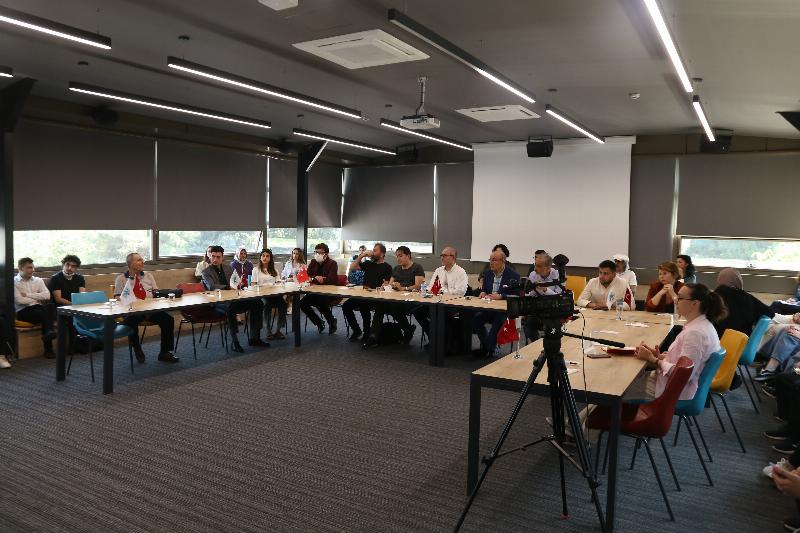
Assoc. Prof. Dr. Ahmet Dağ: “We are facing a very different plane”
Dağ stated that we are facing a period where sociologists and philosophers are trying to understand the world; “The theories and approaches of sociologists and philosophers mean that we are not sufficient in understanding this world. We must know what sociologists and philosophers have written and explained. Because we are facing a very different plane. As Hegel stated, every being must engage with the spirit of its age, understand the existence of its age. But understanding is not enough. This inadequacy can lead us to the sophisticated debates of what we call simulation. Of course, with the emergence of mass communication tools on the historical plane, we assume that human nature is the same. However, the perspective on human nature and God, especially in the 17th century, is completely different. In the process, it is seen that the nature of existence began to be understood through a mathematical plane. While the 18th century was a period of widespread socialization, the 19th century gave rise to a plane moving towards mechanization and industrialization. From the 20th century onwards, we have faced a technological process. At this point, the inclusion of instruments like television and radio into social life, followed by the widespread use of the internet, is highly illustrative. So much so that after 2005, a process began where we became more informed by encountering the reality of social media. The plane we call Web 1.0 is a process where we were informed, and the plane we call Web 2.0 developed as a process of mutual influence or interaction. Facebook, Instagram, Twitter, and many other social media applications have established us in a new way at this point,” he said.
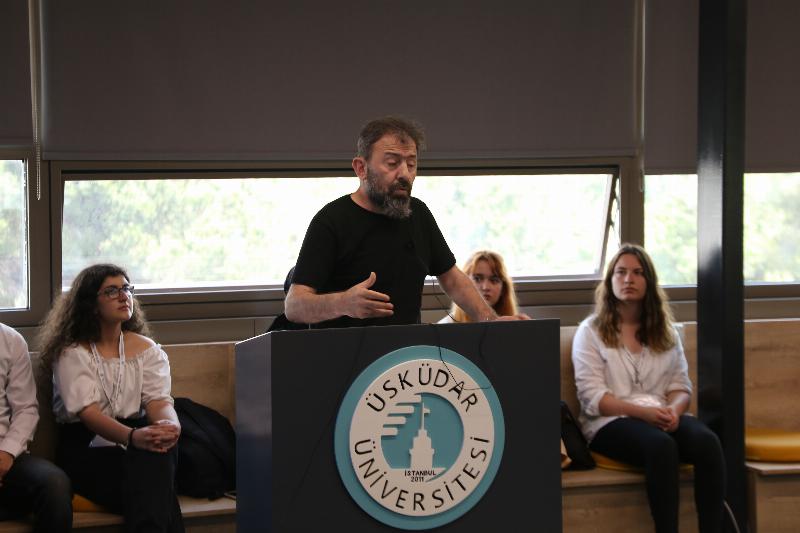
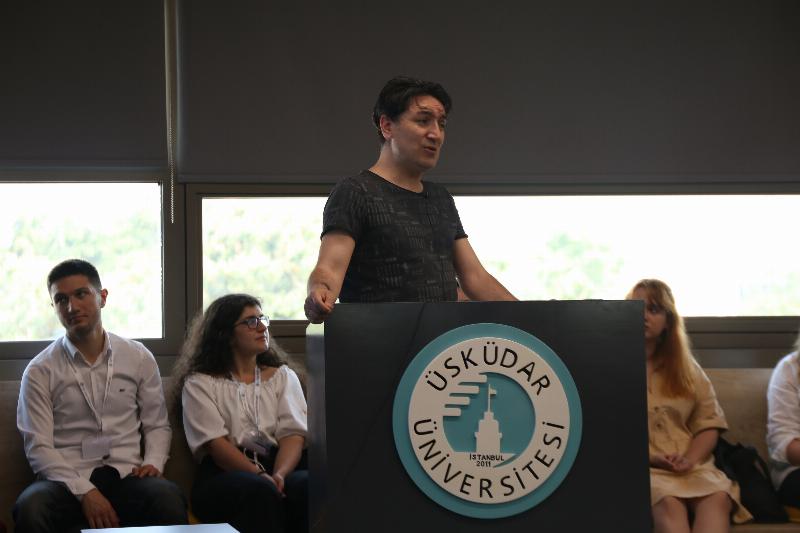
 Assoc. Prof. Dr. Şevki Işıklı: “Technology meets our needs in the social sphere as well”
Işıklı stated that the technocultural and technoformic perspective is shared by many; “The use and design of technology are decisive, from the stage of designing other technological materials and interaction networks to a stage that affects all material life. In the social sphere too, technology meets our needs and dominates every aspect of life. The technological age and the digital age emerged after the stages of hunter-gatherer societies, settled life, and advanced information society. The most important characteristic of the sociality built by this age we have reached is information. However, the concept of information society is misunderstood. Because information society is incorrectly used as 'informatics society'. In my opinion, information society means a communication-centered knowledge society. It is evident that this intense communication-based information process fundamentally changes human habits, production, consumption, and legal chains, as well as the religious and cultural rules of other social institutions,” he commented.
Prof. Dr. Veysel Bozkurt: “A hero affects the fate of a country”
Bozkurt stated, “We need to be very careful when making predictions about the future;” “A hero affects the fate of a country. It is clear that a single act, like hammering a nail, by a hero can change the fate of the world. In this context, it is very important to develop a holistic perspective when explaining societal issues. This is also why I emphasized the tradition of the work at the beginning of the presentation. It is necessary to approach the issue with a perspective that encompasses continuity. I participated in the debates on the information society that began in 1992 with my doctoral thesis written at that time. I completed this thesis on the information society in 1994. After successfully completing the thesis, I wanted to publish it as a book but could not. Everyone criticized me for dealing with this topic. Today, it has become clear how baseless these criticisms were. It is certainly functional to subject this point reached in the philosophical field to a critical filter and to rethink and discuss it. But one must not forget that there is also a technological dimension to the matter. You must follow technological transformation. To internalize social change, we must follow this process of change. Along with this follow-up, we should not neglect to talk about the future, even if through probabilities. Although we do not know what genius will invent tomorrow, it is vital that we focus on current and future issues developing around the technological aspect of social change,” he concluded.
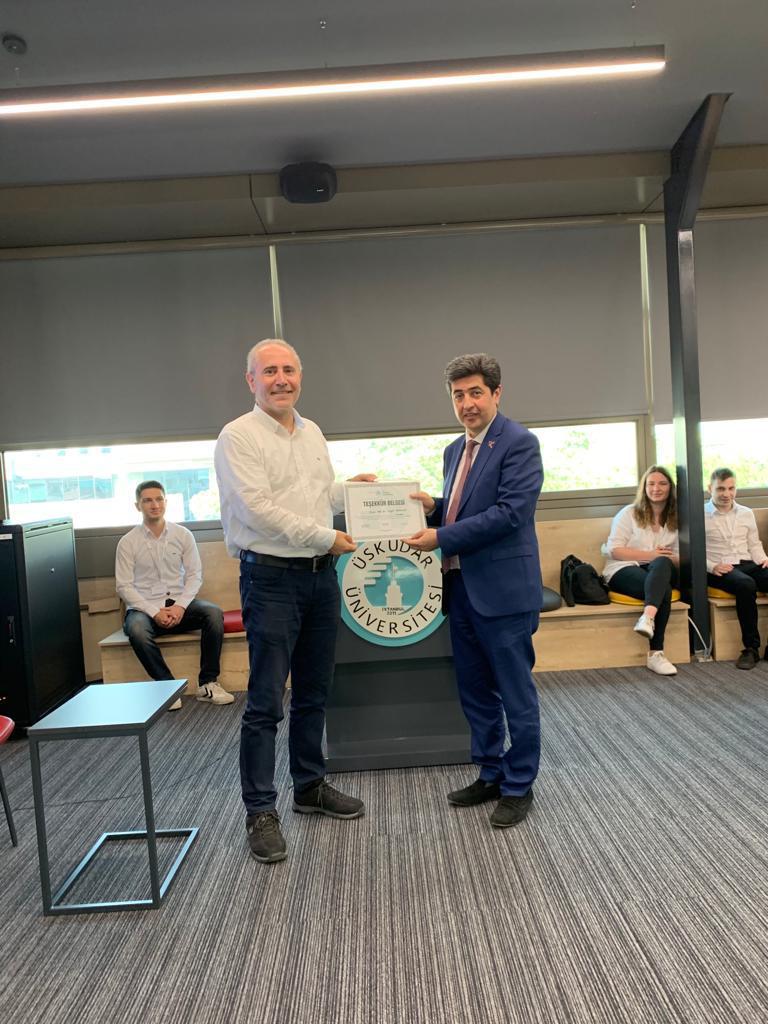
At the end of the conference, Prof. Dr. Ebulfez Süleymanlı, Head of Üsküdar Üniversitesi Department of Sociology, thanked the guest academicians for their participation and speeches, and stated that as a department, they strive to address the effects of the culture emerging from digital transformation on social life through the international and national congresses and conferences they organize.
Share
Update Date: March 01, 2026
Creation Date: May 29, 2022
Request a Call
Other News
- The book that read today's digital threats in 2014: Being a Conscious Family
- Experts warn: 'Instead of memorizing letters, teach pencil grip, scissor use, and coloring'
- School fear and school love both start in the family!
- Family is not merely transforming, it is being battered under a serious assault
- Artificial intelligence opens the door to early diagnosis in autism!