

Üsküdar University Founding Rector Prof. Dr. Nevzat Tarhan, participated as a speaker in the Science Camp program organized in cooperation with Istanbul Fuat Sezgin Science and Art Center and Ataşehir District National Education Directorate. Making important evaluations regarding the topic “New Truths in Education and 21st Century Skills,” Tarhan stated that asociality has begun in the new generation of youth; “Asociality has started among young people, especially in the last decade. In this sense, there is a global threat.” he said.
Content
New Global Threat: Asocial Youth…
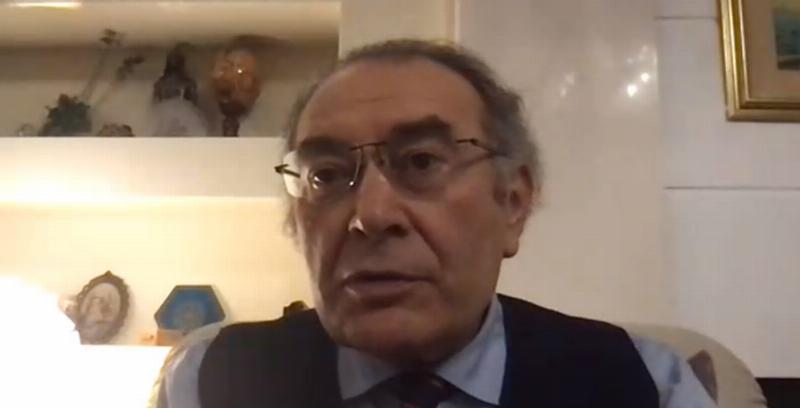
“Today's youth only develop their intelligence in front of computers”
Students showed great interest in the program organized online for middle and high school students within the scope of pandemic measures.
Tarhan, stating that asociality has begun among young people in the last decade during the program, which parents also attended; “In human neurodevelopment, fine-gross motor developments, intelligence developments, and social developments are very important. Currently, young people only develop their intelligence in front of computers. They pay no attention to socialization, fine-gross motor developments. They have almost no friends they meet face-to-face. They form all their friendships virtually. Individuals who lack half of their neurodevelopmental skills, such as social skills and fine-gross motor developments, are generally diagnosed with autism. In this sense, there is a global problem threatening young people.” he stated.
“Knowledge is not permanent in classical learning”
Üsküdar University Founding Rector, Psychiatrist Prof. Dr. Nevzat Tarhan, stated that brain-based learning is permanent and noted that brain-based learning also forms the basis of the current restructuring in the education system. Tarhan; “Learning is not just mental; it also has emotional and social learning dimensions. 21st Century skills involve active and experiential learning. In classical learning, only cognitive learning is mentioned. In this type of learning, an individual understands what they read and explains it, but this learning is not permanent. In ideal learning, it's not just about learning with logic. It is learned together with emotions and social skills. This type of learning becomes permanent. This learning aims to engage every aspect of the individual's brain. This is defined as a 21st Century skill,” he said.
3 Important Skills in Education…
Tarhan, pointing out that there are new truths in education, noted three important 21st Century skills; “First is objectivism. We must succeed in being objective. The sense of justice is prominent in the world. Especially among young people. We need to teach our students through education that freedom is important and that policies based on trust are more important than policies based on fear. The teaching style should no longer be authoritarian. The philosophy of a learning organization should be applied in schools. In a learning organization, both students and teachers learn, and experiential learning is necessary. It is not about transferring encyclopedic knowledge to students, but enabling them to experience that knowledge, and for this, various workshop activities need to be carried out. Behind this is the philosophy of objectivism. We will approach events objectively. If we cannot do this in the 21st Century, if we only look at events from our own perspective and culture, we will miss this era.
Second is relativism. Where there is prejudice, there is relativism. People who only look at events from their own perspective are making a mistake. It is important for individuals to create self-awareness, wondering if they themselves have prejudices. We will show respect for trees, birds, that is, nature. Man's ruthless attempt to be the sole owner of nature is contrary to the principle of relativism. The third truth is emotivism. In emotivism, there is the ability to take emotions into account when making decisions. It states that not only one's own benefit but also the benefit of society and humanity should be taken into consideration,” he concluded.
Prof. Dr. Nevzat Tarhan also answered questions from students at the end of the program.
Share
Update Date: February 27, 2026
Creation Date: February 02, 2021
Request a Call
Other News
- Experts warn: 'Instead of memorizing letters, teach pencil grip, scissor use, and coloring'
- School fear and school love both start in the family!
- Family is not merely transforming, it is being battered under a serious assault
- Artificial intelligence opens the door to early diagnosis in autism!
- Artificial intelligence doesn't end engineering, it transforms it!